Key takeaways:
Shingles causes a painful, blistering rash that can happen on one side of your body or the face.
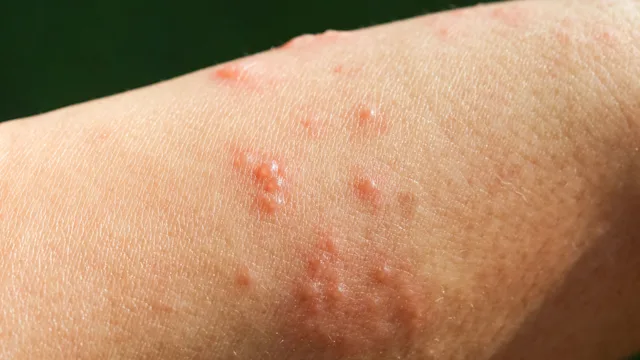
The shingles rash goes through different stages. It usually starts as red, violet, or brown patches and bumps that turn into fluid-filled blisters. These eventually crust over and heal.
Treating shingles early — ideally within 3 days of developing the rash — can help the rash heal faster, reduce pain, and may prevent some long-term complications.
Shingles is a painful, blistering rash that affects one side of the body or face. It’s caused by the same virus that causes chickenpox. After you recover from chickenpox, the virus stays inactive in your nerves. Years or even decades later, it can become active again and cause shingles.
About 1 million people in the U.S. get shingles each year. Your risk increases as you get older. Recognizing the signs of shingles early can help you get treatment sooner. And early treatment helps the rash heal faster, and may prevent long-term complications, such as scarring and lingering pain.
Let’s review what the shingles rash looks like at each stage, with pictures to help you recognize the signs.
What does shingles feel and look like?
Shingles usually causes a blistering rash on one side of your body or face. It can appear anywhere, but it’s most common on the chest, back, and abdomen. In these areas, the rash may form a stripe or band that wraps around one side of your body. It usually doesn’t cross the midline of your body.
The rash can look different depending on your skin tone. On dark skin tones, it may look purple, dark brown, or gray. On lighter skin tones, the surrounding skin may look pink or red.
Shingles can feel like burning, tingling, or sharp pain. You may also have itching or numbness in the affected area. These sensations may begin before you see a rash.
Stages of the shingles rash
Like with other viruses, the shingles rash goes through predictable stages. Knowing about the stages helps you identify shingles early and know what to expect. Let’s take a closer look at the three stages of shingles, including what the rash looks and feels like.
Stage 1: Early-stage shingles (prodromal)
The earliest stage of shingles, also called the prodromal or pre-eruptive stage, usually begins a few days before the rash appears. You may not notice any changes to your skin during this time.
During this stage, you may feel tingling, burning, stabbing, or shooting pain on one side of your body or face. Some people also experience more general symptoms, such as:
Stage 2: Shingles rash (acute phase)
Next is the eruptive stage, when the rash develops. Symptoms from stage 1, like pain and tingling, typically continue after the rash appears. They can last 2 to 4 weeks.
During this stage, the skin rash starts flat and eventually turns into crusty bumps. Here’s what to expect:
Red, purple, or brown patches and bumps: These are often the first visible signs of the rash. On your torso, they may form a band around one side of your chest, abdomen, or back, wrapping around like a belt.
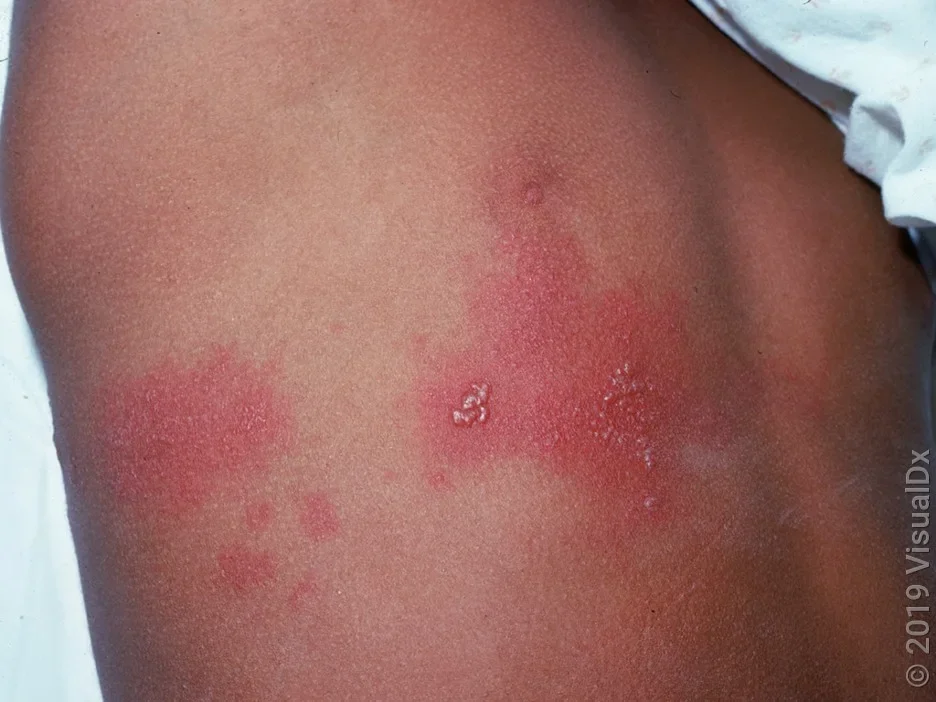
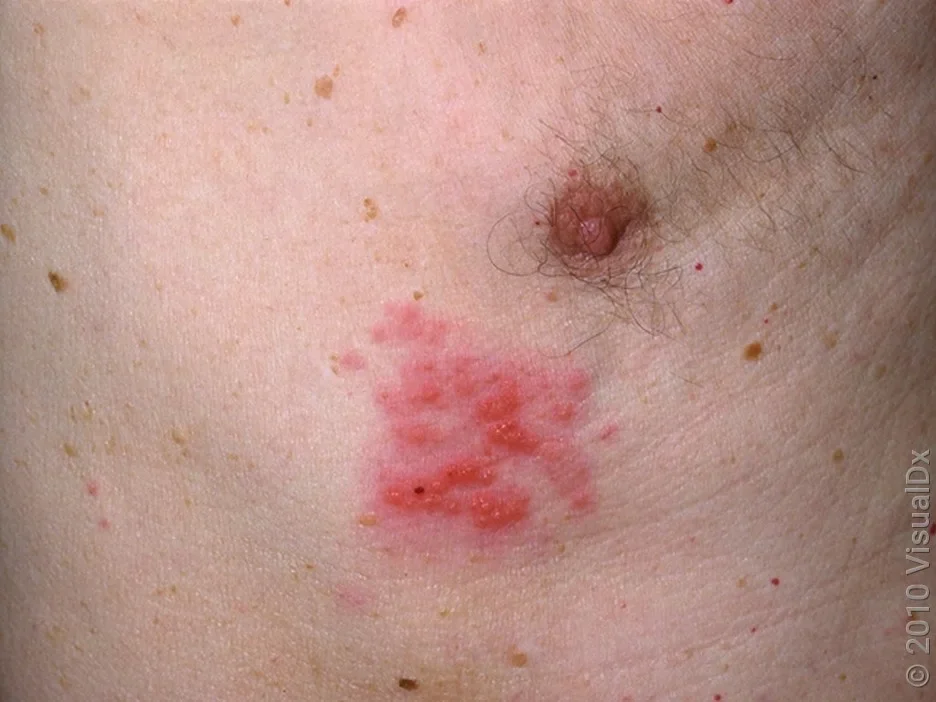
Fluid-filled blisters (vesicles): The bumps develop into groups of blisters filled with clear liquid. Some of the blisters may break open.
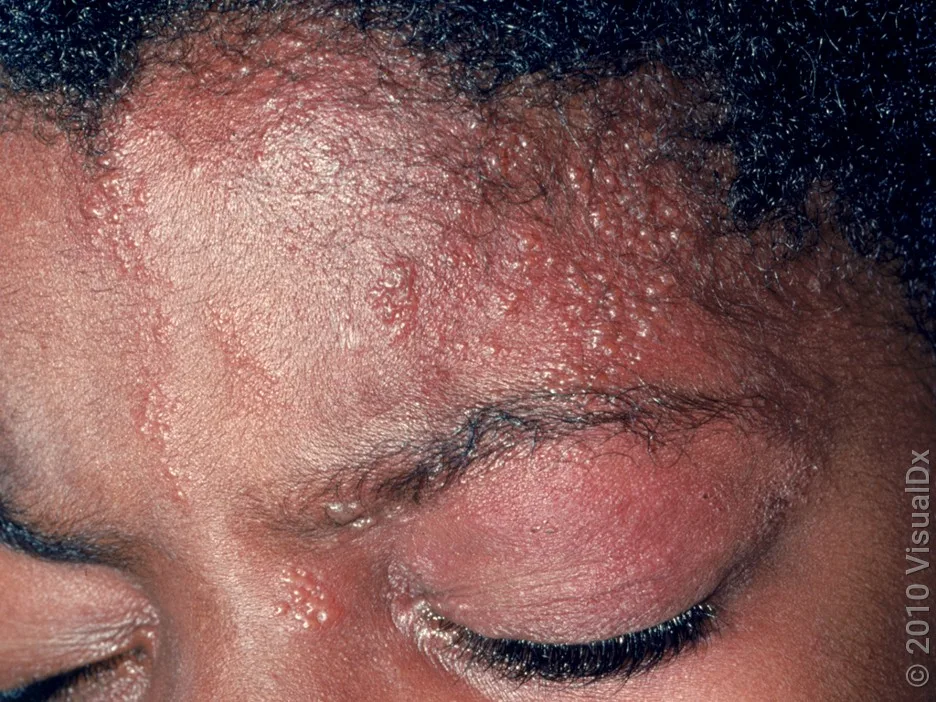
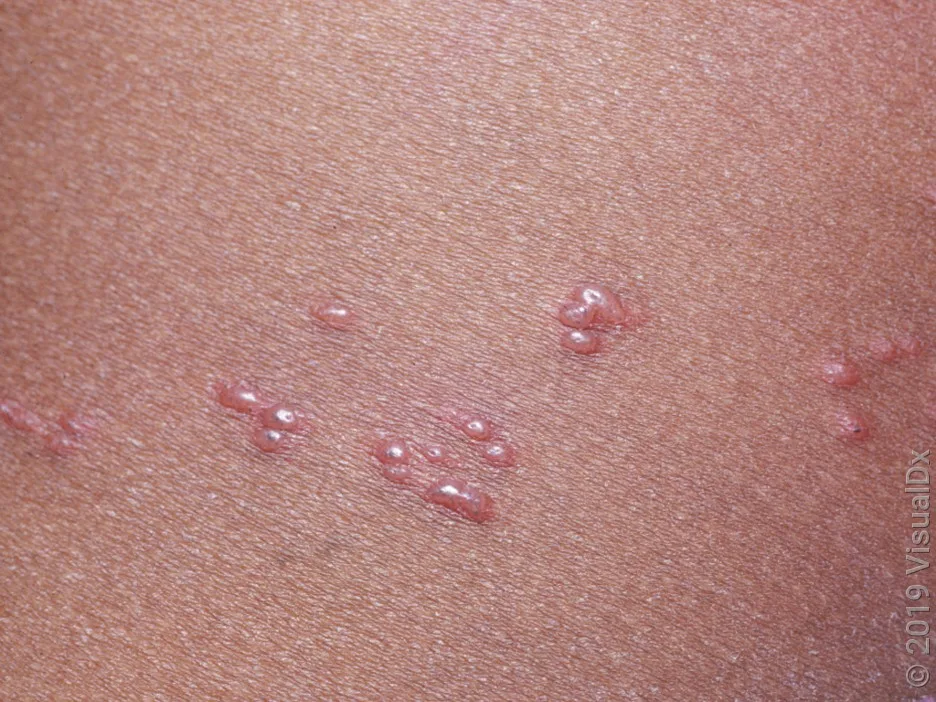
You can spread the virus to others from the time the blisters appear until all of them have dried and formed scabs.
Stage 3: Crusting
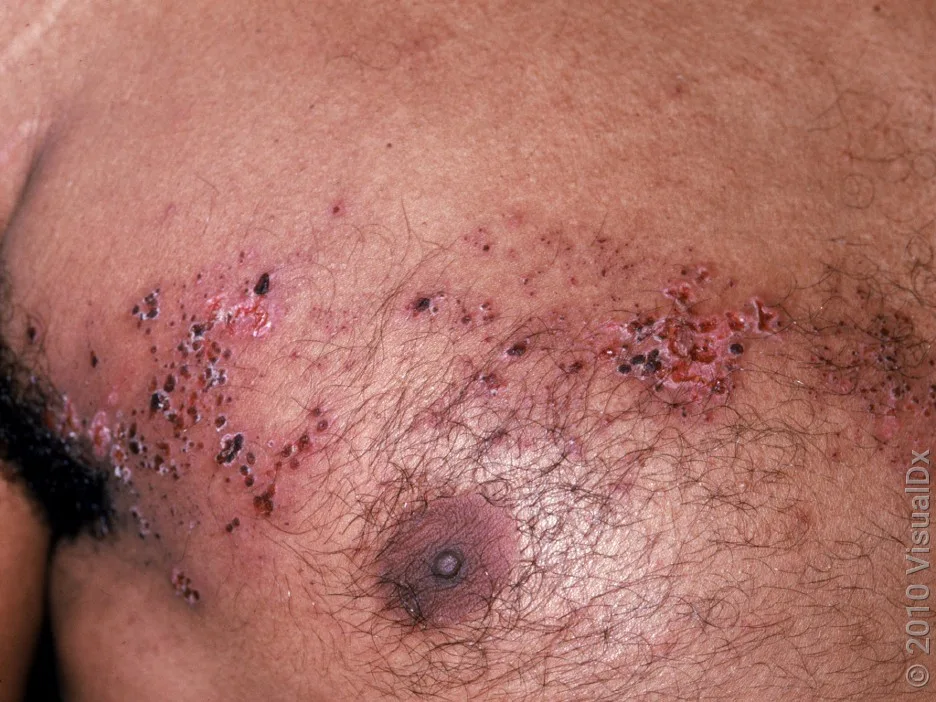
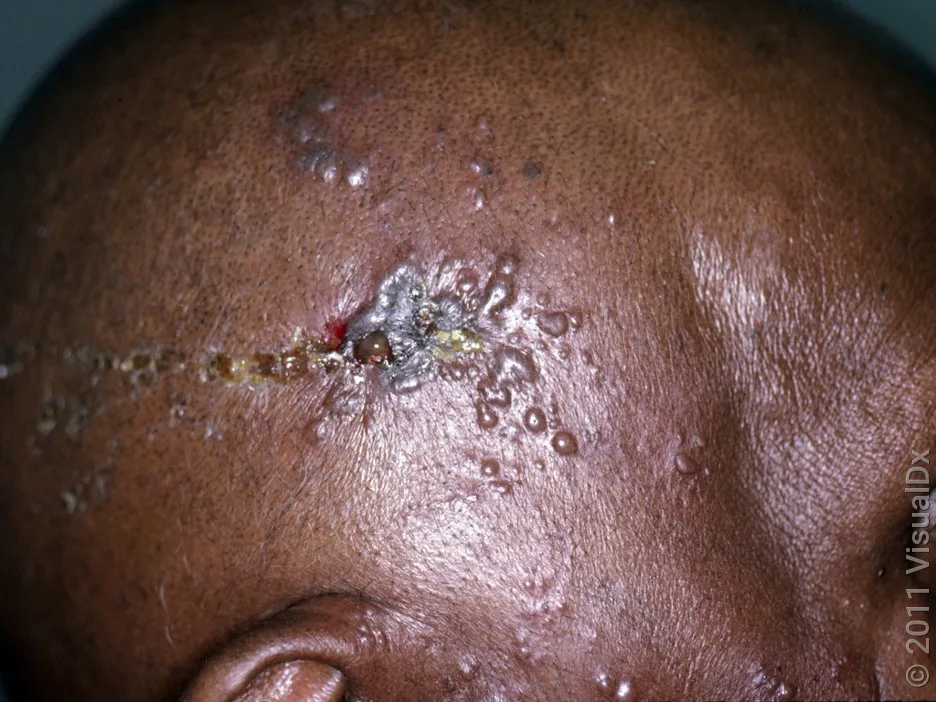
The blisters dry out and form scabs within 7 to 10 days after the rash shows up. The rash usually heals within 2 to 4 weeks.
As the rash heals, it can cause scarring and skin discoloration, like postinflammatory hyperpigmentation. This is especially common in people with darker skin tones.
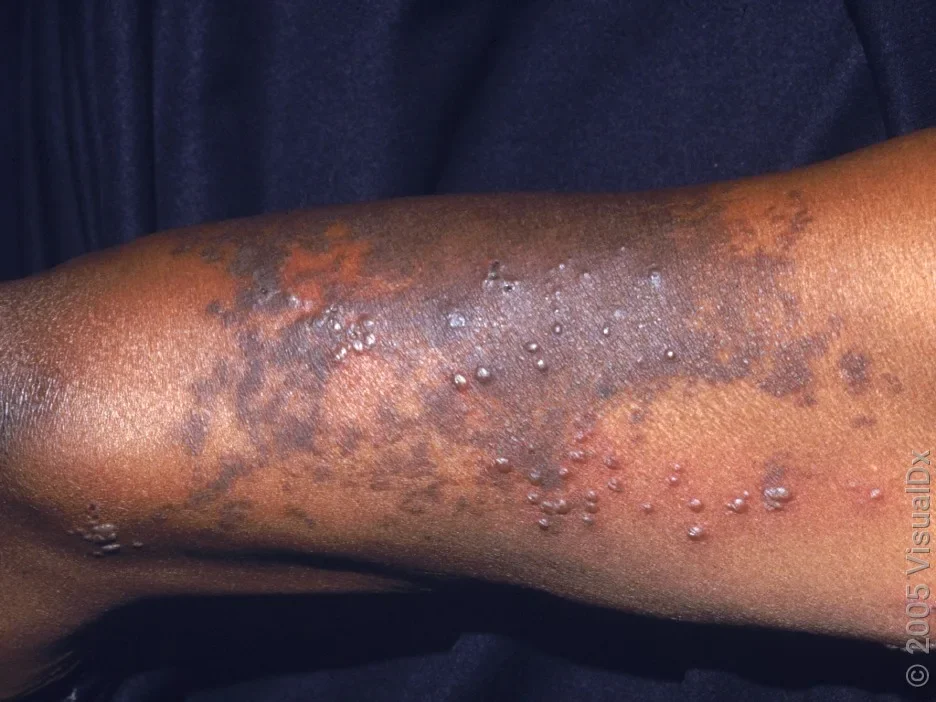
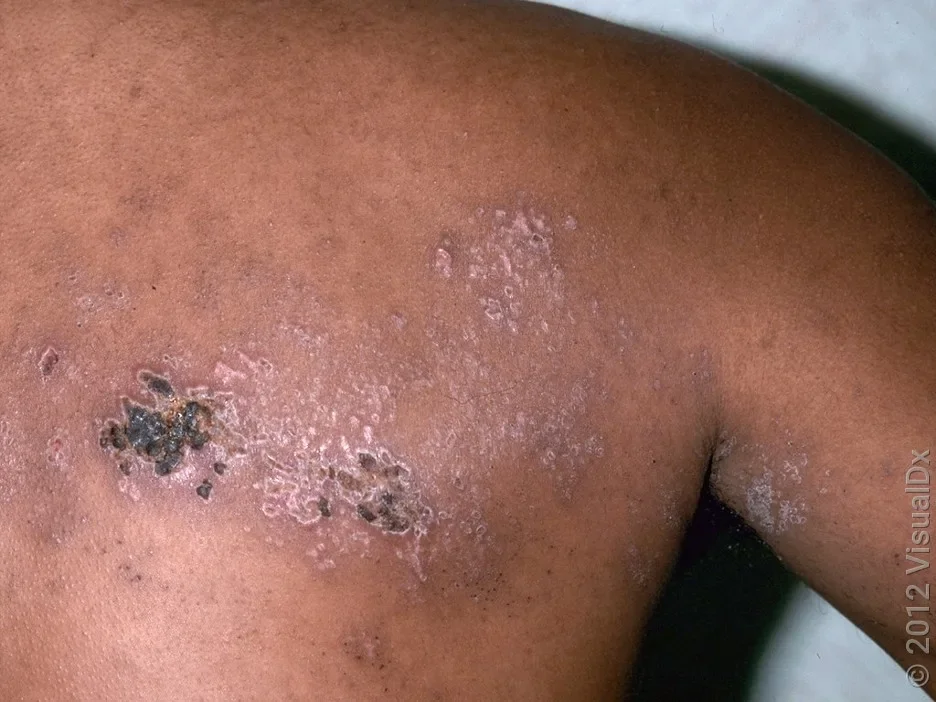
Some people continue to have nerve pain after the rash heals. (We’ll cover more on this in the next section).
What are the complications of shingles?
Shingles can cause problems that last even after the rash heals. Possible complications of shingles include:
Long-lasting nerve pain: Postherpetic neuralgia (PHN) is the most common complication of shingles. It causes pain in the area where you had the rash. The pain can be severe and last for months or years.
Vision problems: Shingles that affects your eye can damage your vision.
Hearing or balance problems: Shingles in or near your ear can cause hearing loss or balance problems. If it also causes weakness on one side of your face, it’s called Ramsay Hunt syndrome. This condition needs urgent medical attention.
In rare cases, shingles can also lead to pneumonia or encephalitis (inflammation of the brain).
Get medical attention if you develop a rash that may be shingles, especially if it’s on your face or near an eye. Starting treatment early may lower your risk of developing complications of shingles.
Conditions that may look like shingles
To the trained eye, the shingles rash is pretty easy to recognize based on how it looks and your symptoms. But sometimes, other conditions can look like shingles, including:
A healthcare professional can help determine whether you have shingles or something else.
How to treat shingles
There’s no cure for shingles. But prescription antiviral medications can help the rash heal faster and may lower your risk of long-term complications. Options include:
These medications work best when you start them within 3 days of developing the rash. So, it’s important to contact a healthcare professional as soon as you think you may have shingles. Treatment may still help even if you’ve had the rash for more than 3 days.
To help manage pain, a healthcare professional may also recommend pain relievers like acetaminophen, ibuprofen, or naproxen.
Preventing shingles
The shingles vaccine, Shingrix, lowers your risk of developing shingles and related complications. The shingles vaccine is recommended for adults 50 and older. Vaccination is also recommended for adults 19 and older who have a weakened immune system.
Experts recommend getting the shingles vaccine even if you’ve already had shingles before. But you need to wait until you no longer have an active infection.
Frequently asked questions
You can’t get shingles from another person. But the virus that causes shingles, called varicella-zoster virus, can spread through direct contact with fluid from blisters. It may also spread through virus particles released into the air from the blisters. If you haven’t had chickenpox or the chickenpox vaccine, you could get chickenpox after being near someone with shingles. This is why it’s important to cover your rash while there are blisters.
Shingles is usually the most painful during the acute, or eruptive, phase, when the blisters start to appear. This stage can last 2 to 4 weeks. For most people, the pain starts to improve as the blisters heal.
The current recommendation is that adults 50 and older should get 2 doses of the shingles vaccine, Shingrix. The doses should be given 2 to 6 months apart. If you’ve had both shots, a booster after age 65 isn’t usually recommended.
The bottom line
Shingles often begins with pain, tingling, or itching on one side of your body or face. A few days later, red, brown, or violet patches and bumps may develop in the same area. These bumps can turn into fluid-filled blisters. The blisters usually crust over within 7 to 10 days, and the rash heals within 2 to 4 weeks. Some people have lingering pain or changes in skin color even after the rash clears.
If you think you have shingles, contact a healthcare professional promptly. Antiviral treatment works best when you take it within 72 hours of developing the rash. They can help you heal faster and reduce symptoms.

Why trust our experts?



Images used with permission from VisualDx (www.visualdx.com).
References
Anderson, T. C., et al. (2022). Use of recombinant zoster vaccine in immunocompromised adults aged ≥19 years: Recommendations of the advisory committee on immunization practices - United States, 2022. MMWR.
Centers for Disease Control and Prevention. (2025). Shingles (herpes zoster).
Centers for Disease Control and Prevention. (2024). Shingles vaccine recommendations.
MedlinePlus. (2024). Shingles, also called: Herpes zoster.
Nair, P. A., et al. (2026). Herpes zoster. StatPearls.
NHS. (2025). Post-herpetic neuralgia.
Saguil, A., et al. (2017). Herpes zoster and postherpetic neuralgia: Prevention and management. American Family Physician.