Key takeaways:
Systemic medications for psoriasis include options in pill, injection, and intravenous (IV) infusion forms.
There’s no “best” systemic medication for psoriasis. But with so many options to choose from, there’s a medication out there that will clear up your skin.
Which medication is right for you depends on your psoriasis, your other health conditions, the potential side effects, and your preferences.
Save on related medications
If you have psoriasis but your skin isn’t getting better with creams or lotions, you’re probably frustrated. The rashes are still there, and you wish they weren’t. Don’t worry: There are many effective medications for psoriasis, and clear skin is possible.
When psoriasis doesn’t go away with topical treatments (like creams, lotions, or shampoos), there are many different systemic options to try. Systemic medications go inside the body — like pills, injections, or infusions. Which option is best for you depends on many factors, including your personal preferences.
Learn about the systemic treatment options for psoriasis, their possible side effects, and when you may want to consider using one.
How to tell when psoriasis creams aren’t working
For many people, psoriasis symptoms can be managed with medicated creams and lotions alone. But sometimes stronger medications, like pills and injections, are needed. This may be the case in these instances:
Prescription creams are no longer keeping your symptoms under control.
You have psoriasis on large areas of skin and applying cream isn’t practical.
You also have psoriatic arthritis.
In many cases, systemic medications are used together with topical treatments to improve results. It might take some time to find the best psoriasis medication that works for you. But there’s one out there that can help.
Here’s an overview of the different options.
Which oral medications for psoriasis are most effective?
There are several oral medications that can help when psoriasis doesn’t respond to creams alone. Oral medications are pills you take by mouth.
Methotrexate
Methotrexate (Trexall) has been used to treat psoriasis for decades. It’s usually taken once a week as a pill or liquid. While taking methotrexate, you also take a daily vitamin called folic acid to prevent side effects.
Possible side effects: Nausea, diarrhea, or fatigue the day after taking the medication. Methotrexate isn’t a good choice if you have liver disease or you’re trying to get pregnant.
Acitretin
Acitretin (Soriatane) is an oral retinoid (vitamin A derivative) that’s FDA approved to treat psoriasis. You take it once daily with food.
Possible side effects: Dry skin and mouth, hair loss, and higher cholesterol levels. Acitretin shouldn’t be used during pregnancy.
Apremilast
Apremilast (Otezla) is FDA approved to treat psoriasis and psoriatic arthritis. You take it twice a day, with or without food. Over the first 5 days, you’ll gradually increase the dose of apremilast until you reach the recommended dose.
Possible side effects: Nausea, diarrhea, and headache. Apremilast isn’t a good choice if you have a history of suicidal thoughts or severe depression.
Tofacitinib
Tofacitinib (Xeljanz) is FDA approved for psoriatic arthritis, but it’s sometimes used off-label to treat psoriasis. It’s taken once or twice daily.
Possible side effects: A higher risk of shingles, inflammation of the nose and sinuses, and blood test abnormalities. Tofacitinib isn’t a good choice if you have a history of blood clots, cancer, or heart disease.
Cyclosporine
Cyclosporine (Neoral, Gengraf) is FDA approved to treat severe psoriasis in adults with a healthy immune system. It comes as a pill or liquid that you take twice daily.
Possible side effects: High blood pressure, kidney damage, and headache. Cyclosporine isn’t a good choice if you have kidney disease. Healthcare professionals typically recommend cyclosporine only after other options haven’t worked, since the possible side effects can be more severe.
Sotyktu
Sotyktu (deucravacitinib) is a newer oral medication for psoriasis. It works by blocking tyrosine kinase 2 (TYK2), a protein involved in immune signaling. Unlike older oral psoriasis medications, Sotyktu targets a specific part of the immune system. You take Sotyktu once daily.
Possible side effects: Upper respiratory infections, acne, cold sores, and increased triglyceride levels.
Psoriasis injection treatments
Biologics are advanced treatments that target specific parts of the immune system involved in psoriasis. Many biologics can dramatically improve, or sometimes clear, psoriasis plaques.
Biologics are grouped based on the immune pathway they block.
Tumor necrosis factor (TNF) alpha blockers
These were some of the first biologics available to treat psoriasis. They block a protein called tumor necrosis factor (TNF). Examples include:
Interleukin (IL)-17 blockers
These medications target interleukin (IL)-17, an inflammatory protein strongly linked to psoriasis. Examples include:
IL-12 and IL-23 blockers
These medications block IL-12 and/or IL-23, both of which are involved in the development of psoriasis. Examples include:
IL-36 blockers
This newer biologic targets IL-36 and is mainly used for a more serious and rare type of psoriasis called generalized pustular psoriasis.
An example is:
Spevigo (spesolimab)
How do you take biologic medications?
You can take biologic medications in two ways: as a subcutaneous injection (under the skin) or as an intravenous (IV) infusion directly into the vein.
The medication itself determines how you take it and how often you need treatment. Some biologics are taken twice weekly, while others are given only once every 3 months:
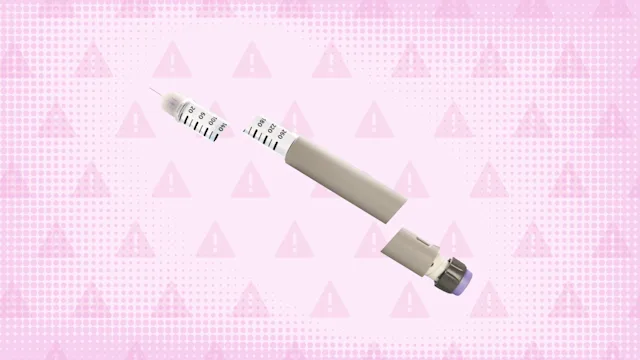
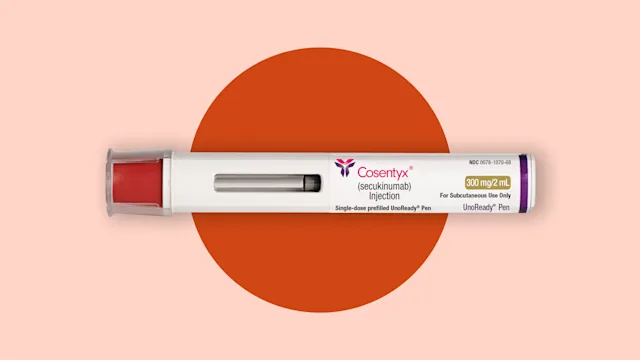
Subcutaneous injections: Most biologics come in easy-to-use “injector pens,” so you never see the needle. You place the pen against your belly or thigh and push a button to deliver the medication under your skin. Some biologics come as prefilled syringes or vials. Many people give themselves injections at home, and medication companies often provide instructional videos, support phone numbers, and at-home nurse training.
IV infusions: Some biologics are given as an infusion through an IV placed in your arm. Infusions can take 30 minutes to 2 hours, depending on the medication. Nurses monitor you during treatment and watch for side effects.
What are the side effects of biologics?
Specific side effects will depend on the medication you’re taking. But most biologics share these two common risks:
Injection site reactions: Mild redness, soreness, and swelling after the injection is normal. If reactions become more severe or worsen after each injection, talk with your healthcare team. You may need a different medication.
Infections: Biologics lower activity in parts of the immune system, so they can increase your risk of infections. Most infections are mild, like the common cold and flu. But sometimes, biologics can lead to severe infections that need hospitalization.
Before starting a biologic, your healthcare team will typically:
Test for infections like hepatitis, HIV, and tuberculosis
Make sure that you’re up-to-date on recommended vaccinations
Recommend holding treatment if you develop a significant infection
You might feel scared about possible side effects, and that’s understandable. But like all medications, biologics have risks and benefits. You and your dermatologist will work together to choose a treatment that fits your needs.
Which medication works best for psoriasis?
There isn’t one “best” medication for psoriasis. A treatment that works well for one person may not be the best choice for someone else.
That said, newer biologic medications tend to be some of the most effective treatments available today. Studies suggest that medications in the IL-17 and IL-23 blocker families might work best. Remicade, an infusion in the TNF-alpha blocker family, also works well.
How to choose the right medication for your psoriasis
With so many options available, it’s normal to feel a bit overwhelmed. Some factors that you and your healthcare team will consider when choosing a medication include:
The type of psoriasis you have
The severity of your psoriasis
Your other health problems
Medication side effects
Your insurance coverage
If you don’t have insurance or your insurance doesn’t cover the medication you need, there are programs that can help. These include manufacturer copay cards if you have private insurance and different assistance programs if you have Medicare.
How long will it take for the medication to work?
Generally speaking, most oral medications start working within 2 to 3 months. Biologics can begin working within weeks, but it often takes 3 to 6 months to see their full effect.
Sometimes, the first medication you try works well. Other times, it takes some trial and error to find the right fit. If one treatment doesn’t work, don’t lose hope. There's a medication out there for you.
Frequently asked questions
Yes. Phototherapy (or light therapy) is an effective treatment for psoriasis. It uses specific wavelengths of ultraviolet (UV) light to:
Slow down the growth of skin cells
Lower inflammation
Reduce or eliminate the itch
There are a few different types of light therapy, and most require an in-office visit. Treatment usually involves standing in front of the UV light sources for a few minutes, 3 times a week. Once you see improvement, you can decrease how often you get treatment. Light therapy can also be used in combination with other psoriasis treatments.
Psoriasis triggers vary from person to person, but some are more common than others. Identifying and avoiding your personal triggers may help reduce psoriasis flares.
Here are some of the most common psoriasis triggers:
Medications like beta blockers and nonsteroidal anti-inflammatory drugs (NSAIDs)
Alcohol
Infections like strep throat
Stress
Certain foods like sugar and gluten
Without treatment, psoriasis can worsen over time and affect larger areas of skin. This can lead to increased itching, discomfort, sleep disruption, and emotional distress. If you have psoriatic arthritis, delaying treatment can result in permanent joint damage and disfiguration.
Psoriasis is linked with an increased risk of other medical conditions (called comorbidities), including:
Not treating psoriasis can also increase your risk of developing these psoriasis-related complications.
Yes. Phototherapy (or light therapy) is an effective treatment for psoriasis. It uses specific wavelengths of ultraviolet (UV) light to:
Slow down the growth of skin cells
Lower inflammation
Reduce or eliminate the itch
There are a few different types of light therapy, and most require an in-office visit. Treatment usually involves standing in front of the UV light sources for a few minutes, 3 times a week. Once you see improvement, you can decrease how often you get treatment. Light therapy can also be used in combination with other psoriasis treatments.
Psoriasis triggers vary from person to person, but some are more common than others. Identifying and avoiding your personal triggers may help reduce psoriasis flares.
Here are some of the most common psoriasis triggers:
Medications like beta blockers and nonsteroidal anti-inflammatory drugs (NSAIDs)
Alcohol
Infections like strep throat
Stress
Certain foods like sugar and gluten
Without treatment, psoriasis can worsen over time and affect larger areas of skin. This can lead to increased itching, discomfort, sleep disruption, and emotional distress. If you have psoriatic arthritis, delaying treatment can result in permanent joint damage and disfiguration.
Psoriasis is linked with an increased risk of other medical conditions (called comorbidities), including:
Not treating psoriasis can also increase your risk of developing these psoriasis-related complications.
The bottom line
If creams and other topical treatments aren’t controlling your psoriasis, it may be time to consider a systemic psoriasis medication. These treatments include pills, injections, and infusions that work throughout the body. With more treatment options available than ever before, most people can find a medication that works well for them. Your dermatologist can help you choose the best option based on your symptoms, medical history, lifestyle, and treatment goals.

Why trust our experts?




References
American Academy of Dermatology Association. (n.d.). Psoriasis treatment: Phototherapy.
Armstrong, A. W., et al. (2020). Comparison of biologics and oral treatments for plaque psoriasis: A meta-analysis. JAMA Dermatology.
Centers for Disease Control and Prevention. (n.d.). Vaccines & immunizations.
Fala, L. (2015). Otezla (apremilast), an oral PDE-4 inhibitor, receives FDA approval for the treatment of patients with active psoriatic arthritis and plaque psoriasis. American Health and Drug Benefits.
Medicare.gov. (n.d.). Help with drug costs.
Menter, A., et al. (2020). Joint AAD-NPF guidelines of care for the management of psoriasis with systemic nonbiologic therapies. Journal of the American Academy of Dermatology.
National Psoriasis Foundation. (n.d.). Systemics.
National Psoriasis Foundation. (2025). Cyclosporine.
National Psoriasis Foundation. (2025). Generalized pustular psoriasis.
National Psoriasis Foundation. (2025). Otezla (apremilast).
National Psoriasis Foundation. (2025). Related conditions of psoriasis.
National Psoriasis Foundation. (2025). Soriatane (acitretin).
Sbidian, E., et al. (2023). Systemic pharmacological treatments for chronic plaque psoriasis: A network meta-analysis. The Cochrane Database of Systematic Reviews.