


What Is the Best Psoriasis Treatment for You?
Whether your psoriasis is moderate or severe, there are many treatment options. Browse over-the-counter medications, biologics, and other psoriasis treatments.
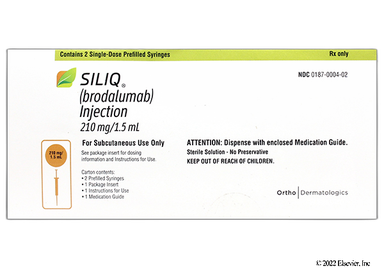
Siliq (brodalumab) is an under-the-skin injection that's approved for plaque psoriasis. After a couple of starter doses, you only need to inject it once every 2 weeks. Because there's a chance that Siliq (brodalumab) might raise your risk for mood problems, you must register with the Risk Evaluation and Mitigation Strategies (REMS) program for this medication. It's brand name only and can be very expensive.

Siliq (brodalumab) is a monoclonal antibody that binds to receptors (proteins) in your body to lower the number of cells that cause inflammation.
| Common Brands | Siliq |
|---|---|
| Drug Class | Monoclonal antibody |
| Controlled Substance Classification | Not a controlled medication |
| Generic Status | No lower-cost generic available |
| Availability | Prescription only |

The following side effects may get better over time as your body gets used to the medication. Let your healthcare provider know immediately if you continue to experience these symptoms or if they worsen over time.
Contact your healthcare provider immediately if you experience any of the following.
Side effects that you should report to your care team as soon as possible:
Side effects that usually do not require medical attention (report these to your care team if they continue or are bothersome):




Siliq (brodalumab) can cause some serious health issues. This risk may be even higher for certain groups. If this worries you, talk to your doctor or pharmacist about other options.
 Although rare, a few people who took Siliq (brodalumab) have commited suicide. But there's no clear evidence that shows this medication caused the suicides. To be cautious, people who've a history of depression or suicidal thoughts should only take Siliq (brodalumab) if their provider think the benefit is greater than the risk. If you experience suicidal thoughts or unusual behavior (e.g., anxiety, panic attacks, difficulty sleeping, feeling angry or irritated, restlessness) while taking Siliq (brodalumab), call your provider right away.
Because of this risk, Siliq (brodalumab) is only available through a restricted program under Risk Evaluation and Mitigation Strategies (REMS) called the SILIQ REMS Program. Your provider, pharmacy, and you must all be registered with this program in order to prescribe, dispense, or take this medication. This program will help your provider monitor you for mood changes, new or worsening anxiety or depression, or abnormal thoughts.
Siliq (brodalumab) can raise your risk of serious or life-threatening infections. Serious infections are more likely to happen if you have other long-term conditions. If you develop any symptoms of an infection, such as fever, difficulty breathing, a cough that won't go away, night sweats, or confusion, contact your provider right away. Don't take Siliq (brodalumab) if you have an active infection.
Make sure your provider knows your medical history before starting Siliq (brodalumab), especially if you've ever had tuberculosis (TB). This medication can cause new or old TB infections to come back. For this reason, you'll need to get tested for TB before starting Siliq (brodalumab) and during treatment. If you test positive (meaning that you’re infected), you’ll likely have to get treated for TB before starting or continuing Siliq (brodalumab).
To help avoid getting sick, your provider will make sure that you're all up-to-date with your vaccines before you start Siliq (brodalumab). Once you start treatment with this medication, you won't be able to get live vaccines, like the measles, mumps, and rubella vaccine (MMR), FluMist (nasal flu vaccine), or Varivax (varicella vaccine). This is because there's a chance that you might get sick from the live vaccines since Siliq (brodalumab) cause your immune system to not work as well.
People with Crohn's disease shouldn't take Siliq (brodalumab) because it could make symptoms worse. This medication can even cause Crohn's disease to develop if you've never had it before. If you experience unexplained diarrhea, fever, stomach pain, weight loss, and a loss of energy, call your provider because you may need to stop taking this medication.

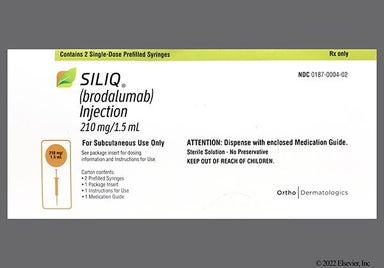
 Carton
| Dosage | Quantity | Price as low as | Price per unit |
|---|---|---|---|
| 2 syringes of 210mg/1.5ml | 1 carton | $4,440.76 | $4,440.76 |


Contraindications are specific health conditions or situations in which a person should not take a medication due to safety concerns. If you have any of the following conditions or if any of the following apply to you, let your healthcare provider know because Siliq (brodalumab) will not be safe for you to take.




Prescription savings
Stop paying too much for your prescriptions. Compare prices, get pharmacy coupons, and save up to 80%.Resources
About GoodRx
 Find expert answers to your health questions so you can make the best decisions for yourself and your family.
Health conditions
Medications & treatment
Access & affordability
Well-being
Medication discounts

If you've been using Siliq for more than 4 months and you don't see an improvement in your plaque psoriasis, this medication is unlikely working for you. Continuing this medication isn't recommended because doing so might put you at risk for side effects, such as Crohn's disease or infections. Talk with your provider about an alternative treatment.
Not commonly. In clinical studies, about 2% of participants experienced an injection site reaction. This reaction involved either itchy, redness, bruising, or bleeding to the skin. It didn't always involve pain and the reaction isn't unique to Siliq. In the same study, a similar number of people who used a placebo injection or a similar medication called Stelara experienced some irritation at their injection site.
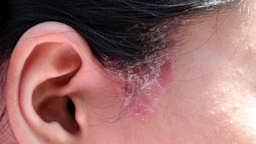
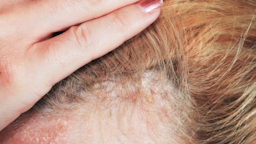
Siliq is only approved for plaque psoriasis that's moderate or severe in people who are candidates for systemic therapy (injections or pills) or phototherapy (treatment using ultraviolet or UV light). It's also only recommended if you haven't responded or have lost a response to another treatment. If your provider says your plaque psoriasis is a mild form or you haven't tried another medication before Siliq, talk to them about alternative treatment options for your condition.
If you forget to store the syringe in the fridge when you're not using it, it can stay at room temperature for 2 weeks. Keep in mind though, that once the syringe is left out at room temperature, you can't put it back in the fridge. If it's been left outside the fridge for longer than two weeks, throw it away because it may affect how the medication works.
Talk to your provider before drinking alcohol with this medication. Especially since alcohol can worsen your plaque psoriasis symptoms.
