Key takeaways:
Birth control pills work to prevent pregnancy in a few ways. They prevent the release of an egg from the ovaries, make it harder for sperm to reach an egg, and prevent a fertilized egg from implanting in the uterus.
Birth control pills are about 93% effective with typical use. Taking your pills at the same time every day helps them to be as effective as possible.
Side effects are similar between different birth control pills. Headaches, breast tenderness, and breakthrough bleeding are all commonly reported.
There are many ways to save on your birth control pills. Many options are available as lower-cost generics or have copay savings opportunities. GoodRx can help make your prescription more affordable.
Birth control pills (also called “the pill”) are the most commonly used form of contraception in the U.S. after surgical sterilization. The most recent estimate is that 11.4% of girls and women in the U.S. ages 15 to 49 take the pill, which isn’t surprising since the pill has been around for over 60 years.
Birth control pills contain human-made versions of the sex hormones estrogen and progesterone. These help prevent pregnancy in a few different ways. Generally speaking, they’re low cost, easy to use, and tolerated well.
But the pill isn’t only used for contraception. It’s also very effective at treating heavy and painful periods, and other hormone-related conditions. The pill doesn’t, however, protect against sexually transmitted infections (STIs).
Here’s a guide to commonly asked questions about birth control pills, including efficacy, possible side effects, and how to save on them.
How do birth control pills work?
Birth control pills have been used for decades to prevent unplanned pregnancies. They contain varying amounts of synthetic hormones that — when taken each day as directed — prevent pregnancy in the following ways:
Stop the ovaries from releasing eggs (ovulation): This is the main way birth control pills prevent pregnancy.
Thicken the cervical mucus: This makes it harder for sperm to reach an egg.
Thin the lining of the uterus: This makes it harder for a fertilized egg to implant and start a pregnancy.
Using the pill for contraception is reversible. In other words, you can get pregnant when you stop taking it. In order for the pill to work best, you need to take it every day — no exceptions. So it’s helpful to make it part of your routine, like taking it every morning when you brush your teeth, or every night before going to sleep. Medication reminder apps can also be helpful.
It’s important to note that the pill isn’t the only form of contraception — there are many other options. Examples include intrauterine devices (IUDs), medication patches, and even surgery (which is permanent).
What else are birth control pills used for?
The pill can do more than prevent unplanned pregnancy. It’s also used to treat many symptoms and conditions related to sex hormones. While this guide will focus on the pill as it’s used for contraception, it’s worth mentioning the other conditions it can treat, such as:
Premenstrual syndrome (PMS)
Premenstrual dysphoric disorder (PMDD)
Heavy menstrual bleeding disorders
Polycystic ovary syndrome (PCOS)
Acne or unwanted hair growth due to hormones

Birth control pill alternatives: Long-acting methods like intrauterine devices (IUDs), implants, and more offer reliable protection without the hassle of remembering to take a daily pill.
Are IUDs safe for teens? Yes, IUDs are safe for teens. Experts recommend IUDs as one of the safest and most effective forms of birth control. Find out why.
Side effects of birth control pills: If you’re considering the pill, it can be helpful to know about possible side effects. Here’s what you need to know.
Different brands and types of birth control pills
There are many different brands of birth control pills. Here we’ll break it down into combination (estrogen and progestin) pills and progestin-only pills.
Combination pills
Most birth control pills contain some combination of the female sex hormones estrogen and progestin (an absorbable form of progesterone). These are known as combination pills.
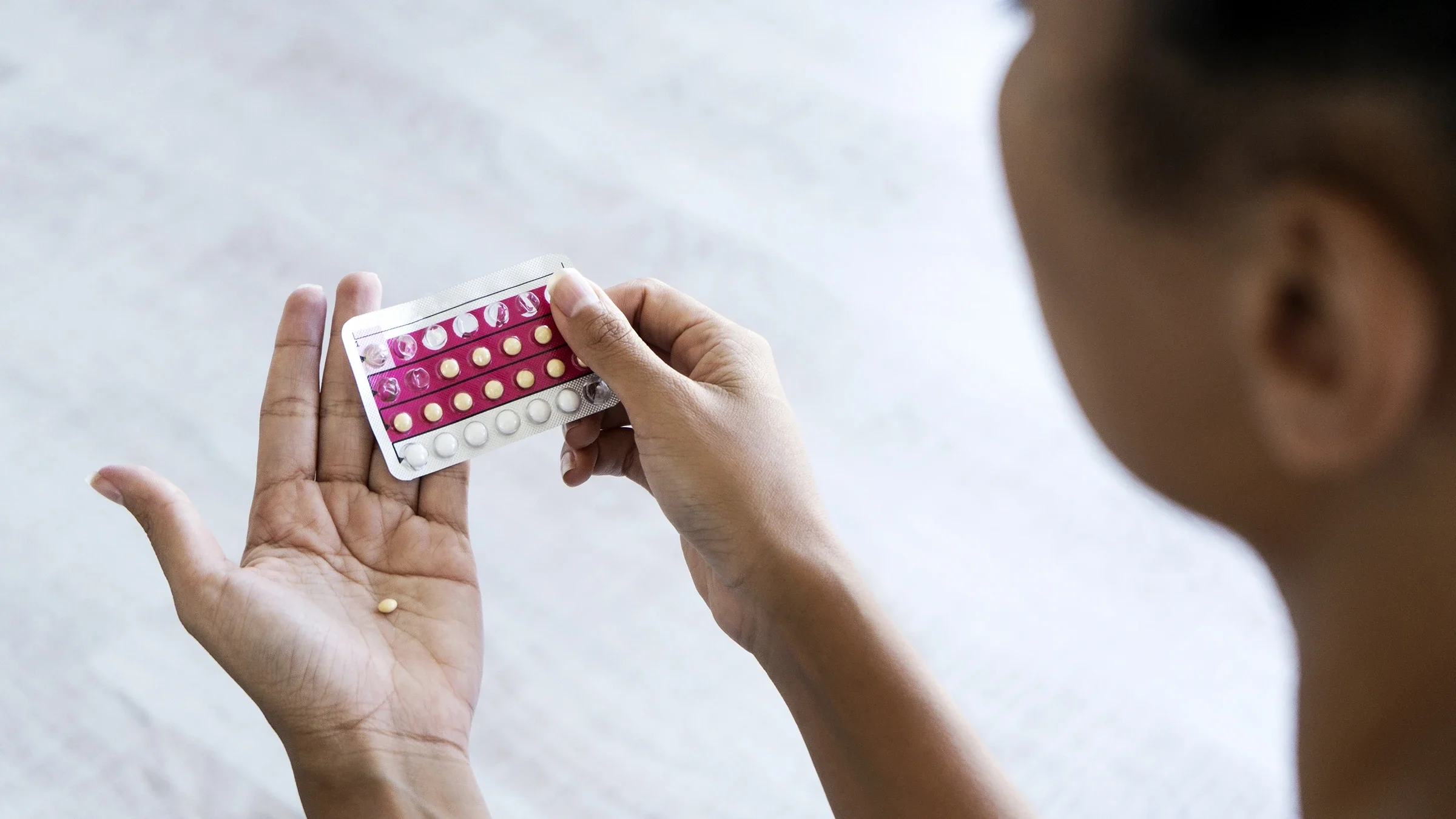
Usually, with combination pills, you take an active pill (with hormones) each day for 21 to 24 days. This is followed by a pill without hormones (a placebo) or no pill for 4 to 7 days. During this hormone-free time, you can expect to have withdrawal bleeding, like a period. Unless your prescriber tells you otherwise, it’s usually OK to skip the 4- or 7-day break.
- EstaryllaGeneric Ortho-Cyclen
- Microgestin Fe 1/20Aurovela Fe 1/20 and Blisovi Fe 1/20 and Gildess Fe 1/20 and Hailey Fe 1/20 and Junel Fe 1/20 and Larin Fe 1/20 and Tarina Fe 1/20
- Loestrin Fe 1/20Aurovela Fe 1/20 and Blisovi Fe 1/20 and Gildess Fe 1/20 and Hailey Fe 1/20 and Junel Fe 1/20 and Larin Fe 1/20 and Tarina Fe 1/20
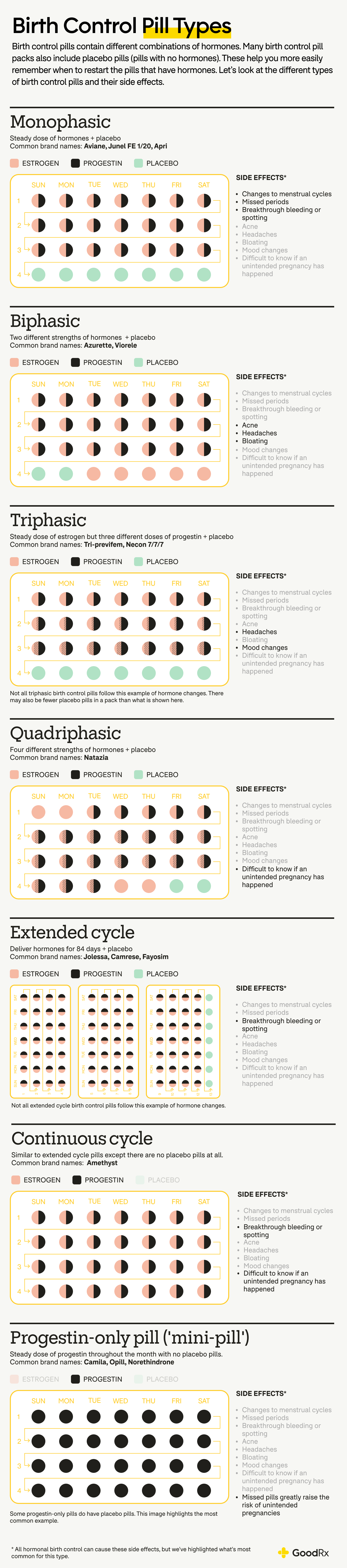
The different types of combination pills vary based on the amount of hormones in them:
Monophasic pills: These pills have the same amount of hormone in each active pill. Examples include Vienva (ethinyl estradiol / levonorgestrel) and Junel 1/20 (ethinyl estradiol / norethindrone).
Biphasic pills: Here, each pack has two types of hormone-containing pills and placebo pills. Examples include Kariva and Viorele (ethinyl estradiol / desogestrel).
Triphasic pills: These pills have different levels of hormones from one week to the next, like your normal monthly cycle would. Examples include Tri-Sprintec and Necon 7/7/7 (ethinyl estradiol / norethindrone).
Quadriphasic pills: The amount of both hormones in these pills change throughout the month, to more closely mimic a typical monthly cycle. The only option currently is Natazia (estradiol valerate / dienogest).
Extended-cycle (continuous use) pills: These forms of the pill are designed to delay your period for a few months or even a year by skipping the placebo pills. Examples include Jolessa and Amethyst (ethinyl estradiol / levonorgestrel).
‘Mini pills’
Progestin-only pills — sometimes called “mini pills” — are a good option for people who can’t take combination pills. These pills work the same way as combination pills, except progestin-only pills aren’t as good at stopping ovulation. The body also processes them faster, so you have to take them at the same time every day (more on this below).
Progestin-only pills come in a 28-day pack. In some packs, each pill contains a progestin. In others, there are 24 progestin pills and four placebo pills.
Examples of “mini pill” brands include:
How effective are birth control pills?
How well birth control pills prevent unplanned pregnancy depends on how well you remember to take them each day.
With “perfect use,” when you take the pill every day (and at the same time with a mini pill) without forgetting any, less than 1 person in 100 has an unplanned pregnancy every year. In other words, it’s over 99% effective.
With “typical use,” forgetting to take the pill occasionally or taking a mini pill late, birth control pills are about 93% effective. So, 7 out of 100 people who use the pill have an unplanned pregnancy every year.
The mini pill must be taken at the same time every day (within a 3-hour window) to work. If this 3-hour window passes, you may not be protected against pregnancy. The only exception is drospirenone (Slynd), which allows a 24-hour window.
Combination pills are a little more forgiving. As long as you take your pill before the day is over, you’re still protected against pregnancy. But taking it at the same time every day can make it easier for you to remember to take it.
Some medications can make the pill less effective, no matter how regularly you take it. Be sure to share your list of medications with your care team and pharmacist when asking about birth control options.
How long do birth control pills take to work?
How long it takes for the pill to be effective depends on the type of pill you take and when you start taking it.
Combination pills
When starting combination pills for the first time, you may need backup contraception (such as a condom) if you are sexually active. It all depends on the timing of when you start taking the pill:
If you start the pill within 5 days of when your period started, you don’t need backup contraception.
If you start the pill more than 5 days after your period began, you’ll need backup contraception for 7 days.
If you’re not sure when your last period was, use contraception for 7 days to be safe.
Progestin-only pills
When starting progestin-only pills for the first time, you may need backup contraception if you are sexually active. It depends on your timing and the type of progestin:
If you start norethindrone (Heather) on the first day of your period, you don’t need backup contraception. If you start it any other day, you’ll need backup contraception for 2 days.
You can start taking norgestrel (Opill) anytime. But no matter when you start, use backup contraception for 2 days.
It’s best to start drospirenone (Slynd) on the first day of your period. There are no instructions for what to do if you start it any other time, so ask your healthcare team if you’re unsure.
When in doubt, use backup contraception for 2 days (7 days for Slynd) to be safe.
What are possible side effects of birth control pills?
After starting the pill for the first time, or when switching to a new one, it’s normal to experience side effects. Some common side effects include:
Headaches
Nausea
Breast tenderness
Changes to your period
Breakthrough bleeding or spotting
These side effects are usually temporary and tend to get better after the first few months. If you continue to struggle with side effects, reach out to your healthcare team, as it can help to switch to a different kind of pill.
Can the pill cause weight gain?
Many people think that the pill causes weight gain. But, in a large review of studies, no link was found between the pill and significant weight gain. And another large review didn’t find a difference between combination and progestin-only birth control in terms of weight gain.
Serious side effects
In addition to the side effects mentioned above, there’s a more serious issue related to combination pills. There’s a known link between hormonal contraception and the risk of blood clots, heart attack, and stroke. The risk is highest in the first year of use. This risk isn’t specific to the pill, however. A higher risk of blood clots is also seen with other forms of contraception that use hormones, such as vaginal ring birth control and the patch.
Mood changes are another possible issue with the pill. A large study of over 1 million women found a link between all types of hormonal contraception and later use of an antidepressant. This link was found to be stronger in younger women and adolescents. But experts have noted that newer birth control pills may be less likely to cause mood changes than older pills.
It’s normal to have questions about serious side effects. Your women’s health professional can speak with you about your individual risks.
Are the side effects of progestin-only pills different?
Not really. The side effects listed above can also be seen with progestin-only pills. Irregular and unpredictable bleeding tends to be the most common side effect of progestin-only birth control. This is less likely if you take the type with four placebo pills.
Progestin-only pills are thought to be safer for women at high risk of blood clots. However, the type of progestin may be important. Research suggests that combination pills containing drospirenone and desogestrel, a type of progestin, might be linked to an increased risk of blood clots. But this review didn’t include drospirenone-only pills, which are relatively new. So far, data suggest drospirenone-only pills don’t carry an increased risk of blood clots, but research is ongoing.
This information can be confusing and overwhelming, so once again, be sure to speak with your healthcare team about any concerns.
Who should not take birth control pills?
The pill might be the most commonly used reversible birth control, but that doesn’t mean it’s right for everyone. Here’s what you need to know about who should avoid the pill.
Who should avoid combination pills
You should not take combination birth control pills if you are 35 years or older and smoke. You should also not take them if you have certain medical conditions, such as:
Blood clotting disorder
Blood clot or stroke in the past
Diabetes with kidney, eye, nerve, or blood vessel problems
Heart disease
Kidney disease
Liver disease
Lupus with antiphospholipid antibodies
Migraine with aura
Uncontrolled high blood pressure
Vascular disease
There may be some exceptions, so it’s best to speak with a healthcare professional first.
Who should avoid progestin-only pills
You should not take progestin-only pills if you have:
Breast cancer
High potassium or hyperkalemia (for drospirenone only)
Liver cancer
Breastfeeding women
Be sure to speak with your primary care provider or obstetrician before starting the pill if you just gave birth and/or you are breastfeeding. They might suggest that you wait to start the pill, or recommend a different type of contraception.
Due to a greater risk of blood clots in the first few weeks after giving birth, progestin-only pills are recommended over combination pills in this time window.
Progestin-only pills are safe to take while breastfeeding. Combination birth control pills aren’t usually recommended because there’s a small risk that they can affect your milk supply.
How to choose the best birth control pill for you
There are so many birth control pill options out there, it can be overwhelming. But certain factors can help you narrow it down, including your medical history and any other symptoms. There’s not really a “best” pill for anything, but some may be better than others in certain situations. For example:
Some combination pills may be better suited to treat acne.
Monophasic or continuous cycle pills may be better for mood symptoms related to PMDD. Yaz (drospirenone / ethinyl estradiol) is FDA approved to treat the condition.
Combination pills are more risky in people with a body mass index (BMI) of over 30 because of the higher risk of blood clots. That said, if you are young with no history of blood clots and you don’t smoke, then the risk increase is pretty small.
But there are other things to think about, such as what your menstrual cycle is like, how you’ve reacted to hormones in the past (if at all), and whether you have health insurance coverage.
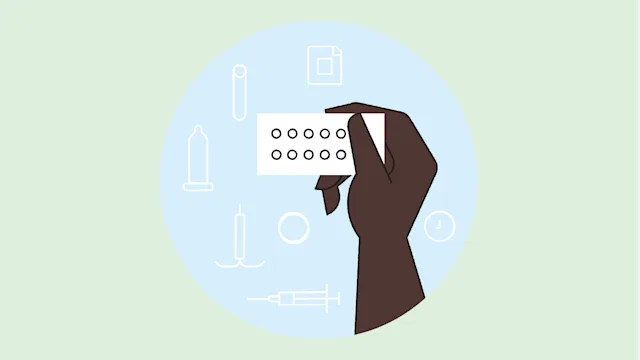
Finding the right contraceptive can be frustrating, and if you’re just starting out, it’s hard to predict how your body will react to the hormones. Even once you’re settled on the pill, you’ll probably go through a certain amount of trial and error before finding the pill that’s best for you. This helpful guide to birth control options can help you choose.
Take our quiz: Types of birth control
How to get birth control pills
There are a few options for getting birth control pills, depending on where you live.
With a prescription
In many places in the U.S., you need a prescription for birth control pills. That means contacting a healthcare professional and probably going in for a visit. This could be difficult if you don’t have insurance, or time to wait for an appointment. In that case, there are several telehealth services that can provide a consultation and prescription online.
Without a prescription
Opill, a progestin-only pill, is the first over-the-counter (OTC) birth control. This means you can get it without a prescription, at a pharmacy or online.
And in over 30 states, you don’t need a doctor’s prescription for birth control. A growing number of states allow pharmacists to prescribe hormonal birth control.
How to save on birth control pills
If you have health insurance, birth control pills are likely to be fully covered under the Affordable Care Act.
If you’re uninsured or underinsured, there are still many ways to save on birth control pills:
Savings opportunities are also available for select brand-name products:
For Nextstellis (drospirenone / estetrol), anyone with a valid prescription, regardless of insurance status, can use GoodRx to purchase a 28-day supply at an exclusive cash price of $65. And if you have commercial insurance, you may be eligible to pay as little as $0 for Nextstellis using a savings card from the manufacturer.
GoodRx can also help you access a 28-day supply of Lo Loestrin Fe (norethindrone acetate / ethinyl estradiol / ferrous fumarate) at an exclusive cash price of $99. For those with commercial insurance, you may be eligible to pay as little as $25 for Lo Loestrin Fe using a manufacturer savings card.
More birth control resources
There are many resources available to help guide your birth control decision. Be sure to check out the following for even more information:
Frequently asked questions
Women who take the pill may be at a slightly higher risk for breast and cervical cancer than women who don’t use hormonal contraception. But your risk returns to normal about 10 years after coming off birth control.
The pill can decrease the risk of several other cancers, including colorectal, endometrial (uterus), and ovarian cancers.
No. You will be able to conceive after you stop taking birth control pills.
If you’re taking combination pills, take your pill as soon as you remember, even if it means you have to take two pills at once. Stay on track with the rest of the pills. Use backup contraception for 7 days if you missed a pill in the first week of the pack OR if you miss more than 2 days.
If you’re taking progestin-only pills and you miss your window, take it as soon as you remember. Use backup contraception for at least 2 days (7 days for drospirenone) and stay on track with the rest of the pills.
No. Birth control pills don’t protect against STIs, such as:
You should use a male or female condom if you’re worried about getting infected. But know that condoms are not 100% effective.
Women who take the pill may be at a slightly higher risk for breast and cervical cancer than women who don’t use hormonal contraception. But your risk returns to normal about 10 years after coming off birth control.
The pill can decrease the risk of several other cancers, including colorectal, endometrial (uterus), and ovarian cancers.
No. You will be able to conceive after you stop taking birth control pills.
If you’re taking combination pills, take your pill as soon as you remember, even if it means you have to take two pills at once. Stay on track with the rest of the pills. Use backup contraception for 7 days if you missed a pill in the first week of the pack OR if you miss more than 2 days.
If you’re taking progestin-only pills and you miss your window, take it as soon as you remember. Use backup contraception for at least 2 days (7 days for drospirenone) and stay on track with the rest of the pills.
The bottom line
Birth control pills are a popular choice to help prevent pregnancy. They can also help treat other health conditions, such as acne and premenstrual dysphoric disorder. Birth control pills are typically about 93% effective. Side effects are similar across various types of oral contraception, and can include headache, breast tenderness, and spotting.
Birth control pills aren’t right for everyone, and they do have risks to be aware of. Discuss your unique circumstances with a healthcare professional when deciding which one is right for you.

Why trust our experts?



References
American College of Obstetricians and Gynecologists. (n.d.). Effectiveness of birth control methods.
American College of Obstetricians and Gynecologists. (2023). Postpartum birth control.
American College of Obstetricians and Gynecologists. (2024). Progestin-only hormonal birth control: Pill and injection.
American College of Obstetricians and Gynecologists. (2025). Combined hormonal birth control: Pill, patch, and ring.
American Society for Reproductive Medicine. (n.d.). Contraception resources.
American Society for Reproductive Medicine. (2023). Hormonal contraception.
Britton, L. E., et al. (2020). An evidence-based update on contraception. The American Journal of Nursing.
Centers for Disease Control and Prevention. (2024). Appendix C: Classifications for progestin-only contraceptives.
Centers for Disease Control and Prevention. (2024). Appendix D: Classifications for combined hormonal contraceptives.
Daniels, K., et al. (2025). Current contraceptive status among females aged 15-49: United States, 2022-2023. Centers for Disease Control and Prevention.
Exeltis USA. (2019). Slynd (drospirenone) tablets, 4mg [package insert].
Exeltis USA. (2025). Slynd- drospirenone kit [package insert].
Gallo, M. F., et al. (2014). Combination contraceptives: Effects on weight. The Cochrane Database of Systematic Reviews.
Glenmark Pharmaceuticals. (2021). Heather- norethindrone tablet [package insert].
HealthCare.gov. (n.d.). Birth control benefits.
Hotoleanu, C. (2020). Association between obesity and venous thromboembolism. Medicine and Pharmacy Reports.
Iversen, L., et al. (2017). Lifetime cancer risk and combined oral contraceptives: The Royal College of General Practitioners’ oral contraception study. American Journal of Obstetrics and Gynecology.
Kao, A. (2000). History of oral contraception. AMA Journal of Ethics.
L. Perrigo Company. (2025). Opill- norgestrel tablet [package insert].
Lidegaard, Ø., et al. (2012). Venous thrombosis in users of non-oral hormonal contraception: follow-up study, Denmark 2001-10. The BMJ.
Lopez, L. M., et al. (2016). Progestin‐only contraceptives: Effects on weight. The Cochrane Database of Systematic Reviews.
Mu, E., et al. (2022). Hormonal contraception and mood disorders. Australian Prescriber.
Office on Women’s Health. (2025). Birth control methods. U.S. Department of Health & Human Services.
Palacios, S., et al. (2020). Oestrogen-free oral contraception with a 4 mg drospirenone-only pill: New data and a review of the literature. The European Journal of Contraception & Reproductive Health Care.
Petersen, J. F., et al. (2014). Combined hormonal contraception and risk of venous thromboembolism within the first year following pregnancy. Thrombosis and Haemostasis.
Phillips, S. J., et al. (2016). Progestogen-only contraceptive use among breastfeeding women: A systematic review. Contraception.
Planned Parenthood. (n.d.). Birth control pill.
Planned Parenthood. (n.d.). How do I use the birth control pill?
Planned Parenthood. (2025). Does the pill have to be taken at a specific time each day?
Schindler, A. E. (2013). Non-contraceptive benefits of oral hormonal contraceptives. International Journal of Endocrinology and Metabolism.
Wu, C. Q., et al. (2013). Drospirenone-containing oral contraceptive pills and the risk of venous and arterial thrombosis: A systematic review. BJOG: An International Journal of Obstetrics and Gynaecology.