

What’s the Best Birth Control Pill? How to Pick a Birth Control Brand That’s Right for You
There are so many types of birth control pills to choose from. Learn about the different names, types, their side effects, safety, and how well they work.
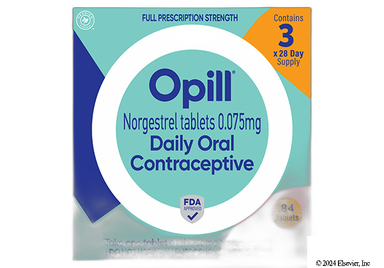
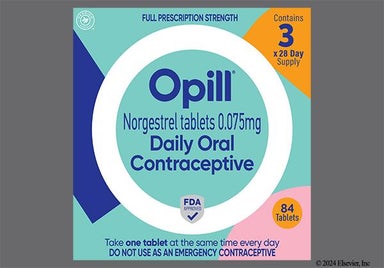
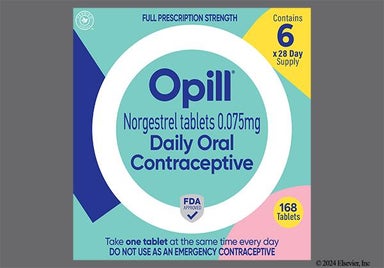
Opill (norgestrel) is the first over-the-counter (OTC) birth control pill approved by the FDA that can be used by all ages. It's a progesterone-only birth control pill and contains norgestrel, a lab-made form of progesterone — so it doesn't have any estrogen in it. Opill (norgestrel) is taken once daily by mouth to prevent pregnancy. The most common side effect is changes in menstrual periods. including breakthrough bleeding and spotting. Opill (norgestrel) shouldn't be used as an emergency contraceptive (morning after pill).

Opill (norgestrel) is a progestin, a lab-made form of progesterone (a natural hormone). It helps prevent pregnancy by blocking sperm from reaching the egg by thickening cervical mucus. The medication might also stop ovulation, or the release of an egg from the ovary.
| Common Brands | Opill |
|---|---|
| Drug Class | Progestin |
| Controlled Substance Classification | Not a controlled medication |
| Generic Status | No lower-cost generic available |
| Availability | Over-the-counter |

The following side effects may get better over time as your body gets used to the medication. Let your healthcare provider know immediately if you continue to experience these symptoms or if they worsen over time.
The following side effects were reported in at least 5% of people:
Contact your healthcare provider immediately if you experience any of the following.
Side effects that you should report to your care team as soon as possible:
Side effects that usually do not require medical attention (report these to your care team if they continue or are bothersome):




Opill (norgestrel) can cause some serious health issues. This risk may be even higher for certain groups. If this worries you, talk to your doctor or pharmacist about other options.
Some people who became pregnant while taking progestin-only birth control like Opill (norgestrel) have had an ectopic pregnancy (a pregnancy outside the womb). If you have severe pain in your lower stomach, contact your OB-GYN right away. They can examine you to see whether it's an ectopic pregnancy and whether you need closer monitoring during pregnancy.
Sometimes, ovarian cysts (small fluid-filled sacs in the ovary) can develop after taking Opill (norgestrel). These cysts rarely cause problems and tend to go away on their own. But some might lead to mild stomach pain and, in rare cases, require surgery. If you have severe stomach pain, contact your primary care provider so they can check for an ovarian cyst.
Irregular vaginal bleeding is a common side effect of Opill (norgestrel). In clinical studies, about 50% of people taking this medication experienced changes in their period, including breakthrough bleeding and spotting. Some people also stopped having a period while taking the medication. In some rare cases, these changes could be a sign of a serious condition, such as an infection or cancer. If you're concerned about irregular bleeding, talk with your healthcare professional. If you miss a period while you're taking Opill (norgestrel) and you've recently had sex, consider taking a pregnancy test.
Although rare, progestins like Opill (norgestrel) can cause liver damage, usually from high doses. Signs of liver problems include stomach pain, yellowing of the skin or whites of the eyes, dark-colored urine, and feeling tired. If you experience these symptoms, contact your primary care provider so they can check your liver health.
If you start having new or worsening migraines or develop severe, frequent, or persistent headaches while taking Opill (norgestrel), talk to your healthcare provider. Migraines can raise your risk of stroke, so it's important to find out the cause of your symptoms.
Some medications can make Opill (norgestrel) work less well at preventing pregnancy. They include seizure medications, like phenytoin (Dilantin) and carbamazepine (Tegretol), and the tuberculosis (TB) medication rifampin. Certain antibiotics, human immunodeficiency virus (HIV) medications, and herbal supplements like St. John's wort can speed up the breakdown of Opill (norgestrel), making it less effective and increasing the chance of breakthrough bleeding. Additionally, don't use Opill (norgestrel) within 5 days of taking an emergency contraceptive pill called Ella (ulipristal). Tell your primary care provider or pharmacist about all the medications and supplements you're taking before starting Opill (norgestrel).
Opill (norgestrel) contains a dye called FD&C Yellow No. 5 (tartrazine). This dye can cause some people to experience allergic reactions, such as hives or breathing problems. Talk to your primary care provider before taking Opill (norgestrel) if you're allergic to FD&C Yellow No. 5.

Each tablet contains 0.075 mg of norgestrel.
The typical dose is 1 tablet by mouth every day, at the same time each day.

Contraindications are specific health conditions or situations in which a person should not take a medication due to safety concerns. If you have any of the following conditions or if any of the following apply to you, let your healthcare provider know because Opill (norgestrel) will not be safe for you to take.







Prescription savings
Stop paying too much for your prescriptions. Compare prices, get pharmacy coupons, and save up to 80%.Resources
About GoodRx
 Find expert answers to your health questions so you can make the best decisions for yourself and your family.
Health conditions
Medications & treatment
Access & affordability
Well-being
Medication discounts

Birth control pills might raise your risk of breast cancer, but studies show that the risk is low. What's more, research is mixed on whether progestin-only birth control pills like Opill affect breast cancer risk. To be safe, Opill isn't recommended for people with a history of breast cancer. Talk to your healthcare professional about any concerns. They can help you understand your personal risk and whether this medication is right for you.
It's possible for Opill to stop your period temporarily. In clinical studies, almost 30% of people taking it didn't have a period, sometimes as early as the first cycle. This isn't harmful, but missing periods could be a sign of pregnancy. Tell your healthcare professional if you miss a period and have also missed some pills in your pack. They might recommend a pregnancy test to be sure.
Opill is safe for most people but it might not be right for everyone. Talk to a healthcare professional (HCP) before using it if you have a history of breast cancer, liver problems, or unexplained vaginal bleeding. Check with your primary care provider or pharmacist if you take certain medications for seizures, HIV, tuberculosis, or pulmonary hypertension. These medications might make Opill work less well to prevent pregnancy. In general, if you're unsure whether Opill is right for you, talk to your HCP before starting.
Opill only lasts in your system for about a day, so it's important to take it at the same time each day. If you miss a dose, your chances of getting pregnant are higher.
With perfect use, Opill is 98% effective at preventing pregnancy.It works the best when taken at the same time every day. If you miss a dose or take it more than 3 hours late, the chance of pregnancy might be higher.
You can buy Opill online, at community pharmacies, big box retailers, and directly from the manufacturer. It's also available for purchase from GoodRx.
Weight gain wasn't a common side effect in Opill clinical studies. Some birth control pills might lead to weight gain, but this is likely from the hormones causing your body to hold on to too much water. If you're concerned about any weight changes, talk to your healthcare professional.
While some birth control pills can treat acne, Opill isn't FDA-approved to treat acne. More information is needed to know how well it works to treat acne. If you're looking for acne treatment options, ask your dermatologist.
