



How to Save on Psoriasis Medications: From Topicals to Biologics
With or without insurance, there are many ways to save on psoriasis treatments. Learn more with this cost guide for medication and biologic injections for psoriasis.
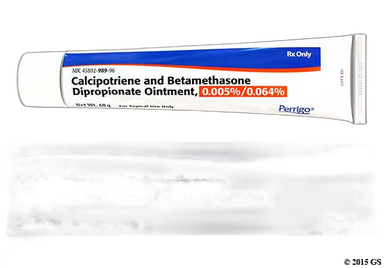
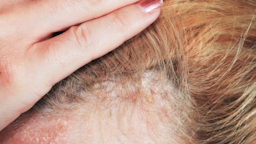
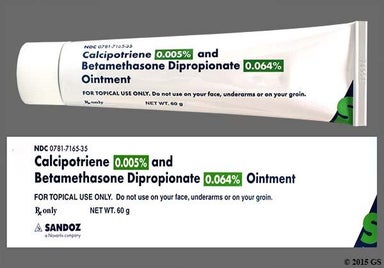
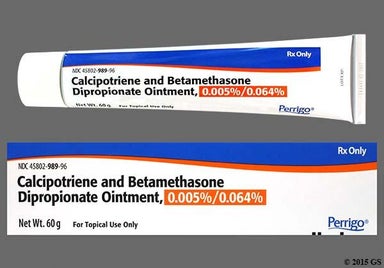
Taclonex (calcipotriene / betamethasone) is a combination medication used to treat plaque psoriasis in adults and children ages 12 years and older. It contains betamethasone (a topical corticosteroid) and calcipotriene (a form of vitamin D). Taclonex (calcipotriene / betamethasone) is available as brand name and generic ointment and topical suspension. The suspension can be applied to the scalp and body once daily for up to 8 weeks, while the ointment can be applied once daily for 4 weeks. Side effects can include itching and a burning sensation on the skin.

Taclonex (calcipotriene / betamethasone) is a combination of two medications that help treat psoriasis.
| Common Brands | Taclonex |
|---|---|
| Drug Class | Vitamin D analog / Corticosteroid |
| Controlled Substance Classification | Not a controlled medication |
| Generic Status | Lower-cost generic available |
| Availability | Prescription only |

The following side effects may get better over time as your body gets used to the medication. Let your healthcare provider know immediately if you continue to experience these symptoms or if they worsen over time.
Side effects that you should report to your care team as soon as possible:
Side effects that usually do not require medical attention (report these to your care team if they continue or are bothersome):




Taclonex (calcipotriene / betamethasone) can cause some serious health issues. This risk may be even higher for certain groups. If this worries you, talk to your doctor or pharmacist about other options.
Taclonex (calcipotriene / betamethasone) can cause high calcium levels in your blood or urine. Your healthcare team might order lab tests to check your calcium levels while you're taking this medication to make sure they're within a safe range. If your calcium levels are too high, they might ask you to stop this medication until the levels return to a safe range. If you have concerns, speak to your care team.
Taclonex contains betamethasone, a corticosteroid. This is a man-made version of cortisol, the stress hormone naturally made by the body. Using Taclonex (calcipotriene / betamethasone) for a long time can lead to symptoms of too much stress hormone, including weight gain and higher blood sugar levels. Children are at a higher risk, since more medication might be absorbed.
In addition, using Taclonex (calcipotriene / betamethasone) over a longer period of time can cause your body to stop making its own stress hormone. When you stop this medication, it takes a while for the body to ramp up making its own stress hormone again. During this time, you might experience topical steroid withdrawal symptoms, such as itchy or burning skin. If you need to stop Taclonex (calcipotriene / betamethasone), your healthcare team can help you do so safely by lowering your dose slowly over time.
Talk with your healthcare team if you're concerned about any of these side effects.
Some people can experience an allergic skin reaction to the ingredients in Taclonex (calcipotriene / betamethasone). Speak to your prescriber if you develop a skin rash from using Taclonex (calcipotriene / betamethasone), or if your symptoms aren't getting better.
Taclonex (calcipotriene / betamethasone) might raise your risk of glaucoma (raised pressure in your eye) and cataracts. You should avoid using this medication near your eyes. If you notice any vision changes, such as blurred vision, eye pain, or tunnel vision, let your care team know.
Taclonex (calcipotriene / betamethasone) can cause your skin to become more sensitive to sunlight. Avoid excessive sun exposure and tanning beds while using Taclonex (calcipotriene / betamethasone), and wear sunscreen and protective clothing when outside to prevent skin damage.




Prescription savings
Stop paying too much for your prescriptions. Compare prices, get pharmacy coupons, and save up to 80%. Find expert answers to your health questions so you can make the best decisions for yourself and your family.
Health conditions
Medications & treatment
Access & affordability
Medication discounts


Yes, Taclonex contains a topical steroid(betamethasone). Betamethasone works to treat psoriasis by lowering inflammation in the skin. This helps relieve redness, itching, and swelling.
You should avoid using Taclonex on the face, unless your prescriber instructed you to use it there. This is because the steroid medication in Taclonex, betamethasone, is considered a medium-to-high potency corticosteroid. Typically, this type of steroid shouldn't be used on or near sensitive skin areas, like the face, because the skin is thinner and doing so can result in more side effects. If you need a corticosteroid for the face, your dermatologist might recommend a low-potency corticosteroid to minimize the risk of side effects.
The manufacturer doesn't state how long you need to leave Taclonex suspension on your scalp. But instruction does say that you should avoid showering or washing your hair right after applying it. Leaving Taclonex on your skin for as long as possible will help the medication work best for your psoriasis.
No. Don't wash Taclonex off of your scalp or body after applying it. You should leave the medication on for as long as possible.
Yes, Taclonex can expire. There should be an expiration date on your product. Don't use the medication past this date, because it's unclear whether it will still work well or be safe after this date. If you're using the Taclonex suspension, it's only good for 6 months after it has been opened. After this time, throw it away. If your Taclonex is expired, ask your prescriber or pharmacist about a refill.
Yes. Taclonex is available as both a generic ointment and generic suspension.
No, Taclonex isn't available over the counter (OTC). You can only get it with a prescription from your dermatologist or other healthcare professional. There are treatments for psoriasis that are available OTC, such as hydrocortisone 1%, which is a low-potency corticosteroid.
