


Grapefruit Juice, Antibiotics, and More: 8 Belsomra Interactions
Learn about common interactions with Belsomra, including medication, food, and alcohol.
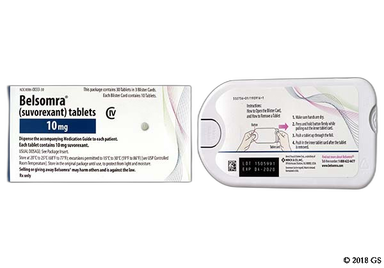
Belsomra (suvorexant) is used to treat insomnia in adults. It's helpful for those who have a hard time falling asleep or staying asleep. This sleep medication belongs to the drug class called orexin receptor antagonists. You take a dosage within 30 minutes of bedtime as needed for sleep. It's common to feel drowsy the next day as a side effect. Belsomra (suvorexant) is a controlled substance because of the risk of misuse and becoming habit-forming. It's available as a brand-name medication only.

Belsomra (suvorexant) is an orexin receptor antagonist. It works by blocking the action of orexin. Orexin is a chemical in the brain that plays a role in the sleep cycle and helps with wakefulness. By blocking orexin, Belsomra (suvorexant) can help people sleep.
| Common Brands | Belsomra |
|---|---|
| Drug Class | Orexin receptor antagonist |
| Controlled Substance Classification | Schedule IV |
| Generic Status | No lower-cost generic available |
| Availability | Prescription only |

Belsomra (suvorexant) can cause some serious health issues. This risk may be even higher for certain groups. If this worries you, talk to your doctor or pharmacist about other options.
Belsomra (suvorexant) can make you feel drowsy. It can also make it harder to focus, think clearly, and react quickly. These effects can last into the morning or daytime after taking the medication. Sometimes, they can last for up to several days after you stop taking it.
The risk is higher if you don't get a full 7 hours of sleep after taking Belsomra (suvorexant). The risk is also higher if you take Belsomra (suvorexant) with other medications that make you tired. People over 65 might have a greater risk of falling because of drowsiness.
Belsomra (suvorexant) can affect your ability to drive. It might raise your risk of falling asleep at the wheel. Don't drive, use heavy machines, or do anything that you need to be alert for until you know how the medication affects you.
In studies, some people who took Belsomra (suvorexant) had suicidal thoughts or thoughts of hurting themselves. People with depression might also have worse mental health. Tell your prescriber if you or your loved ones notice signs of worsened depression while taking this medication. Call 911 right away if you have any thoughts of hurting yourself.
Sometimes after taking Belsomra (suvorexant), people can do things in their sleep or when they're not fully awake. It can be dangerous and might happen any time you take the medication. They include sleepwalking, cooking and eating, talking on the phone, having sex, or even driving a car. Most people don't remember doing these things. So if someone close to you says you've done something like this in your sleep, talk to your prescriber. You'll need to stop taking Belsomra (suvorexant).
Sometimes, Belsomra (suvorexant) can cause sleep paralysis. This when you can't move or talk for a few minutes right before falling asleep or waking up. Some people might also have hallucinations (seeing or hearing things that aren't real). They can be very vivid or disturbing. In addition, some people might have sudden leg weakness, which can happen during the day or at night. The weakness usually lasts from seconds to a few minutes. Talk to your prescriber right away if any of these effects happen to you.
If you have chronic obstructive pulmonary disease (COPD), obstructive sleep apnea, or other breathing problems, talk to your prescriber before starting Belsomra (suvorexant). It's not known how the medication could affect your breathing. Your prescriber can weigh the risks and benefits to see if the medication is safe for you to take.

The following side effects may get better over time as your body gets used to the medication. Let your healthcare provider know immediately if you continue to experience these symptoms or if they worsen over time.
Contact your healthcare provider immediately if you experience any of the following.
Side effects that you should report to your care team as soon as possible:
Side effects that usually do not require medical attention (report these to your care team if they continue or are bothersome):




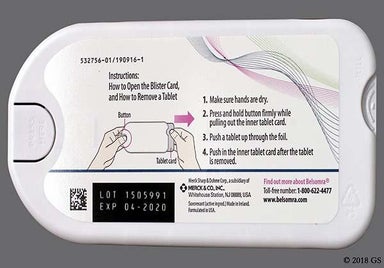
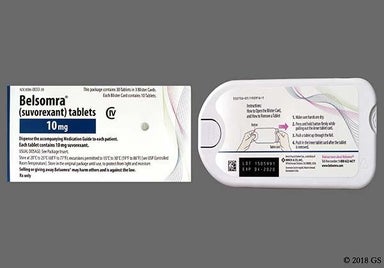
 Tablet
| Dosage | Quantity | Price as low as | Price per unit |
|---|---|---|---|
| 5mg | 30 tablets | $463.24 | $15.44 |
| 10mg | 30 tablets | $462.80 | $15.43 |
| 15mg | 30 tablets | $462.89 | $15.43 |
| 20mg | 30 tablets | $464.03 | $15.47 |
The recommended dose is 10 mg by mouth within 30 minutes of bedtime. Make sure to have at least 7 hours in bed before you need to wake up.
If you're still having trouble sleeping, your prescriber might raise your dose. The maximum dose is 20 mg by mouth at bedtime.


Contraindications are specific health conditions or situations in which a person should not take a medication due to safety concerns. If you have any of the following conditions or if any of the following apply to you, let your healthcare provider know because Belsomra (suvorexant) will not be safe for you to take.






Prescription savings
Stop paying too much for your prescriptions. Compare prices, get pharmacy coupons, and save up to 80%. Find expert answers to your health questions so you can make the best decisions for yourself and your family.
Health conditions
Medications & treatment
Access & affordability
 Our monthly healthcare membership can help you save thousands on your prescription costs.
Resources

Yes, Belsomra is a schedule IV controlled substance. This means it has some risk of misuse and dependence. So far, studies haven't shown that people can develop physical dependence while taking the medication or withdrawal symptoms after stopping. But it's important to be aware of the risk. Federal and state laws limit how controlled substances like Belsomra are prescribed. Talk to your prescriber to learn more about these risks and restrictions.
No. Don't take more than 20 mg of Belsomra per night. This is the highest dose you should take. Taking more than 20 mg can make side effects worse. You might feel even sleepier, have more trouble concentrating, and have coordination problems the next day. If you take more than your prescribed dose by accident, call your prescriber right away.
It's not clear if Belsomra is addictive or habit-forming. The medication does has some risk of dependence. This is one reason why it's a controlled substance. But studies haven't found that people have had physical dependence or withdrawal symptoms from it. Still, it's important to know that Belsomra might have this risk. Talk to your prescriber if you're worried about this.
No. Don't cut Belsomra tablets. They're film-coated and they also don't have a score line (a line for cutting). Because of this, it's not recommended to cut them. You might get uneven halves and then possible take the wrong dose if you cut them. Belsomra comes in four different dosage strengths. So if your dose changes, your prescriber will probably give you a different strength of the pill.
Belsomra starts to work within 30 minutes to an hour. You should take it half an hour before bed because it can help you feel sleepy during that time. Keep in mind that if you take the medication with food or right after eating, it might take a little longer to start working.
No. Belsomra and zolpidem (Ambien) are both sleep medications that aren't benzodiazepines. They work in different ways to help people fall asleep and stay asleep. Ambien comes in more dosage forms than Belsomra. This can make it easier to match people's preferences. Both medications are controlled substances that have a risk of misuse. Ambien can cause physical dependence and withdrawal, especially at higher doses or with long-term use. But this hasn't been reported with Belsomra. Talk to your prescriber or sleep specialist to compare the two.
Weight gain isn't a common side effect of Belsomra. If you notice weight changes while taking this medication, speak with your prescriber. They can help figure out the cause and suggest ways to manage your weight.
No, there isn't a generic version of Belsomra available yet. Right now, it only comes as a brand-name medication.
