






Children’s NyQuil Dosages: Your GoodRx Guide
The recommended children’s dosage for NyQuil will vary depending on which product you use. Get dosage info for NyQuil Kids Honey, Children’s NyQuil, and more.
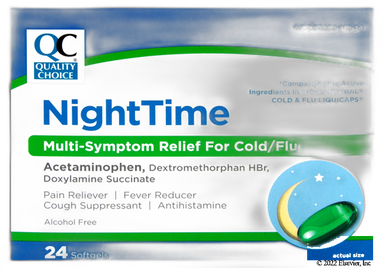
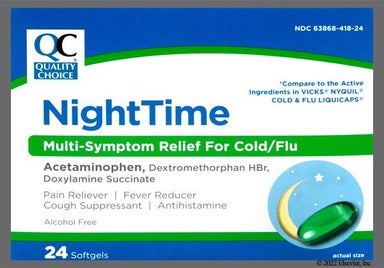
Nyquil Cold and Flu is a combination medication containing acetaminophen (a pain reliever), dextromethorphan (a cough suppressant), and doxylamine (an antihistamine). It's used to treat cold and flu symptoms, like sore throat, fever, cough, runny nose, sneezing, and aches, in adults and children. Nyquil Cold and Flu is available as pills and a liquid. This medication can make you feel sleepy and dizzy as side effects.

Temporarily relieves common cold and flu symptoms, including:
Nyquil Cold and Flu is a combination of three medications:
| Common Brands | Vicks Nyquil Cold and Flu |
|---|---|
| Drug Class | Analgesic / Cough suppressant / Antihistamine |
| Controlled Substance Classification | Not a controlled medication |
| Generic Status | Lower-cost generic available |
| Availability | Over-the-counter |

The following side effects may get better over time as your body gets used to the medication. Let your healthcare provider know immediately if you continue to experience these symptoms or if they worsen over time.
Contact your healthcare provider immediately if you experience any of the following.
Side effects that you should report to your care team as soon as possible:
Side effects that usually do not require medical attention (report these to your care team if they continue or are bothersome):



More tips for Nyquil Cold and Flu liquid form:

Nyquil Cold and Flu can cause some serious health issues. This risk may be even higher for certain groups. If this worries you, talk to your doctor or pharmacist about other options.
 Taking too much acetaminophen can cause permanent and life-threatening liver damage. For adults, the maximum amount of acetaminophen that can be taken is 3 or 4 grams in a 24-hour period, depending on your provider's instructions. For children, ask your child's provider.
 Speak to your provider before using Nyquil Cold and Flu if you have liver problems, since it can cause further damage to your liver. Avoid drinking alcohol while taking this medication.
Signs of liver problems include dark urine, fatigue, stomach pain, or yellowing of skin or eyes. If you notice any of these symptoms, call your provider right away.
Serotonin syndrome is a rare, but potentially life-threatening condition where there's too much serotonin in the brain. Serotonin is one of the chemicals in your brain responsible for your mood. Your risk for this condition goes up if you use Nyquil Cold and Flu with other medications that affect serotonin levels, such as antidepressants (e.g., sertraline (Zoloft), duloxetine (Cymbalta)), MAOIs (e.g., phenelzine (Nardil)), lithium, and certain migraine medications (e.g., sumatriptan (Imitrex)). Make sure your provider knows about all the medications you take (including over-the-counter medications and supplements) before starting Nyquil Cold and Flu so they can check that your medications are safe for you. Symptoms of serotonin syndrome include fast heart rate, sweating, muscle stiffness or spasms, high fever, and confusion. Get medical help right away if you have any of these symptoms.
Nyquil Cold and Flu contains an analgesic (acetaminophen), a cough suppressant (dextromethorphan), and an antihistamine (doxylamine), which can be found in many other over-the-counter products. Using more than one medication containing acetaminophen, dextromethorphan, doxylamine, can lead to an accidental overdose and cause serious side effects. These serious side effects include liver failure, seizures, hallucinations (seeing things that aren't real), or even death. To prevent an accidental overdose, read package labels carefully. If you're not sure if a product has any similar ingredients, ask your pharmacist. If you or your loved one experiences an accidental overdose, get medical help as soon as possible or contact a poison control center at 1-800-222-1222.
Don't take Nyquil Cold and Flu if you have any of the risk factors listed above unless your provider said it's safe to do so. Taking this medication can worsen your condition(s) and cause serious side effects. Make sure your provider knows about all medical conditions you have or have had in the past before starting Nyquil Cold and Flu.
Although rare, Nyquil Cold and Flu can cause serious skin reactions, such as rash, blisters, skin reddening, or skin peeling. If you notice changes in your skin, stop using Nyquil Cold and Flu and get medical attention right away.

Nyquil Cold and Flu and its generics might come in different strengths and have different dosing directions. Read the manufacturer's label for instructions specific for your medication. Some examples include:
Nyquil Cold and Flu liquid: Each 30 mL dose cup contains 650 mg of acetaminophen, 30 mg of dextromethorphan, and 12.5 mg of doxylamine.
Nyquil Cold and Flu capsules: Each capsule contains 325 mg of acetaminophen, 15 mg of dextromethorphan, and 6.25 mg of doxylamine.


Contraindications are specific health conditions or situations in which a person should not take a medication due to safety concerns. If you have any of the following conditions or if any of the following apply to you, let your healthcare provider know because Nyquil Cold and Flu will not be safe for you to take.

Temporarily relieves common cold and flu symptoms, including:










Prescription savings
Stop paying too much for your prescriptions. Compare prices, get pharmacy coupons, and save up to 80%. Find expert answers to your health questions so you can make the best decisions for yourself and your family.
Health conditions
Medications & treatment
Access & affordability
Medication discounts

Yes, Nyquil contains doxylamine, an antihistamine that can make you feel sleepy. If you're feeling too sleepy to get through your day, let your provider know and they can talk with you about other options for your symptoms.
Nyquil typically starts to work within 30 minutes and lasts for about 6 hours.
Adults and children ages 12 years and older can take up to 2 capsules (or 2 tablespoonfuls for the liquid) of Nyquil every 6 hours. But don't take more than 4 doses in a 24-hour period. If your provider specifically recommended you to take Nyquil, it's possible they might give you different instructions than what's written on the manufacturer's box; follow your provider's directions in that case. Ask your provider or pharmacist if you're not sure how much Nyquil you can take and how often you should take the medication.
If you're pregnant, talk with your provider before taking Nyquil. In general, the three active ingredients in Nyquil (acetaminophen, dextromethorphan, doxylamine) are generally considered safe to take during pregnancy. But keep in mind that some liquid forms of Nyquil contain alcohol, which should be avoided.
Maybe; it depends on which Mucinex product you choose. Mucinex is a branded line of products. Many of their products already contain acetaminophen, dextromethorphan, or doxylamine, the active ingredients in Nyquil. Taking Nyquil with other medications that contain the same or very similar ingredients can raise your risk of side effects, such as extreme sleepiness or liver problems. Check the label of all the cold and flu medications you're taking to make sure you're not taking more than the recommended dose of any particular active ingredient. Ask your provider or pharmacist if you aren't sure if a particular medication is similar to an active ingredient in Nyquil.
No. Nyquil already contains acetaminophen (Tylenol) and taking too much acetaminophen (Tylenol) can cause severe liver damage. Talk to your provider or pharmacist for available options if you're still having pain while taking Nyquil.
Yes, you can safely take Nyquil with amoxicillin. There are no known medication interactions between both medications.
No, Nyquil doesn't contain a decongestant. But there might be other Nyquil products that contain a decongestant, like phenylephrine. Make sure you read the label of your specific Nyquil product to see what the active ingredients are. Talk to your provider or pharmacist if you need help finding an OTC medication to treat sinus pressure or stuffy nose.
