



Types of Asthma Inhalers and How to Choose the Best One for You
If you have asthma, you probably use an inhaler — and you may need more than one. Learn the different types of asthma inhalers and which one you need.
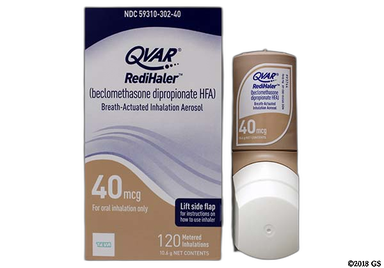
QVAR RediHaler, the brand name for beclomethasone dipropionate HFA inhaler, is an inhaled corticosteroid. It's used in people ages 4 years and older for the maintenance treatment of asthma. This medication is inhaled through the mouth twice per day. Like other inhaled steroid medications, Qvar RediHaler (beclomethasone) can cause upper respiratory tract infections and oral thrush as side effects.

Qvar RediHaler (beclomethasone) is an inhaled corticosteroid. It lessens inflammation and swelling in the lungs, which helps you breathe better.
| Common Brands | Qvar RediHaler |
|---|---|
| Drug Class | Inhaled corticosteroid (ICS) |
| Controlled Substance Classification | Not a controlled medication |
| Generic Status | No lower-cost generic available |
| Availability | Prescription only |

The following side effects may get better over time as your body gets used to the medication. Let your healthcare provider know immediately if you continue to experience these symptoms or if they worsen over time.
Contact your healthcare provider immediately if you experience any of the following.
Along with its needed effects, a medicine may cause some unwanted effects. Although not all of these side effects may occur, if they do occur they may need medical attention.
Check with your doctor immediately if any of the following side effects occur:
Rare
Shortness of breath, troubled breathing, tightness in chest, or wheezing
signs of hypersensitivity reactions, such as swelling of face, lips, or eyelids
Check with your doctor as soon as possible if any of the following side effects occur:
Less common
burning or pain while urinating, blood in urine, or frequent urge to urinate
creamy white, curd-like patches in the mouth or throat and/or pain when eating or swallowing
dizziness or sense of constant movement or surroundings
general feeling of discomfort or illness
irregular or fast heartbeat
sinus problems
stomach or abdominal pain
swelling of fingers, ankles, feet, or lower legs
unusual tiredness or weakness
Rare
Bleeding from rectum or bloody stools
blurred vision or other changes in vision
fainting or feeling faint
frequent urination or unusual thirst
growth inhibition in children
increased fat deposits in face, neck, and trunk
increased skin pigmentation
loss of appetite
menstrual changes
mood or mental changes
numbness
pain or burning in chest
vomiting
Additional side effects may occur if you take this medicine for a long time. Check with your doctor if any of the following side effects occur:
Pain in the back, ribs, arms, or legs (osteoporosis)
Some side effects may occur that usually do not need medical attention. These side effects may go away during treatment as your body adjusts to the medicine. Also, your health care professional may be able to tell you about ways to prevent or reduce some of these side effects. Check with your health care professional if any of the following side effects continue or are bothersome or if you have any questions about them:
Other side effects not listed may also occur in some patients. If you notice any other effects, check with your healthcare professional.
Call your doctor for medical advice about side effects. You may report side effects to the FDA at 1-800-FDA-1088.



Tips for how to use Qvar RediHaler (beclomethasone):

Qvar RediHaler (beclomethasone) can cause some serious health issues. This risk may be even higher for certain groups. If this worries you, talk to your doctor or pharmacist about other options.
Don't use Qvar RediHaler (beclomethasone) if you're experiencing an asthma attack because this medication won't provide immediate relief. Use a rescue inhaler, such as albuterol (Ventolin HFA), if you're having trouble breathing.
If you're using your rescue inhaler more often than usual, let your pulmonologist know because this could be a sign that your condition is getting worse. Don't use more doses Qvar RediHaler (beclomethasone) than recommended because this won't improve your breathing. Rather, this can raise your risk for serious side effects, such as heart problems, tremors, and dizziness.
Qvar RediHaler (beclomethasone), like all inhaled steroids, can cause a fungal infection in your mouth and throat called thrush. To lower your risk for thrush, rinse your mouth with water and spit after each inhalation of Qvar RediHaler (beclomethasone). If you develop thrush, your pulmonologist might prescribe you a medication to treat this infection and ask you to temporarily stop using Qvar RediHaler (beclomethasone). Let your pulmonologist know if you notice symptoms of thrush, such as white patches in your mouth, cotton-like feeling in your mouth, pain while eating or swallowing, or loss of taste.
Inhaled medications, including Qvar RediHaler (beclomethasone), can sometimes cause a muscle spasm in your lungs. This can lead to difficulty breathing, wheezing, cough, and chest discomfort. If you have a hard time breathing after inhaling Qvar RediHaler (beclomethasone), use your rescue inhaler and get medical attention right away.
Like all corticosteroid-containing medications, Qvar RediHaler (beclomethasone) can weaken your immune system and raise your risk for infections, including upper respiratory infections and pneumonia. Your risk for infections is higher if you're also taking other medications that also weaken your immune system. If you're currently being treated for a serious infection, such as tuberculosis, let your pulmonologist know. They might need to consider a different medication for your condition until you get better. Let your pulmonologist or primary care provider know right away if you have symptoms of infections, such as fever, chills, or body aches.
Use Qvar RediHaler (beclomethasone) only as directed. Don't use more than the maximum number of inhalations each day. Doing so can cause more steroid to be absorbed into the body and raise your risk for symptoms of too much stress hormones, such as higher blood sugar or blood pressure.
On the other hand, if you're transitioning to Qvar RediHaler (beclomethasone) from oral steroids, you might experience symptoms of low steroid hormone, such as stomach pain, loss of appetite, and nausea. When you transition to Qvar RediHaler (beclomethasone), your pulmonologist will work with you to lower your dose of oral steroids slowly over time to prevent these side effects.
Children who use inhaled steroids, like Qvar RediHaler (beclomethasone), might experience a delay in growth. To lower the risk of growth problems, your child's pulmonologist will only prescribe the lowest dose needed to help their condition. Your child's care team will check your child's growth regularly while your child is using this medication. If you're concerned about how Qvar RediHaler (beclomethasone) might affect your child's growth, discuss with your child's pulmonologist to see if this medication is right for them.
People who use inhaled steroids, like Qvar RediHaler (beclomethasone), have reported lower bone mineral density (BMD) over time. It's unclear whether this leads to higher risk of bone fractures. But you're more likely to experience a fracture if you're an older adult, have family members who have osteoporosis, or are taking other medications that raise the risk of fractures.
Although rare, people using inhaled steroids over a long period of time have reported having higher pressure in the eyes, glaucoma, and cataracts. Talk to your optometrist before using Qvar RediHaler (beclomethasone) if you have glaucoma or cataracts because they might ask you to come in more often for eye exams. Also speak with them if you notice any changes to your vision while using the medication.
Allergic reactions to Qvar RediHaler (beclomethasone) are possible. These reactions can include life-threatening facial swelling, low blood pressure, and anaphylaxis (closing of the throat). Get medical attention right away if you notice hives, rash, red skin, swelling of the lips or tongue, or difficulty breathing after you use Qvar RediHaler (beclomethasone).


Although certain medicines should not be used together at all, in other cases two different medicines may be used together even if an interaction might occur. In these cases, your doctor may want to change the dose, or other precautions may be necessary. Tell your healthcare professional if you are taking any other prescription or nonprescription (over-the-counter [OTC]) medicine.


Contraindications are specific health conditions or situations in which a person should not take a medication due to safety concerns. If you have any of the following conditions or if any of the following apply to you, let your healthcare provider know because Qvar RediHaler (beclomethasone) will not be safe for you to take.








Prescription savings
Stop paying too much for your prescriptions. Compare prices, get pharmacy coupons, and save up to 80%. Find expert answers to your health questions so you can make the best decisions for yourself and your family.
Health conditions
Medications & treatment
Access & affordability
 Our monthly healthcare membership can help you save thousands on your prescription costs.
Resources

Yes, the active ingredient in QVAR RediHaler is beclomethasone, which is an inhaled corticosteroid (or steroid). Steroids help you breathe better by lowering the inflammation in your airways.
You might notice improved breathing within a day of starting Qvar, but it can take up to 2 weeks to kick in. In addition, it can take up to 4 weeks to get the maximum benefit from the medication. If you're still having symptoms after this time, your healthcare team can raise your dose of Qvar or talk with you about other medication options. Keep in mind that because it takes a while for Qvar to work, it shouldn't be used as a rescue inhaler like albuterol (ProAir, Ventolin) to treat an asthma attack.
An earlier version of Qvar (beclomethasone) was taken off the market in 2018 by its manufacturer. It was replaced with Qvar, which contains the same active medication. The main difference between the two versions is the inhaler device itself. QVAR is a metered-dose inhaler, while Qvar RediHaler is breath actuated inhaler . Qvar RediHaler might be easier to use than the earlier version of Qvar.
No, you don't need to use a spacer with Qvar. This is a breath actuated inhaler, meaning the medication is released only when you put the inhaler directly around your lips and inhale. Spacers are designed for metered-dose inhalers that release medication when you push of a button, such as albuterol HFA (Ventolin, ProAir).
Qvar and Arnuity Ellipta (fluticasone) are different inhaled corticosteroids for maintenance treatment of asthma. Qvar RediHaler is approved for people 4 years and older, while Arnuity Ellipta is approved for ages 5 and up. Another difference is the type of inhaler. Qvar RediHaler is a breath actuated inhaler that delivers medication as a liquid aerosol when you breathe in, whereas Arnuity Ellipta is a dry powder inhaler (DPI). If you have specific questions about these medications, talk to your pulmonologist.
No, Qvar and Symbicort (budesonide / formoterol) aren't the same. QVAR RediHaler is an inhaled corticosteroid, whereas Symbicort is a combination inhaler containing both a steroid (budesonide) and a long-acting beta agonist or LABA (formoterol). Both medications treat asthma, but Symbicort can also be prescribed for chronic obstructive pulmonary disease (COPD). Typically, inhaled corticosteroid is the first-choice medication for treating asthma. But if your symptoms aren't well-controlled with an inhaled steroid alone, your pulmonologist might recommend a combination inhaler with a LABA, like Symbicort. Talk to your pulmonologist if you have more questions about either inhaler.
Yes, Qvar is generally safe for long-term use when used as prescribed by your pulmonologist. It can help manage your asthma symptoms over time to prevent asthma attacks. But like with other corticosteroids, long-term use of Qvar have some risks. For example, it can raise your risk for oral thrush (a fungal infection in your mouth) or, in rare cases, affect bone health or slow growth in children. Your healthcare team will monitor you for these side effects if you're using Qvar over a longer period of time. Ask your care team if you have questions about any specific side effect.
No, Qvar is only available as the brand name medication.
