


How to Stop Postnasal Drip: 7 Treatments to Consider
Postnasal drip can cause coughing, congestion, and more. Here’s how to stop postnasal drip with prescription and OTC medications, plus home remedies to try.
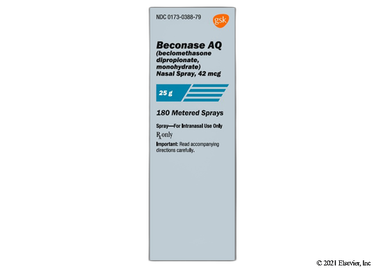
Beconase AQ (beclomethasone) is a corticosteroid medication used to treat nasal symptoms such as congestion, sneezing, and runny nose caused by seasonal or year-round allergies. In addition, Beconase AQ (beclomethasone) can be used to prevent nasal polyps from regrowing after surgical removal.

Beconase AQ (beclomethasone) is a nasal corticosteroid that works directly in your nose to help reduce swelling and inflammation caused by allergies.
| Common Brands | Beconase AQ |
|---|---|
| Drug Class | Corticosteroid |
| Controlled Substance Classification | Not a controlled medication |
| Generic Status | No lower-cost generic available |
| Availability | Prescription only |

The following side effects may get better over time as your body gets used to the medication. Let your healthcare provider know immediately if you continue to experience these symptoms or if they worsen over time.
Along with its needed effects, a medicine may cause some unwanted effects. Although not all of these side effects may occur, if they do occur they may need medical attention.
Check with your doctor immediately if any of the following side effects occur:
More common
Chills
dizziness
fast heartbeat
lightheadedness
rapid, shallow breathing
rash
unusual bleeding or bruising
Other side effects not listed may also occur in some patients. If you notice any other effects, check with your healthcare professional.
Call your doctor for medical advice about side effects. You may report side effects to the FDA at 1-800-FDA-1088.




Beconase AQ (beclomethasone) can cause some serious health issues. This risk may be even higher for certain groups. If this worries you, talk to your doctor or pharmacist about other options.
Long-term use of Beconase AQ (beclomethasone) can raise your chances of having changes in the nasal septum (the bony cartilage between your nostrils). Your doctor will check your nose regularly if you have to be on this medication for a long time.
If you've recently had surgery, ulcers, or trauma in your nose or sinuses, using Beconase AQ (beclomethasone) can lower your body's ability to heal itself. If you've hurt your nose or had surgery in your nose, talk to your doctor before starting Beconase AQ (beclomethasone).
Using Beconase AQ (beclomethasone) for a long time can raise eye pressure, worsen glaucoma, and cause cataracts (cloudiness in the eyes). Talk to your doctor right away if you experience blurry vision, eye discomfort, or other changes in your vision after using Beconase AQ (beclomethasone).

 Nasal spray
| Dosage | Quantity | Price as low as | Price per unit |
|---|---|---|---|
| 25g of 42mcg/spray | 1 nasal spray | $287.87 | $287.87 |

Although certain medicines should not be used together at all, in other cases two different medicines may be used together even if an interaction might occur. In these cases, your doctor may want to change the dose, or other precautions may be necessary. When you are taking this medicine, it is especially important that your healthcare professional know if you are taking any of the medicines listed below. The following interactions have been selected on the basis of their potential significance and are not necessarily all-inclusive.
Using this medicine with any of the following medicines is not recommended. Your doctor may decide not to treat you with this medication or change some of the other medicines you take.
Using this medicine with any of the following medicines is usually not recommended, but may be required in some cases. If both medicines are prescribed together, your doctor may change the dose or how often you use one or both of the medicines.
Using this medicine with any of the following medicines may cause an increased risk of certain side effects, but using both drugs may be the best treatment for you. If both medicines are prescribed together, your doctor may change the dose or how often you use one or both of the medicines.


Prescription savings
Stop paying too much for your prescriptions. Compare prices, get pharmacy coupons, and save up to 80%. Find expert answers to your health questions so you can make the best decisions for yourself and your family.
Health conditions
Medications & treatment
Access & affordability
Medication discounts

Beconase AQ can cause a so-called “nasal spray addiction” in some people. This often occurs when a person uses the decongestant nasal spray too frequently or for too long. This is considered rebound congestion and not an addiction.
If you're using Beconase AQ correctly, the medication should not drip from your nose or down the back of your throat. It may leave an unpleasant taste in your mouth. A drink of water or juice should help eliminate the after taste. Never use your Beconase AQ after the expiration date on the bottle.
In rare cases, Beconase AQ can weaken your immune system and put you at higher risk for getting infections more easily. This is especially true if you use this medication for long-term and at high doses. Talk to your provider or pharmacist before making any changes to your usage.
There are not enough studies for this medication to know whether it is fully safe to use during pregnancy. Talk to your provider to decide which medication may be right for you.
This medication starts working within 3 days for some people, but it can take up to 2 weeks before you feel the full effects of Beconase AQ.
