Used for Acromegaly, High Prolactin, Parkinson's Disease
Used for Acromegaly, High Prolactin, Parkinson's Disease
Bromocriptine (Parlodel) is used to treat conditions associated with high prolactin levels, as well as Parkinson's disease and acromegaly (too much growth hormone). This medication is available as a generic or brand name (Parlodel). Nausea, constipation, and dizziness are common side effects of bromocriptine (Parlodel). While there's limited information available, reports suggest that bromocriptine (Parlodel) doesn't seem to raise the risk for birth defects if taken by mothers during pregnancy.
Bromocriptine (Parlodel) is a dopamine agonist. It activates (turns on) dopamine receptors to lower hormone levels if they're too high and improve movement in people with Parkinson's disease.
The following side effects may get better over time as your body gets used to the medication. Let your healthcare provider know immediately if you continue to experience these symptoms or if they worsen over time.
Common Side Effects
Nausea (up to 49%)
Headache (19%)
Dizziness (17%)
Constipation (up to 14%)
Tiredness (up to 7%)
Low blood pressure when you stand up (orthostatic hypotension, up to 6%)
Feeling lightheaded (up to 5%)
Vomiting (up to 5%)
Less Common Side Effects
Stomach cramps
Upset stomach
Constipation
Diarrhea
Dry mouth
Loss of appetite
Stuffy nose
Feeling drowsy
Weakness
Trouble sleeping
Bromocriptine (Parlodel) serious side effects
Contact your healthcare provider immediately if you experience any of the following.
Dangerously high blood pressure: chest pain, headache that won't go away, irregular heartbeat, vision problems, difficulty breathing, nose bleed, blood in your urine
The following Bromocriptine (Parlodel) side effects have also been reported
Along with its needed effects, a medicine may cause some unwanted effects. Although not all of these side effects may occur, if they do occur they may need medical attention.
Check with your doctor immediately if any of the following side effects occur:
Some side effects may occur that usually do not need medical attention. These side effects may go away during treatment as your body adjusts to the medicine. Also, your health care professional may be able to tell you about ways to prevent or reduce some of these side effects. Check with your health care professional if any of the following side effects continue or are bothersome or if you have any questions about them:
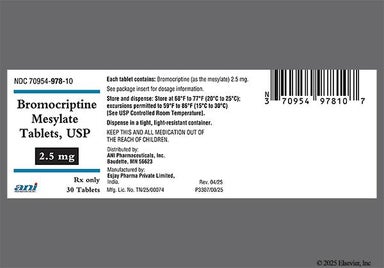
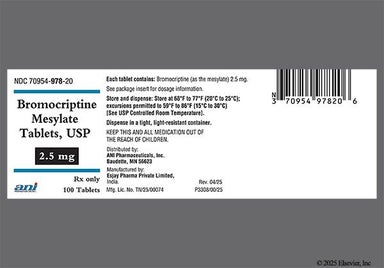
Only comes as a 2.5 mg tablet or 5 mg capsule, so you might need to take a lot of pills if you're taking a high dose
Should be taken with food
Pharmacist tips for Bromocriptine (Parlodel)
Take bromocriptine (Parlodel) with food. This can help prevent nausea or vomiting that you might experience after taking the medication.
You might need to cut your tablet in half to get the right dose. The tablets come with a line in the middle to help you. You can purchase a pill splitter to help cut the tablets in half.
Don't try to split the capsules. If you need a smaller dose and only have capsules, ask your provider for a prescription for the tablets.
Side effects of bromocriptine (Parlodel) include dizziness, confusion, and falling asleep suddenly. Don't drive or do activities that require a lot of focus until you know how the medication affects you.
After starting bromocriptine (Parlodel), you might notice a drop in blood pressure when you stand up or get up from bed. This change in blood pressure can cause dizziness and fainting. Getting up slowly can help prevent a dangerous fall.
Let your provider know if you want to stop or take a lower dose of bromocriptine (Parlodel). They'll instruct you on how to lower your dose slowly to prevent bothersome side effects, like anxiety, depression, tiredness, trouble sleeping, sweating, fever, stiff muscles, and pain.
To prevent unnecessary exposure of bromocriptine (Parlodel) to babies during pregnancy, talk to your provider about birth control if you're capable of getting pregnant, but not actively trying. If you haven't gotten your period within 3 days of when expected, take a pregnancy test and contact your provider.
Risks and warnings for Bromocriptine (Parlodel)
Bromocriptine (Parlodel) can cause some serious health issues. This risk may be even higher for certain groups. If this worries you, talk to your doctor or pharmacist about other options.
Use during pregnancy and after giving birth
There's limited research about the safety of bromocriptine (Parlodel) during pregnancy. Severe high blood pressure, heart attacks, seizures, and stroke have occurred rarely in people who took bromocriptine (Parlodel) after giving birth (postpartum).
Because of this, your provider might only prescribe bromocriptine (Parlodel) for you during pregnancy or the postpartum period if the benefits outweigh the risks. Let your provider know right away if you become pregnant while taking bromocriptine (Parlodel). You'll need to discuss with your provider whether you should stop or continue the medication with very close monitoring.
Sleepiness or falling asleep during activities
Risk factors: History of drowsiness | History of sleep problems | Taking sedatives or medications that make you drowsy | Taking bromocriptine (Parlodel) for Parkinson's disease
Bromocriptine (Parlodel) can make you feel sleepy, particularly if you're taking this medication for Parkinson's disease. Rarely, it can cause you to suddenly fall asleep, even if you don't feel sleepy. Avoid driving or activities that require you to focus until you know how this medication affects you. Take extra care if you have a history of sleepiness or falling asleep suddenly in the past. Let your provider know if you feel very sleepy during the daytime or if you fall asleep during activities where you need to concentrate.
Changes in blood pressure
Risk factors: Uncontrolled blood pressure | Taking other medications that can affect blood pressure | Recent childbirth
Bromocriptine (Parlodel) can cause changes to your blood pressure. When you first start the medication, you might have low blood pressure. Symptoms of low blood pressure include tiredness, dizziness, vision changes, and feeling faint.
After a week or two, high blood pressure can happen. Extremely high blood pressure can result in a heart attack or seizure. Dangerously high blood pressure is more often seen in people who have just given birth. Seek medical help if you have symptoms of high blood pressure, such as a headache that won't go away, an irregular heartbeat, chest pain, and difficulty breathing.
Impulsive behavior
There have been reports of people having lower impulse control while taking medications that raise dopamine, such as bromocriptine (Parlodel). This can include strong sexual or gambling urges, urges to spend a lot of money, and binge eating. Talk to your provider if these urges start to have a negative impact on your life. Lowering your dose or stopping the medication can help.
Fluid around the heart or lungs
Risk factors: Taking high doses of bromocriptine (Parlodel) | Taking bromocriptine (Parlodel) for long periods of time
Rarely, unexplained lung and heart problems have been reported in people taking bromocriptine (Parlodel). If you experience symptoms of shortness of breath, chest pain, cough, or irregular heartbeat, get medical attention right away.
Blood flow problems
Risk factors: Taking bromocriptine (Parlodel) for acromegaly
Some people who take bromocriptine (Parlodel) for acromegaly develop a condition called digital vasospasm. This is where your blood vessels constrict (become narrower) and lower blood flow to your fingers or toes. It's usually triggered by cold temperatures. Let your provider know if you notice a discolored finger or toe that's painful. They might tell you to lower your dose, which can help. Keeping your fingers and toes warm can also help prevent this from happening.
Bromocriptine (Parlodel) dosage
The average cost for 90 tablets of 2.5mg of Bromocriptine (Parlodel) is $81.66 with a free GoodRx coupon. This is 43.89% off the average retail price of $145.53.
Interactions between Bromocriptine (Parlodel) and other drugs
Bromocriptine (Parlodel) may interact with certain medications or supplements. Always let your doctor and pharmacist know about any other medications or supplements (including prescribed and over-the-counter medications, vitamins, and dietary or herbal supplements) that you are currently taking. The list below does not include all possible drug interactions with Bromocriptine (Parlodel). Please note that only the generic name of each medication is listed below.
Although certain medicines should not be used together at all, in other cases two different medicines may be used together even if an interaction might occur. In these cases, your doctor may want to change the dose, or other precautions may be necessary. When you are taking this medicine, it is especially important that your healthcare professional know if you are taking any of the medicines listed below. The following interactions have been selected on the basis of their potential significance and are not necessarily all-inclusive.
Using this medicine with any of the following medicines is not recommended. Your doctor may decide not to treat you with this medication or change some of the other medicines you take.
Using this medicine with any of the following medicines is usually not recommended, but may be required in some cases. If both medicines are prescribed together, your doctor may change the dose or how often you use one or both of the medicines.
Using this medicine with any of the following medicines may cause an increased risk of certain side effects, but using both drugs may be the best treatment for you. If both medicines are prescribed together, your doctor may change the dose or how often you use one or both of the medicines.
Contraindications are specific health conditions or situations in which a person should not take a medication due to safety concerns. If you have any of the following conditions or if any of the following apply to you, let your healthcare provider know because Bromocriptine (Parlodel) will not be safe for you to take.
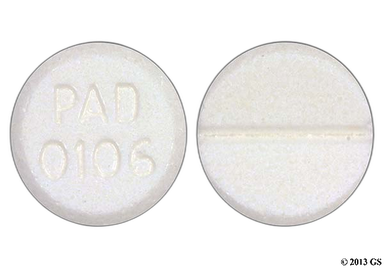
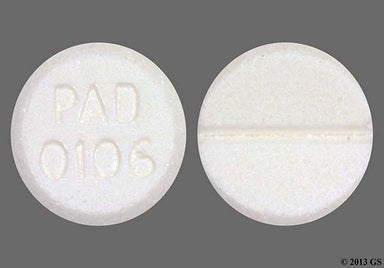
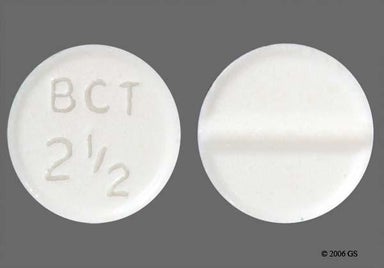
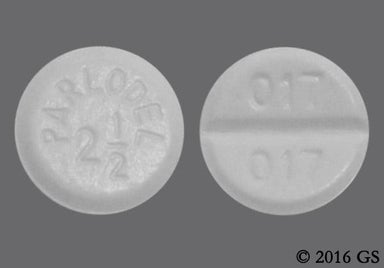
This medicine is White, Round, Scored Tablet Imprinted With "Pad 0106".White Round Pad 0106 - Bromocriptine Mesylate 2.5mg TabletThis medicine is White, Round, Scored Tablet Imprinted With "Bct 2 1/2".White Round Bct 2 1/2 - Bromocriptine Mesylate 2.5mg TabletThis medicine is White, Round, Scored Tablet Imprinted With "Parlodel 2 2/12" And "017 017".White Round Parlodel 2 2/12 And 017 017 - Bromocriptine Mesylate 2.5mg TabletThis medicine is White, Round, Scored Tablet Imprinted With "E 280" And "2.5".White Round 2.5 And E 280 - Bromocriptine Mesylate 2.5mg TabletThis medicine is White, Round, Scored Tablet Imprinted With "E 280" And "2.5".White Round 2.5 And E 280 - Bromocriptine Mesylate 2.5mg Tablet
References
Best studies we found
Hallare, J., et al. (2023). Half life. StatPearls.
GoodRx Health has strict sourcing policies and relies on primary sources such as medical organizations, governmental agencies, academic institutions, and peer-reviewed scientific journals. Learn more about how we ensure our content is accurate, thorough, and unbiased by reading our editorial guidelines.
Prescription savings
Stop paying too much for your prescriptions. Compare prices, get pharmacy coupons, and save up to 80%.
Your provider will likely start you off at a low dose of Bromocriptine and slowly raise your dose up over days or weeks, so it could take time to see the full effects, depending on what condition you're being treated for. For examples: (1) In clinical studies, females with high prolactin levels and no period typically saw their periods return after about 2 months of treatment with Bromocriptine, though it took much longer for some people (up to 8 months). (2) In people with acromegaly, Bromocriptine works within a few hours to lower growth hormone levels. Some people notice improvement in symptoms like sweating during the first few days of taking the medication. They also noticed other physical changes, like smaller feet or hands, after a few weeks of treatment.
It takes about 24 hours for Bromocriptine to fully leave your body. But keep in mind that this time frame is estimated based on the half-life of Bromocriptine. It can also be affected by your health conditions and what other medications you're taking, so it can be different for each individual person. Discuss with your healthcare provider if you have questions about how long the medication stays in your body.
Bromocriptine can rarely cause hair loss. In clinical studies, less than 1% of people taking the medication experienced hair loss. If this is a concern for you, talk to your provider.
Because Bromocriptine has a risk of causing high blood pressure that can lead to dangerous complications, it's not recommended to take this medication if your blood pressure is high and uncontrolled. If you're taking blood pressure-lowering medications and keeping your blood pressure in your target range, your provider will help you decide if Bromocriptine is right for you. But since Bromocriptine can cause changes to your blood pressure, you might need to monitor your blood pressure more closely. In general, people who take Bromocriptine tend to experience low blood pressure at the beginning of treatment, but higher blood pressure starting the second week. Call your provider if you experience dizziness or vision changes while taking this medication.
Having high levels of prolactin can make it difficult for females to become pregnant (infertility). Bromocriptine can help with infertility that's caused by high prolactin levels by lowering the amount of prolactin hormone in your body. Talk to your provider to see if this medication is right for your particular fertility problems.
Based on the information available, there isn't evidence of harm to babies in pregnant females who take Bromocriptine. One study looked at about 2,500 females who took Bromocriptine during their pregnancy. They didn't find any association between the medication and harm to babies. However, there isn't enough information to know if Bromocriptine is safe to take during pregnancy. If you're pregnant or thinking of becoming pregnant, discuss with your provider if Bromocriptine is the best option for your condition.
The time it takes for Bromocriptine to stop milk production due to high prolactin levels can depend on how much milk production you experienced before starting treatment. Prolactin is the hormone needed to make breast milk, and taking this medication can lower prolactin levels. Most people notice 75% less milk production after 8 to 12 weeks of treatment with Bromocriptine.