Livdelzi
Livdelzi (seladelpar) treats primary biliary cholangitis (PBC), a liver condition that happens when damaged bile ducts cause bile to build up. It’s a peroxisome proliferator-activated receptor (PPAR)-delta agonist that works to help the body make less bile acids. But it’s not clear yet whether it can slow liver damage in people with PBC. Livdelzi (seladelpar) is a tablet that’s taken once daily by mouth for adults. It’s taken either alone or with ursodiol (Actigall). Side effects of Livdelzi (seladelpar) include headache, dizziness, stomach pain, and bloating.


What is Livdelzi (seladelpar)?
What is Livdelzi (seladelpar) used for?
- Primary biliary cholangitis (PBC), a liver condition due to damaged bile ducts
How Livdelzi (seladelpar) works
Livdelzi (seladelpar) is a peroxisome proliferator-activated receptor-delta agonist (PPAR agonist). It works by activating a protein called PPAR to help the liver produce less bile acids, which are a component of bile. This is important for people with PBC because too much bile can be harmful to the liver. Keep in mind that the exact way this helps with PBC isn’t well understood.
Drug facts
| Common Brands | Livdelzi |
|---|---|
| Drug Class | Peroxisome proliferator-activated receptor (PPAR)-delta agonist |
| Controlled Substance Classification | Not a controlled medication |
| Generic Status | No lower-cost generic available |
| Availability | Prescription only |

Side effects of Livdelzi (seladelpar)
The following side effects may get better over time as your body gets used to the medication. Let your healthcare provider know immediately if you continue to experience these symptoms or if they worsen over time.
Common Side Effects
- Headache (8%)
- Stomach pain (7%)
- Nausea (6%)
- Bloating (6%)
- Dizziness (5%)
Less Common Side Effects
- Skin rash
- Hair loss
- Cough
- Anemia
- Indigestion
Livdelzi (seladelpar) serious side effects
Contact your healthcare provider immediately if you experience any of the following.
- Worsening liver problems: stomach pain or bloating; yellowing of skin or whites of eyes; black, tarry, or bloody stool; coughing or vomiting up blood; confusion; mood swings; sleep changes
- Bone fracture: pain, bone looking out of place, bruising, swelling
The following Livdelzi (seladelpar) side effects have also been reported
Side effects that you should report to your care team as soon as possible:
- Allergic reactions—skin rash, itching, hives, swelling of the face, lips, tongue, or throat
- Liver injury—right upper belly pain, loss of appetite, nausea, light-colored stool, dark yellow or brown urine, yellowing skin or eyes, unusual weakness or fatigue
Side effects that usually do not require medical attention (report these to your care team if they continue or are bothersome):

Get your GoodRx coupon

Pros and cons of Livdelzi (seladelpar)
Pros
- Taken once daily
- Can help alleviate itching that’s associated with PBC
- An option for people who haven’t responded well to other PBC treatments, like ursodiol (Actigall)
Cons
- Can cause headache, dizziness, stomach pain, and bloating
- Can increase the risk of bone fractures
- Not recommended for people with advanced liver cirrhosis (with symptoms like ascites, variceal bleeding, and loss of brain function)

Pharmacist tips for Livdelzi (seladelpar)

- You can take Livdelzi (seladelpar) with or without food. Taking it with food can help reduce side effects such as nausea and stomach discomfort.
- Get your blood tests done on time so your prescriber can check your liver enzyme levels. This helps keep track of your liver health while you're taking Livdelzi (seladelpar).
- Tell your prescriber if you have a loss of appetite, nausea, stomach bloating, swelling in your legs or feet, yellow skin or eyes, or unusual tiredness while taking Livdelzi (seladelpar). These can be signs of worsening liver problems.
- Eat a balanced diet of foods that are high in calcium and vitamin D, such as leafy greens, dairy products, and foods with a lot of protein. This helps keep your bones strong, which is important because Livdelzi (seladelpar) might make it easier for you to break a bone.
- Exercise regularly with weight-bearing activities and resistance training. It can help keep your bones strong and healthy. This is important when you’re taking Livdelzi (seladelpar) because of the increased risk of fractures.
- Take Livdelzi (seladelpar) at least 4 hours before or 4 hours after you take any bile acid sequestrants, such as cholestyramine (Prevalite), colestipol (Colestid), and colesevelam (Welchol). This makes sure Livdelzi (seladelpar) can get absorbed into the body properly and work the best it can.
- Tell your prescriber and pharmacist about all the medications you take. Livdelzi (seladelpar) can interact with some medications, like diltiazem (Cardizem), furosemide (Lasix), and pantoprazole (Protonix). These medications can raise the levels of Livdelzi (seladelpar) in the body, which can be harmful. Your healthcare team can check if your medications are safe to take together.
- If you get pregnant while taking Livdelzi (seladelpar), contact your prescriber to see whether you should keep taking it. It isn’t known if Livdelzi (seladelpar) can harm your baby because there aren’t enough studies on its safety during pregnancy.
- Keep Livdelzi at room temperature between 68°F to 77°F. Don’t store it in places where the temperature or humidity can vary, like in the bathroom or your car.

Risks and warnings for Livdelzi (seladelpar)
Livdelzi (seladelpar) can cause some serious health issues. This risk may be even higher for certain groups. If this worries you, talk to your doctor or pharmacist about other options.
Changes in liver function test results
- Risk factors: High doses of Livdelzi (seladelpar) | Previous liver problems
So far, people who’ve taken Livdelzi (seladelpar) at the recommended 10 mg daily dose haven’t had very large increases in their liver enzyme levels. But people who took a much higher dose (50 mg daily) did have notably higher liver enzyme levels. High liver enzyme levels could be a sign of liver stress or damage. Most times, levels returned to normal after people stopped taking the medication.
Before you start taking Livdelzi (seladelpar), you’ll need a blood test to check your liver enzyme levels. Also have these blood tests done whenever your prescriber thinks it's necessary while you’re taking the medication.
Watch for pain in the upper right side of your belly and yellowing of your skin and eyes. These can be signs and symptoms of worsening liver function or liver damage. If you notice these signs or symptoms, talk to your prescriber. They might recommend stopping Livdelzi (seladelpar) to see whether your liver health improves. But don’t stop taking the medication without checking with your prescriber first.
Fractures
- Risk factors: History of fractures | Osteoporosis | Long-term use
In clinical studies, some people who’ve taken Livdelzi (seladelpar) have experienced fractures. These fractures happened between the first 3 and 12 months of treatment.
Let your prescriber know if you have a history of fractures or osteoporosis. They might monitor your bone health during treatment. These can include tests to check your calcium levels and bone density screenings (DEXA scan).
Be mindful of the signs of a broken bone such as pain, the bone looking out of place or misshaped, bruising, and swelling. If you think you broke a bone, seek medical attention immediately and limit how much you move that bone until you get care. The healthcare team can check out the bone and talk about what to do next.
Avoid in people with biliary obstruction
- Risk factors: History of bile duct problems | Complete biliary obstruction
You should avoid taking Livdelzi (seladelpar) if you have a complete biliary obstruction, or a total blockage of the bile ducts. Symptoms of biliary obstruction include pain in the upper right side of your belly and yellowing of your skin and eyes. Contact your prescriber right away if you have any of these symptoms. You might have to stop Livdelzi (seladelpar) while you’re getting evaluated and treated for biliary obstruction.

Livdelzi (seladelpar) dosage
 Capsule
| Dosage | Quantity | Price as low as | Price per unit |
|---|---|---|---|
| 10mg | 30 capsules | $12,773.60 | $425.79 |

How much does Livdelzi (seladelpar) cost?
$12,773.60

What are alternatives to Livdelzi (seladelpar)?

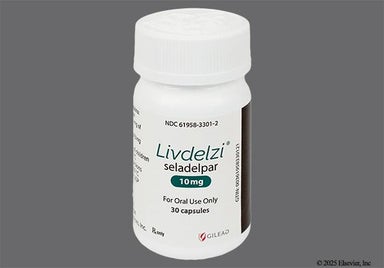
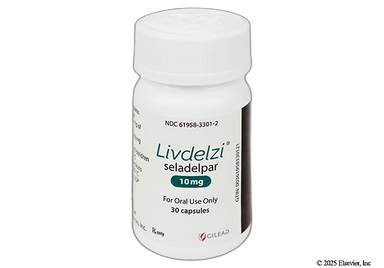
Livdelzi (seladelpar) images