Key takeaways:
Sunlight has various benefits, and it can improve your health and well-being. One of the main benefits is the way it supports vitamin D levels, which play an important role in your health.
Some people only need 10 minutes of sunlight to see health benefits. People with darker skin tones need more time in the sun to get the same effects, since darker skin absorbs sunlight differently.
If you need more time in the sun, there are some simple ways you can work it into your daily schedule, like taking your coffee breaks outside.
Save on related medications
You’ve probably heard about the potential dangers of being out in the sun too long. But did you know that getting the right daily dose of sunlight can be good for your health and well-being? From providing vitamin D to boosting mood and improving sleep, here are eight benefits of sunshine, plus tips to make sure you’re getting enough.
1. Sunlight provides vitamin D
Being exposed to sunlight lets your body make vitamin D from cholesterol in your skin cells. Known as the “sunshine vitamin,” vitamin D benefits your health in many ways, including:
Supporting your bone and muscle health
Regulating your blood pressure
Regulating your immune system
Maintaining the health of your blood vessels
Keeping your brain working well
Regulating your blood sugar
Search and compare options
2. Sunlight strengthens bones
Vitamin D supports bone health. The sunshine vitamin helps your body absorb calcium, which is essential for strong bones and helps prevent certain conditions, like osteoporosis and osteopenia. And having good bone health can also help you avoid bone fractures (breaks).
3. Sunlight kills bacteria
Most people spend a lot of time indoors. And indoor environments can contain dust that carries different types of bacteria — some of which can trigger asthma and allergy symptoms.
One study found that sunlight can kill bacteria that lives in dust indoors. In this particular study, about half as many bacteria survived in rooms that were exposed to sunlight, compared to dark rooms.
What does this mean for you? Open those shades and windows and let more sunlight into your home. As the UV rays kill bacteria that live in the dust in your home, your air quality may improve.
4. Sunlight may reduce high blood pressure
Hypertension, or high blood pressure, is linked to many health problems, including heart attack, stroke, and kidney damage. One study showed that exposure to sunlight lowered systolic blood pressure (the top number in a blood pressure reading) in people who had kidney failure and were getting dialysis.
The study was based on the idea that UV light increases the availability of nitric oxide in your body. Nitric oxide is a molecule that can cause blood vessels to widen and, as a result, lower blood pressure.
But more research is needed to understand the sun’s effects on blood pressure and whether there are benefits for people who don’t have kidney disease.
5. Sunlight can improve sleep quality
Sun exposure plays a big role in maintaining your body’s internal clock, or circadian rhythm. Generally, your circadian rhythm responds to the sun’s light-dark cycle, helping you fall asleep at night (when there’s darkness) and wake up in the morning (when there’s light). So, you can try using the sun’s light-dark cycle to improve your sleep hygiene.
For example, experts recommend being in bright sunlight in the morning to increase your chances of falling asleep earlier in the evening. Exposure to sunshine in the morning increases your melatonin levels. And melatonin plays a key role in regulating your body’s circadian rhythm and helping you sleep when it gets dark.

Read more like this
Explore these related articles, suggested for readers like you.



6. Sunlight boosts mood
Getting enough sunlight can help lessen the likelihood of having mood disorders, most notably seasonal affective disorder (SAD). SAD is a type of depression that usually occurs in the fall and winter, when there’s less sunlight.
Experts don’t know the exact cause of SAD, but a lack of sunlight may affect the way the brain’s hypothalamus works. This effect may make it harder for your circadian rhythm to time certain functions, like waking up. As a result, you may be more likely to experience SAD symptoms, such as feelings of despair or fatigue.
Not getting enough sunlight can also result in lower serotonin levels, which can contribute to depression. So, it makes sense that getting more sunlight can boost your level of serotonin and your mood.
7. Sunlight can boost your immune system
Sunlight can help your immune system in two separate ways: First, your body gets a lot of vitamin D from sunlight. Vitamin D is essential for a healthy immune system. Second, sunlight provides UV light.
Since we often hear negative things about UV light, it may come as a surprise that UV light can actually be helpful. The truth, though, is that, in some cases, UV light can actually be good for your immune system.
Studies have found that vitamin D and exposure to UV light both have a protective effect against some bacteria and viruses. In addition to helping to fight infections from things like influenza (the flu) and tuberculosis, sunlight has also been found to help your immune system regulate diseases, like psoriasis. In fact, exposure to UV light and vitamin D are two treatments used to treat psoriasis.
Scientists also know that people who live in environments that are high in UV light (such as tropical areas) are protected against illnesses, like multiple sclerosis and asthma. Though they don’t know for sure what effect sunlight has on these illnesses yet. But because scientists know that sunlight helps regulate the immune system, and because these illnesses are autoimmune diseases, it’s possible that getting more sunlight may actually protect against these diseases.
8. Sunlight is associated with weight loss
Multiple studies have shown that exposure to sunlight is associated with having a lower body mass index (BMI). There haven’t been enough studies to show that sunlight actually causes weight loss, though. It could be that people who have lower a BMI happen to spend more time outdoors, which causes them to get more sunlight.
Nevertheless, scientists think that it’s possible that sunlight can actually help with weight loss. Getting sunlight affects vitamin D levels, the release of nitric oxide in the body, and other biological pathways related to weight. Because of this, scientists think it’s possible that sunlight itself might actually affect your weight directly. If nothing else, sunlight has been shown to boost your mood, which may make you more inclined to go outside and be active.
How much sunlight should you get per day?
Depending on your skin tone, you may be able to get the daily recommended amount of sun exposure in as little as 10 minutes. People with darker skin tones have more melanin, a molecule that serves as a natural sunscreen. But this can also make it a little harder to get enough sun exposure. So, it takes more time in sunlight to get its benefits if you have a darker skin tone.
Here’s how much sunlight experts recommend based on your skin tone:
Lighter skin tones: 10 to 15 minutes a day
Darker skin tones: 25 to 40 minutes a day
Where you live also matters. If you live:
In tropical areas, where the sun is stronger: You might need less time in the sun to get your recommended exposure.
Up north, where the sun isn’t as powerful: You might need more time outdoors to get the right daily dose of sun exposure for you.
Keep in mind, regardless of skin tone, spending more time in the sun than what’s recommended may increase your risk of sunburn or skin cancer. This is why it’s a good idea to put on sunscreen before going outside. This is especially true if you’re going to be out longer than 10 to 30 minutes.
How sunscreen impacts the sunlight you need each day
You may be wondering whether putting on sunscreen can prevent you from getting enough sunlight to make vitamin D. The body only needs a little sunlight to make vitamin D. And research shows that using sunscreen on a regular basis doesn’t hurt the body’s ability to create the sunshine vitamin.
When is the best time to get sunlight?
Any time you can fit some sunlight into your schedule is a good time. But research suggests that you absorb the most sunlight around noon. And experts believe the timeframe from 10AM and 1PM is optimal for sun exposure. That’s because you’ll get plenty of UVB rays — which lets your body create vitamin D — while minimizing your risk for skin cancer from UVA rays.
Tips for working time in the sun into your daily schedule
In today’s technology-driven society, it can be difficult to get enough sunlight each day. Here are a few ways you might get more time in the sun:
Take a brief walk during your work breaks or study breaks.
Take one or more of the day’s virtual meetings outside.
Park your car further away from store entrances, so you can soak up some sunlight as you walk in.
Eat your lunches or snacks outside.
Exercise outside.
Plant a few flowers, herbs, or vegetables to give you a reason to go outside and tend to your plants.
Safety tips for sun exposure
As you get outside to soak up the sun, keep these tips in mind to protect your skin:
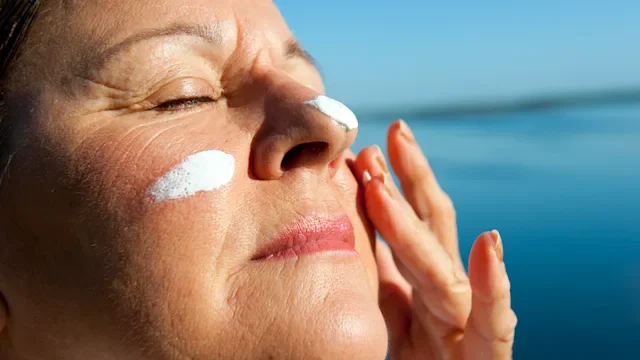
Use sunscreen every day. Use a broad-spectrum sunscreen with an SPF of at least 30. Reapply it to exposed skin every 2 hours or more often, if you go in the water or sweat a lot.
Time your sun exposure. Try to avoid prolonged sun exposure during the hottest time of day and when the sun’s rays are most powerful.
Remember your scalp. Although your hair can help prevent rays from burning your scalp, it doesn’t offer complete protection. A hat and sunscreen can help you avoid a painful scalp sunburn.
Protect your lips and eyes. The sun can also damage your eyes and lips. Apply SPF lip balm and wear UV-protective sunglasses when you go outside.
Review your medication list. Certain medications, including some antibiotics, can make you more sensitive to sunlight. This can make you more likely to get severe sunburns, rashes, and other types of skin damage.
Check your skin regularly. Pay attention to changes in your skin, such as a mole or skin spot that changes colors, has an uneven border, or looks asymmetrical. If you’re worried about a skin spot, visit a dermatologist or your primary care provider.
Avoid tanning beds. Like the sun, tanning beds put off dangerous UV rays that raise your risk of skin cancer and premature skin aging.
Frequently asked questions
Yes, sunlight gives you more energy. Sunlight has been proven to boost mood and help with sleep. Your mood plays a big role in your energy levels. And the better you sleep, the more energy you’ll have during the day.
Your body gets most of its vitamin D from sunlight. But sunlight isn’t the only way for your body to get vitamin D. You can get vitamin D from a variety of foods. Fish, beef, and eggs have lots of vitamin D. You can also get vitamin D from supplements or multivitamins.
Sunlight is generally associated with damage to your skin, but, in rare cases, it can actually help. People with psoriasis and vitiligo are often treated with UV-light exposure. And babies born with jaundice, which causes a yellowing of the skin, are also treated with UV light. In general, though, experts think that sunlight causes more damage to your skin than benefit.
Yes, you may still benefit from sunlight that comes through windows. But the glass on windows blocks UVB rays, which are the ones your body uses to make vitamin D. That said, vitamin D isn’t the only beneficial part of sunlight. Exposure to sunlight indoors can still help boost your mood. But keep in mind that not all windows block UVA rays, which can increase your risk of skin cancer.
Yes, sunlight gives you more energy. Sunlight has been proven to boost mood and help with sleep. Your mood plays a big role in your energy levels. And the better you sleep, the more energy you’ll have during the day.
Your body gets most of its vitamin D from sunlight. But sunlight isn’t the only way for your body to get vitamin D. You can get vitamin D from a variety of foods. Fish, beef, and eggs have lots of vitamin D. You can also get vitamin D from supplements or multivitamins.
Sunlight is generally associated with damage to your skin, but, in rare cases, it can actually help. People with psoriasis and vitiligo are often treated with UV-light exposure. And babies born with jaundice, which causes a yellowing of the skin, are also treated with UV light. In general, though, experts think that sunlight causes more damage to your skin than benefit.
Yes, you may still benefit from sunlight that comes through windows. But the glass on windows blocks UVB rays, which are the ones your body uses to make vitamin D. That said, vitamin D isn’t the only beneficial part of sunlight. Exposure to sunlight indoors can still help boost your mood. But keep in mind that not all windows block UVA rays, which can increase your risk of skin cancer.
The bottom line
Getting enough sunlight has benefits for your mental and physical health, including improving your mood and sleep and lowering your risk of certain diseases. People with a lighter skin tone typically only need 10 to 15 minutes of daily sun exposure. However, due to increased melanin, people with darker skin tones usually need a bit more — around 25 to 40 minutes. But due to the risk of skin damage and skin cancer from prolonged sun exposure, it’s important to wear sunscreen on a regular basis when you’re outside.

Why trust our experts?



References
American Academy of Dermatology Association. (n.d.). What to look for: ABCDEs of melanoma.
Burchell, K. (2019). Press release: Are you getting your 10-15 minutes of sunlight a day? The University of Manchester.
Centers for Disease Control and Prevention. (2024). Sleeping well.
Fahimipour, A. K., et al. (2018). Daylight exposure modulates bacterial communities associated with household dust. Microbiome.
Fleury, N., et al. (2016). Sun exposure and its effects on human health: Mechanisms through which sun exposure could reduce the risk of developing obesity and cardiometabolic dysfunction. International Journal of Environmental Research and Public Health.
Gilles, V., et al. (2011). Abnormal hypothalamic response to light in seasonal affective disorder. Biological Psychiatry.
Hart, P. H., et al. (2011). Modulation of the immune system by UV radiation: More than just the effects of vitamin D? Nature Reviews Immunology.
Ludman, P. (2023). Vitiligo: Diagnosis and treatment. American Academy of Dermatology Association.
Moan, J., et al. (2008). At what time should one go out in the sun? Advances in Experimental Medicine and Biology.
Moan, J., et al. (2014). Ultraviolet-radiation and health: Optimal time for sun exposure. Advances in Experimental Medicine and Biology.
National Institute for Occupational Safety and Health. (2020). Effects of light on circadian rhythms. Centers for Disease Control and Prevention.
Office of Dietary Supplements. (2022). Vitamin D. National Institutes of Health.
Ondrusova, K., et al. (2017). Subcutaneous white adipocytes express a light sensitive signaling pathway mediated via a melanopsin/TRPC channel axis. Scientific Reports.
Sansone, R. A., et al. (2013). Sunshine, serotonin, and skin: A partial explanation for seasonal patterns in psychopathology? Innovations in Clinical Neuroscience.
Wacker, M., et al. (2013). Sunlight and vitamin D: A global perspective for health. Dermato-Endocrinology.
Weller, R. B., et al. (2020). Does incident solar ultraviolet radiation lower blood pressure? Journal of the American Heart Association.
Yang, J., et al. (2020). The impact of bacteria-derived ultrafine dust particles on pulmonary diseases. Experimental & Molecular Medicine.