Key takeaways:
Photokeratitis is a painful eye condition where ultraviolet (UV) light damages the cornea.
Common sources of UV light include direct and reflected sunlight as well as sources of artificial light.
You can prevent photokeratitis by using eyewear that protects your eyes from UV light.
If you enjoy skiing or spending time at the beach, then you probably know that protecting your skin from the sun is important to prevent damage from ultraviolet (UV) rays. But did you know your eyes can get sunburned?
Photokeratitis, also known as ultraviolet (UV) keratitis or snow blindness, is a condition that can happen when your eyes become overexposed to UV light. Photokeratitis causes eye pain and can damage your vision. If you spend a lot of time outdoors, or your job puts you in contact with UV light, here’s what you need to know to keep your eyes safe from photokeratitis.
What causes photokeratitis?
Exposure to UV light is the cause of photokeratitis.
Search and compare options
Photokeratitis affects the cornea, the clear layer that covers the pupil and iris (the colored part of the eye). It focuses light so you can see clearly.

High levels of UV light can damage the cornea, the same way UV light can damage your skin. UV light causes inflammation of the cornea. This inflammation leads to corneal scarring and sometimes vision loss.
If you’re exposed to UV light often, you’re more at risk for developing photokeratitis.
Sunlight is the most common source of exposure to UV light. This includes:
Direct sunlight: People who spend more time outdoors (especially if they work outdoors) are more likely to be exposed to high levels of UV light.
Reflected sunlight: Reflected sunlight refers to UV rays that bounce off surfaces, especially water, sand, and snow. These UV rays are magnified. Even recreational exposure to reflected sunlight (like a day on the water or on the slopes) can cause photokeratitis.
Magnified sunlight: The strength of UV light from the sun changes from place to place. Some areas have higher levels of UV light (or UV index). Places in the mountains or closer to the equator have higher UV indexes. Living in or visiting these areas can put you at risk for photokeratitis if you don’t wear proper eye protection.
There are artificial sources of UV light, too. You’re at higher risk for developing photokeratitis if you’re often exposed to one of these sources:
Sparks and radiation from welding
Tanning beds
UV light equipment, like laboratory and disinfectant lights
Unprotected UV bulbs (often in night clubs)
Unprotected metal halide lamps (often in gyms and sports venues)

Read more like this
Explore these related articles, suggested for readers like you.
What are the symptoms of photokeratitis?
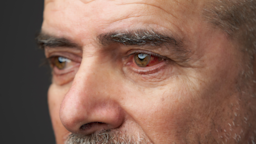
Symptoms of photokeratitis include:
Eye pain
Foreign body sensation in your eye (eye irritation)
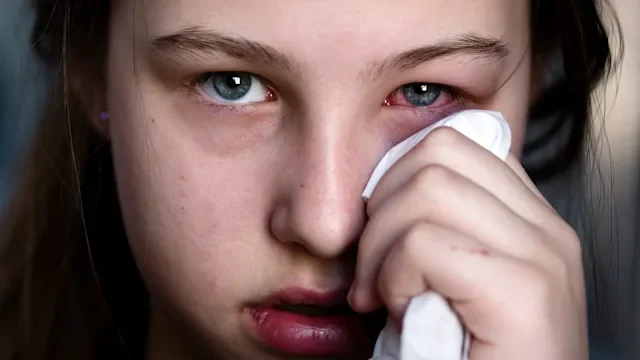
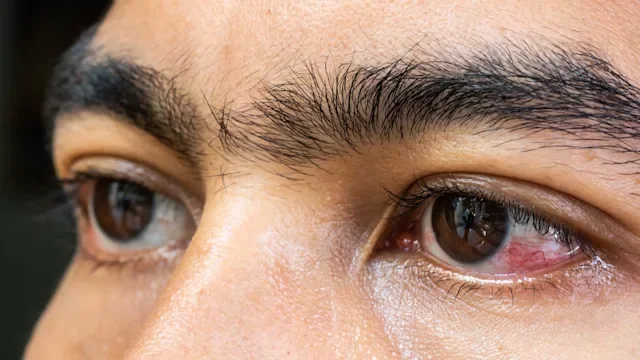
Red eyes
Blurry vision
Watery eye discharge
Eyelid swelling and redness
Symptoms usually start between 6 to 12 hours after an exposure to high levels of UV light. But they can start as early as 30 to 60 minutes after exposure to a large burst of UV light.
How do you treat photokeratitis?
Most people get better on their own within a few days. But, if you think you might have photokeratitis, make sure to see an eye doctor.
Your eye doctor will do a full eye exam to see how much damage there is to your cornea. If you have other eye conditions or wear contact lenses, you may need additional treatment for photokeratitis.
Some things that may help keep you comfortable while your eyes heal include:
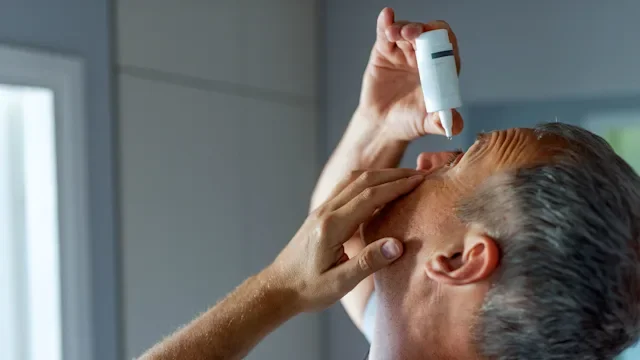
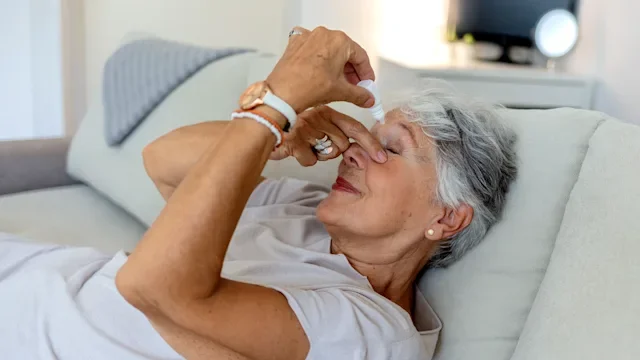
Over-the-counter (OTC) artificial tears
OTC pain relievers, like acetaminophen (Tylenol)
Cool compresses
Lower levels of light in your home
Not rubbing or touching your eyes
If you wear contact lenses, it’s best to switch to glasses until your eye doctor clears you to wear contacts again.
How can you prevent photokeratitis?
You can prevent photokeratitis by wearing protective eyewear.
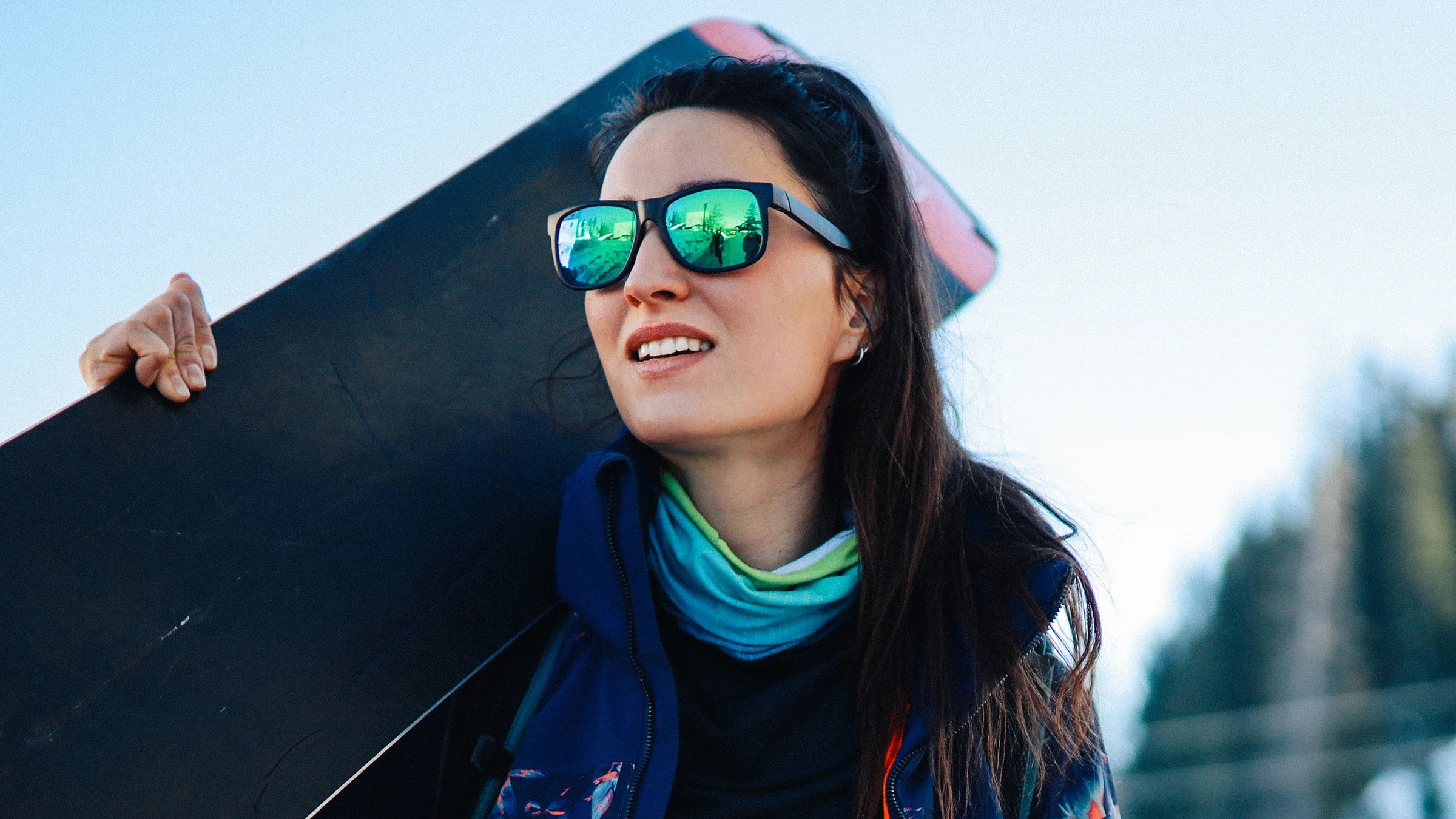
Whether you’re hanging out at the beach, sitting by the pool, or skiing on the slopes, wear sunglasses or ski goggles with UVA and UVB protection.
When shopping for sunglasses or goggles, look for one of the following on the label:
UV 400 protection
100% protection against UVA and UVB rays
Most new lenses have built-in UV protection (instead of coated on). So a good pair of sunglasses can provide protection for a long time.
If possible, opt for wraparound sunglasses. They provide extra protection because they cover the sides of your eye, not just the front.
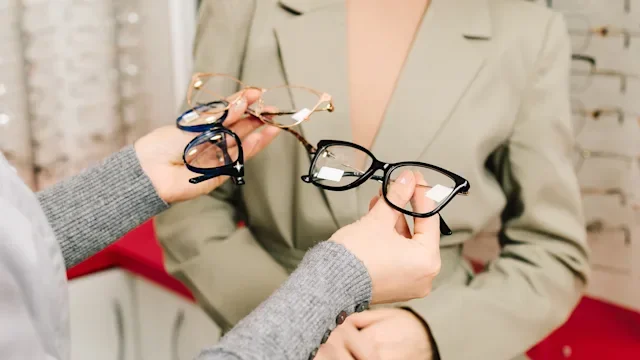
If you already own a pair of sunglasses and aren’t sure whether they provide UV protection, you can take your glasses to an optical store. The optician can use machines to measure the UV light protection in the lenses.
Keep in mind that polarized lenses don’t always include UV protection. Polarized lenses simply include a filter to reduce glare. You can get combination polarized/UV 400 lenses. This might be a good option if you work outdoors.
Darkly tinted lenses don’t always include UV protection either. In fact, dark, tinted lenses without UV protection can increase your risk of photokeratitis. That’s because your pupils will dilate when you’re wearing darker lenses, and this lets even more UV light enter your eyes.
If you’re exposed to artificial UV light sources in your workplace, always wear protective eye equipment issued by your employer. Occupational eyewear is designed to include many protective features, including UV light protection.
Does UV light cause other eye problems?
UV light can lead to other eye problems. UV light increases your risk of developing cataracts.
Exposure to UV light can also lead to ocular melanoma — a type of cancer that affects the eye and can be difficult to spot. UV light can also lead to painful eye growths that can affect your vision.
The bottom line
Photokeratitis is a painful eye condition caused by exposure to UV light. Direct and reflected sunlight on water, sand, and snow are the most common sources. Artificial UV light exposure can also cause photokeratitis.
Photokeratitis can heal on its own, but some people need more treatment. You can protect yourself from photokeratitis by wearing sunglasses and protective eyewear while working, skiing, sailing, or spending time at the beach.

Why trust our experts?




References
Abedi, F., et al. (2018). Corneal subbasal nerve recovery in an acute case of ultraviolet keratitis treated with autologous serum eye drops. Journal of Ophthalmology.
American Academy of Ophthalmology. (2016). Cornea.
American Optometric Association. (n.d.). Ultraviolet (UV) protection.
Boyd, K. (2021). What is pinguecula and a pterygium (surfer’s eye)? American Academy of Ophthalmology.
Dixon, A. J., et al. (2004). Ultraviolet radiation from welding and possible risk of skin and ocular malignancy. The Medical Journal of Australia.
Fioletov, V., et al. (2010). The UV index: Definition, distribution and factors affecting it. Canadian Journal of Public Health.
Izadi, M., et al. (2018). Photokeratitis induced by ultraviolet radiation in travelers: A major health problem. Journal of Postgraduate Medicine.
Kirschke, D. L., et al. (2004). Photokeratitis and UV-radiation burns associated with damaged metal halide lamps. Journal of the American Medical Association.
Mahadik, S., et al. (2014). Halogen lamp burst photokeratitis: A mass incidence. Journal of Evolution of Medical and Dental Sciences.
Occupational Safety and Health Administration. (2012). Eye protection against radiant energy during welding and cutting in shipyard employment.
Porter, D. (2022). What is ocular melanoma? American Academy of Ophthalmology.
Rohl, A., et al. (2022). Photokeratitis. American Academy of Ophthalmology.
The College of Optometrists. (2021). Photokeratitis (Ultraviolet [UV] burn, arc eye, snow blindness).
Ting, M. A. J., et al. (2016). Mass photokeratitis following ultraviolet light exposure at a nightclub. Contact Lens & Anterior Eye.
U.S. Food and Drug Administration. (2021). Risk of exposure to unsafe levels of radiation with Safe-T-Lite UV WAND: FDA safety communication.
Willmann, G. (2015). Ultraviolet Keratitis: From the pathophysiological basis to prevention and clinical management. High Altitude Medicine and Biology.