





5 Ways to Save on Insulin (Or Even Get It For Free) — With or Without Insurance
Insulin access and affordability is crucial for people with diabetes. See ways you can save on insulin (or even get it free) through programs and discounts.
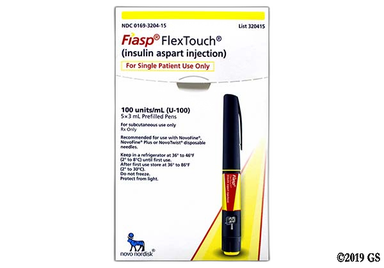
Fiasp (Insulin aspart) is a fast-acting insulin. It helps control blood sugar levels in adults and children with type 1 diabetes (T1D) or type 2 diabetes (T2). It's similar to insulin apart (Novolog), but it works more quickly because it contains niacinamide and L-arginine, which help with absorption. Fiasp comes as a vial, Fiasp Flextouch pen, Fiasp PenFill cartridge, and Fiasp PumpCart cartridge. This medication is given as an injection under the skin or through a continuous insulin pump. Some common side effects include upper respiratory tract infections and the common cold.

Fiasp (Insulin aspart) is an insulin. Insulin is a natural hormone your body makes to control blood sugar levels. It helps your body absorb and store sugar from the bloodstream after a meal. Insulin also stops your liver from making glucose (sugar). But people with diabetes can't make insulin, don't make enough insulin, or their body doesn't respond to insulin as it should.
Fiasp (Insulin aspart) is a fast-acting insulin. It's injected with or shortly after a meal to prevent blood sugar levels from rising too high. It can also be used with the appropriate insulin infusion pump.
| Common Brands | Fiasp, Fiasp FlexTouch, Fiasp PenFill |
|---|---|
| Drug Class | Insulin |
| Controlled Substance Classification | Not a controlled medication |
| Generic Status | No lower-cost generic available |
| Availability | Prescription only |

The following side effects may get better over time as your body gets used to the medication. Let your healthcare provider know immediately if you continue to experience these symptoms or if they worsen over time.
Adults:
Children:
Contact your healthcare provider immediately if you experience any of the following.
Side effects that you should report to your care team as soon as possible:
Side effects that usually do not require medical attention (report to your care team if they continue or are bothersome):



Tips on how to use Fiasp vials, Fiasp FlexTouch pens, and Fiasp PenFill cartridges:
Tips on how to use Fiasp PumpCart cartridges and vials through an insulin pump:

Fiasp (Insulin aspart) can cause some serious health issues. This risk may be even higher for certain groups. If this worries you, talk to your doctor or pharmacist about other options.
Never share Fiasp (Insulin aspart) pens, syringes, needles, or cartridges with anyone else. Sharing Fiasp (Insulin aspart) and injection supplies with someone can raise the risk of spreading very dangerous infections to other people (including yourself).
Changing your insulin or insulin routine, such as where you inject Fiasp (Insulin aspart) or switching to a different brand of insulin aspart, can affect how your body responds to insulin. This can lead to either high or low blood sugar levels. In addition, injecting Fiasp (Insulin aspart) repeatedly into skin areas that show signs of lipodystrophy, such as pitting or thickened skin, can also result in high blood sugar levels.
Don't make changes to your Fiasp (Insulin aspart) dose or routine without first checking in with your diabetes care team. Make sure to avoid injecting into skin areas that show signs of lipodystrophy. If your care team instructs you to make any changes to your insulin routine, they'll also ask you to check your blood sugar levels more often to see how the changes affect your blood sugar levels.
Using Fiasp (Insulin aspart) alone or together with other medications that lower blood sugar can lead to hypoglycemia, which is dangerously low blood sugar levels. If not treated in time, it can be life-threatening.
Check your blood sugar level regularly to make sure it's within a safe range. If your diabetes care team instructs you to mix different insulins together, read the label of the insulins carefully to make sure you're using the right products. If you make any changes to your diet or meal patterns, other medications, or how much you exercise, let your care team know because they might need to adjust your dose of Fiasp (Insulin aspart).
Make sure you're familiar with symptoms of hypoglycemia, such as feeling shaky, being nervous or anxious, sweating or body chills, and excessive hunger. Keep fast-acting sugars, such as glucose tablets, with you at all times so you can treat an episode of hypoglycemia. If your blood sugar levels don't improve even after you take fast-acting sugars, get medical help right away.
Fiasp (Insulin aspart) can lower the levels of potassium in your blood, which can sometimes be dangerous. You're at risk if you're already taking medications that lower your potassium, like certain diuretics (water pills). Your prescriber will check your potassium levels regularly and might give you medications to keep your potassium in the normal range. Tell your prescriber if you have symptoms of low potassium, such as weakness, muscle cramps or twitches, nausea, vomiting, or abnormal heartbeats.
Taking insulin, including Fiasp (Insulin aspart), with medications called glitazones (also known as thiazolidinediones), like pioglitazone (Actos), can cause your body to hold onto fluid. This can worsen or lead to heart failure. Let your prescriber know if you've noticed sudden weight gain or if you have symptoms of heart failure, such as trouble breathing, tiredness, or headache. They might need to make changes to your blood sugar medications.
If you're using an insulin pump to inject Fiasp (Insulin aspart), check that your pump is working properly and that you know how to use it correctly. When the pump isn't work properly, you're at risk of having extremely high blood sugar levels or a serious complication of diabetes called ketoacidosis. Call your prescriber right away if you can't fix your pump quickly. Your prescriber might recommend that you inject Fiasp (Insulin aspart) in other ways in the meantime. Seek medical help if you have symptoms of ketoacidosis, such as tiredness, fruity-smelling breath, or vomiting.

Your diabetes care team will determine your dose of Fiasp (Insulin aspart) based on different factors, such as your blood sugar level, body weight, how responsive your body is to insulin.


Contraindications are specific health conditions or situations in which a person should not take a medication due to safety concerns. If you have any of the following conditions or if any of the following apply to you, let your healthcare provider know because Fiasp (Insulin aspart) will not be safe for you to take.






Prescription savings
Stop paying too much for your prescriptions. Compare prices, get pharmacy coupons, and save up to 80%. Find expert answers to your health questions so you can make the best decisions for yourself and your family.
Health conditions
Medications & treatment
Access & affordability
 Our monthly healthcare membership can help you save thousands on your prescription costs.
Resources

Yes, Fiasp is considered a fast-acting (or rapid-acting) insulin that's given with the first bite of a meal or within 20 minutes after starting a meal. The purpose of fast-acting insulin is to prevent your blood sugar levels from rising too high from your food.
Fiasp contains insulin aspart, which is a rapid-acting insulin. Studies show that it takes about 16-20 minutes for Fiasp to start lowering blood sugar levels. Typically, people experience the maximum effect of this medication after about 1.5-2 hours.
The blood sugar-lowering effects of Fiasp can last for about 5 to 7 hours after a dose. If you're taking Fiasp as meal time insulin, you typically need to take the medication multiple times per day with each meal.
Fiasp and Novolog (insulin aspart) are fast-acting insulins that contain insulin aspart as the active ingredient. But, they're not the same. The main difference between them is that Fiasp also contains niacinamide (vitamin B3) and L-arginine as inactive ingredients, while Novolog doesn't. The niacinamide and L-arginine in Fiasp allows your body to absorb this medication about 5 minutes faster than it does Novolog. Because Fiasp works more quickly than Novolog, you can inject it at the start of meal time or within 20 minutes of the start of your meal, instead of needing to do so 5 to 10 minutes before meals like with Novolog. Ask your diabetes care team if you have more questions about the differences between each medication.
Yes, it's possible to gain weight from Fiasp. This is a typical side effect of insulin because of how it works in your body. In clinical studies, people who took Fiasp gained about 1.5 to 6 pounds. To lower your risk for weight gain, your healthcare team can help you plan a nutritious diet and an exercise routine that works best for you. Talk with your healthcare team if you've more questions about the risk of weight gain from Fiasp.
Yes, you can use the Fiasp PumpCart cartridges or vial with a compatible insulin pump. It's important to check the insulin pump to make sure Fiasp has specifically been tested for safety and compatibility with the pump. Your endocrinologist will decide if administration through an insulin pump is right for you.
Fiasp can be used with the Omnipod DASH, but not yet with the Omnipod 5. Talk with your diabetes care team if you've more questions about Fiasp and Omnipod compatibility.
No, Fiasp can't be used with a tandem pump because it hasn't been studied.
Fiasp is made by Novo Nordisk.
