


Xtandi Dosages: Your GoodRx Guide
Read on for Xtandi (enzalutamide) dosage information, including typical dosage, adjustments for health conditions, and what to do if you miss a dose.
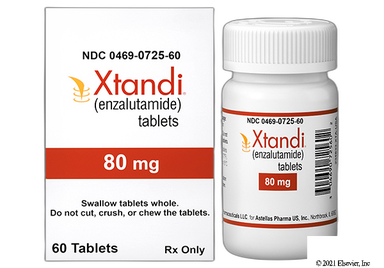
Xtandi (enzalutamide) is a prescription cancer medication used to treat certain types of prostate cancer in adults. It works by blocking testosterone, a hormone that many prostate cancers need to grow. You usually take a tablet or capsule once a day by mouth, often along with other hormone treatments or after surgery to remove the testicles. Common side effects include weakness or fatigue, back pain, and hot flashes.

Xtandi (enzalutamide) is an androgen receptor inhibitor. It works by blocking testosterone in prostate cancer cells. Since testosterone helps prostate cancer grow, this medication reduces its effects to slow or stop the cancer from growing or spreading.
| Common Brands | Xtandi |
|---|---|
| Drug Class | Androgen receptor inhibitor |
| Controlled Substance Classification | Not a controlled medication |
| Generic Status | No lower-cost generic available |
| Availability | Prescription only |

The following side effects may get better over time as your body gets used to the medication. Let your healthcare provider know immediately if you continue to experience these symptoms or if they worsen over time.
Contact your healthcare provider immediately if you experience any of the following.
Side effects that you should report to your care team as soon as possible:
Side effects that usually do not require medical attention (report these to your care team if they continue or are bothersome):




Xtandi (enzalutamide) can cause some serious health issues. This risk may be even higher for certain groups. If this worries you, talk to your doctor or pharmacist about other options.
Although it's rare, Xtandi (enzalutamide) might put you at risk for seizures. In studies, seizures happened anywhere from a few days to several years after starting treatment. Let your oncologist know if you have a history of seizures or are medications that raise the risk for seizures. Because of this risk, avoid activities where losing consciousness could be dangerous, such as driving or swimming alone.
Stop taking Xtandi (enzalutamide) and tell your oncologist right away if you think you've had a seizure. You’ll likely need to switch to a different medication to treat your prostate cancer. Early symptoms of a seizure can include a strange taste or smell, feeling anxious, nausea, or a fluttering feeling in your body.
In rare cases, people taking Xtandi (enzalutamide) have developed a brain condition called posterior reversible encephalopathy syndrome (PRES). If this happens, you’ll need to stop the medication. Get medical help right away if you have sudden severe headaches, confusion, vision loss or changes, behavior changes, or seizures.
Allergic reactions have happened in some people taking Xtandi (enzalutamide). These reactions can include swelling of the face, lips, tongue, or throat. If you notice any signs of an allergic reaction, stop taking the medication and get medical help right away. If the reaction is serious, you will need to stop the medication altogether.
Rarely, Xtandi (enzalutamide) can cause blocked arteries in the heart called ischemic heart disease. If this happens and your symptoms are severe, you’ll need to stop taking this medication. Call your oncologist right away if you have chest pain, chest discomfort during rest or activity, or shortness of breath, since these might be signs of heart problems.
Xtandi (enzalutamide) can raise your risk of falls and broken bones. These problems can happen days or even years after starting the medication. Tell your oncologist if you develop bone pain or experience falls while taking this medication.
Xtandi (enzalutamide) can harm an unborn baby. If your partner can get pregnant, use birth control, such as condoms, while you’re taking this medication and for 3 months after your last dose. Tell your oncologist right away if your partner becomes pregnant during this time.
Xtandi (enzalutamide) capsules or tablets can be large and can cause serious choking or trouble swallowing in some people. To lower this risk, swallow each capsule or tablet whole with plenty of water. If you have trouble swallowing pills, tell your oncologist.

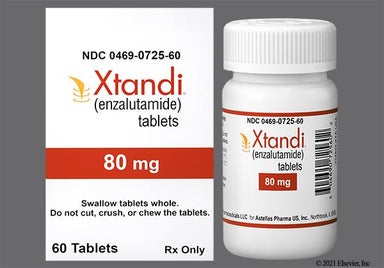
 Tablet
| Dosage | Quantity | Price as low as | Price per unit |
|---|---|---|---|
| 40mg | 120 tablets | $14,745.03 | $122.88 |
The typical dose is 160 mg by mouth once a day.







Prescription savings
Stop paying too much for your prescriptions. Compare prices, get pharmacy coupons, and save up to 80%. Find expert answers to your health questions so you can make the best decisions for yourself and your family.
Health conditions
Medications & treatment
Access & affordability
Medication discounts


Xtandi isn't chemotherapy. Chemotherapy works by directly killing fast-growing cells, including cancer cells. Xtandi is a type of hormone therapy called an androgen receptor inhibitor, which blocks testosterone from helping prostate cancer grow and spread.
When you’re taking Xtandi, avoid grapefruit and grapefruit juice because they can change how your body breaks down the medication and raise the risk of side effects. If you’re unsure about certain foods or supplements, check with your care team.
Xtandi can start lowering your prostate-specific antigen (PSA) within a few weeks, but it often takes a few months to see a clear drop. PSA is a protein in your blood that your cancer care team uses to track how active your prostate cancer is, and higher levels can mean the cancer is growing. Your care team will check your PSA regularly to see how well the medication is working for you.
You can take Xtandi at any time of day that works best for you. The most important thing is to take it at the same time every day to keep steady levels in your body. Many people choose morning or evening based on their routine, and you can take it with or without food.
Xtandi doesn’t usually cause hair loss. Most people don’t notice changes in their hair while taking it. If you do notice hair thinning or other changes, it could be related to hormone changes or other treatments, so let your oncologist know.
Yes. Xtandi can help people with certain types of prostate cancer live longer. For example, a large study in people with metastatic hormone-sensitive prostate cancer found that adding this medication to standard hormone-lowering treatment lowered the risk of death by about 30% over five years and led to a higher chance of being alive at five years compared with hormone-lowering therapy alone. The benefit can be different for each person, so your oncologist can help explain what this means for your specific situation.
You can usually drink coffee while taking Xtandi, but it’s a good idea to check with your oncologist first. Caffeine can make side effects like diarrhea or trouble sleeping worse for some people. Ask your oncology care team how much coffee, if any, is safe for you.
No, Xtandi doesn't need to be refrigerated. Store it at room temperature, away from heat and moisture, and keep it in its original container. If you have questions about storage, your pharmacist can help.
