Key takeaways:
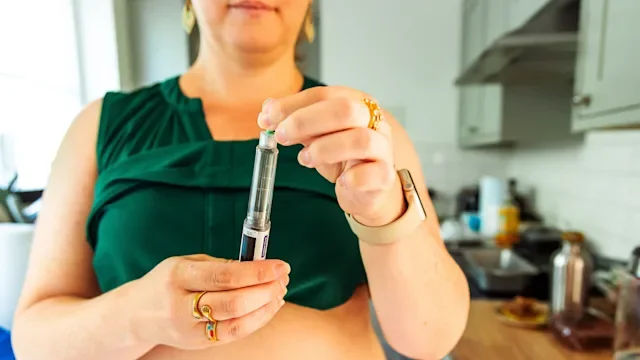
Nearly 100 new Type 2 diabetes medications are being studied in clinical trials. Many of them work differently from current treatment options. There are also new once-weekly injections being developed for more convenient dosing.
Several new medications work by targeting gut hormones involved in balancing blood glucose (sugar) and digestion. Some may improve upon current medications that work this way.
Over the next few years, we may see several new Type 2 diabetes treatments approved for use in the U.S.
Whether you’re newly diagnosed or it has been part of your life for years, everyone’s experience living with Type 2 diabetes is different. Medications don’t make up the entire picture. But the right ones for you are often chosen based on your treatment goals, risk factors, personal preferences, and more.
Today, there are about 60 Type 2 diabetes medications to choose from. And researchers are studying roughly 100 more in clinical trials. What’s more, many are innovating new ways to treat the condition while also providing heart, kidney, and body weight-related benefits.
Here, we’ll discuss five new Type 2 diabetes treatments that may be available down the road.
1. Sotagliflozin
Jardiance, Farxiga, and Invokana: these popular medications all belong to the same class, known as sodium-glucose co-transporter 2 (SGLT2) inhibitors.
SGLT2 inhibitors are oral medications that work in your kidneys to get rid of excess sugar (glucose) and sodium (salt) through your urine. This effect can help lower your blood glucose levels. And it can provide kidney and heart-related benefits for certain people, too.
Researchers are studying a new medication called sotagliflozin. It works in a similar way to the SGLT2 inhibitors mentioned above. But what makes it unique is that, in addition to how it works in your kidneys, it also affects glucose absorption in your intestines. This targets sugar coming from your diet, which may help lower your blood glucose after a meal.
Sotagliflozin is the first medication in a class called dual SGLT1/2 inhibitors. It works on SGLT1 proteins in your intestines, and both SGLT1 and SGLT2 proteins in your kidneys. Its side effects are similar to SGLT2 inhibitors, with the addition of diarrhea.
Potential benefits
Sotagliflozin has been shown to help lower hemoglobin A1C (A1C) levels — your average blood sugar levels over 3 months. And it was found to work just as well as a few other diabetes medications, including Jardiance (empagliflozin) and glimepiride (Amaryl).
If you’re living with both Type 2 diabetes and heart failure, sotagliflozin may have some added benefits. Results from two studies suggest that it can lower the risk of death and worsening heart failure by 22% to 43%. This includes types of heart failure that are difficult to treat.
And if you have chronic kidney disease (CKD), sotagliflozin may lower the risk of death related to heart disease. It may also lower the risk of hospitalization and urgent care visits for heart failure.
Whether sotagliflozin is the right medication for you may depend on your risk factors and medical history. If you have CKD, for example, sotagliflozin could be preferred to also help prevent strokes.
Availability
The FDA is currently reviewing sotagliflozin’s application for approval. A decision is expected in May 2023. For certain people with Type 2 diabetes, sotagliflozin may be approved to help lower the risk of:
Heart attack
Stroke
Death related to heart disease
Hospitalization and urgent care visits due to heart failure
2. IcoSema
If you’re taking insulin as part of your treatment plan, a daily long-acting insulin is likely part of your regimen. And if you’re not taking one already, your healthcare provider may add a non-insulin injectable medication, like semaglutide (Ozempic), to the mix.
Semaglutide is a glucagon-like peptide-1 (GLP-1) agonist that’s injected once weekly. It mimics a gut hormone that increases insulin release in response to food, blocks your liver from making glucose, and makes you feel full. If you also have heart disease, semaglutide can help lower your risk of heart attack and stroke.
Researchers have been studying IcoSema, a new medication that combines insulin and semaglutide into a single injection. This concept isn’t new. But similar combination products need to be injected once daily. And IcoSema is injected once weekly.
IcoSema combines semaglutide with insulin icodec, a new once-weekly insulin that’s also being studied. Insulin icodec binds to specific proteins in your blood, allowing it to last longer in your body compared to other long-acting insulins.
Low blood glucose (hypoglycemia) may be possible with IcoSema. You may also experience side effects like nausea, vomiting, or diarrhea.
Potential benefits
When added to long-acting insulin, semaglutide has been shown to significantly lower A1C and cause weight loss. Combining both of them into a once-weekly injection may give you a more convenient dosing option. In other words, IcoSema could mean fewer injections.
Availability
IcoSema is currently being studied in several different phase 3 clinical trials. The trials are all expected to be completed by early 2024. So, we may see IcoSema available within the next few years.
3. CagriSema
IcoSema isn’t the only semaglutide combination product being studied. CagriSema combines semaglutide and cagrilintide into a once-weekly injection. Cagrilintide is a new long-acting amylin analogue.
Amylin analogues have several overlapping effects with GLP-1 agonists like semaglutide. This includes making you feel full and decreasing glucose production by your liver. Combining the two may provide additive effects.
Pramlintide (Symlin) is currently the only FDA-approved amylin analogue. But it’s short-acting, so you need to inject it before your main meals every day. Cagrilintide binds to certain proteins in your blood, similar to insulin icodec. This causes it to last longer in the body, allowing for once-weekly dosing with semaglutide.
Potential benefits
In August 2022, CagriSema’s manufacturer announced results from a phase 2 clinical trial. The trial compared the medication to semaglutide or cagrilintide alone in people with Type 2 diabetes and overweight. CagriSema was shown to lower A1C more than either medication by itself. And it resulted in greater weight loss, too.
Availability
Because of these promising phase 2 results, the manufacturer plans to start phase 3 trials in 2023. If everything goes as planned, CagriSema may be available within the next few years.
4. Retatrutide
In early 2022, the FDA approved a new medication called tirzepatide (Mounjaro). Tirzepatide works like semaglutide, but it mimics a second gut hormone for additive effects. In fact, tirzepatide has been found to work better than semaglutide at lowering A1C. And people taking it lost more weight.
Now, tirzepatide’s manufacturer is studying retatrutide (formerly LY3437943). Retatrutide is a once-weekly injection that targets three hormones involved in balancing blood glucose. These include the two hormones targeted by tirzepatide, plus glucagon.
Glucagon is a hormone made by your pancreas to help balance your blood sugar levels. Retatrutide doesn’t contain glucagon. But it’s thought to mimic some of glucagon’s effects. These include lowering your appetite, helping you burn more calories, and breaking down fat.
Retatritude is the first medication in a class called GIP/GLP-1/glucagon receptor agonists (or GGG triple agonists).
Potential benefits
Retatritude works by mimicking three different gut hormones. And researchers believe this may improve glucose values and result in more weight loss than tirzepatide and GLP-1 agonists. However, results from a phase 2 trial aren’t available yet. And any potential benefits will need to be confirmed in a larger phase 3 trial.
Availability
Retatrutide is currently being studied in a phase 2 clinical trial that’s expected to wrap up in October 2022. Depending on the results, the medication could move forward to phase 3 trials. So, it may be a few years before retatrutide is available.
5. Imeglimin
Almost every cell in your body has mitochondria necessary for energy. But you may be surprised to learn that mitochondria are also thought to play a role in Type 2 diabetes. In particular, they may affect how certain cells respond to insulin and improve glucose levels in your body.
Researchers have been exploring ways to apply this idea to new treatments. One example is an oral medication called imeglimin. Imeglimin is the first of a new class called “glimins.” Glimins are thought to help mitochondria in your pancreas, liver, and muscle cells work better to help control blood sugar levels.
Potential benefits
Imeglimin has been studied in several phase 3 trials in Japan. These include trials studying imeglimin on its own, in combination with other diabetes medications, and with insulin. Imeglimin was shown to significantly lower A1C by itself and provide additional A1C reduction when added to other treatments.
Animal studies have suggested that imeglimin may also have heart and kidney-related benefits. But these effects haven’t been confirmed in people yet.
Availability
In September 2021, imeglimin was launched in Japan under the name “Twymeeg.” Imeglimin’s manufacturer is looking at opportunities to move the medication forward in the U.S. and other countries. Previous discussions with the FDA involved planning phase 3 trials that will study imeglimin’s effects in people with Type 2 diabetes and certain stages of CKD. A timeline for these studies has yet to be announced.
The bottom line
There are many new Type 2 diabetes treatments being studied in clinical trials. Several are trying to improve upon medications like tirzepatide and GLP-1 agonists. Others are being formulated to allow for less frequent dosing as once-weekly injections. Over the next few years, we may see several new treatment options approved in the U.S.

Why trust our experts?



References
Al-Massadi, O., et al. (2019). Glucose control on food intake and energy balance. International Journal of Molecular Sciences.
Avgerinos, I., et al. (2021). Sotagliflozin for patients with type 2 diabetes: A systematic review and meta-analysis. Diabetes, Obesity and Metabolism.
Bajaj, H. S., et al. (2021). Switching to once-weekly Insulin Icodec versus once-daily insulin glargine U100 in type 2 diabetes inadequately controlled on daily basal insulin: A phase 2 randomized controlled trial. Diabetes Care.
Bhatt, D. L., et al. Sotagliflozin in patients with diabetes and chronic kidney disease. The New England Journal of Medicine.
Cefalo, C. M. A., et al. (2019). Sotagliflozin, the first dual SGLT inhibitor: Current outlook and perspectives. Cardiovascular Diabetology.
ClinCalc.com. (2020). SGLT-2 inhibitors.
Clinicaltrials.gov. (2022). A study of LY3437943 in participants with type 2 diabetes. Eli Lilly and Company.
Clinicaltrials.gov. (n.d.). Icosema phase 3.
Coskun, T., et al. (2022). LY3437943, a novel triple glucagon, GIP, and GLP-1 receptor agonist for glycemic control and weight loss: From discovery to clinical proof of concept. Cell Metabolism.
Dahlén, A. D., et al. (2022). Trends in antidiabetic drug discovery: FDA approved drugs, new drugs in clinical trials and global sales. Frontiers in Pharmacology.
Davies, M. J., et al. (2022) Management of hyperglycemia in Type 2 Diabetes, 2022. A consensus report by the American Diabetes Association (ADA) and the European Association for the Study of Diabetes (EASD). American Diabetes Association.
Dubourg, J., et al. (2021). Efficacy and safety of imeglimin monotherapy versus placebo in Japanese patients with type 2 diabetes (TIMES 1): A double-blind, randomized, placebo-controlled, parallel-group, multicenter phase 3 trial. Diabetes Care.
Dubourg, J., et al. (2021). Long-term safety and efficacy of imeglimin as monotherapy or in combination with existing antidiabetic agents in Japanese patients with type 2 diabetes (TIMES 2): A 52-week, open-label, multicentre phase 3 trial. Diabetes, Obesity & Metabolism.
Eli Lilly and Company. (2022). Retatrutide [package insert].
Frías, J. P., et al. (2021). Tirzepatide versus semaglutide once weekly in patients with type 2 diabetes. The New England Journal of Medicine.
Hallakou-Bozec, S., et al. (2021). Mechanism of action of imeglimin: A novel therapeutic agent for type 2 diabetes. Diabetes, Obesity & Metabolism.
Konkwo, C., et al. (2022). Imeglimin – Current development and future potential in type 2 diabetes. Drugs.
Kruse, T., et al. (2021). Development of cagrilintide, a long-acting amylin analogue. Journal of Medicinal Chemistry.
Lexicon Pharmaceuticals, Inc. (2022). Lexicon announces FDA acceptance of new drug application for sotagliflozin to treat heart failure.
Napoli, N. (2021). Sotagliflozin shows benefit for difficult-to-treat form of heart failure. American College of Cardiology.
Novo Nordisk Global. (2022). Novo Nordisk successfully completes phase 2 trial with CagriSema in people with type 2 diabetes.
Padda, I. S., et al. (2022). Sodium-glucose transport protein 2 (SGLT2) inhibitors. StatPearls.
Pitt, B., et al. (2021). Does SGLT1 inhibition add benefit to SGLT2 inhibition in type 2 diabetes?. Circulation.
Poxel Pharma. (n.d.). Diabetes.
Reilhac, C., et al. (2022). Efficacy and safety of imeglimin add-on to insulin monotherapy in Japanese patients with type 2 diabetes (TIMES 3): A randomized, double-blind, placebo-controlled phase 3 trial with a 36-week open-label extension period. Diabetes, Obesity & Metabolism.
Rodbard, H. W., et al. (2018). Semaglutide added to basal insulin in type 2 diabetes (SUSTAIN 5): A randomized, controlled trial. The Journal of Clinical Endocrinology & Metabolism.
Rosenstock, J., et al. (2020). Once-weekly insulin for type 2 diabetes without previous insulin treatment. The New England Journal of Medicine.
Roth, J. D., et al. (2011). GLP-1R and amylin agonism in metabolic disease: Complementary mechanisms and future opportunities. British Journal of Pharmacology.
Sergi, D., et al. (2019). Mitochondrial (Dys)function and insulin resistance: From pathophysiological molecular mechanisms to the impact of diet. Frontiers in Physiology.
Sumotiomo Dainippon Pharma. (2021). Sumitomo Dainippon Pharma announces launch of TWYMEEG® for the treatment of type 2 diabetes in Japan.
Yaribeygi, H., et al. Molecular mechanisms by which imeglimin improves glucose homeostasis. Journal of Diabetes research.
Zhao, L. M., et al. (2021). Gliflozins for the prevention of stroke in diabetes and cardiorenal diseases. Medicine.