Key takeaways:
The common cold and the flu are both respiratory illnesses, but they’re caused by different viruses.
Colds are more common, cause a milder illness, and typically resolve without treatment.
The flu is typically a more severe illness. Most people get better on their own, but the flu can sometimes lead to complications like pneumonia, especially in people at higher risk.
The flu vaccine helps prevent the flu, and special antiviral medications can help treat it. There’s no vaccine for the common cold, but you can help prevent infection with some basic strategies.
Save on related medications
You might ask yourself, “Do I have a cold or the flu?” when you wake up with a sore throat, runny nose, and cough. While a cold and the flu can have similar symptoms, there are some important differences to know.
Here, we’ll go over those differences, talk about treatments for the cold and flu, and give you some tips to help you avoid getting either one.
What’s the difference between a cold and the flu?
The common cold and the flu both cause respiratory infections. But there are some key differences to know.
Search and compare options
They’re caused by different viruses
The seasonal flu is caused by two main viruses: influenza A and influenza B.
The common cold, on the other hand, can be caused by over 200 different types of viruses. Some of these include viruses you may have heard of, like:
RSV (respiratory syncytial virus)
Coronavirus (which is related to, but different from, the virus that causes COVID-19)
Other viruses that cause the common cold are less well known, including:
Rhinovirus
Adenovirus
Enterovirus
Parainfluenza virus
Flu symptoms may be more severe than the common cold
The flu and the common cold can cause similar symptoms, but the flu is generally more severe. Every year, up to 52,000 people in the U.S. die from the flu. And up to 710,000 are hospitalized because of it. It’s very rare for people to be hospitalized or to die from the common cold.

How do you break a fever? Here’s what to know about how — and when — to bring a fever down.
Cough not going away? Take a look at nine common causes of a persistent cough.
Can an apple a day keep the doctor away? Three healthcare professionals share their tips for what to eat to stay healthy during cold and flu season.
The good news is that, even though the flu is more severe, it’s less common than the cold. Most adults get 2 to 4 colds per year, on average. By contrast, your chance of getting the flu is only about 8% each year.
Flu vs. cold symptom severity, duration, and onset
The chart below lists some other differences between the common cold and the flu, including how severe symptoms are, how fast they start, and how long they last.
| Cold | Flu | |
|---|---|---|
| Incubation period | ||
| Duration of symptoms |
|
|
| Severity of symptoms |
|
|
| Risk of complications |
|
|
| Treatment options |
|
|
| Symptom onset |
|
|
Common cold vs. flu symptoms: How can you tell which one you have?
Both a cold and the flu can cause symptoms of a respiratory infection, including:
A cough
Runny nose
Sore throat
Sneezing
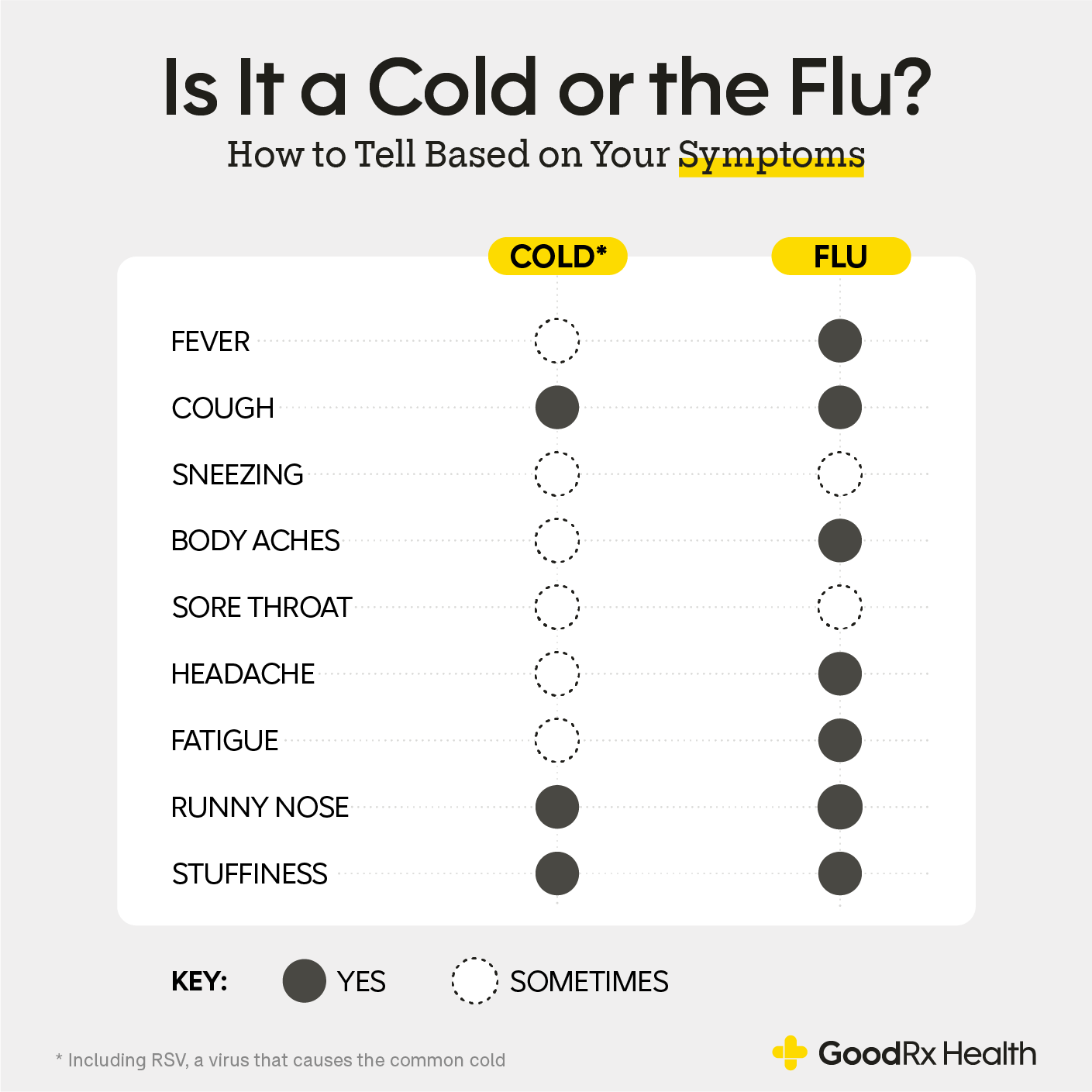
Because cold and flu symptoms are similar, it can be hard — and sometimes impossible — to tell them apart. But some symptoms are more common with one versus the other.
Here’s what to look out for with cold or flu symptoms.
Common flu symptoms
In general, flu symptoms come on faster and are more severe than cold symptoms. Common flu symptoms include:
Fever
Chills
Muscle aches
Headache
Sore throat
Runny or stuffy nose and sneezing
Cough and/or chest congestion
Fatigue and weakness
Young children sometimes get an upset stomach with vomiting and diarrhea when they have the flu.
Common cold symptoms
Cold symptoms can vary, but in most cases they’re mild.
Common cold symptoms include:
Runny or stuffy nose and sneezing
Cough
Sore throat
Pink or irritated eyes
Low-grade fever in some cases
COVID virus vs. flu vs. cold symptoms
Another respiratory virus that can cause similar symptoms is COVID. It can be very difficult to tell the difference between COVID, the flu, and the common cold. It’s also possible to have both COVID and the flu at the same time.
COVID symptoms include:
Fever and/or chills
Cough
Sore throat
Headache
Body aches
Runny or stuffy nose and sneezing
Fatigue
Loss of taste or smell
Difficulty breathing
Nausea, vomiting, and/or diarrhea
Can you be tested for the flu and colds?
Yes. There are tests available for the flu, COVID, and many of the viruses that cause the common cold.
You can now get several flu and COVID tests over the counter (OTC) without a prescription. These include at-home rapid antigen tests and combination COVID/flu tests. You can also be tested in a clinic, where healthcare professionals typically swab your nose or throat. Rapid flu tests done in clinics can give results in as little as 15 minutes. Lab-based tests take longer but are more accurate.
Most people don’t get tested for common cold viruses. But some new, multiplex respiratory virus tests can screen for several different infections all at once. This type of testing can be expensive, but they help healthcare professionals make more informed decisions about treatment.
Are treatments for a cold and the flu the same?
While some treatments for a cold and the flu are similar, there’s an important difference: specific antiviral medications can help treat the flu, but no such medications exist for the common cold.
Prescription flu medications
There are four FDA-approved prescription medications for the flu:
Oseltamivir phosphate (Tamiflu)
Zanamivir (Relenza)
Peramivir (Rapivab)
Baloxavir marboxil (Xofluza)
Most people who get the flu have mild symptoms and may not need medications. Antiviral medications may be helpful for people with more severe disease or those in high-risk groups, including:
Adults older than age 65
People with lung disease
Pregnant women
People with weakened immune systems
For those who do get flu treatment, it’s important to start any medications early for them to be effective — ideally within 2 days of symptom onset. If started early, these medications have been shown to decrease symptoms, shorten the course of illness, and prevent some serious flu-related complications, like being hospitalized.
Other than antiviral medications, cold and flu symptoms are treated similarly. If you have either illness, you should stay home, get plenty of rest, and stay hydrated with lots of fluids.
OTC cold and flu medications
Fever and other symptoms, like cough and congestion, can be treated with OTC medications that don’t require a prescription.
Some common examples of OTC medications that can help lower fever include:
Acetaminophen (Tylenol)
Ibuprofen (Advil)
There are also combination medications that can help with fever and other flu symptoms, like cough and congestion:
Your primary care provider can help determine what’s best for you.
When should you get medical attention for the cold or flu?
Most people who catch a cold or the flu don’t need medical attention. Some people have a higher risk of getting very sick from the flu. This includes people with chronic medical conditions or weakened immune systems, as well as pregnant people, young children, and adults age 65 and older.
If you’re at risk for serious infection, be sure to contact a healthcare professional as soon as possible, even if your symptoms are mild.
When the flu becomes severe, it can look very different than what you might expect. Serious complications of the flu include:
Brain infections, like encephalitis or meningitis
Heart infections, like myocarditis or pericarditis
Lung infections, like pneumonia
Multi-organ system diseases, like sepsis
Anyone who develops any of the following warning signs should also get medical care right away:
Shortness of breath or difficulty breathing
Chest pain
Abdominal pain
Confusion
Lightheadedness or dizziness
Excessive sleepiness
Seizures
Blue discoloration of their lips or face
The flu can look different in children than it does in adults. For more details on warning signs to look out for in children, read our article on flu symptoms in kids.
How can you prevent getting a cold or flu?
Like with any virus, prevention is the best strategy to avoid getting colds and the flu.
Here are some basic steps you can take:
Clean your hands often. Wash your hands with soap and water for at least 20 seconds, or use hand sanitizer. Viruses that cause the common cold and flu can live on your fingers. Keeping them clean is one of the best ways to avoid getting sick.
Stay away from people who’re sick. The common cold and the flu are contagious. Avoiding people who have symptoms will help keep you from getting sick.
Don’t touch your face. Avoid touching your nose, eyes, and mouth with unwashed hands. The viruses that make people sick often enter your body from these places.
Cover your sneeze. Cover your mouth and nose when you cough or sneeze with the flu or a cold. This helps prevent viruses from spreading through droplets in the air.
In addition to these steps, the best way to prevent the flu is to get the flu vaccine each year. The flu vaccine has been shown to keep people from getting the flu and also to help prevent flu-related hospitalizations.
Frequently asked questions
No. Common colds and the flu are caused by different viruses. This means that a cold can’t turn into the flu, or vice versa. But keep in mind that it’s possible to be sick with more than one virus at once. In other words, you could have a cold and the flu together.
Yes, you should stay home until you’ve been fever-free for at least 24 hours without using fever-reducing medication, like Tylenol. You should also stay home until your symptoms are starting to get better.
If your symptoms are very mild, it’s possible that you could feel better in 3 days. For most people, cold symptoms peak in the first 3 days after exposure. It’s likely you’ll feel better within a week, but symptoms can sometimes last longer.
No. Common colds and the flu are caused by different viruses. This means that a cold can’t turn into the flu, or vice versa. But keep in mind that it’s possible to be sick with more than one virus at once. In other words, you could have a cold and the flu together.
Yes, you should stay home until you’ve been fever-free for at least 24 hours without using fever-reducing medication, like Tylenol. You should also stay home until your symptoms are starting to get better.
If your symptoms are very mild, it’s possible that you could feel better in 3 days. For most people, cold symptoms peak in the first 3 days after exposure. It’s likely you’ll feel better within a week, but symptoms can sometimes last longer.
The bottom line
The common cold and the flu can be difficult to tell apart. Often, the difference doesn’t matter — symptoms can settle within a week and can be eased with OTC remedies. But in some cases, the flu can cause a severe illness that requires hospitalization. Because of this, it’s important to recognize the signs of serious flu and to know if you’re at high risk for life-threatening flu complications.
The best way to protect yourself from severe flu is to get the yearly flu vaccine and start an antiviral flu treatment within the first 48 hours of symptoms. There are no vaccines or antiviral treatments for the viruses that cause the common cold.

Why trust our experts?



References
Budd, A., et al. (2017). Chapter 6: Influenza. Manual for the Surveillance of Vaccine-Preventable Diseases.
Centers for Disease Control and Prevention. (2024). About common cold.
Centers for Disease Control and Prevention. (2024). About estimated flu burden.
Centers for Disease Control and Prevention. (2024). Clinical signs and symptoms of influenza.
Centers for Disease Control and Prevention. (2024). Treatment of flu in children.
Centers for Disease Control and Prevention. (2025). Treating flu with antiviral drugs.
Eccles, R. (2005). Understanding the symptoms of common cold and influenza. The Lancet. Infections Diseases.
Heikkinen, T., et al. (2003). The common cold. Lancet.
Huang, H., et al. (2018). Multiplex PCR system for the rapid diagnosis of respiratory virus infection: Systematic review and meta-analysis. Clinical Microbiology and Infection.
Katz, S. (2025). Common cold. Merck Manual.
MedlinePlus. (2025). Common cold.
National Heart, Lung, and Blood Institute. (2023). What is heart inflammation?
Tokars, J. I., et al. (2017). Seasonal incidence of symptomatic influenza in the United States. Clinical Infectious Diseases.