
Key takeaways:
Zyrtec (cetirizine), Claritin (loratadine), and Allegra (fexofenadine) are over-the-counter (OTC) antihistamines used to treat allergies. Overall, they work similarly well, but you may find that one works better for you.
These three medications are all labeled as “nondrowsy antihistamines” because they cause less drowsiness than older antihistamines, such as Benadryl (diphenhydramine). But Zyrtec is more likely to make you sleepy than Claritin or Allegra.
Other OTC allergy medications include steroid nasal sprays, such as Flonase Allergy Relief (fluticasone propionate), and decongestants, such as Sudafed (pseudoephedrine). Your prescriber or pharmacist can help you choose the best treatment for your allergies.
Save on related medications
Allergies are common, with more than 100 million people in the U.S. experiencing some type of allergy symptoms each year. If you have allergies, you know how bothersome these symptoms — a runny nose, itchy eyes, sneezing, and more — can be.
Fortunately, there are several over-the-counter (OTC) medications that can help. Zyrtec (cetirizine), Claritin (loratadine), and Allegra (fexofenadine) are examples of popular OTC antihistamines.
It can be hard deciding between Zyrtec, Claritin, and Allegra — or maybe something else altogether. You can start by finding out more about how they work, what side effects you can expect, and what the alternatives are.
Search and compare options
Zyrtec vs. Claritin vs. Allegra: Which is the best allergy medicine?
In general, Zyrtec, Claritin, and Allegra all work similarly well for treating allergies. But some studies suggest Allegra might work slightly better for eye-related symptoms. And Claritin may be slightly less effective than other similar antihistamines. But overall, experts don’t recommend one of these three antihistamines over the others.
Typically, many people find that one antihistamine works better for them or causes fewer side effects. But if you’re unsure which to try first, there are a few differences between them to consider. For example, Zyrtec tends to start working slightly faster than Claritin or Allegra, but it has a higher chance of causing drowsiness.
In general, antihistamines tend to work better when started before you are exposed to an allergen. And each of these medications can be taken daily if needed.
The table below compares some specifics of Zyrtec, Claritin, and Allegra. This might give you some insight into which one may be best for you.
When it starts working | |||
How long it lasts | About 24 hours | Up to 24 hours (12-hour versions also available) | Up to 24 hours (12-hour versions also available) |
• Drowsiness • Sore throat • Dizziness • Dry mouth • Itching after stopping Zyrtec (rare) | • Headache • Dizziness • Dry mouth • Fatigue (rare) | • Headache • Indigestion • Back pain • Dry mouth | |
Situations that may require a dosage adjustment | Lower dose needed if you have liver or kidney problems | Lower dose needed if you have liver or kidney problems | Lower dose needed if you have kidney problems |
Cost for a 30-day supply (generic) | Lowest price with a GoodRx coupon: as low as $9.11 | Lowest price with a GoodRx coupon: as low as $9.17 | Lowest price with a GoodRx coupon: as low as $8.32 |
Keep in mind that these medications are available OTC. In order to use a GoodRx coupon, you’ll need a prescription for them.
What are the active ingredients of Zyrtec, Claritin, and Allegra?
Zyrtec, Claritin, and Allegra are all antihistamines. But they have different active ingredients:
Zyrtec’s active ingredient: Cetirizine
Claritin’s active ingredient: Loratadine
Allegra’s active ingredient: Fexofenadine
As mentioned, studies suggest they all work similarly well. But you might prefer one over the others.
Zyrtec vs. Claritin vs. Allegra: How do they work?
Zyrtec, Claritin, and Allegra work by blocking histamine. Histamine is a chemical in the body that is released when the immune system is fighting allergens, which causes allergy symptoms. Zyrtec, Claritin, and Allegra block histamine’s effects, which helps reduce allergy symptoms.
What kind of allergies do Zyrtec, Claritin, and Allegra treat?
Many people take Zyrtec, Claritin, or Allegra to treat seasonal and year-round (perennial) allergies. People as young as 2 years old can safely take them.
But, in general, antihistamines can also help with treating chronic hives, an allergic skin condition. OTC antihistamines — including Zyrtec, Claritin, and Allegra — are first-choice treatments for managing this condition.
Good to know: Zyrtec, Claritin, and Allegra are not intended to treat life-threatening allergic reactions, such as anaphylaxis. These types of reactions are a medical emergency and require immediate care in a hospital setting.
How do the side effects of the medications differ?
Zyrtec, Claritin, and Allegra are all labeled as “nondrowsy antihistamines.” That’s because they’re less likely to cause drowsiness compared to older antihistamines, such as Benadryl (diphenhydramine). But they can still make some people drowsy. And, as mentioned above, Zyrtec is more likely to cause drowsiness than Claritin or Allegra.
Zyrtec, Claritin, and Allegra also carry a risk of other side effects. Since they are very similar medications, their side effects are more or less the same. Common ones include:
Fatigue
Dizziness
Nausea or indigestion
Rare but potentially serious risks and side effects include:
Allergic reactions (if you’re allergic to the medication)
Excessive sleepiness if combined with alcohol or other sedating medications, such as opioids or muscle relaxers
Trouble urinating, especially if you have problems with an enlarged prostate
Worsening of certain types of glaucoma
Zyrtec has one side effect that’s unique from Claritin and Allegra. In rare cases, it can cause severe itching after people stop taking it. The risk for this is higher if you’ve been taking Zyrtec long term (several months or longer). But it can also happen after less than a month of regular use.
If you need to take an antihistamine regularly, discuss which antihistamine would be right for you with a healthcare professional.
Are there better allergy treatments?
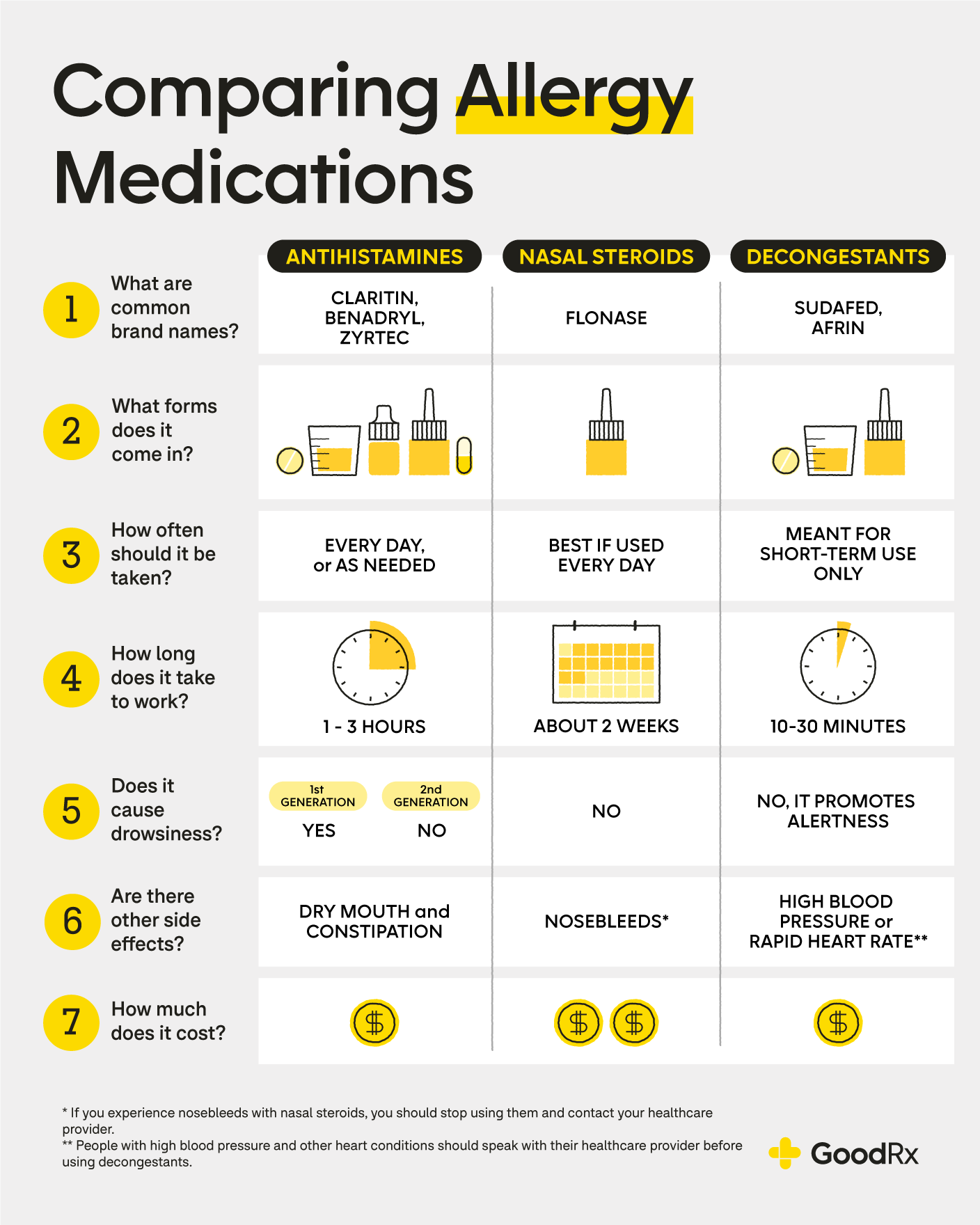
The short answer to whether or not there are better options out there is: It depends. Antihistamines — such as Zyrtec, Claritin, and Allegra — work quickly and can usually be taken safely long term.
Antihistamine nasal sprays are the closest alternative to oral antihistamines. Astepro (azelastine) is an example. These medications work for allergies in the same way as Zyrtec, Claritin, and Allegra. But they start working much faster — in as little as 15 minutes. And research suggests antihistamine nasal sprays work better than their oral counterparts.
Steroid nasal sprays are another alternative to Zyrtec, Claritin, and Allegra. Flonase Allergy Relief (fluticasone propionate) and Nasacort (triamcinolone) are two examples. These nasal sprays can take longer to work than antihistamines (up to 2 weeks for full effects). But experts consider them to be one of the best-working preventative medications for long-lasting nasal allergies.
Nasal decongestants, such as Sudafed (pseudoephedrine) and Afrin (oxymetazoline) nasal spray, work by tightening the blood vessels around the nose. They have the benefit of working quickly (about 30 minutes or less). But they aren’t recommended as first-choice or long-term treatments.
Sudafed can cause bothersome side effects, such as increased blood pressure and a high heart rate. Because of this, you shouldn’t take Sudafed for longer than 7 days without a healthcare professional’s OK. And Afrin shouldn’t be used for more than 3 days in a row. Your body can quickly become dependent on this nasal spray. So there’s a risk of having more congestion (rebound congestion) with long-term use of Afrin.
The best allergy medication for you likely depends on your symptoms, how quickly you need relief, and how you could potentially be affected by a medication’s side effects. If you have questions about the different options, talk with your healthcare team, who can help you choose the best allergy treatment.
Good to know: You can safely combine all four classes of allergy medications if needed. This is a great strategy for quick relief while longer-acting medications, such as steroid nasal sprays, start working. But you should speak with your prescriber or pharmacist before taking more than one medication at a time. They can help make sure you’re getting the most out of your allergy treatments while staying safe.
What about Zyrtec-D, Claritin-D, and Allegra-D?
What does it mean when you see a “-D” next to Zyrtec, Claritin, and Allegra? The “D” stands for decongestant, and it means that there’s an added decongestant. In this case, pseudoephedrine (Sudafed’s active ingredient) is included in these medications.
If your allergy symptoms include sinus congestion, it may be worth considering Zyrtec-D (cetirizine / pseudoephedrine), Claritin-D (loratadine / pseudoephedrine), or Allegra-D (fexofenadine / pseudoephedrine). But these combination products aren’t safe for everyone to take.
Who should not take Zyrtec-D, Claritin-D, or Allegra-D?
If you have high blood pressure or other heart conditions, you should avoid decongestants like Sudafed. You should also steer clear of medications that contain pseudoephedrine, such as Zyrtec-D, Claritin-D, and Allegra-D. As mentioned above, decongestants work by narrowing the blood vessels in your nose. But they also narrow blood vessels in other areas of the body, including the heart and blood vessels. This can raise your blood pressure and heart rate.
It’s also a good idea for people living with diabetes to avoid decongestants. These medications can raise blood glucose (blood sugar) levels for people with this condition.
Check with your prescriber if you’re unsure about whether or not you can safely take a medication containing a decongestant.
Frequently asked questions
No, Zyrtec doesn’t usually help with eczema. Research suggests that Zyrtec and other antihistamines pills don’t work well for reducing eczema symptoms.
Yes, Zyrtec can help reduce itching from insect bites. When a bug bites you, your body releases histamine. This is what causes that itchy feeling. Zyrtec blocks histamine’s effects, making it an option to help with itchy bug bites.
Most people don’t need to taper off Zyrtec. “Tapering off” means to slowly lower your dose over time, usually to help prevent withdrawal symptoms. Most people can stop Zyrtec whenever they want or need to.
But there are cases of people experiencing itching after trying to stop Zyrtec. If this happens to you, speak with a healthcare professional. They may suggest splitting your dose in half for a few weeks before trying to stop it. But keep in mind that there is no standard Zyrtec tapering schedule available.
No, it’s not recommended to take Zyrtec and Claritin together. They’re both antihistamines and work similarly. Combining them raises your risk of side effects, such as dry mouth, dizziness, and fatigue. It’s best to check with your healthcare team before taking more than one allergy medication. They can recommend a combination that’s safe for you.
No, Zyrtec doesn’t usually help with eczema. Research suggests that Zyrtec and other antihistamines pills don’t work well for reducing eczema symptoms.
Yes, Zyrtec can help reduce itching from insect bites. When a bug bites you, your body releases histamine. This is what causes that itchy feeling. Zyrtec blocks histamine’s effects, making it an option to help with itchy bug bites.
Most people don’t need to taper off Zyrtec. “Tapering off” means to slowly lower your dose over time, usually to help prevent withdrawal symptoms. Most people can stop Zyrtec whenever they want or need to.
But there are cases of people experiencing itching after trying to stop Zyrtec. If this happens to you, speak with a healthcare professional. They may suggest splitting your dose in half for a few weeks before trying to stop it. But keep in mind that there is no standard Zyrtec tapering schedule available.
No, it’s not recommended to take Zyrtec and Claritin together. They’re both antihistamines and work similarly. Combining them raises your risk of side effects, such as dry mouth, dizziness, and fatigue. It’s best to check with your healthcare team before taking more than one allergy medication. They can recommend a combination that’s safe for you.
The bottom line
Zyrtec (cetirizine), Claritin (loratadine), and Allegra (fexofenadine) are over-the-counter antihistamines that help relieve allergy symptoms. They’re all labeled as nondrowsy allergy medications. But Zyrtec can still cause drowsiness for some people who take it.
Zyrtec, Claritin, and Allegra work similarly well for managing allergy symptoms. All three start working within a few hours, but Zyrtec works a bit faster than Claritin and Allegra. You can also take them on a daily basis for longer periods of time to help prevent allergy symptoms.
Always check with your healthcare team before starting a new medication. They can help you decide which medication would be best for you.

Why trust our experts?



References
Asthma and Allergy Foundation of America. (2026). Allergy facts.
Cocker, K., et al. (2019). Oral H1 antihistamines as add-on therapy to topical treatment for eczema. American Family Physician.
Craun, K. L., et al. (2024). Fexofenadine. StatPearls.
Dykewicz, M. S., et al. (2020). Rhinitis 2020: A practice parameter update. The Journal of Allergy and Clinical Immunology.
Hong, D., et al. (2023). Efficacy of different oral H1 antihistamine treatments on allergic rhinitis: A systematic review and network meta-analysis of randomized controlled trials. Brazilian Journal of Otorhinolaryngology.
Linton, S., et al. (2023). Evidence-based use of antihistamines for treatment of allergic conditions. Annals of Allergy, Asthma, and Immunology.
MedlinePlus. (2017). Histamine: The stuff allergies are made of.
MedlinePlus. (2026). Cetirizine.
MedlinePlus. (2026). Fexofenadine.
MedlinePlus. (2026). Loratadine.
Naqvi, A., et al. (2024). Cetirizine. StatPearls.
Northern Sydney Local Health District. (2018). Deprescribing guide for sedating antihistamines.
Patel, P., et al. (2025). Loratadine. StatPearls.
PubChem. (2026). Pseudoephedrine. National Library of Medicine.
Seidman, M. D., et al. (2015). Clinical practice guideline: Allergic rhinitis. Otolaryngology–Head and Neck Surgery.