


What Medications Are Usually Prescribed After Having a Stroke?
Learn about the most common medications for people who have experienced a stroke with GoodRx.
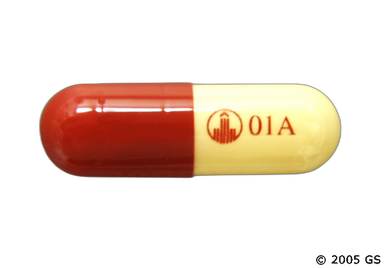
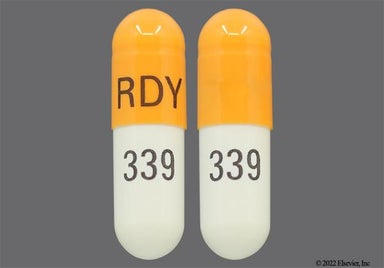
Aggrenox (aspirin / dipyridamole) is a combination of two antiplatelet medications. It's taken to lower the risk of having a stroke if you've had one before, whether it was an ischemic stroke or a transient ischemic attack (TIA, also called a "mini stroke").

Aggrenox (aspirin / dipyridamole) contains two antiplatelet medications: aspirin and dipyridamole. They work by blocking your platelets from clumping up together and forming blood clots. This helps to lower your risk for clots that block blood and oxygen from getting to your brain. As a result, Aggrenox (aspirin / dipyridamole) can help to lower your risk for a stroke.
| Common Brands | Aggrenox |
|---|---|
| Drug Class | Antiplatelet |
| Controlled Substance Classification | Not a controlled medication |
| Generic Status | Lower-cost generic available |
| Availability | Prescription only |

The following side effects may get better over time as your body gets used to the medication. Let your healthcare provider know immediately if you continue to experience these symptoms or if they worsen over time.
Contact your healthcare provider immediately if you experience any of the following.
Side effects that you should report to your care team as soon as possible:
Side effects that usually do not require medical attention (report these to your care team if they continue or are bothersome):




Aggrenox (aspirin / dipyridamole) can cause some serious health issues. This risk may be even higher for certain groups. If this worries you, talk to your doctor or pharmacist about other options.
Aggrenox (aspirin / dipyridamole) raises your risk for bleeding. Additionally, this medication might make it take longer than usual for any bleeding to stop. You might also notice that you get bruises more easily or have more bleeding when you get a cut or nosebleed. Although rare, bleeding into other organs, such as those in the digestive tract, is also possible. To lower your risk for bleeding, tell your provider about all of your medications and medical conditions before starting Aggrenox (aspirin / dipyridamole). Try to limit alcohol intake as much as possible. If you feel faint, lightheaded, or dizzy; vomit blood; have bloody or dark-colored stools; or feel severe stomach pain; stop taking Aggrenox (aspirin / dipyridamole) and get medical attention right away.
Though rare, Aggrenox (aspirin / dipyridamole) might cause kidney or liver problems that can sometimes be life-threatening. This might be more likely if you take higher than recommended doses of Aggrenox (aspirin / dipyridamole). To be safe, let your provider know of your medical history before starting this medication. Avoid Aggrenox (aspirin / dipyridamole) if you already have severe kidney or liver damage. Get medical attention right away if you notice stomach bloating; stomach pain; yellowing of your skin or the whites of your eyes; stool changes (black, tarry, or bloody stools); dark, brown, foamy, or bloody urine; you're urinating less than usual, or muscle cramps. You might need to stop using the medication to prevent further kidney or liver damage.
Aggrenox (aspirin / dipyridamole) can cause your blood pressure to drop too much. This can make you feel dizzy, tired, or lightheaded. Your risk is higher if you're dehydrated or have medical conditions, such as diarrhea or vomiting, that cause you to become dehydrated. Make sure to drink plenty of fluids. If you feel dizzy, lightheaded, faint, or tired, sit down slowly while holding onto something to prevent falling, and let your provider know. If you feel confused or fall and hit your head, get medical help right away.
Allergic reactions to Aggrenox (aspirin / dipyridamole) are possible, including life-threatening reactions like facial swelling, shock, and anaphylaxis. Let your provider know if you have an allergy to aspirin or other NSAIDs before starting Aggrenox (aspirin / dipyridamole). If you notice hives, rash, red skin, swelling of the lips or tongue, or difficulty breathing after using Aggrenox (aspirin / dipyridamole), get medical attention right away.

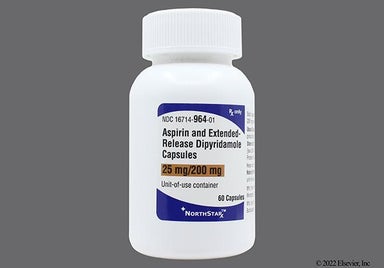
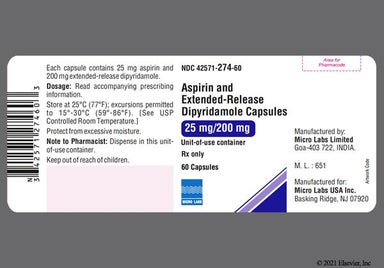
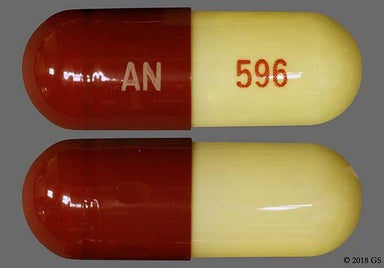
 Bottle
| Dosage | Quantity | Price as low as | Price per unit |
|---|---|---|---|
| 60 capsules of 25mg/200mg | 3 bottles | $99.38 | $33.13 |


Contraindications are specific health conditions or situations in which a person should not take a medication due to safety concerns. If you have any of the following conditions or if any of the following apply to you, let your healthcare provider know because Aggrenox (aspirin / dipyridamole) will not be safe for you to take.








Prescription savings
Stop paying too much for your prescriptions. Compare prices, get pharmacy coupons, and save up to 80%.Resources
About GoodRx
 Find expert answers to your health questions so you can make the best decisions for yourself and your family.
Health conditions
Medications & treatment
Access & affordability
Well-being
Medication discounts

No, you should take Aggrenox if it's prescribed to you. Aspirin is one of the antiplatelet medications used for stroke prevention, and Aggrenox contains aspirin. But Aggrenox contains two different antiplatelet medications (aspirin and dipyridamole) that work together to help prevent additional strokes from happening. For some people, it might be more beneficial to take Aggrenox instead of aspirin alone. In fact, in clinical studies, people taking Aggrenox had a 23% lower chance of having another stroke than those taking aspirin alone. Speak with your provider if you have questions about taking Aggrenox to lower your risk of having another stroke.
You'll likely need to take medication to lower your risk of having another stroke, but it might not necessarily be Aggrenox. Your provider will discuss with you whether Aggrenox is right for you. Current treatment guidelines recommend Aggrenox as one of the options for people who had an ischemic stroke or a transient ischemic attack (TIA, also called a "mini stroke"). Other options include aspirin or clopidogrel (Plavix). When deciding a treatment plan for you, your provider might also consider other factors, like how much brain damage you had with your previous stroke or how much of a risk you have of having another stroke.
It's generally safe to take acetaminophen (Tylenol) with Aggrenox. But if you have a history of liver problems, make sure to ask your provider how much acetaminophen (Tylenol) you can safely take. Avoid taking nonsteroidal anti-inflammatory drugs (NSAIDs), like ibuprofen (Advil, Motrin) or naproxen (Aleve), with Aggrenox, unless your provider told you it's safe for you to do so. Since Aggrenox contains aspirin (a type of NSAID), taking this medication with other NSAIDs can raise your risk for severe side effects, such as heart risks, kidney problems, and severe bleeding. If you experience pain while taking Aggrenox, talk to your provider about safe ways to relieve your pain.
No, you can take Aggrenox with or without food. But this medication commonly causes stomach side effects, like indigestion, stomach pain, nausea, diarrhea, and vomiting. So taking it with food might help lower the risk of getting these side effects.
If you miss a dose of Aggrenox, skip the missed dose. Then, take the next dose at the usual time. Don't take two doses to make up for the missed dose.
