



Long-Acting Maintenance Asthma Inhalers: Know Your Options
If you’re shopping around for asthma inhalers, you’ll have seemingly too many options to count. Here’s a list of inhaler brands to help you choose the best one for you.
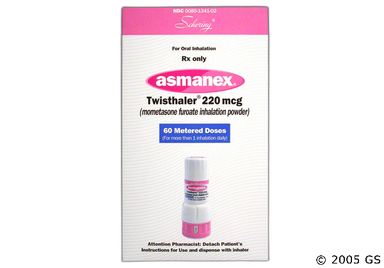
Asmanex, also known by its generic name, mometasone furoate, is a steroid inhaler used for maintenance treatment of asthma in adults and children. Asmanex HFA is approved for people ages 5 years and older, and is inhaled through the mouth twice daily. Asmanex Twisthaler is for people ages 4 years and older, and is inhaled once to twice daily. Some common side effects include headache, runny nose, and sore throat.

Asmanex (mometasone) is an inhaled corticosteroid. It lessens inflammation and swelling in the lungs, which helps you breathe better.
| Common Brands | Asmanex HFA, Asmanex Twisthaler |
|---|---|
| Drug Class | Inhaled corticosteroid (ICS) |
| Controlled Substance Classification | Not a controlled medication |
| Generic Status | No lower-cost generic available |
| Availability | Prescription only |

The following side effects may get better over time as your body gets used to the medication. Let your healthcare provider know immediately if you continue to experience these symptoms or if they worsen over time.
Asmanex Twisthaler
Asmanex HFA Inhaler
Contact your healthcare provider immediately if you experience any of the following.
Along with its needed effects, a medicine may cause some unwanted effects. Although not all of these side effects may occur, if they do occur they may need medical attention.
Check with your doctor immediately if any of the following side effects occur:
Rare
White patches inside the nose or mouth
Some side effects may occur that usually do not need medical attention. These side effects may go away during treatment as your body adjusts to the medicine. Also, your health care professional may be able to tell you about ways to prevent or reduce some of these side effects. Check with your health care professional if any of the following side effects continue or are bothersome or if you have any questions about them:
More common
Difficulty with moving
discouragement
feeling sad or empty
headache
increased abdominal or stomach pain and cramping during menstrual periods
irritability
joint pain
lack of appetite
loss of interest or pleasure
muscle pain or stiffness
nasal burning and irritation
stomach discomfort following meals
stuffy or runny nose
tiredness
trouble concentrating
trouble sleeping
unexplained runny nose or sneezing
Less common
Accidental injury
bladder pain
bloated
bloody mucus or unexplained nosebleeds
bloody or cloudy urine
difficult, burning, or painful urination
excess air or gas in stomach or intestines
frequent urge to urinate
full feeling
general feeling of discomfort or illness
lower back or side pain
menstrual changes
passing gas
post-procedure pain
shivering
sweating
vomiting
Other side effects not listed may also occur in some patients. If you notice any other effects, check with your healthcare professional.
Call your doctor for medical advice about side effects. You may report side effects to the FDA at 1-800-FDA-1088.



More tips for the Asmanex Twisthaler:
More tips for the Asmanex HFA inhaler:

Asmanex (mometasone) can cause some serious health issues. This risk may be even higher for certain groups. If this worries you, talk to your doctor or pharmacist about other options.
Don't use Asmanex (mometasone) if you're experiencing an asthma attack because this medication won't provide immediate relief. Use a rescue inhaler, such as albuterol (Ventolin HFA), if you're having trouble breathing.
If you're using your rescue inhaler more often than usual, let your pulmonologist know because this could be a sign that your condition is getting worse. Don't use more doses Asmanex (mometasone) than recommended because this won't improve your breathing. Rather, this can raise your risk for serious side effects, such as heart problems, tremors, and dizziness.
Asmanex (mometasone), like all inhaled steroids, can cause a fungal infection in your mouth and throat called thrush. To lower your risk for thrush, rinse your mouth with water and spit after each inhalation of Asmanex (mometasone). If you develop thrush, your pulmonologist might prescribe you a medication to treat this infection and ask you to stop using Asmanex (mometasone) temporarily. Let your pulmonologist know if you notice symptoms of thrush, such as white patches in your mouth, cotton-like feeling in your mouth, pain while eating or swallowing, or loss of taste.
Inhaled medications, including Asmanex (mometasone), can sometimes cause a muscle spasm in your lungs. This can lead to difficulty breathing, wheezing, cough, and chest discomfort. If you have a hard time breathing after inhaling Asmanex (mometasone), use your rescue inhaler and get medical attention right away.
Like all corticosteroid-containing medications, Asmanex (mometasone) can weaken your immune system and raise your risk for infections, including upper respiratory infections and pneumonia. Your risk for infections is higher if you're also taking other medications that also weaken your immune system. If you're currently being treated for a serious infection, such as tuberculosis, let your pulmonologist know. They might need to consider a different medication for your condition until you get better. Let your pulmonologist or primary care provider know right away if you have symptoms of infections, such as fever, chills, or body aches.
Use Asmanex (mometasone) only as directed. Don't use more than the maximum number of inhalations each day. Doing so can cause more steroid to be absorbed into the body and raise your risk for symptoms of too much stress hormones, such as higher blood sugar or blood pressure.
On the other hand, if you're transitioning to Asmanex (mometasone) from oral steroids, you might experience symptoms of low steroid hormone, such as stomach pain, loss of appetite, and nausea. When you transition to Asmanex (mometasone), your pulmonologist will work with you to lower your dose of oral steroids slowly over time to prevent these side effects.
Children who use inhaled steroids, like Asmanex (mometasone), might experience a delay in growth. To lower the risk of growth problems, your child's pulmonologist will only prescribe the lowest dose needed to help their condition. Your child's care team will check your child's growth regularly while your child is using this medication. If you're concerned about how Asmanex (mometasone) might affect your child's growth, discuss with your child's pulmonologist to see if this medication is right for them.
People who use inhaled steroids, like Asmanex (mometasone), have reported lower bone mineral density (BMD) over time. It's unclear whether this leads to higher risk of bone fractures. But you're more likely to experience a fracture if you're an older adult, have family members who have osteoporosis, or are taking other medications that raise the risk of fractures.
Although rare, people using inhaled steroids over a long period of time have reported having higher pressure in the eyes, glaucoma, and cataracts. Talk to your optometrist before using Asmanex (mometasone) if you have glaucoma or cataracts because they might ask you to come in more often for eye exams. Also speak with them if you notice any changes to your vision while using the medication.
Severe allergic reactions to Asmanex (mometasone) are possible, including life-threatening reactions like facial swelling, shock, and anaphylaxis (closing of the throat). Let your healthcare professional know of any allergies before starting Asmanex (mometasone), especially if you have an allergy to milk proteins. Since Asmanex Twisthaler contains lactose, you'll need to use the HFA inhaler of Asmanex (mometasone) or a different medication instead to avoid getting an allergic reaction. Get medical attention right away if you notice hives, rash, red skin, swelling of the lips or tongue, or difficulty breathing after using Asmanex (mometasone).


Although certain medicines should not be used together at all, in other cases two different medicines may be used together even if an interaction might occur. In these cases, your doctor may want to change the dose, or other precautions may be necessary. When you are taking this medicine, it is especially important that your healthcare professional know if you are taking any of the medicines listed below. The following interactions have been selected on the basis of their potential significance and are not necessarily all-inclusive.
Using this medicine with any of the following medicines is not recommended. Your doctor may decide not to treat you with this medication or change some of the other medicines you take.
Using this medicine with any of the following medicines is usually not recommended, but may be required in some cases. If both medicines are prescribed together, your doctor may change the dose or how often you use one or both of the medicines.
Using this medicine with any of the following medicines may cause an increased risk of certain side effects, but using both drugs may be the best treatment for you. If both medicines are prescribed together, your doctor may change the dose or how often you use one or both of the medicines.


Contraindications are specific health conditions or situations in which a person should not take a medication due to safety concerns. If you have any of the following conditions or if any of the following apply to you, let your healthcare provider know because Asmanex (mometasone) will not be safe for you to take.






Prescription savings
Stop paying too much for your prescriptions. Compare prices, get pharmacy coupons, and save up to 80%. Find expert answers to your health questions so you can make the best decisions for yourself and your family.
Health conditions
Medications & treatment
Access & affordability
Medication discounts


It depends on the product you have. The Asmanex Twisthaler 220 mcg inhaler can have either 30, 60, or 120 inhalations (puffs), depending on the specific size your pharmacy dispenses to you. The Asmanex Twisthaler 110 mcg inhaler has 30 inhalations. Finally, all strengths of the Asmanex HFA inhaler contain 120 inhalations. Both the Asmanex HFA and Twisthaler contain a dose counter that'll help you keep track of how many inhalations are left. Use this counter to help you determine when it's time to ask your pharmacy or prescriber for a refill.
No, fluticasone (Flovent) and Asmanex aren't the same, but they're similar. Both medications are inhaled corticosteroids (or steroids) used for asthma treatment. Both come as a dry powder inhaler (Flovent Diskus and Asmanex Twisthaler), but the inhalers look different and the technique to deliver the dose slightly differs between brands. Both medications also come as HFA (aerosolized) inhalers too. Talk to your pulmonologist if you have specific questions about both of these inhalers.
No. Asmanex isn't a rescue inhaler and isn't able to treat an asthma attack. It's only FDA-approved as a maintenance treatment for asthma. Short-acting inhalers, like albuterol (Ventolin), are rescue inhalers that open your airways quickly. Make sure to have your albuterol or other rescue inhaler with you at all times, even if you're taking Asmanex.
Yes. Your pulmonologist will likely prescribe you albuterol (Ventolin) as a rescue inhaler when you're taking Asmanex. This is because Asmanex is a long-acting medication that works over time to lessen inflammation and swelling in your lungs and open your airways. But it won't help if you have sudden trouble breathing during an asthma attack. A rescue inhaler, such as albuterol (Ventolin), works quickly and can relieve sudden symptoms. Ask your healthcare team if you have more questions about Asmanex and rescue inhalers.
Anxiety wasn't a reported side effect from people taking Asmanex. Oral steroids can cause anxiety, but Asmanex typically stays in the lungs, so it's unlikely to make you anxious. Talk to your primary care provider or psychiatrist if you're noticing symptoms of anxiety after using this inhaler.
No, people who took Asmanex in clinical studies didn't report insomnia (trouble sleeping) as a side effect. While oral steroids can potentially cause insomnia, it's unlikely for Asmanex to do so since it's inhaled directly into your lungs.
Both the Asmanex HFA and Twisthaler contain the same active ingredient, mometasone furoate. They work just as well as each other to treat asthma. A major difference is the actual inhaler that delivers the medication and how you should use each device. The HFA inhaler works by using a propellant to push the aerosolized medication out of the inhaler and into your lungs. As you push down on the canister for a dose, you'll need to take a slow, long, deep breath to allow the medication to reach your lungs. In contrast, the Twisthaler is a dry powder inhaler. The medication reaches your lungs using the force of your inhalation. That's why you need to breathe in quickly and deeply when you're using the Twisthaler. Additionally, while the HFA inhaler is typically given twice per day, the Twisthaler is given once per day (in most cases). Ask your prescriber which type of Asmanex inhaler is right for you.
