
Coverage details and savings
Confirm your prescription and Medicare plan
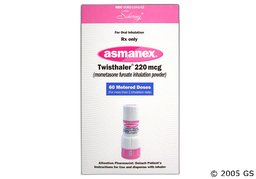
Medicare copay prices for Asmanex
Important info about these prices
Can GoodRx help me save on Asmanex?
Medicare: Your GoodRx guide
Learn the ins and outs of Medicare with our comprehensive guide that covers eligibility, coverage, costs, and more.
See Medicare guide

Common Medicare glossary terms

The Medicare Annual Notice of Change (ANOC) is a letter for people enrolled in Medicare Advantage plans and anyone with Medicare Part D prescription coverage. People with Medicare Advantage or original Medicare (Part A and/or Part B) can have Part D plans. The ANOC informs enrollees about any changes to their benefits for the coming coverage year. By law, Medicare Advantage and Part D plans must send the ANOC to enrollees by September 30 — which is before the annual Medicare open enrollment period of October 15 to December 7. Even if you have the same plan, your benefits could change year to year.
A premium is the cost of having a health insurance plan and is usually paid monthly. Medicare enrollees may pay several premiums. Most people don’t pay anything for Part A hospital insurance, but some people do depending on how long they worked and paid taxes. For outpatient and preventive coverage, the Part B standard premium is $185 a month in 2025, but people with higher incomes pay more. Your premium for Medicare Advantage plans will vary, but even so-called “zero premium” plans require you to pay your Part B premium. Part D premiums range in price, but the average is about $47 a month in 2025. If you have original Medicare and a Medigap supplement plan, you have an additional premium for that coverage.
A deductible is the amount you pay out of pocket before your Medicare plan begins cost-sharing. In 2025, the Part A deductible is $1,676 per benefit period. The Part B deductible is $257 for the year, but you can access certain preventive care — including some vaccines — without meeting your deductible. Medicare Advantage deductibles vary and your Part D deductible can’t exceed $590 in 2025.
Original Medicare has no annual out-of-pocket maximum. Medicare Advantage plans have out-of-pocket limits. In 2025, they are $9,350 for in-network covered services and $14,000 for in-network and out-of-network covered services combined.
Starting January 1, 2025, anyone with Part D coverage had the option to use the Medicare Prescription Payment Plan for their out-of-pocket medication costs instead of paying upfront at the pharmacy. This plan doesn’t provide savings, but allows you to spread prescription costs — including your deductible — over the year. Making payments can be particularly helpful for people who may skip or delay picking up prescriptions because of high costs early in the year. Also in 2025, the Part D out-of-pocket limit dropped to $2,000.
After a Medicare enrollee meets the Part D deductible (if the plan has one), the health insurance begins cost sharing. The initial coverage phase means you pay coinsurance or a copay for covered prescriptions.
When you reach the $2,000 out-of-pocket maximum, your Part D plan pays for 100% of covered medications for the rest of the year.

How to save on drugs with Medicare
Medicare Part D is the part of Medicare that helps cover prescription medications, including brand name and generic. It also covers certain vaccines and medical supplies that aren’t covered by Medicare Part B.
Even with Medicare Part D coverage, you may still have out-of-pocket costs such as premiums, deductibles, copayments, and coinsurance. As of 2026, Medicare Part D plans have a $2,100 annual out-of-pocket cap for prescription medications covered by your plan. Once you reach this limit, your plan covers the full cost of your covered medications for the rest of the year.
Still, there are several ways to reduce your expenses for prescription medications. From GoodRx coupons to patient assistance programs, here are ways you can save money on the medications you need.
1. See if you qualify for Medicare’s Extra Help program
The Medicare Extra Help/Low-Income Subsidy (LIS) program is a federally funded savings option for eligible people covered by a Medicare Part D plan. It reduces your out-of-pocket costs by limiting deductibles and copays. To qualify, your income and assets must fall below a certain threshold.
If you’re eligible, you may be qualify for:
No monthly premiums for Medicare Part D
No Medicare Part D deductible
Low copays for prescription medications
2. Use GoodRx
You can’t combine GoodRx with Medicare, but you can choose to use GoodRx instead of your insurance if it results in a lower price.
Here’s how to download a GoodRx discount:
Go to the GoodRx website, or download the GoodRx app on your phone.
Search for your prescription medication.
Enter your prescribed dose and quantity, then set your location.
Compare prices across different pharmacies in your area.
Click “Find the lowest prices” or press “Enter.”
You can have the discount sent by text or email, or print it out.
Show the discount at the pharmacy when you fill your prescription. Ideally, this is done at drop-off before the prescription is filled.
3. Consider the Medicare Prescription Payment Plan
The Medicare Prescription Payment Plan is a new program that can help make paying for medications more manageable. It’s open to anyone with a standalone Part D plan or those with Medicare Advantage plans that offer prescription medication coverage.
There is no cost to join the Medicare Prescription Payment Plan and participation is voluntary. Instead of paying for the total cost of your medications up front at the pharmacy, the payment plan allows you to spread expenses into smaller payments during the year. If you join, you will continue to pay your premium every month as well as an additional monthly amount on your payment plan. It’s a good idea to review how the Medicare Prescription Payment Plan works to determine if it’s right for you.
4. Compare Part D plans during open enrollment
Medicare open enrollment, which takes place every year from October 15 to December 7, is your chance to switch plans if another option offers better prescription medication coverage or lower costs. Plan costs and coverage details can change each year, so it’s important to review your options.
Here are some steps to help you compare plans:
Make a list of all your medications and what dosages you take.
Visit Medicare’s plan finder tool.
Enter the names of your prescription medications to see which plans offer the best coverage.
Look at premiums, deductibles, and medication costs for each plan. Plans may change their formularies at any time and typically have annual premium and copay changes.
Check if your preferred pharmacy is in each plan's network.
5. Get a 90-day supply
Opting for a 90-day supply instead of a monthly refill of your medication might help reduce your long-term out-of-pocket costs. Many insurance plans offer lower copays or bulk pricing for 3-month prescriptions.
If your medication is covered by your plan, see if your insurer’s mail-order or specialty pharmacy provides savings on a 90-day supply. If so, ask your prescriber to write a prescription for a 90-day quantity to take advantage of these savings. You might also realize savings for a 90-day prescription at the pharmacy counter.
6. Ask about the generic version of your medication
Some medications have a generic version, and they generally cost less than brand-name prescriptions. Generic medications are just as safe and effective as brand-name medications, so it’s an option worth considering to reduce your cost. Ask your prescriber about switching to a generic version of your medication to save money.
7. Consider lower-cost alternative medications
There may be other medications that help manage your condition that cost less. If your medication is costly or not covered by your insurance, talk to your prescriber about lower-cost alternatives that might be a good option for you. Another medication can have better insurance coverage or lower costs.
8. Learn more about patient assistance programs
Patient assistance programs (PAPs) offer free or low-cost medications to uninsured consumers as well as people with low incomes and others whose can’t afford prescriptions. These programs, which primarily offer savings on brand-name medications, are usually run by pharmaceutical companies or nonprofit organizations. You must meet certain qualifications and complete paperwork to receive savings from PAPs. However, some PAPs exclude Medicare enrollees, so it’s important to review the program’s rules and requirements carefully.
9. Check state-funded resources
Depending on where you live, you may have access to a State Pharmaceutical Assistance Program or another initiative that can help you pay for medications. A good place to start is your state Department of Aging.
Some states even have their own cost-saving programs for older adults. For example, older adults enrolled in the Program of All-Inclusive Care for the Elderly (PACE) are typically dually eligible for Medicare and Medicaid and qualify for help paying for medications.
10. Use a health savings account to pay for prescription medications
Although you can’t contribute to a health savings account (HSA) after enrolling in Medicare, you can still use any remaining funds in your account to pay for qualified medical expenses. An HSA allows you to use tax-free dollars to pay for eligible prescription medications. The money in your account does not expire, so you can use your funds at any time to reduce your Medicare out-of-pocket medication costs.

Get Medicare savings updates for Asmanex
Receive price alerts, news, and other messages from GoodRx about Asmanex and other healthcare topics and relevant savings offers.