


Early Breast Cancer Treatments: 5 Common Options to Explore
Early breast cancer treatments include surgery, radiation, and medications such as chemotherapy, hormone therapy, anti-HER2 drugs, and targeted therapies.
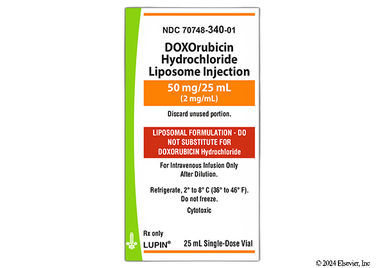
Doxorubicin (Adriamycin) is a chemotherapy medication that’s used to treat many types of cancer. They can include ovarian cancer, breast cancer, and soft tissue sarcoma, among others. It’s an intravenous (IV) infusion that's given at a medical office or clinic, usually once every 3 or 4 weeks. Sometimes, it’s used alone. But other times, it’s given with other cancer medications. Doxorubicin (Adriamycin) can cause side effects like nausea, hair loss, and low blood cell counts. Like other medications in the anthracycline group, doxorubicin (Adriamycin) also has a risk of heart problems.

Doxorubicin (Adriamycin) is a chemotherapy medication known as an anthracycline. It works by damaging the DNA in the cells in the body that grow very fast, including cancer cells. Cancer cells with damaged DNA can’t grow or spread as well. This helps treat cancer.
| Common Brands | Adriamycin |
|---|---|
| Drug Class | Anthracycline |
| Controlled Substance Classification | Not a controlled medication |
| Generic Status | No lower-cost generic available |
| Availability | Prescription only |

The following side effects may get better over time as your body gets used to the medication. Let your healthcare provider know immediately if you continue to experience these symptoms or if they worsen over time.
Contact your healthcare provider immediately if you experience any of the following.
Along with its needed effects, a medicine may cause some unwanted effects. Although not all of these side effects may occur, if they do occur they may need medical attention.
Check with your doctor or nurse immediately if any of the following side effects occur:
Less common
Cough or hoarseness accompanied by fever or chills
darkening or redness of the skin (if you recently had radiation treatment)
fast or irregular heartbeat
fever or chills
joint pain
lower back or side pain accompanied by fever or chills
pain at the injection site
painful or difficult urination accompanied by fever or chills
red streaks along the injected vein
shortness of breath
stomach pain
swelling of the feet and lower legs
Some side effects may occur that usually do not need medical attention. These side effects may go away during treatment as your body adjusts to the medicine. Also, your health care professional may be able to tell you about ways to prevent or reduce some of these side effects. Check with your health care professional if any of the following side effects continue or are bothersome or if you have any questions about them:
After you stop using this medicine, it may still produce some side effects that need attention. During this period of time, check with your doctor immediately if you notice the following side effects:
Fast or irregular heartbeat
shortness of breath
swelling of the feet and lower legs
Other side effects not listed may also occur in some patients. If you notice any other effects, check with your healthcare professional.
Call your doctor for medical advice about side effects. You may report side effects to the FDA at 1-800-FDA-1088.




Doxorubicin (Adriamycin) can cause some serious health issues. This risk may be even higher for certain groups. If this worries you, talk to your doctor or pharmacist about other options.
 Although rare, doxorubicin (Adriamycin) can leak into the tissues around the IV line. This can cause pain, a burning or stinging feeling, blistering, and damage to the skin or tissues around it.
 Tell your nurse right away if you feel pain any pain, burning, or warmth during your doxorubicin (Adriamycin) infusion. They’ll need to stop the infusion and put an ice pack over the area.
Doxorubicin (Adriamycin) can cause serious heart problems, such as heart rhythm problems and heart failure. These heart problems can happen during treatment or up to several years after you finish treatment. Your oncologist will make sure you don’t go over the limit on how much doxorubicin (Adriamycin) you can take in your lifetime. This limit helps lower the risk of heart problems.
If you have heart issues, talk to your oncologist before starting doxorubicin (Adriamycin) to see if it’s safe for you. You’ll need a heart scan called an echocardiogram (ECHO). You’ll also periodically need these scans during treatment to check that it’s still safe.
Watch for signs of heart problems while taking doxorubicin (Adriamycin). Be aware of irregular heartbeat, shortness of breath, swelling in your ankles or feet, sudden weight gain, and dizziness. If these symptoms happen, you’ll probably have to stop doxorubicin (Adriamycin).
Although rare, some people who got doxorubicin (Adriamycin) have had other blood cancers later, like acute myelogenous leukemia (AML) or myelodysplastic syndrome (MDS). If this happens, these cancers usually show up 1 to 3 years after treatment. Your oncologist will check for this using lab tests, even after you’ve finished taking doxorubicin (Adriamycin). Talk to your oncologist if you’re worried about this risk.
Doxorubicin (Adriamycin) can cause your blood cell count to drop. For example, you might have low white blood cells. This can put you at risk of infections that can be serious or make it harder to fight one off. Your white blood cell count usually hits its lowest about 2 weeks after each doxorubicin (Adriamycin) infusion. It usually bounces back up about a week later.
Doxorubicin (Adriamycin) can also cause low red blood cell counts. This can lead to anemia and make you feel tired. In addition, the medication can cause you to have less platelets in your blood and raise your risk for bleeding. Some people have needed transfusions when their blood cell counts got too low.
Your oncology team will check your blood cell counts before each doxorubicin (Adriamycin) infusion. Tell your care team if you have any unexpected bruising or bleeding. Also call them if you feel very tired or are getting sick often. These can be signs of low blood cell counts. If this happens, your oncologist might lower your dose or delay when you get the infusion.
People with liver problems can have a hard time getting rid of doxorubicin (Adriamycin) from their body. This is because the liver helps remove the medication after it works to fight cancer. With poor liver function, doxorubicin (Adriamycin) can build up in the body and raise the risk of harmful side effects.
Tell your oncologist if you have liver problems before starting doxorubicin (Adriamycin). They’ll check your liver with blood tests before and during treatment. If you have liver problems, you might need a lower dose of doxorubicin (Adriamycin) to prevent serious side effects. People with severe liver damage can’t take doxorubicin (Adriamycin) because it can be too dangerous.
Doxorubicin (Adriamycin) can cause a serious condition called tumor lysis syndrome (TLS) in people with fast-growing cancers. It can affect the electrolyte levels in the body. This can lead to muscle cramps, kidney problems, abnormal heart rhythms if not treated.
Call your oncology care team right away if you have nausea, vomiting, low appetite, side pain, dark urine, or less urination. Also call them if you have muscle cramps, numbness, or heart palpitations. These could be signs of TLS.
Tell your oncology care team if you’ve had radiation therapy before. Although uncommon, you might have a reaction called radiation recall while you’re taking doxorubicin (Adriamycin). This can cause a rash in the area where you had radiation. Let your care team know if you see a new or worse rash so they can help manage your symptoms.
Doxorubicin (Adriamycin) can make radiation side effects worse if the two therapies are given together. If your treatment includes both, talk to your oncology care team about the safest plan for you.
Based on animal studies and the way the medication works, doxorubicin (Adriamycin) might raise the risk of harm to an unborn baby if it’s given during pregnancy.
Before starting doxorubicin (Adriamycin), talk to your oncologist about the risks and benefits of treatment and options for family planning. Let your oncology team know right away if you or your partner becomes pregnant while taking doxorubicin (Adriamycin).

Doxorubicin (Adriamycin) is given as an infusion through the vein (also called intravenous or IV). It’s given by a healthcare professional at a medical center or infusion clinic.
Your oncologist will calculate your dose of doxorubicin (Adriamycin) based on your body surface area (BSA), taking into account your height and weight.
The general dose range is between 40 mg/m2 and 75 mg/m2 given IV once every 3 to 4 weeks.
Note: The dose depends on the type of cancer you have. It also depends on whether you’re taking it by itself or with other medications to treat your cancer. The dose can also differ based on the treatment protocol that your oncologist is following.

Although certain medicines should not be used together at all, in other cases two different medicines may be used together even if an interaction might occur. In these cases, your doctor may want to change the dose, or other precautions may be necessary. When you are receiving this medicine, it is especially important that your healthcare professional know if you are taking any of the medicines listed below. The following interactions have been selected on the basis of their potential significance and are not necessarily all-inclusive.
Using this medicine with any of the following medicines is not recommended. Your doctor may decide not to treat you with this medication or change some of the other medicines you take.
Using this medicine with any of the following medicines is usually not recommended, but may be required in some cases. If both medicines are prescribed together, your doctor may change the dose or how often you use one or both of the medicines.
Using this medicine with any of the following medicines may cause an increased risk of certain side effects, but using both drugs may be the best treatment for you. If both medicines are prescribed together, your doctor may change the dose or how often you use one or both of the medicines.

Contraindications are specific health conditions or situations in which a person should not take a medication due to safety concerns. If you have any of the following conditions or if any of the following apply to you, let your healthcare provider know because Doxorubicin (Adriamycin) will not be safe for you to take.







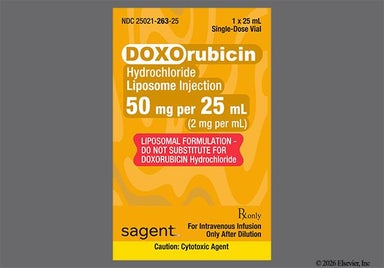
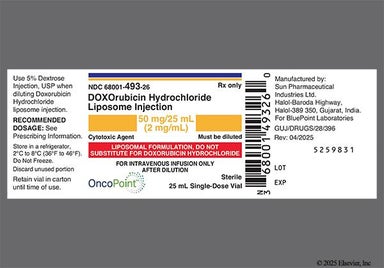
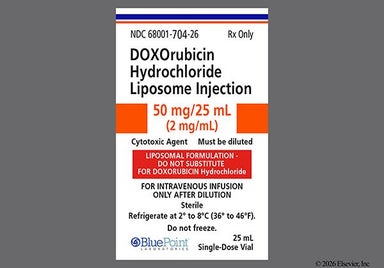
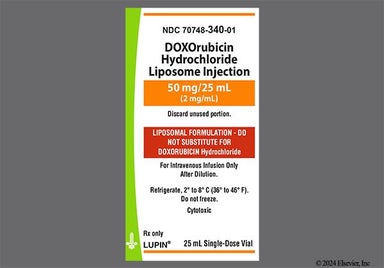
Prescription savings
Stop paying too much for your prescriptions. Compare prices, get pharmacy coupons, and save up to 80%. Find expert answers to your health questions so you can make the best decisions for yourself and your family.
Health conditions
Medications & treatment
Access & affordability
Medication discounts

Yes, Doxorubicin is a chemotherapy medication. More specifically, it belongs to the anthracycline drug class. The medication works by damaging the DNA in cancer cells. This causes the cancer cells to die, which helps treat cancer.
Doxorubicin is a bright red color. When you get it through your IV, you can see that it’s red. And the “Death” or “Devil” part of the nicknames come from the strong side effects the medication can cause. These include nausea or pain that can happen if it leaks from the IV into the surrounding area. Doxorubicin has been around for a long time, before we had very good ways to manage side effects. But now, we have medications and medical advances to help. For example, there are many good options for nausea and vomiting from chemotherapy. And it’s common to use special access devices, like ports, to safely give the medication and help prevent leaking. Talk to your oncology care team if you’re worried about side effects from Doxorubicin.
Yes, most people who take Doxorubicin will have hair loss. This can happen when you’re given Doxorubicin by itself. And many other cancer medications that are given with Doxorubicin can also cause hair loss. Usually, your hair will grow back after you stop chemotherapy. If you notice hair loss during treatment, let your care team know. They can talk to you about ways to manage it, like using cooling caps or brushing your hair gently.
If you have heart problems, talk to your oncologist to see if Doxorubicin is safe for you. Doxorubicin can sometimes cause heart problems, like changes to your heart rhythm or heart failure. Because of this risk, everyone who takes Doxorubicin needs to get a heart scan called an echocardiogram (ECHO) before starting treatment. This scan checks how well your heart is working. It helps the oncologist see if the medication could make any heart problems worse. Your oncologist will also make sure you don’t get too much Doxorubicin over your lifetime. This helps lower the risk of heart problems. They’ll continue to follow up with you during treatment and even after you finish chemotherapy. Talk to your oncologist about the risks and benefits of taking Doxorubicin.
Yes, Doxorubicin often causes nausea and vomiting. It’s important to take prescribed medications to prevent nausea from your chemotherapy. They’re either taken by mouth or given through your IV on the same day as your chemotherapy session. Your oncologist will also prescribe medications to have at home in case you need them between treatments. Talk to your oncology care team if you have severe nausea that doesn’t get better with medications.
How long you need to take Doxorubicin depends on which type of cancer you have. It also depends on which treatment protocol your oncologist recommends. Some people take Doxorubicin for 2 to 6 treatment cycles. This includes certain people with breast cancer or Hodgkin lymphoma. But others need more cycles, so their treatment might take longer. Keep in mind that there’s also a limit for how much Doxorubicin each person can take in total. This dose limit helps protect you from the risk of heart problems with the medication. Talk to your oncologist if you’re not sure how long you should take Doxorubicin.
Yes, Doxorubicin is a vesicant. This means that the medication can cause damage to the tissue and skin around your vein if it leaks out of the IV line. It can also cause pain, burning, and blistering in the area around the IV line. Most people will get Doxorubicin through a port that helps prevent leakage. But the risk can still be there. Tell the nurse right away if you feel any pain, burning, or warmth during your Doxorubicin infusion. They’ll stop the infusion and manage this side effect (for example, putting a cold pack over the area).
The “cumulative lifetime dose” of Doxorubicin is the total amount of the medication you can safely get in your life. For most people, it’s 550 mg/m², which is calculated based on your body size. If you’ve had radiation to the chest, the limit is a bit lower at 450 mg/m². It’s important for your oncologist to keep track of how much Doxorubicin you get because the medication can cause heart problems. Your oncologist won’t give you more than this safety limit to protect your heart. Here’s an example of calculating the cumulative dose. After you’ve taken a dose of 50 mg/m² for three doses so far, your cumulative dose is 150 mg/m². Ask your oncologist if you want to learn more about your lifetime dose of Doxorubicin.
