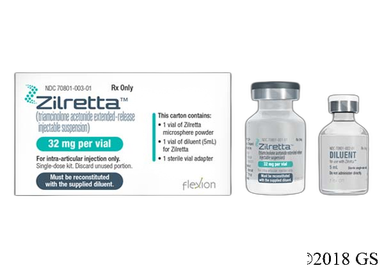
Zilretta
Zilretta (triamcinolone) is a steroid injection used to treat knee pain from osteoarthritis in adults. It works by reducing inflammation in the joint, helping to relieve pain and stiffness. The typical dose is 32 mg injected directly into the knee (intra-articular) by a healthcare professional. Some potential side effects include joint swelling, cough, and bruising where the medication is injected.


What is Zilretta (triamcinolone)?
What is Zilretta (triamcinolone) used for?
- Pain from osteoarthritis of the knee
How Zilretta (triamcinolone) works
Zilretta (triamcinolone) is a corticosteroid. It works by reducing the release of chemicals in your body that cause swelling and inflammation.
Drug facts
| Common Brands | Zilretta |
|---|---|
| Drug Class | Corticosteroid |
| Controlled Substance Classification | Not a controlled medication |
| Generic Status | No lower-cost generic available |
| Availability | Prescription only |

Side effects of Zilretta (triamcinolone)
The following side effects may get better over time as your body gets used to the medication. Let your healthcare provider know immediately if you continue to experience these symptoms or if they worsen over time.
Common Side Effects
- Joint swelling (3%)
- Bruising at the injection site (2%)
- Sinus infection (2%)
- Cough (2%)
Less Common Side Effects
- Pain at the injection site
- Rash
- Itchiness
- Headache
- Muscle spasms
Zilretta (triamcinolone) serious side effects
Contact your healthcare provider immediately if you experience any of the following.
- Serious allergic reaction: hives, difficulty breathing, difficulty swallowing, swelling of the face, lips, tongue, or throat
- Infection: fever, chills, muscle aches, constant cough, sore throat, skin redness or swelling, diarrhea, burning feeling during urination
- Extreme mood swings and severe depression

Pros and cons of Zilretta (triamcinolone)
Pros
- Injected directly into the affected knee joint
- Single injection per treatment
- Lasts up to 3 months or longer
Cons
- Must be given by a trained healthcare professional
- Unknown if safe during pregnancy or breastfeeding
- Side effects include joint swelling and bruising at the injection site

Pharmacist tips for Zilretta (triamcinolone)

- Zilretta (triamcinolone) is typically given by a trained healthcare professional. Mark your appointment on your calendar so you don’t forget when it’s time for your injection.
- Zilretta (triamcinolone) can raise your blood pressure and blood sugar levels. If you have diabetes, you might need a higher dose of your diabetes medication.
- Zilretta (triamcinolone) can interact with many medications. Certain antibiotics, like clarithromycin, can lower how much Zilretta (triamcinolone) is cleared from your body, leading to more side effects. Zilretta (triamcinolone) can also affect how well blood thinners, like warfarin, work. Always ask your prescriber before starting a new medication.
- Avoid live vaccines while receiving Zilretta (triamcinolone). These vaccines contain live viruses, and Zilretta (triamcinolone) weakens your immune system's ability to fight these viruses. If you’re unsure which vaccines are safe with this injection, ask your prescriber or pharmacist.
- Zilretta (triamcinolone) raises your risk of infection. Call your prescriber right away if you have a fever, chills, flu-like symptoms, cough, pain with passing urine, or a wound that won't heal.
- Zilretta (triamcinolone) can cause mood and behavior changes. Let your prescriber know right away if you or a loved one notice new or worsening mood swings, anxiety, depression, or unusual behavior.

Risks and warnings for Zilretta (triamcinolone)
Zilretta (triamcinolone) can cause some serious health issues. This risk may be even higher for certain groups. If this worries you, talk to your doctor or pharmacist about other options.
Serious nervous system problems
- Risk factors: Epidural injection
Serious nervous system problems have been reported with epidural (spinal) injections of corticosteroids like Zilretta (triamcinolone). These can include spinal cord damage, paralysis, blindness, and stroke. That's why Zilretta (triamcinolone) shouldn't be injected into the spine.
Severe allergic reactions
Corticosteroids like Zilretta (triamcinolone) can cause serious allergic reactions. If you experience trouble breathing, swelling of the face or throat, dizziness, or a severe rash after receiving this injection, get emergency medical help right away.
Greater risk of infections
- Risk factors: History of infections | Weakened immune system | High doses | Using other medications that weaken your immune system
When Zilretta (triamcinolone) is injected into a joint, some of it gets absorbed into your body. Since corticosteroids like Zilretta (triamcinolone) can weaken your immune system, it becomes harder for your body to fight infections. Tell your prescriber right away if you develop fever, chills, or other signs of infection. If you haven’t had chickenpox or measles, avoid being around people who have these infections.
Hormone effects
- Risk factors: High doses | Long-term use | Stress such as trauma, injury, or infection | History of thyroid problems
Long-term use of Zilretta (triamcinolone) can lead to adrenal insufficiency, where your adrenal glands stop making hormones naturally. If you stop this medication suddenly, you might experience steroid withdrawal, which can cause tiredness, joint or muscle pain, and low energy. This hormone imbalance can last for months after stopping treatment.
If you have thyroid problems, your body might process Zilretta (triamcinolone) differently. People with low thyroid hormone levels break down steroids more slowly, while those with high thyroid hormone levels break them down faster. If your thyroid function changes, your prescriber might need to adjust your dosage of Zilretta (triamcinolone).
Heart and kidney problems
- Risk factors: High doses of Zilretta (triamcinolone) | History of high blood pressure | History of heart failure | History of kidney problems
Corticosteroids like Zilretta (triamcinolone), especially in high doses, can raise blood pressure, cause your body to hold onto excess salt and water, and lead to potassium loss. If you have a history of high blood pressure, heart failure, or kidney problems, your prescriber will monitor you for swelling, weight gain, and electrolyte imbalances. You might need to limit salt in your diet and take potassium supplements if necessary.
Eye problems
- Risk factors: History of eye problems
Using Zilretta (triamcinolone) can raise eye pressure or make it worse if you already have high eye pressure. If you have glaucoma or other eye conditions, your prescriber will monitor your eye pressure and might adjust your treatment if needed.
Stomach problems
- Risk factors: History of stomach problems
Corticosteroids, including Zilretta (triamcinolone), should be used carefully if you have stomach or digestive problems like peptic ulcers, diverticulitis, ulcerative colitis, or recent intestinal surgery. They can raise the risk of a tear or hole in your gut, which can be serious. Let your care team know if you have severe and sudden stomach pain, nausea, vomiting, fever, or poor appetite.
Bone problems
- Risk factors: Women who've gone through menopause
Zilretta (triamcinolone) can weaken your bones and make them more brittle, raising the risk of osteoporosis. If you already have osteoporosis or are at risk (such as postmenopausal women), your prescriber might need to monitor your bone health before starting this medication.
Changes in mood and behavior
- Risk factors: History of mental health conditions
Taking Zilretta (triamcinolone) can cause new or worsening mental health problems, such as mood swings, trouble sleeping, personality changes, or severe depression. If you have a history of mental health conditions, your prescriber might need to monitor you closely during treatment. Tell your care team right away if you or a loved one notice sudden mood changes, anxiety, depression, or unusual thoughts or behaviors.

Zilretta (triamcinolone) dosage
Typical dosage for Zilretta (triamcinolone)
The typical dose is 32 mg injected directly into the affected knee joint by a healthcare professional.

Zilretta (triamcinolone) contraindications
Contraindications are specific health conditions or situations in which a person should not take a medication due to safety concerns. If you have any of the following conditions or if any of the following apply to you, let your healthcare provider know because Zilretta (triamcinolone) will not be safe for you to take.
- Allergy to corticosteroids

What are alternatives to Zilretta (triamcinolone)?
This medication is used for many different conditions. Generally, it's used for autoimmune problems, conditions related to swelling, or cancer. Some examples include:



