

IARC Working Group on the Evaluation of Carcinogenic Risks to Humans. (2012). Combined estrogen–progestogen contraceptives. Pharmaceuticals.
National Cancer Institute. (2018). Oral contraceptives (birth control pills) and cancer risk.
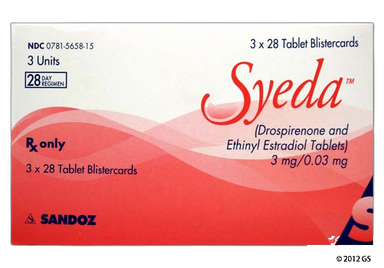
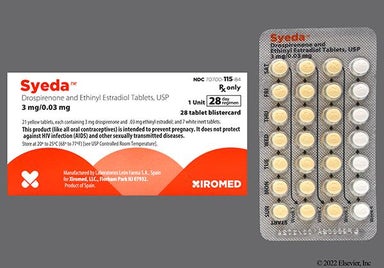
Yasmin is a prescription combination birth control pill used to prevent pregnancy. It contains two hormones, ethinyl estradiol (an estrogen) and drosperinone (a progestin). Each pack contains 28 tablets: 21 active pills with hormones and and 7 inactive pills without hormones. The medication is taken by mouth once a day. Common side effects include headache and breast pain or tenderness.

Yasmin is a combined contraceptive that contains two hormones: ethinyl estradiol (an estrogen) and drosperinone (a progestin). Both hormones work together to prevent pregnancy by:
| Common Brands | Yasmin |
|---|---|
| Drug Class | Estrogen / Progestin combined contraceptive |
| Controlled Substance Classification | Not a controlled medication |
| Generic Status | Lower-cost generic available |
| Availability | Prescription only |

The following side effects may get better over time as your body gets used to the medication. Let your healthcare provider know immediately if you continue to experience these symptoms or if they worsen over time.
Contact your healthcare provider immediately if you experience any of the following.
Along with its needed effects, a medicine may cause some unwanted effects. Although not all of these side effects may occur, if they do occur they may need medical attention.
Check with your doctor immediately if any of the following side effects occur:
More common
Breast pain or tenderness
headache, severe and throbbing
heavy non-menstrual vaginal bleeding
irregular menstrual periods
normal menstrual bleeding occurring earlier, possibly lasting longer than expected
Less common
Longer or heavier menstrual periods
unusual tiredness or weakness
vomiting
Incidence not known
Chills
clay-colored stools
dark urine
difficulty with breathing
dizziness
headache
loss of appetite
pain in the chest, groin, or legs, especially the calves
rash
slurred speech
stomach pain
sudden loss of coordination
sudden, severe weakness or numbness in the arm or leg
unpleasant breath odor
unusual tiredness or weakness
vision changes
vomiting of blood
yellow eyes or skin
Some side effects may occur that usually do not need medical attention. These side effects may go away during treatment as your body adjusts to the medicine. Also, your health care professional may be able to tell you about ways to prevent or reduce some of these side effects. Check with your health care professional if any of the following side effects continue or are bothersome or if you have any questions about them:
Less common
Crying
decreased interest in sexual intercourse
delusions of persecution, mistrust, suspiciousness, or combativeness
false or unusual sense of well-being
inability to have or keep an erection
irritability
loss in sexual ability, desire, drive, or performance
mental depression
quick to react or overreact emotionally
rapidly changing moods
Other side effects not listed may also occur in some patients. If you notice any other effects, check with your healthcare professional.
Call your doctor for medical advice about side effects. You may report side effects to the FDA at 1-800-FDA-1088.



General tips
How to take Yasmin

Yasmin can cause some serious health issues. This risk may be even higher for certain groups. If this worries you, talk to your doctor or pharmacist about other options.
 Smoking cigarettes while taking Yasmin can significantly raise your risk for blood clots. These blood clots can lead to more serious problems, such as heart attack and stroke. The risk is greater if you're over 35 years old and have a history of smoking cigarettes. If you smoke, talk with your gynecologist about safer birth control alternatives.
Yasmin can raise the risk of serious blood clots because it contains ethinyl estradiol (an estrogen). Higher estrogen levels can lead to more blood proteins that stimulate clot formation. Some studies also suggest that birth control pills with drospirenone, like Yasmin, might have a higher risk of blood clots compared to pills with levonorgestrel or other progestins. These clots can be life-threatening and can form anywhere in your body. Get medical attention right away if you have any signs or symptoms of a blood clot:
Your risk of blood clots is higher if you're older, smoke cigarettes, or have certain medical conditions. It also increases if you're on bedrest after surgery or have just given birth. Your gynecologist will usually stop Yasmin 3-4 weeks before surgery and restart it 2 weeks after to lower your risk. If you recently delivered a baby, you should wait at least 4 weeks after delivery to start this medication, and only if you aren't breastfeeding. Talk with your gynecologist if you have any questions regarding your risk of blood clots.
Yasmin contains drospirenone, a hormone that can raise your blood potassium levels. Having too much potassium in your blood (hyperkalemia) can cause muscle weakness, nausea, or an irregular heartbeat. In severe cases, it can lead to serious heart problems.
Your risk is higher if you have kidney, liver, or adrenal gland problems. You shouldn't take Yasmin if you have any of these conditions. Taking it with medications that raise potassium levels, such as ACE inhibitors,potassium-sparing diuretics, or potassium supplements can also raise your risk. Your care team might check your potassium levels with a blood test during your first month of treatment.
Yasmin contains hormones that might affect your risk of certain cancers. Some studies suggest that combination birth control pills might slightly raise the risk of breast cancer, especially in people who currently take them or recently stopped. Other studies suggest a possible link to cervical cancer, but more research is needed to understand this risk.
You shouldn't take Yasmin if you currently have or have had breast cancer because the hormones might cause certain breast cancers to grow. Keep up with your recommended breast exams, mammograms, and cervical cancer screenings. Tell your care team if you notice a new breast lump, nipple discharge, changes in breast shape or skin, or unusual vaginal bleeding.
Yasmin can sometimes cause liver problems, especially if your liver isn't working well. In rare cases, combination birth control pills have been linked to liver tumors, which can cause serious internal bleeding if they rupture. Long-term use might also slightly raise the risk of liver cancer, although this is very rare. Taking Yasmin with certain hepatitis C medications can also raise your risk of liver problems.
Tell your care team if you have a history of liver problems before starting Yasmin. Stop taking the medication and contact your care team right away if you develop yellowing of your skin or eyes (jaundice), dark urine, or unusual tiredness. Get emergency medical help if you develop sudden, severe stomach pain.
Yasmin can raise your blood pressure, especially if you're older or have been taking combination birth control pills for a long time. If you already have high blood pressure that's well controlled, your care team will need to monitor it closely. You shouldn't take this medication if your blood pressure isn't well controlled or if you have blood vessel problems caused by high blood pressure.
Check your blood pressure regularly while taking Yasmin. Tell your care team if your readings are higher than usual, since you might need to stop taking the medication.
Yasmin might slightly raise your risk of developing gallbladder problems, such as gallstones. Tell your care team if you develop pain in the upper right side of your stomach, nausea, or vomiting, especially after eating fatty foods.
Yasmin can affect your blood sugar and cholesterol levels. It might make it harder for your body to control blood sugar, especially if you have diabetes or prediabetes. In some people, it can also raise cholesterol or triglyceride (blood fat) levels.
If you have very high triglycerides, taking Yasmin might raise your risk of pancreatitis, a serious condition that causes inflammation of the pancreas. Tell your care team if you have a history of high blood sugar or cholesterol before starting treatment. They might recommend regular blood tests or a different birth control method.
Yasmin can cause headaches or make existing migraines worse. In some cases, a sudden or severe headache can be a warning sign of a serious problem, such as a stroke.
Tell your care team if you develop new headaches, have headaches that won't go away, or notice your migraines becoming more frequent or severe. You might need to stop taking the medication. Get emergency medical help if you develop a sudden, severe headache, especially with vision changes, weakness, or trouble speaking.
Yasmin can cause spotting or bleeding between periods, especially during the first 3 months of treatment. These changes often improve as your body adjusts to the medication.
You might also have lighter periods or miss a period while taking Yasmin, even if you're not pregnant. If you miss a period after forgetting pills, take a pregnancy test. If you've taken all your pills correctly but miss 2 periods in a row, contact your care team to rule out pregnancy. Also, tell them if you have heavy bleeding or spotting that doesn't go away.
Yasmin can sometimes cause mood changes or make depression worse. If you've had depression before, your care team might need to monitor your mood more closely during treatment.
Tell your care team if you notice ongoing sadness, loss of interest in activities, or other changes in your mood. If your depression becomes severe, your prescriber might recommend stopping the medication and switching to another birth control method.
If you have certain conditions, such as hereditary angioedema (a condition that causes swelling) or chloasma (dark patches on your skin), talk to your prescriber before taking Yasmin. This medication might make these conditions worse. If you've had chloasma before, limit your exposure to sunlight and UV light to help prevent dark patches from developing or getting worse.

 Package
| Dosage | Quantity | Price as low as | Price per unit |
|---|---|---|---|
| 28 tablets of 3mg/0.03mg | 3 packages | $29.07 | $9.69 |

Although certain medicines should not be used together at all, in other cases two different medicines may be used together even if an interaction might occur. In these cases, your doctor may want to change the dose, or other precautions may be necessary. When you are taking this medicine, it is especially important that your healthcare professional know if you are taking any of the medicines listed below. The following interactions have been selected on the basis of their potential significance and are not necessarily all-inclusive.
Using this medicine with any of the following medicines is not recommended. Your doctor may decide not to treat you with this medication or change some of the other medicines you take.
Using this medicine with any of the following medicines is usually not recommended, but may be required in some cases. If both medicines are prescribed together, your doctor may change the dose or how often you use one or both of the medicines.
Using this medicine with any of the following medicines may cause an increased risk of certain side effects, but using both drugs may be the best treatment for you. If both medicines are prescribed together, your doctor may change the dose or how often you use one or both of the medicines.


Contraindications are specific health conditions or situations in which a person should not take a medication due to safety concerns. If you have any of the following conditions or if any of the following apply to you, let your healthcare provider know because Yasmin will not be safe for you to take.





Prescription savings
Stop paying too much for your prescriptions. Compare prices, get pharmacy coupons, and save up to 80%. Find expert answers to your health questions so you can make the best decisions for yourself and your family.
Health conditions
Medications & treatment
Access & affordability
Medication discounts


Yes, Yasmin is a combination birth control pill. It contains two different types of hormones that work together to help prevent pregnancy. These hormones are an estrogen called ethinyl estradiol and a progestin called drospirenone.
No, Yasmin isn't a mini pill. Mini pills contain only one hormone (progestin), while Yasmin contains both estrogen and progestin, making it a combination pill pill. Mini pills are often an option for people who can't take estrogen, such as those who are breastfeeding or have certain health conditions.
No, Yasmin isn't considered a low-dose estrogen birth control pill. Low-dose pills typically contain 20 mcg or less of ethinyl estradiol (estrogen). Since Yasmin contains 30 mcg of estrogen in each active pill, it's considered a moderate-dose birth control pill.
You can take Yasmin for many years as long as it's safe for you. Many people continue taking birth control pills until they reach menopause or decide to become pregnant. Your gynecologist will check your health regularly to make sure the medication is still right for you, especially if you develop risk factors like a history of blood clots.
No, Yasmin isn't available over the counter. You'll need a prescription from a healthcare professional to get it at a pharmacy. While a progestin-only birth control pill called Opill is available without a prescription, combination birth control pills like Yasmin still require one.
Yes, Yasmin can sometimes cause mood changes, including depression. While not everyone experiences these side effects, depression is a known side effect of hormonal birth control. Talk to your prescriber if you notice unusual sadness, anxiety, or changes in your mood while taking the medication.
Yes, Yasmin can help delay your period. If you want to skip your period, you can skip the 7 inactive pills in your pack and start a new pack of active pills right away. This can help prevent the bleeding that usually happens during the week you take inactive pills. But you might still experience some spotting or breakthrough bleeding, especially when you first try this. Talk to your prescriber before changing how you take Yasmin to make sure it's right for you.
Yasmin and Yaz are both combination birth control pills that contain drospirenone and ethinyl estradiol, but they have a few differences. Yasmin contains more estrogen (30 mcg vs. 20 mcg), which might cause more side effects. It also has 21 active pills per pack, compared with 24 in Yaz, so you might have shorter periods with Yaz. Unlike Yasmin, Yaz is also FDA approved to treat premenstrual dysphoric disorder (PMDD) and acne in certain people. Talk to your gynecologist if you have questions about how these medications compare.
