Key takeaways:
Eating whole grains may support weight management.
Whole grain foods may support weight goals by increasing fullness, keeping blood sugar steady, and changing your gut microbiome.
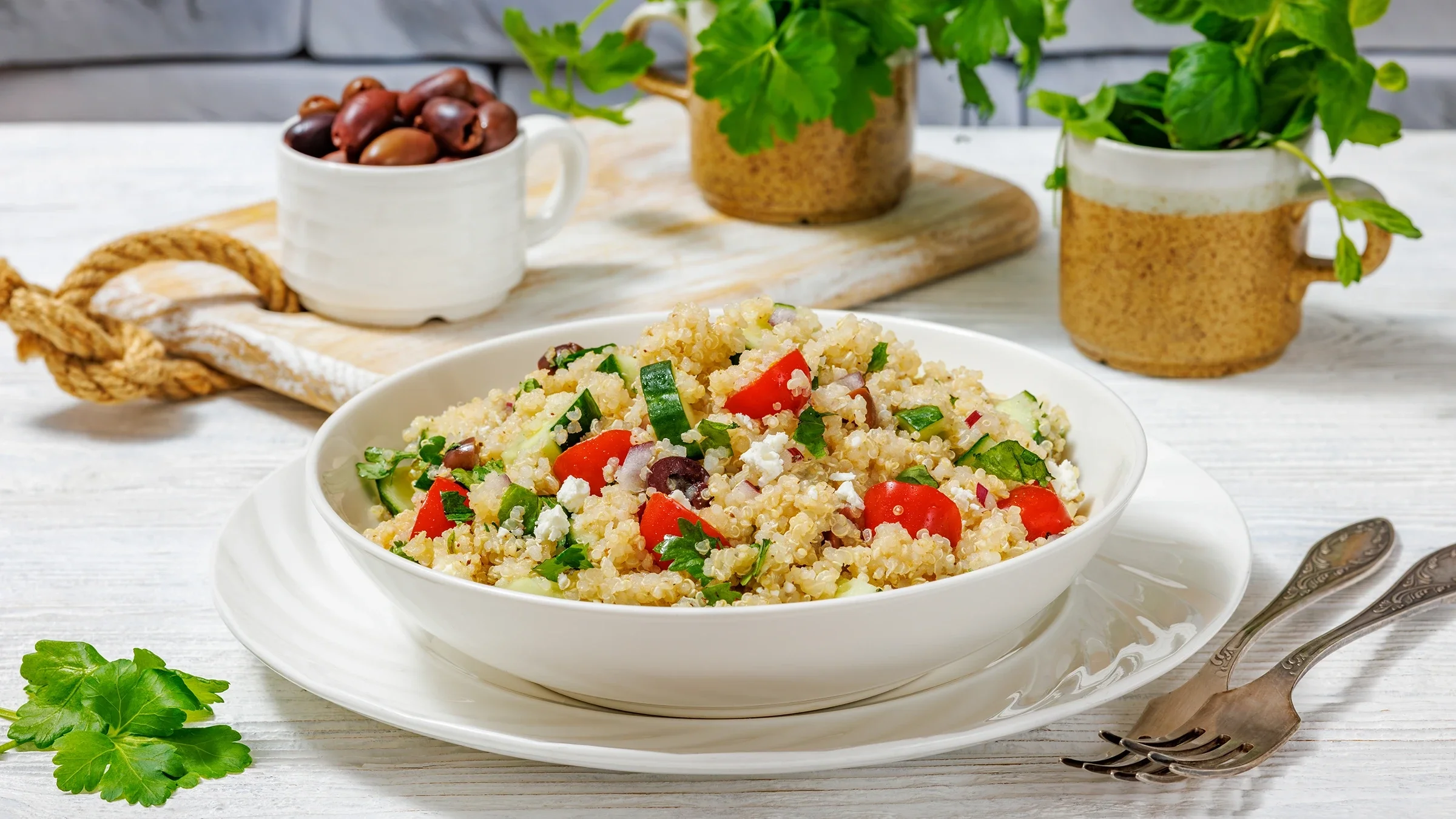
The best whole grains for weight loss include oats, quinoa, barley, brown rice, and whole-grain bread.
Carbohydrates often get a bad rap, especially when it comes to weight loss. You may have heard that carbs are bad for you, or that you should avoid them if you want to lose weight.
But carbs are an important part of a balanced diet. And whole-grain carbs, specifically, offer many health benefits — including support for weight loss. Let’s take a look at what the science says about whole grains, plus how adding them to your diet might help your weight goals.
What are whole grains?
First, let’s break down what we mean by whole grains. Whole grains include all three parts of the grain: the bran, germ, and endosperm. These parts of the grain are rich in nutrients, including fiber. Some examples of whole grains are oats, quinoa, and wheat.
In contrast, refined grains — like white bread or pasta — go through a milling process that removes the bran and germ. This makes them more shelf-stable. But it also strips away many of the nutrients your body needs.
Can whole-grain foods support weight loss?
The short answer: They might.
There’s evidence that whole-grain foods may help with weight loss. Large population studies track habits among big groups of people. These studies suggest that people who eat more whole grains have a lower body weight. They’re also less likely to have metabolic syndrome. This is a group of health issues like high blood sugar and belly fat that raise your risk of diabetes and heart disease.
But clinical trials are mixed. These are studies in which people are randomly assigned to eat whole grain or refined grains.
Some studies find that eating a diet rich in whole grains can lead to weight loss or lower body fat. But large reviews of multiple studies found that switching to whole grains had no effect on body weight, fat percentage, or waist size.
These mixed findings might be because studies haven’t been consistent about what type of whole grain they study. Studies also may not have been consistent about the quantity of whole grains used or how long participants should be monitored.
How can whole grains help you lose weight?
Whole grains are rich in nutrients that may help with weight loss in a few different ways.
1. Helps you feel full
Eating whole grains increases satiety (feelings of fullness). For example, researchers have found that eating whole-grain pasta instead of regular pasta can help you feel fuller sooner.
One reason may be that whole grains are rich in fiber. Fiber expands in your stomach and slows digestion, leaving you satisfied longer. It may also help stimulate the release of hormones — like GLP-1 (glucagon-like peptide-1). These hormones tell your brain that you’re full.
The protein in many whole grains is also filling. Protein works together with fiber to boost fullness, so you may eat less at each meal.
2. Decreases hunger between meals
Eating whole grains may also help you feel less hungry overall. In one study, people who ate whole-rye porridge for breakfast were less hungry for the next 8 hours compared to people who ate refined wheat bread.
Feeling less hungry between meals can make it easier to avoid overeating throughout the day. This can support gradual, sustainable weight loss.
3. Stabilizes blood sugar
When you eat refined grains, your blood sugar spikes quickly. In contrast, eating whole grains leads to a smaller, slower rise in blood sugar. That’s because the fiber and protein in whole grains slow down how fast your body digests and absorbs carbohydrates. This helps you avoid the high blood-sugar spikes that can lead to food cravings.
Over time, the effect of whole grains on your blood sugars may also lower your risk of diabetes. And having diabetes makes you more likely to gain weight. So this is another way that whole grains can support weight management.
4. Changes microbiome
Your gut is lined with trillions of micro-organisms known as your microbiome. Research suggests that eating whole grains regularly can change the types of bacteria that live in your gut.
Specifically, whole grains may increase the diversity of bacteria. And having more variety of bacteria in the microbiome is linked to less weight gain.
5. May help your body burn fat
Eating more whole grains might help decrease body fat. This happens in a few different ways:
Polyphenols are plant compounds found in the bran layer of whole grains. They may help prevent fat cells from growing and maturing.
Whole grains may help burn extra calories by turning stored fat into heat energy.
The minerals and protein in whole grains may help your body build more muscle mass. This lowers your body fat percentage, the amount of your total body weight that’s made up of fat.
What are the best whole grains for weight loss?
The best whole grains for weight loss are those that are high in fiber and relatively high in protein. Examples include:
Rye berries
Barley
Millet
How to include more whole grains in your diet
You don’t have to overhaul your diet to incorporate more whole grains. Try experimenting with different grains in different meals to see what you like.
Here are some easy tips for including more whole grains in your diet:
Start your day with oats. Overnight oats or oatmeal make an easy breakfast that can keep you full all morning.
Try new grains. Try out different types of whole grains — like barley, quinoa, millet, amaranth, or farro.
Swap out refined grains for whole grains. Try replacing white rice, pasta, or bread with whole-grain versions in meals you already like eating.
Mix and match. When you’re first getting used to the taste and texture of whole grains, you can combine whole grains with refined ones — like mixing brown and white rice.
Check labels carefully. Look for “100% whole grain” or “whole wheat” as the first ingredient. And remember that multigrain isn’t the same as whole grain. Multigrain refers to products that are made with more than one grain, but the grains can be refined.
Frequently asked questions
The Dietary Guidelines for Americans recommend that at least half of the grains you eat should be from whole grains. The exact number of servings you should aim for each day depends on your age, weight, and other factors.
No, whole grains aren’t considered inflammatory foods. In fact, whole grains may even help lower some types of inflammation.
Yes, whole-grain foods are good for people with diabetes. That’s because whole grains cause a smaller rise in blood sugar after meals compared to refined grains. So, eating more whole grains may help improve insulin sensitivity and lower your long-term blood sugar levels (known as your hemoglobin A1C, or A1C). And people who eat more whole grains also have a lower risk of developing Type 2 diabetes.
The Dietary Guidelines for Americans recommend that at least half of the grains you eat should be from whole grains. The exact number of servings you should aim for each day depends on your age, weight, and other factors.
No, whole grains aren’t considered inflammatory foods. In fact, whole grains may even help lower some types of inflammation.
Yes, whole-grain foods are good for people with diabetes. That’s because whole grains cause a smaller rise in blood sugar after meals compared to refined grains. So, eating more whole grains may help improve insulin sensitivity and lower your long-term blood sugar levels (known as your hemoglobin A1C, or A1C). And people who eat more whole grains also have a lower risk of developing Type 2 diabetes.
The bottom line
Whole grains aren’t a magical weight-loss food. But research suggests they can help you feel full longer, regulate your blood sugar, and help maintain a healthy gut microbiome. All of these things can help support your weight goals. To add more whole grains to your diet, try making gradual changes. One way to start is by swapping our refined grains for whole-grains in dishes you already enjoy.

Why trust our experts?




References
American Diabetes Association. (2022). High blood sugar and hunger.
Cioffi, I., et al. (2016). Effects on satiation, satiety and food intake of wholegrain and refined grain pasta. Appetite.
Dietary Guidelines for Americans. (2020). Dietary guidelines for Americans, 2020-2025. U.S. Department of Agriculture.
Hu, Y., et al. (2020). Intake of whole grain foods and risk of type 2 diabetes: results from three prospective cohort studies. The BMJ.
Isaksson, H., et al. (2008). Whole grain rye porridge breakfast improves satiety compared to refined wheat bread breakfast. Food & Nutrition Research.
Marventano, S., et al. (2017). Whole grain intake and glycaemic control in healthy subjects: A systematic review and meta-analysis of randomized controlled trials. Nutrients.
Matthews, R., et al. (2023). The effect of whole-grain oats, oat bran, and isolated beta-glucan on indices of satiety and short-term energy intake. Food Reviews International.
Menni, C., et al. (2017). Gut microbiome diversity and high-fibre intake are related to lower long-term weight gain. International Journal of Obesity.
Milesi, G., et al. (2022). Whole grain consumption and inflammatory markers: A systematic literature review of randomized control trials. Nutrients.
Morell, P., et al. (2017). Revisiting the role of protein-induced satiation and satiety. Food Hydrocolloids.
Oldways Whole Grain Council. (n.d.). What is a whole grain?
Pan, R., et al. (2020). Metabolic improvement via enhancing thermogenic fat-mediated non-shivering thermogenesis: From rodents to humans. Frontiers in Endocrinology.
Papathanasopoulos, A., et al. (2010). Dietary fiber supplements: Effects in obesity and metabolic syndrome and relationship to gastrointestinal functions. Gastroenterology.
Pol, K., et al. (2013). Whole grain and body weight changes in apparently healthy adults: a systematic review and meta-analysis of randomized controlled studies. The American Journal of Clinical Nutrition.
Roager, H. M., et al. (2017). Whole grain-rich diet reduces body weight and systemic low-grade inflammation without inducing major changes of the gut microbiome: A randomised cross-over trial. Gut.
Sadeghi, O., et al. (2020). Whole-grain consumption does not affect obesity measures: An updated systematic review and meta-analysis of randomized clinical trials. Advances in Nutrition.
Sanders, L. M., et al. (2021). Effects of whole grain intake, compared with refined grain, on appetite and energy intake: A systematic review and meta-analysis. Advances in Nutrition.
Seal, C. J., et al. (2021). Health benefits of whole grain: Effects on dietary carbohydrate quality, the gut microbiome, and consequences of processing. Comprehensive Reviews in Food Science and Food Safety.
Thielecke, F., et al. (2014). Can whole grain help in weight management? Journal of Clinical Gastroenterology.
Um, C. Y., et al. (2023). Grain, gluten, and dietary fiber intake influence gut microbial diversity: Data from the food and microbiome longitudinal investigation. Cancer Research Communications.
Wu, W., et al. (2020). Weight loss induced by whole grain-rich diet is through a gut microbiota-independent mechanism. World Journal of Diabetes.
Xu, C., et al. (2021). Bidirectional temporal relationship between obesity and hyperinsulinemia: Longitudinal observation from a Chinese cohort. BMJ Open Diabetes Research & Care.
Ying, T., et al. (2024). Effects of whole grains on glycemic control: a systematic review and dose-response meta-analysis of prospective cohort studies and randomized controlled trials. Nutrition Journal.