Key takeaways:
Eating protein-rich snacks gives you energy and keeps you satisfied between meals. But getting nutritious snacks can be tricky on busy days.
With a little planning, you can prepare plenty of tasty, high-protein snacks that are also portable.
Examples of convenient high-protein snacks include hard-boiled eggs, almonds, and fruit with nut butter.
If you have a busy schedule, you probably snack on the go. For many people, that’s unavoidable. The challenge is finding snacks that are both portable and nutritious. Many prepackaged, "convenience" snacks are high in calories, sodium, sugar, and/or unhealthy fats.
But there are plenty of protein-rich foods that can fuel you up and fill you up, especially when you combine them with other important nutrients like fiber, vitamins, and healthy fats. With just a little planning (and some experimentation), it’s easy to find protein-rich snacks to grab when you’re short on time.
Here are 12 high-protein snacks for on the go.
1. Plain Greek yogurt
Protein: 14.9 g (per 5.3-oz, single-serve container)
Greek yogurt has more protein than regular yogurt, with nearly 15 g per single-serving container.
Choose unsweetened Greek yogurt to avoid added sugars and additives. Instead, try sweetening your yogurt with a drizzle of honey. And add nuts, seeds, or fruit (fresh or dried) for extra protein and some fiber.
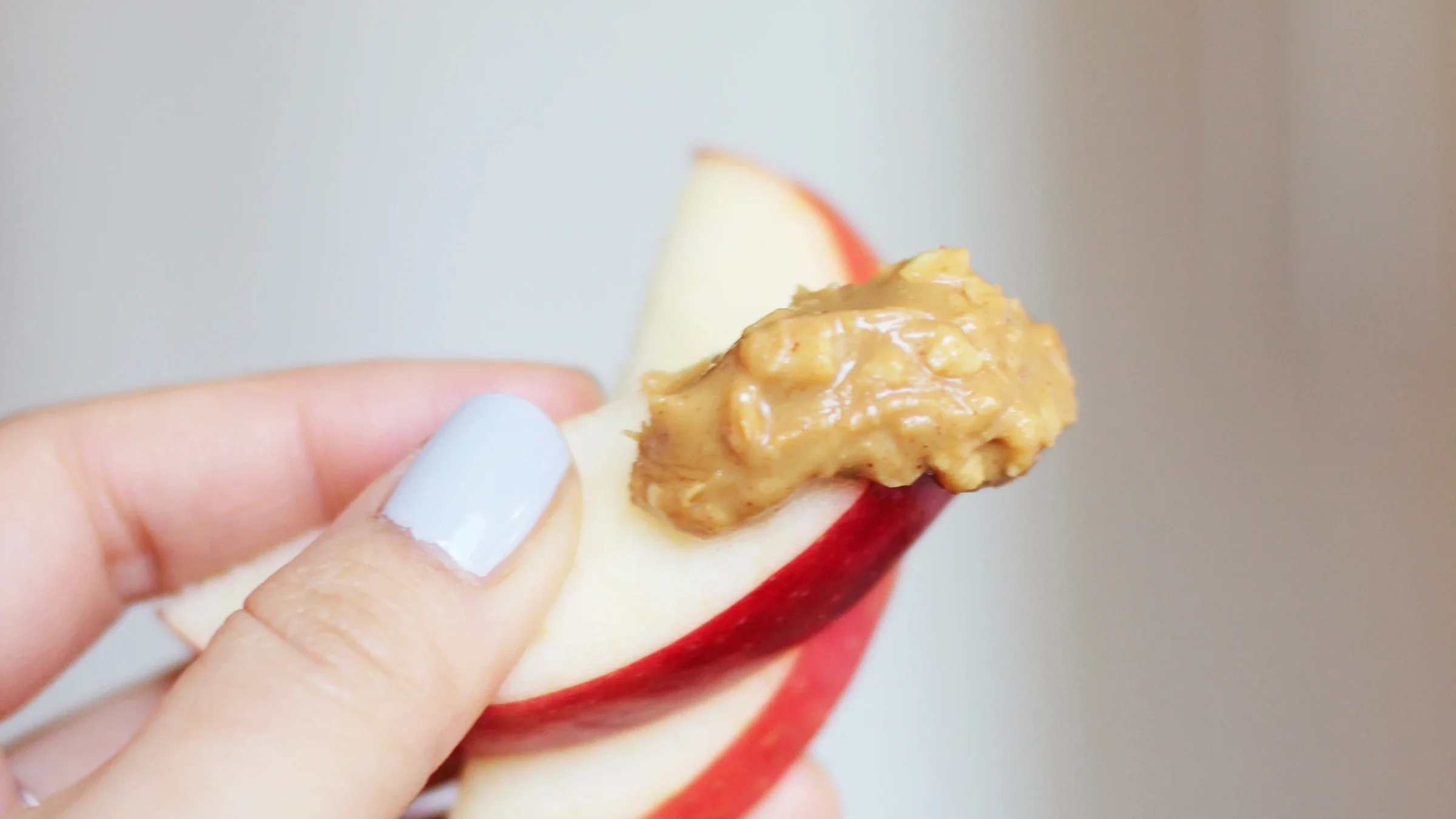
2. Apple slices with peanut butter
Protein: 7 g (per 2 tbsp of peanut butter)
If you’re craving something crunchy, apples with peanut butter can be an excellent snack.
Apples contain carbohydrates (including fiber), vitamin C, and other antioxidants. Peanut butter provides protein, fiber, and satisfying, heart-healthy fats. Single-serving peanut-butter pouches make it extra easy to grab and go.
3. Smoothies
Protein: Varies
Blending a smoothie at home and taking it along in a to-go cup is a convenient way to get a nutritious snack.
Start with a protein-rich base, like soy milk or cow’s milk. You can add frozen fruit and protein-rich foods like:
Greek yogurt
Nut butter
Silken tofu
Hemp or sunflower seeds
Beans (such, as white beans, which have a neutral taste and add a creamy texture)
If you want an extra boost of protein, you can add a scoop of your favorite protein powder. This will add 10 g to 30 g of protein per scoop, depending on the type. Just try to choose a protein powder with less than 5 g of sugar per serving.
4. Tuna with whole-grain crackers
Protein: 20.1 g (per 3 oz serving)
A pouch of water-packed tuna makes a convenient, low-fat, high-protein snack. Pairing it with whole-grain crackers or crunchy veggie spears adds fiber.
You can also look for premade tuna salad and crackers in your grocery store’s deli section. Or make your own at home by mixing canned tuna with celery, onions, and mayonnaise or olive oil. Scoop it into a lidded container, and you have a take-along snack that’s ready to go.
5. Hard-boiled egg
Protein: 12.6 g (2 large eggs)
Eggs aren’t just a source of protein. They also contain many other nutrients, including vitamin D, iron, phosphorus, choline, and the essential amino acid, leucine. Leucine is important for building and repairing muscles.
You can hard boil eggs in advance and store them in the fridge for up to a week. Tuck a couple into a portable container and sprinkle with “everything” seasoning (or whichever seasoning you like best.
6. Low-fat mozzarella string cheese
Protein: 7 g (per stick, or 28 g)
Cheese often gets a bad rap because some types are high in saturated fat, sodium, and calories. But low-fat mozzarella string cheese can make a great portable snack.
It’s a higher-protein cheese and contains calcium to help keep your bones strong. Choosing a low-fat option limits your saturated fat intake. And string cheese is convenient, since it’s prepackaged, portioned, and ready to toss in your bag — no prep needed.
You can pair string cheese with fresh fruit and/or whole-grain crackers for a balanced snack.
7. Cottage cheese
Protein: 12.4 g (per ½ cup)
Cottage cheese has a lot going for it, in addition to its protein content. It has calcium and phosphorus that help your bones. Some cottage cheese also contains probiotics, which can support gut health. You’ll know that cottage cheese has probiotics if the label says “contains live and active cultures.”
Both full-fat and low-fat cottage cheese can be healthy. Full-fat cottage cheese has saturated fat, which is often linked to heart disease. But dairy fats might not be as harmful as once thought, and it could even support heart health and weight management. The best choice depends on your taste preference, health conditions, and nutrition goals.
You can eat cottage cheese as-is or:
Topped with fresh or dried fruit
Sprinkled with nuts or pumpkin seeds
As a dip for veggies or whole grain crackers
8. Almonds
Protein: 6 g (per ounce)
Grabbing a quick handful of nuts is an easy snack. And almonds are a particularly nutritious choice. They’re higher in protein, calcium, fiber, and vitamin E, compared to other nuts. And they may help to lower “bad” LDL cholesterol.
You can buy almonds raw or roasted, or toast them yourself with your favorite seasonings. Try making your own trail mix by combining almonds with unsweetened dried fruit and hemp seeds, which are also an excellent source of protein.
9. Edamame
Protein: 18.5 g (per cup, shelled)
Edamame are “immature” soybeans that are harvested while they’re still soft and green. Unlike most plant foods, they’re a complete protein, which means they contain all nine essential amino acids that your body needs. What’s more, edamame are packed with fiber, healthy fats, vitamins, and minerals.
You can buy fresh or frozen edamame in the shell, or you can buy edamame that’s already shelled and ready to eat.
10. Roasted soybeans
Protein: 12.1 g (per ounce)
When soybeans are left to fully ripen, they harden and become even more nutrient-dense than edamame. Ounce for ounce, soybeans have even more protein than steak.
Soybeans can be processed to make plant-based foods, like tofu, miso, and soy milk. But they can also be dry roasted and eaten as a crunchy, high-protein snack.
You can usually find roasted soybeans in natural food stores. Or make your own by soaking soybeans overnight, then roasting them in the oven until they’re golden.
11. Chia seed pudding
Protein: 4.8 g (per ounce, dry)
Chia seeds are another plant-based, complete protein. They’re also packed with soluble fiber that’s good for your gut and overall health.
It’s not common to eat chia seeds on their own. It’s better to mix them into a moist food or liquid before eating them. This makes them easier to chew and digest.
Here’s how to make chia-seed pudding:
Add 2 tbsp of chia seeds to a small jar or container.
Pour in 1 cup of your preferred type of milk.
Mix in flavorings of your choice, like berries, nut butter, and/or a bit of natural sweetener, like honey.
Cover.
Refrigerate the mixture for at least 30 minutes, or overnight.
For extra protein, spoon a dollop of Greek yogurt on top before eating.
12. Bone broth
Protein: 10 g (per cup, depending on the recipe)
Most of the protein in bone broth comes from collagen and gelatin. These proteins may support your gut, joints, and skin. You can make bone broth at home or buy premade versions. It’s easy to fill a travel mug with warm bone broth and take it with you.
Why is protein so important?
Protein is an essential nutrient that your body needs for many important processes. Protein serves as the building block of your cells, and it provides energy for your body. It also builds bones, muscle, cartilage, and skin.
Eating a diet rich in protein supports:
Faster metabolism
Postexercise muscle recovery
Reducing muscle loss that can happen with aging
Maintaining a healthy immune system
Lower blood pressure
How much protein do you need each day?
Your protein needs vary depending on factors like your age and sex. Most experts recommend getting at least 0.8 g of protein per kg of body weight per day. For example, for someone who is 150 lbs, that’s about 54 g of protein.
But you may need more protein than this, especially if you’re:
An older adult
Highly active or an athlete
Working towards weight loss or weight maintenance
If you’re not sure how much protein you need, check in with a healthcare professional or registered dietitian who can help you figure out the right amount.
High-protein snacks to avoid
Protein is an important nutrient, but that doesn’t mean every high-protein snack is good for you. Some ultra-processed snacks are high in protein, but also contain high amounts of added sugar, sodium, or food additives.
Examples include:
Premade protein smoothies
Jerky sticks
Chicken nuggets
Fish sticks
Some protein bars
Nuts coated in candy
For the best protein snacks, choose a wide variety of nutrient-dense, minimally- processed foods.
Frequently asked questions
Protein deficiencies are rare. Most people in the U.S. get enough protein. But, if you aren’t getting enough, you may notice symptoms, like bone fractures, fatigue, brittle hair and nails, and mood changes or trouble thinking. You may also notice that you’re getting sick more often than usual.
It’s possible to get too much of any nutrient — and that includes protein. Eating too much protein can crowd out other important nutrients, like fiber, carbohydrates, and healthy fats. The calories from excess protein can contribute to weight gain. And too much protein can harm kidneys in people with chronic kidney disease.
Protein deficiencies are rare. Most people in the U.S. get enough protein. But, if you aren’t getting enough, you may notice symptoms, like bone fractures, fatigue, brittle hair and nails, and mood changes or trouble thinking. You may also notice that you’re getting sick more often than usual.
It’s possible to get too much of any nutrient — and that includes protein. Eating too much protein can crowd out other important nutrients, like fiber, carbohydrates, and healthy fats. The calories from excess protein can contribute to weight gain. And too much protein can harm kidneys in people with chronic kidney disease.
The bottom line
Protein is an important nutrient that your body needs to stay strong. It also helps you feel your best. But when life gets busy, it can be hard to eat a balanced diet and get enough protein.
High-protein snacks are an easy way to boost your nutrition during the day. With a little planning, you can find lots of high-protein snacks you like that are easy to take on the go. Just try to avoid snacks that are highly processed, deep-fried, or high in added sugar, sodium, or preservatives.

Why trust our experts?




References
Amawi, A., et al. (2024). Athletes’ nutritional demands: A narrative review of nutritional requirements. Frontiers in Nutrition.
Boyer, J., et al. (2004). Apple phytochemicals and their health benefits. Nutrition Journal.
Bray, G. A., et al. (2015). Effect of protein overfeeding on energy expenditure measured in a metabolic chamber. American Journal of Clinical Nutrition.
Buendia, J. R., et al. (2015). Diets higher in protein predict lower high blood pressure risk in Framingham Offspring Study adults. American Journal of Hypertension.
FoodSafety.gov. (2023). Cold food storage chart.
Lee, Y., et al. (2017). Effects of dark chocolate and almonds on cardiovascular risk factors in overweight and obese individuals: A randomized controlled-feeding trial. Journal of the American Heart Association.
Lordan, R., et al. (2018). Dairy fats and cardiovascular disease: Do we really need to be concerned? Foods.
Moon, J., et al. (2020). Clinical evidence and mechanisms of high-protein diet-induced weight loss. Journal of Obesity & Metabolic Syndrome.
Murphy, M. M., et al. (2021). Adequacy and sources of protein intake among pregnant women in the United States, NHANES 2003–2012. Nutrients.
MyFoodData. (n.d.). Canned white tuna (water packed).
MyFoodData. (n.d.). Cheese, cottage, low fat.
MyFoodData. (n.d.). Chia seeds, dry, raw.
MyFoodData. (n.d.). Dry roasted almonds.
MyFoodData. (n.d.). Dry roasted soybeans (mature seeds).
MyFoodData. (n.d.). Edamame cooked.
MyFoodData. (n.d.). Hard-boiled eggs.
MyFoodData. (n.d.). Lonoline - beef bone broth.
MyFoodData. (n.d.). Low fat mozzarella string cheese.
MyFoodData. (n.d.). Peanut butter (smooth).
MyFoodData. (n.d.). Simple Truth - shelled hemp seeds.
MyFoodData. (n.d.). Yogurt Greek plain low fat.
National Institute of Diabetes and Digestive and Kidney Diseases. (2025). Healthy eating for adults with chronic kidney disease.
Rasmussen, B., et al. (2020). Protein requirements of healthy lactating women are higher than the current recommendations. Current Developments in Nutrition.
Rogeri, P., et al. (2022). Strategies to prevent sarcopenia in the aging process: Role of protein intake and exercise. Nutrients.
Harvard T. H. Chan School of Public Health. (n.d.). Leucine.
University of Rochester Medical Center (n.d.). Leucine.