Vafseo
Vafseo (vadadustat) is a hypoxia-inducible factor prolyl hydroxylase inhibitor (HIF-PHI). It's used to treat anemia in adults with chronic kidney disease (CKD) who are on dialysis. It comes as a tablet that's taken by mouth once a day. Side effects include high blood pressure and diarrhea. This medication is only available as a brand-name version.


What is Vafseo (vadadustat)?
What is Vafseo (vadadustat) used for?
- Anemia caused by chronic kidney disease in adults who've who've been on dialysis for at least 3 months
How Vafseo (vadadustat) works
Vafseo (vadadustat) is a hypoxia-inducible factor prolyl hydroxylase inhibitor, or HIF-PHI. It works by keeping the levels of a protein called HIF high enough in the body. This helps raise the amount of erythropoietin (EPO), a hormone that tells your body to make more red blood cells. Making more red blood cells helps treat anemia caused by chronic kidney disease.
Drug facts
| Common Brands | Vafseo |
|---|---|
| Drug Class | HIF-PH inhibitor |
| Controlled Substance Classification | Not a controlled medication |
| Generic Status | No lower-cost generic available |
| Availability | Prescription only |

Side effects of Vafseo (vadadustat)
The following side effects may get better over time as your body gets used to the medication. Let your healthcare provider know immediately if you continue to experience these symptoms or if they worsen over time.
Common Side Effects
- High blood pressure (14%)
- Diarrhea (13%)
- Headache (9%)
Less Common Side Effects
- Nausea
- Stomach pain
- Vomiting
- Stomach bleeding and ulcers
- Fatigue
- Dizziness
- Shortness of breath
- Problems with dialysis
Vafseo (vadadustat) serious side effects
Contact your healthcare provider immediately if you experience any of the following.
- Blood clot in the leg or arm: swelling or redness in the arm or leg, skin that's warm to touch
- Blood clot in the lungs: trouble breathing, cough, chest pain, irregular heartbeat
- Heart attack: chest pain or tightness; pain that spreads to your shoulder, arm, neck, or jaw
- Stroke: sudden headache, trouble breathing, weakness in one part of your body or face, slurred speech
- Dangerously high blood pressure: severe headache, blurry vision, dizziness, trouble breathing, chest pain
- Liver problems: pain in the right upper stomach, loss of appetite, yellowing of your skin or the whites of your eyes, tiredness, dark or brown urine
- Stomach ulcer or stomach bleeding: severe stomach pain or discomfort, nausea, vomiting, trouble swallowing, pain in your throat or chest, blood in vomit or stool, black or tarry stool
- Seizures
The following Vafseo (vadadustat) side effects have also been reported
Side effects that you should report to your care team as soon as possible:
- Allergic reactions—skin rash, itching, hives, swelling of the face, lips, tongue, or throat
- Blood clot—pain, swelling, or warmth in the leg, shortness of breath, chest pain
- Heart attack—pain or tightness in the chest, shoulders, arms, or jaw, nausea, shortness of breath, cold or clammy skin, feeling faint or lightheaded
- Increase in blood pressure
- Liver injury—right upper belly pain, loss of appetite, nausea, light-colored stool, dark yellow or brown urine, yellowing skin or eyes, unusual weakness or fatigue
- New or worsening seizures
- Stomach bleeding—bloody or black, tar-like stools, vomiting blood or brown material that looks like coffee grounds
- Stroke—sudden numbness or weakness of the face, arm, or leg, trouble speaking, confusion, trouble walking, loss of balance or coordination, dizziness, severe headache, change in vision
Side effects that usually do not require medical attention (report these to your care team if they continue or are bothersome):

Get your GoodRx coupon

Pros and cons of Vafseo (vadadustat)
Pros
- Taken by mouth once a day
- Can take with or without food at any time of day
Cons
- Has some potentially serious risks, like blood clots and liver problems
- Not recommended for people with liver problems, liver cirrhosis, or cancer

Pharmacist tips for Vafseo (vadadustat)

- You can take Vafseo (vadadustat) at any time of day. Just make sure to take it at the same time every day to keep the medication levels steady in your body. Your dialysis type or schedule doesn't affect when you should take Vafseo (vadadustat).
- Take Vafseo (vadadustat) with or without food. If it's hurting your stomach, try taking it with food to help.
- Swallow the Vafseo (vadadustat) tablet whole. Don't crush, cut, or chew it. If you have trouble swallowing tablets, talk to your prescriber.
- Mark your calendar for your blood work appointments while taking Vafseo (vadadustat). These tests are important to make sure the medication is working and is safe for you. The tests will check your hemoglobin levels, iron levels, and liver labs. Your prescriber might change your dose based on your results.
- Check your blood pressure as your prescriber tells you to. Vafseo (vadadustat) can make your blood pressure go up, sometimes to dangerous levels. If your blood pressure stays high, tell your care team. Your prescriber can help manage it, including using blood pressure medications if needed.
- Vafseo (vadadustat) often causes diarrhea. If this happens, make sure to stay hydrated. Ask a healthcare professional if you're considering anti-diarrhea medications to help. Talk to your prescriber if diarrhea doesn't improve or if you feel dizzy or lightheaded.
- Try to avoid alcohol while taking Vafseo (vadadustat). Both the medication and alcohol can raise your risk of serious problems, like stomach and liver damage. Talk to your prescriber about your drinking habits and how to take Vafseo (vadadustat) in a safe way.
- Take Vafseo (vadadustat) at least 1 hour before any products that contain iron. This includes iron supplements and iron-based phosphate binders like Auryxia (ferric citrate) and Velphoro (sucroferric oxyhydroxide). Iron can lower how much Vafseo (vadadustat) your body absorbs. This can make the medication work less well.
- Take Vafseo (vadadustat) at least 1 hour before or 2 hours after taking a phosphate binder that's not iron based. Examples include calcium acetate or sevelamer carbonate (Renvela). Taking them at different times helps Vafseo (vadadustat) get absorbed into the body properly so it can work the way it should.
- Make sure to tell your care team about all the medications you take or plan to take. Some medications can interact with Vafseo (vadadustat) and raise your risk of side effects. For example, taking Vafseo (vadadustat) with certain statins can raise the risk of muscle pain from the cholesterol medication. Your care team can suggest changes to your medications to keep you safe if needed.

Risks and warnings for Vafseo (vadadustat)
Vafseo (vadadustat) can cause some serious health issues. This risk may be even higher for certain groups. If this worries you, talk to your doctor or pharmacist about other options.
Higher risk of serious blood clots and related complications
- Risk factors: Heart disease | Problems with blood circulation to the brain | Heart attack or stroke within 3 months of starting Vafseo (vadadustat) | Hemoglobin levels rising too quickly | Hemoglobin levels greater than 11 g/dL
Vafseo (vadadustat) can raise the risk of serious blood clot problems, which can be life-threatening. These problems can include blood clots, heart attacks, or strokes.
Before you start Vafseo (vadadustat), tell your prescriber about your full medical history. Your risk is higher if you've had heart problems or issues with blood flow to the brain. You shouldn't start this medication if you've had a heart attack or stroke in the last 3 months.
To lower your risk, your prescriber will try to find the lowest dose of Vafseo (vadadustat) that works for you and helps you avoid blood transfusions. They'll also check your hemoglobin levels. This makes sure your levels don't get too high, since that can also put you at risk of clots.
Know the signs and symptoms of a blood clot or related problem. They can happen in the legs, lungs, heart, or brain.
- Stroke: sudden confusion, severe headache, facial drooping, weakness on one side of the body, slurred speech, trouble walking
- Heart attack: chest pain that travels to your arm or jaw, sweating, shortness of breath
- Blood clot in the leg (deep vein thrombosis or DVT): swollen leg; redness, pain, or skin that's warm to the touch
- Blood clot in the lungs (pulmonary embolism or PE): chest pain, cough, shortness of breath
If you notice any signs of a serious blood clot or a problem related to blood clots, get medical help right away.
Liver problems
- Risk factors: History of liver problems
Although rare, Vafseo (vadadustat) can cause higher liver enzyme levels in your blood. This can be a sign of damage to your liver. In studies, a few people had serious liver problems within the first 3 months of treatment. They didn't have any symptoms, and the liver problems went away after they stopped taking the medication.
Before starting Vafseo (vadadustat), tell your prescriber about your medical history. You'll also need a blood test so they can check your liver function. This medication isn't recommended if you have liver cirrhosis or liver disease.
During treatment, you'll need lab tests done periodically to check for liver problems. If they show liver damage, you might have to stop Vafseo (vadadustat) to prevent further harm.
Watch for signs and symptoms of liver damage while taking Vafseo (vadadustat). Get medical help right away if you feel more tired than usual or have pain in your upper right stomach, low appetite, yellow skin or eyes, or dark urine.
High blood pressure
Vafseo (vadadustat) can raise your blood pressure and sometimes make it dangerously high. Before starting this medication, tell your prescriber if you have high blood pressure. They need to make sure it's safe for you. You can't take Vafseo (vadadustat) if your blood pressure isn't well controlled.
While taking Vafseo (vadadustat), regularly check your blood pressure at home. Tell your care team if your blood pressure stays higher than usual. You might need to start a blood pressure medication. Or, your prescriber might need to change your blood pressure medication if you already take one.
Get medical help right away if you have a severe headache, sudden weakness or numbness, blurry vision, chest pain, trouble breathing, nausea, or confusion. These can be signs of dangerously high blood pressure.
Seizures
Although rare, some people who took Vafseo (vadadustat) had a seizure. Let your prescriber know if you've had a seizure in the past.
Get medical help as soon as possible if you have a seizure or have seizures more often while taking Vafseo (vadadustat). Also look out for a "funny feeling”, headache, confusion, anxiety, or irritability. These can appear before a seizure happens.
Ulcers in the esophagus, damage to the stomach lining, and stomach bleeding
- Risk factors: History of stomach bleeding | History of stomach ulcers | Taking other medications that raise your risk of stomach damage | Drinking alcohol | Smoking
In studies, some people taking Vafseo (vadadustat) had damage to their digestive tract. This included ulcers in the esophagus (the tube that connects your throat to your stomach). It also caused damage to the stomach's protective lining. This sometimes led to serious stomach bleeding.
The risk is higher if you've had stomach problems like ulcers before. It's also higher if you take other medications that can irritate the stomach. These include nonsteroidal anti-inflammatory drugs (NSAIDs) like ibuprofen (Advil) or naproxen (Aleve).
Get medical help right away if you have signs or symptoms of esophagus or stomach ulcers or stomach bleeding. Watch for trouble or pain when swallowing, heartburn, or stomach or chest pain. Also be aware if you feel unusually tired or faint. Call 911 right away if you have bloody vomit, bloody or black stools, or severe stomach pain that doesn't go away.
Not recommended for people with cancer
The safety of Vafseo (vadadustat) hasn't been studied in people with cancer. But based on how the medication works, there's a chance it could cause cancer cells to grow or spread.
For this reason, Vafseo (vadadustat) isn't recommended for people with cancer. Before starting this medication, tell your prescriber if you have a history of cancer. They can talk with you about your treatment options.

Vafseo (vadadustat) dosage


How much does Vafseo (vadadustat) cost?
$619.69

Vafseo (vadadustat) contraindications
Contraindications are specific health conditions or situations in which a person should not take a medication due to safety concerns. If you have any of the following conditions or if any of the following apply to you, let your healthcare provider know because Vafseo (vadadustat) will not be safe for you to take.
- Uncontrolled high blood pressure

What are alternatives to Vafseo (vadadustat)?

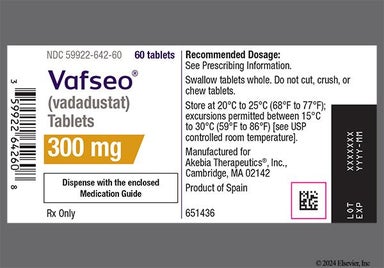
Vafseo (vadadustat) images