


9 Things You Should Know About Penicillin Antibiotics
Penicillin is a popular antibiotic used to treat infections caused by bacteria. Learn what penicillin is used for, tips for taking penicillin, and more.
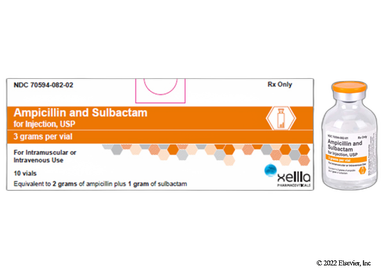
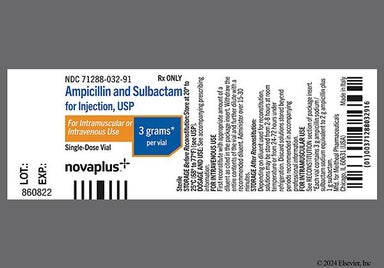
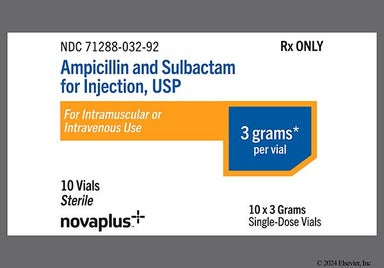
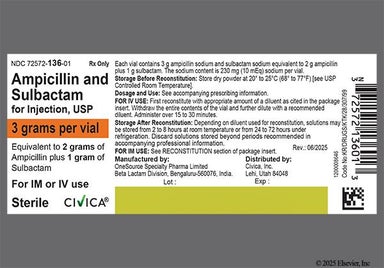
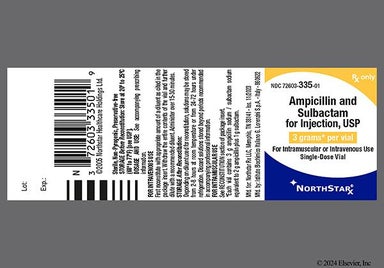
Unasyn (ampicillin / sulbactam) is a combination medication that contains a penicillin and beta-lactamase inhibitor. This antibiotic is used to treat several types of infections throughout the body in adults and children. Doses are given as injections into the vein (IV) or muscle (IM) every 6 hours. Unasyn (ampicillin / sulbactam) is available as a brand-name medication and lower-cost generic. Side effects aren't common, but can include pain at the injection site and diarrhea.

Unasyn (ampicillin / sulbactam) is a combination of two medications that work together to treat infections.
| Common Brands | Unasyn |
|---|---|
| Drug Class | Penicillin antibiotic / Beta-lactamase inhibitor |
| Controlled Substance Classification | Not a controlled medication |
| Generic Status | No lower-cost generic available |
| Availability | Prescription only |

The following side effects may get better over time as your body gets used to the medication. Let your healthcare provider know immediately if you continue to experience these symptoms or if they worsen over time.
Contact your healthcare provider immediately if you experience any of the following.
Side effects that you should report to your care team as soon as possible:
Side effects that usually do not require medical attention (report these to your care team if they continue or are bothersome):




Unasyn (ampicillin / sulbactam) can cause some serious health issues. This risk may be even higher for certain groups. If this worries you, talk to your doctor or pharmacist about other options.
Severe allergic reactions to Unasyn (ampicillin / sulbactam) are possible, including life-threatening reactions like facial swelling and anaphylaxis (e.g., closing of the throat). Let your care team know if you have an allergy to antibiotics. Get medical help right away if you notice hives, rash, red skin, swelling of the lips or tongue, or trouble breathing after you take Unasyn (ampicillin / sulbactam).
Although rare, Unasyn (ampicillin / sulbactam) can cause severe skin reactions, such as Stevens-Johnson syndrome (SJS) and Drug Reaction with Eosinophilia and Systemic Symptoms (DRESS) syndrome. Because a higher number of people with a mononucleosis infection who took ampicillin developed a skin rash, this medication isn't recommended if you currently have a mononucleosis infection. Get medical attention right away if you notice changes in your skin, such as rash, blisters, skin reddening, or skin peeling.
Although rare, liver problems have been linked to Unasyn (ampicillin / sulbactam) use. Most times, liver damage from the medication can be reversible, but it can also sometimes be serious and life-threatening.
If you have a history of liver problems, you might need to get blood tests to check your liver health during treatment to make sure the medication continues to be safe for you. Get medical attention right away if you notice swelling of your stomach, stomach pain, yellowing of your skin or the whites of your eyes, stool changes (black or bloody stools), dark or brown urine, nausea, vomiting, or confusion. These can be signs of liver damage, and you might need to stop using the medication to prevent further damage.
Unasyn (ampicillin / sulbactam) can raise your risk of getting infected with a bacteria called Clostridioides difficile (C. diff). Antibiotics change the amount of normal bacteria in your stomach and intestines. This can cause C. diff to overgrow in your gut and lead to an infection. C. diff infection can cause severe diarrhea.
It's important to recognize the difference between diarrhea as a side effect of Unasyn (ampicillin / sulbactam) and C. diff-related diarrhea. This type of infectious diarrhea can cause rapid heart rate, foul-smelling diarrhea, frequent bowel movements (even up to 15 times per day), fever, and nausea and it is a medical emergency. Get medical help right away if you have any of these symptoms so you can get tested for C. diff infection and get treatment.

Unasyn (ampicillin / sulbactam) is given as an injection into the veins (IV) or into the muscle (IM). The injection is usually administered by a healthcare professional in a healthcare setting (e.g., hospital, clinic, nursing home).
The dose and length of treatment depends on what type of infection you have and how serious it is. The prescriber will determine the right dose and length of treatment for you.
The total dose is expressed as the total grams of ampicillin and sulbactam added together. For most infections, the general dosage is as follows:
The maximum dose is 3 grams given every 6 hours. Your dose might differ if you have kidney problems or if you're getting treated for certain resistant (difficult-to-treat) bacterial infections.

Contraindications are specific health conditions or situations in which a person should not take a medication due to safety concerns. If you have any of the following conditions or if any of the following apply to you, let your healthcare provider know because Unasyn (ampicillin / sulbactam) will not be safe for you to take.





Prescription savings
Stop paying too much for your prescriptions. Compare prices, get pharmacy coupons, and save up to 80%. Find expert answers to your health questions so you can make the best decisions for yourself and your family.
Health conditions
Medications & treatment
Access & affordability
 Our monthly healthcare membership can help you save thousands on your prescription costs.
Resources

No, Unasyn doesn't cover or fight against the Pseudomonas bacteria. Examples of antibiotics that do treat Pseudomonas infections include Zosyn (piperacillin / tazobactam), meropenem (Merrem), and aztreonam (Azactam).
No, Unasyn doesn't cover MRSA, or methicillin-resistant Staphylococcus aureus. This means that Unasyn doesn't work well to treat infections caused by MRSA. Your provider will probably use different antibiotics that are first-choice options for MRSA if you're diagnosed with a MRSA infection. These antibiotics can include vancomycin, linezolid (Zyvox), or Bactrim (sulfamethoxazole / trimethoprim). The specific choice of antibiotic will typically depend on where the infection is in your body and how severe it is.
Unasyn can treat several types of infections throughout the body that's caused by certain bacteria. Examples of these bacteria include Haemophilus influenzae, Escherichia coli (E. coli), Acinetobacter, Klebsiella, Staphylococcus aureus (S. aureus), Enterobacter, and anaerobes including Bacteroides fragilis (B. fragilis). Unasyn can also be used to treat a resistant (hard-to-treat) bacteria called CRAB (carbapenem-resistant Acinetobacter). Fighting these resistant bacteria with this medication usually requires a higher dose than what's typically used.
Both Unasyn and Zosyn (piperacillin / tazobactam) are antibiotic medications that are a combination of a penicillin and beta-lactamase inhibitor. The biggest differences between these two medications are that Zosyn can generally treat more severe types of infections and can fight against more types of bacteria, including Pseudomonas. Additionally, Unasyn is given as an IV or IM injection, whereas Zosyn is given IV only.
Unasyn and Augmentin (amoxicillin / clavulanate) are antibiotic medications that are a combination of a penicillin and beta-lactamase inhibitor. These two antibiotics cover (or treat) similar types of bacteria. The main difference is how each medication is given and how often they're given. Unasyn is given as an IV or IM injection every 6 hours, whereas Augmentin is given by mouth every 8 to 12 hours. People who start treatment with Unasyn in the hospital typically get switched to Augmentin when they're discharged home to finish the antibiotic course.
Unasyn isn't typically used to treat urinary tract infections (UTIs). It's not FDA-approved to treat UTIs nor is it a treatment option that's included in the UTI treatment guidelines. Your provider will probably consider other antibiotics to treat your UTI.
