



Red Eyes, Blurry Vision, and More: 9 Restasis Side Effects to Know About
Restasis (cyclosporine) can cause itchiness, redness, and other forms of eye discomfort. See a full list of common and long-term Restasis side effects here.
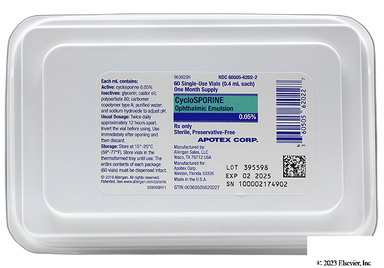
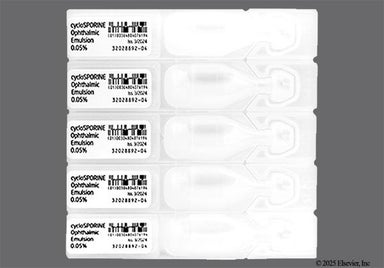
Cyclosporine eye drops, also known by the brand names Restasis and Restasis MultiDose, treat dry eye in people 16 years and older. It's an immunosuppressant called a calcineurin inhibitor, and it helps with tear production. Cyclosporine (Restasis) comes in single-use vials and multi-dose bottles. Only the single-use vials have a generic version. The eye drops are used twice every day. The most common side effect is a burning feeling in the eye, which usually gets better as you continue to use the medication.

Cyclosporine (Restasis) is a type of immunosuppressant called a calcineurin inhibitor. The medication stops a protein called calcineurin from working. It lowers inflammation in the eye, which helps your eye make more tears.
| Common Brands | Restasis, Restasis MultiDose |
|---|---|
| Drug Class | Immunosuppressant |
| Controlled Substance Classification | Not a controlled medication |
| Generic Status | Lower-cost generic available |
| Availability | Prescription only |

The following side effects may get better over time as your body gets used to the medication. Let your healthcare provider know immediately if you continue to experience these symptoms or if they worsen over time.
Side effects that you should report to your care team as soon as possible:
Side effects that usually do not require medical attention (report these to your care team if they continue or are bothersome):



More tips for Restasis MultiDose (cyclosporine) bottles:

Cyclosporine (Restasis) can cause some serious health issues. This risk may be even higher for certain groups. If this worries you, talk to your doctor or pharmacist about other options.
Cyclosporine (Restasis) is an eye drop medication that you should place onto the surface of the eye only. Don't put cyclosporine (Restasis) on or into any other place on your body.
Don't place cyclosporine (Restasis) in the eye while you're wearing contact lenses. If you wear contact lenses, take them out before using this medication. You can put your contact lenses back in 15 minutes after using cyclosporine (Restasis).
In general, people with dry eye shouldn't wear contact lenses because having lenses in can make the dryness worse. Ask your eye specialist if you should wear glasses or contact lenses while you're being treated for dry eyes.

 Package
| Dosage | Quantity | Price as low as | Price per unit |
|---|---|---|---|
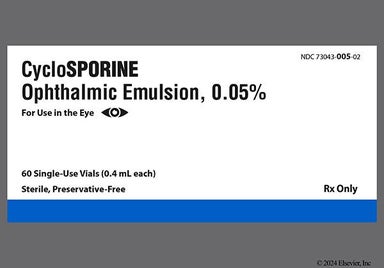
| 30 vials of 0.4ml | 2 packages | $65.46 | $32.73 |
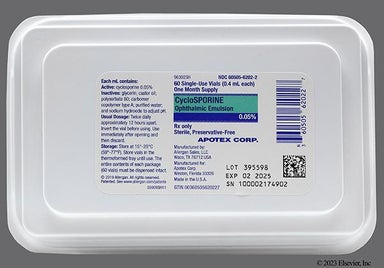
| 60 vials of 0.4ml | 1 package | $65.46 | $65.46 |
Restasis, Restasis MultiDose, and generic cyclosporine eye emulsion contain 0.05% of medication.
The typical dose is 1 drop in affected eye(s) twice a day about 12 hours apart.












Prescription savings
Stop paying too much for your prescriptions. Compare prices, get pharmacy coupons, and save up to 80%. Find expert answers to your health questions so you can make the best decisions for yourself and your family.
Health conditions
Medications & treatment
Access & affordability
 Our monthly healthcare membership can help you save thousands on your prescription costs.
Resources

In studies, it took about 6 months for people using Restasis to see improvement in their dry eye. But those with milder symptoms might feel some relief within a month. Talk to your prescriber if you have questions about how fast the medication is working. You can also ask about other options to try as you wait for Restasis to work.
No. Restasis is only available with a prescription from a healthcare professional (HCP). But there are over-the-counter (OTC) options for dry eye available. OTC options like artificial tears might work faster to relieve dry eye, but they don't last very long. Also, the FDA recommends using OTC eye drops for dry eye for up to 3 days before asking an HCP for more help. Don't use OTC eye drops in place of Restasis unless your prescriber said you can.
No, Restasis won't make dry eye worse. It works to improve dry eye. But using other eye drops, like over-the-counter artificial tears, often or for a long time sometimes can. This is especially true if the eye drops have preservatives. Talk to your prescriber if your dry eye doesn't get better after starting Restasis.
Yes. Having a burning feeling in the eye is the most common side effect of Restasis. But it should get better and eventually go away as you continue to use the medication. Tell your prescriber or eye specialist if the burning feeling bothers you too much or if it doesn't go away.
Xiidra and Restasis are both eye drops that are used twice a day to treat dry eye. But they're different medications. They work in different ways to lower inflammation and relieve dry eye. Some people might feel improvement after about 2 weeks of using Xiidra. But for people using Restasis, they might feel relief after at least a month. These two medications haven't been directly compared, so it's not clear which one works better. But studies show that both can help with dry eye. Talk to your eye specialist if you have questions about which medication is best for you.
No, Restasis isn't a steroid medication. It's a type of medication called a calcineurin inhibitor. Restasis and some steroid eye drops, like Eysuvis (loteprednol), work in different ways to reduce inflammation related to dry eye.
Use each single-use vial of Restasis one time only. After you open it and place a drop into the eye(s), throw away the vial even though there'll be some medication left. Single-use vials don't have a cap to put back on, so there's a higher chance of germs getting into the medication. This isn't the case for Restasis MultiDose, which you can use many times until it expires. Just make sure to put the cap back on the MultiDose bottle after each use.
The Restasis 0.4 mL single-use vial is available as a generic. But there's no generic for the Restasis MultiDose 10 mL bottle; the MultiDose is only brand name right now.
