


What Works to Treat Dry Eye? The Best Eye Drops and Home Remedies
You can treat chronic dry eyes with prescription medication, OTC eye drops, and even home remedies like omega-3. Explore the best eye drops for dry eye relief here.
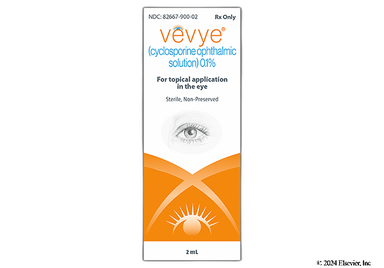
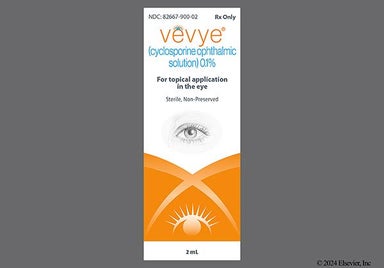
Vevye (cyclosporine) is a prescription eye drop that treats signs and symptoms of dry eyes. It's a preservative-free medication that has been shown to work after 4 weeks. You need to use it twice per day, about 12 hours apart. Common side effects include changes in vision and instillation site reactions like eye irritation or burning and stinging in the eye.

Vevye (cyclosporine) is a calcineurin inhibitor. By stopping a protein called calcineurin from working, Vevye (cyclosporine) lowers inflammation in your eyes, which helps your eyes to make tears.
| Common Brands | Vevye |
|---|---|
| Drug Class | Calcineurin inhibitor |
| Controlled Substance Classification | Not a controlled medication |
| Generic Status | No lower-cost generic available |
| Availability | Prescription only |

The following side effects may get better over time as your body gets used to the medication. Let your healthcare provider know immediately if you continue to experience these symptoms or if they worsen over time.
Side effects that you should report to your care team as soon as possible:
Side effects that usually do not require medical attention (report these to your care team if they continue or are bothersome):




Vevye (cyclosporine) can cause some serious health issues. This risk may be even higher for certain groups. If this worries you, talk to your doctor or pharmacist about other options.
Don't let the tip of the bottle touch the eye, eyelid, fingers, or other surfaces. Doing so can contaminate Vevye (cyclosporine) and cause serious harm to the eye, such as infection and vision loss.
Don't use Vevye (cyclosporine) drops when you have your contacts in. Take your contacts out before you use this medication. You can put your contacts back in after waiting at least 15 minutes.

 Eye dropper
| Dosage | Quantity | Price as low as | Price per unit |
|---|---|---|---|
| 2ml of 0.1% | 1 eye dropper | $299.00 | $299.00 |


Prescription savings
Stop paying too much for your prescriptions. Compare prices, get pharmacy coupons, and save up to 80%.Resources
About GoodRx
 Find expert answers to your health questions so you can make the best decisions for yourself and your family.
Health conditions
Medications & treatment
Access & affordability
Well-being
Medication discounts

In clinical studies, a higher number of people who used Vevye produced more tears when compared to those not receiving the medication. This was seen in about 10% of people taking Vevye, compared to 6% of people taking a placebo.
Vevye and Cequa (cyclosporine) are both brand-name medications that treat dry eyes and contain the same active ingredient, cyclosporine. One difference is that Cequa (cyclosporine) is made with a different technology compared to other cyclosporine products. But since Vevye and Cequa (cyclosporine) haven't been directly compared, it's not known if one medication is safer or works better than the other. Talk with your provider about which option is best for you.
Yes. If you wear contact lenses, take them out before using Vevye so that the medication can reach your eyes. After using the drops, wait at least 15 minutes to put your contact lenses back into your eyes.
Yes. If you are using another eye drop medication along with Vevye, make sure to wait at least 15 minutes between using the medications. This ensures your eyes can fully absorb each medication. Check with your healthcare provider on which medication you should use first.
It's not known if Vevye is safe to take in pregnancy because it hasn't been studied. Animal studies done with higher than prescribed doses of oral cyclosporine (e.g., (Sandimmune), Neoral) can potentially cause serious harm, including death, to unborn babies, and isn't typically recommended in pregnancy. If you're pregnant or thinking of becoming pregnant, talk to your provider about the risks and benefits of using Vevye.
There isn’t enough information in humans to support whether Vevye is safe to use during breastfeeding. Since Vevye is applied to the eye, the level of the medication in the body is likely too low to be detected. Still, if you're breastfeeding, talk to your provider about the risks and benefits of using Vevye.
