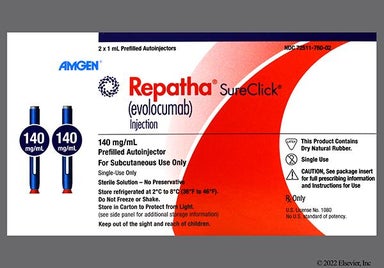
Repatha
Repatha (evolocumab) is a PCSK9 inhibitor that's used to treat high cholesterol in adults and certain children. It also helps lower the risk of heart attack and stroke for adults with heart disease. Repatha (evolocumab) is typically used when you're having trouble managing cholesterol levels with a heart-healthy diet or with other cholesterol medications (like statins). Repatha (evolocumab) is an injection under the skin that's given either once every 2 weeks or once every month. Repatha (evolocumab) side effects can include discomfort near the injection site and cold- or flu-like symptoms.
What is Repatha (evolocumab)?
What is Repatha (evolocumab) used for?
- High cholesterol in adults
- Inherited condition causing extremely high cholesterol (heterozygous and homozygous familial hypercholesterolemia) in people aged 10 years and older
- Lower the risk of heart attack, stroke, and the need for heart procedures (like stent placement) in adults with known heart disease
How Repatha (evolocumab) works
Repatha (evolocumab) is a monoclonal antibody that's known as a PCSK9 inhibitor. PCSK9 is a protein that normally prevents your liver from getting rid of cholesterol in your blood. Repatha (evolocumab) blocks PCSK9 from doing its job so that your body is able to remove extra cholesterol from your blood. As a result, the medication helps lower the total amount of low-density lipoprotein (LDL) or "bad" cholesterol in your blood.
Drug facts
| Common Brands | Repatha |
|---|---|
| Drug Class | PCSK9 inhibitor |
| Controlled Substance Classification | Not a controlled medication |
| Generic Status | No lower-cost generic available |
| Availability | Prescription only |
More on Repatha (evolocumab) essentials
Side effects of Repatha (evolocumab)
The following side effects may get better over time as your body gets used to the medication. Let your healthcare provider know immediately if you continue to experience these symptoms or if they worsen over time.
Common Side Effects
- Common cold symptoms (11%)
- Flu-like symptoms (8%)
- Back pain (6%)
- Redness, pain, or bruising at the injection site (6%)
Less Common Side Effects
- Cough
- Stomach flu
- Diarrhea
- Headache
- Dizziness
- Muscle or joint pain
- High blood sugar
Repatha (evolocumab) serious side effects
Contact your healthcare provider immediately if you experience any of the following.
- Allergic reaction: trouble breathing or swallowing; hives; rash; itching; swelling of the face, lips, tongue, throat, or arms
More on Repatha (evolocumab) side effects
The following Repatha (evolocumab) side effects have also been reported
Side effects that you should report to your care team as soon as possible:
- Allergic reactions or angioedema—skin rash, itching or hives, swelling of the face, eyes, lips, tongue, arms, or legs, trouble swallowing or breathing
Side effects that usually do not require medical attention (report to your care team if they continue or are bothersome):
- Back pain
- Flu-like symptoms—fever, chills, muscle pain, cough, headache, fatigue
- Pain, redness, or irritation at injection site
- Runny or stuffy nose
- Sore throat
Get your GoodRx coupon
Pros and cons of Repatha (evolocumab)
Pros
- Only taken either every 2 weeks or once every month
- Can help lower your cholesterol levels if other medications haven't worked well enough
- Can use for children as young as 10 years old with familial hypercholesterolemia
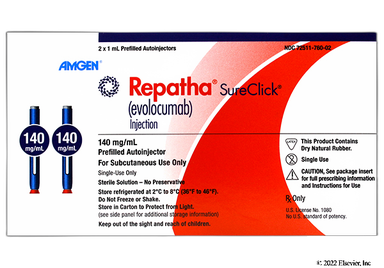
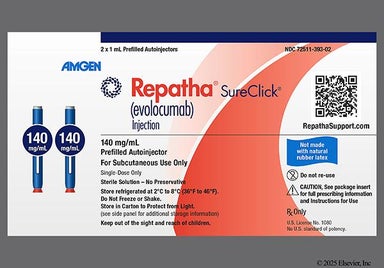
- Available in multiple forms (prefilled syringe, prefilled autoinjector, or single-use on-body infusor)
Cons
- Only available as an injection
- Long-term side effects aren't fully known (compared to statins)
- No lower-cost generic available (brand-name medication only)
Pharmacist tips for Repatha (evolocumab)
- Make sure you're familiar with how to use Repatha (evolocumab) safely and properly. Repatha (evolocumab) comes as a prefilled syringe, prefilled autoinjector, and a hands-free device called an on-body infusor. Your provider will show you how to inject the medication or use the device you have. Also carefully review the instructions for use. Ask your provider or pharmacist if you have any questions about how to use Repatha (evolocumab).
- Repatha (evolocumab) is injected into the fatty part of the skin (subcutaneously). Inject into your thigh or stomach area (at least 2 inches away from your belly button). You can also inject it under the skin of your upper arm with someone's help. Use a different area every time you inject the medication to avoid scarring.
- Keep Repatha (evolocumab) in your refrigerator (but don't freeze it). If needed, you can also keep Repatha (evolocumab) at room temperature in the original carton for up to 30 days. Don't use the medication if it's been out of the refrigerator for longer than that.
- When you're ready for your dose, take Repatha (evolocumab) out from the refrigerator and leave it out for about 30 to 45 minutes so it can warm to room temperature. This will help make the injection more comfortable.
- Don't shake Repatha (evolocumab). Also don't use the medication if the solution looks cloudy or discolored or if you see particles (solid chunks) in it. It might not be safe to use.
- For the prefilled autoinjector: Remember to put the yellow safety guard on the skin before injecting (the needle is located inside).
- For the on-body infusor: Don't use the medication if you've dropped either the infusor or the cartridge onto a hard surface because it might've broken. Use a new set if this happens.
- It's possible for Repatha (evolocumab) to raise your blood sugar levels. Let your healthcare provider know about any signs of high blood sugar like urinating often, feeling very thirsty, feeling very hungry, having low energy, and having blurry vision.
- You can eat grapefruit while you're taking Repatha (evolocumab) — this is unlike with some statin medications. There's no known interaction with Repatha (evolocumab) and grapefruit.
- Let your healthcare provider know if you're pregnant, planning on becoming pregnant, or breastfeeding while you're using Repatha (evolocumab). It isn't known whether the medication is safe for you or your baby.
More on Repatha (evolocumab) tips
Risks and warnings for Repatha (evolocumab)
Repatha (evolocumab) can cause some serious health issues. This risk may be even higher for certain groups. If this worries you, talk to your doctor or pharmacist about other options.
Allergic reaction
- Risk factors: Allergic to latex
Repatha (evolocumab) can cause allergic reactions, including serious swelling. If you have trouble breathing or notice a rash; hives; or swelling of the face, lips, throat or tongue after injecting Repatha (evolocumab), stop using the medication and get medical help right away.
The needle cover of Repatha (evolocumab) prefilled syringes and prefilled autoinjectors contain dry natural rubber. Be aware that contact with the needle cover might cause an allergic reaction for people who have an allergy to latex.
Repatha (evolocumab) dosage
Typical dosage for Repatha (evolocumab)
Repatha (evolocumab) is injected under the skin (subcutaneously) in your stomach, thigh, or upper arm. The typical dose is either 140 mg injected under the skin every 2 weeks or 420 mg injected under the skin once every month. Your provider will prescribe the dose that's best for you.
How much does Repatha (evolocumab) cost?
$25.00
What are alternatives to Repatha (evolocumab)?
News about Repatha (evolocumab)