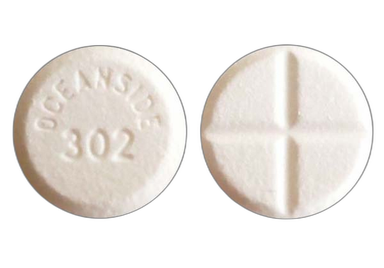
pyridostigmine
Pyridostigmine (Mestinon) is a cholinesterase inhibitor that's commonly used for treating muscle weakness due to myasthenia gravis in adults. It works by improving the communication between the muscles and nerves. This medication is available as a tablet and liquid that are taken by mouth multiple times per day. Side effects aren't common, but taking too much can cause stomach upset, too much saliva, and muscle problems.


What is Pyridostigmine (Mestinon)?
What is Pyridostigmine (Mestinon) used for?
How Pyridostigmine (Mestinon) works
Pyridostigmine (Mestinon) is a cholinesterase inhibitor. It blocks a protein called cholinesterase from breaking down acetylcholine, a chemical in your body that's important for communication between your nerve cells and muscles. As a result, pyridostigmine (Mestinon) helps more acetylcholine stay in your body to activate your muscles. This helps lessen muscle weakness.
Drug facts
| Common Brands | Mestinon |
|---|---|
| Drug Class | Acetylcholinesterase inhibitor |
| Controlled Substance Classification | Not a controlled medication |
| Generic Status | Lower-cost generic available |
| Availability | Prescription only |

Side effects of Pyridostigmine (Mestinon)
The following side effects may get better over time as your body gets used to the medication. Let your healthcare provider know immediately if you continue to experience these symptoms or if they worsen over time.
Common Side Effects
See Risks and Warnings.
Less Common Side Effects
These side effects are usually from taking too much pyridostigmine:
- Nausea
- Vomiting
- Diarrhea
- More bowel movements
- Stomach cramps
- More saliva
- More phelgm in the airways
- Small pupil size
- Sweating
- Muscle cramps
- Muscle twitching
- Muscle weakness
Pyridostigmine (Mestinon) serious side effects
Contact your healthcare provider immediately if you experience any of the following.
- Myasthenic crisis: severe muscle weakness, trouble breathing
The following Pyridostigmine (Mestinon) side effects have also been reported
Along with its needed effects, a medicine may cause some unwanted effects. Although not all of these side effects may occur, if they do occur they may need medical attention.
Check with your doctor immediately if any of the following side effects occur:
Symptoms of overdose
Blurred vision
clumsiness or unsteadiness
confusion
convulsions (seizures)
diarrhea (severe)
increase in bronchial secretions or watering of mouth (excessive)
increasing muscle weakness (especially in the arms, neck, shoulders, and tongue)
muscle cramps or twitching
nausea or vomiting (severe)
shortness of breath, troubled breathing, wheezing, or tightness in chest
slow heartbeat
slurred speech
stomach cramps or pain (severe)
unusual irritability, nervousness, restlessness, or fear
unusual tiredness or weakness
Check with your doctor as soon as possible if any of the following side effects occur:
Rare
Redness, swelling, or pain at place of injection (for pyridostigmine injection only)
skin rash (does not apply to ambenonium)
Some side effects may occur that usually do not need medical attention. These side effects may go away during treatment as your body adjusts to the medicine. Also, your health care professional may be able to tell you about ways to prevent or reduce some of these side effects. Check with your health care professional if any of the following side effects continue or are bothersome or if you have any questions about them:
Less common
Frequent urge to urinate
increase in bronchial secretions
unusually small pupils
unusual watering of eyes
Other side effects not listed may also occur in some patients. If you notice any other effects, check with your healthcare professional.
Call your doctor for medical advice about side effects. You may report side effects to the FDA at 1-800-FDA-1088.

Pros and cons of Pyridostigmine (Mestinon)
Pros
- First-choice treatment for myasthenia gravis
- Available as an oral solution if you need small dose changes or have trouble swallowing pills
- Available as a lower-cost generic form
Cons
- Doesn't cure myasthenia gravis
- Might need to take multiple times a day (especially for immediate-release tablets and oral solution)
- Can't use if you have urinary or intestinal blockage

Pharmacist tips for Pyridostigmine (Mestinon)

- You can take pyridostigmine (Mestinon) with or without food. If it upsets your stomach, try taking it with food to help.
- For the extended-release tablet: Swallow the extended-release tablet whole. Don't chew, break, or crush the medication. You might also need to take the faster-acting, immediate-release tablet or oral solution to help provide enough symptom relief throughout the day.
- Contact your provider if you can't take your usual dose of pyridostigmine (Mestinon) because of any vomiting or because you're having trouble swallowing. Also, seek medical help right away if you become severely weak, especially if it starts getting hard to breathe.
- Don't stop taking pyridostigmine (Mestinon) unless your provider told you to do so. Pyridostigmine (Mestinon) is usually a much-needed medication for people with myasthenia gravis. You can have serious muscle weakness if you stop taking it or skip too many doses.
- Talk to your provider if you become pregnant during treatment with pyridostigmine (Mestinon). There isn't enough information to know whether this medication is safe during pregnancy or while you're breastfeeding.
More tips for pyridostigmine (Mestinon) liquid:
- Store the medication bottle at room temperature.
- Make sure to only use a medication dose cup or oral syringe from the pharmacy to measure out your dose. Don't use household spoons because they aren't accurate and might cause you to take the wrong dose.
- The pyridostigmine (Mestinon) liquid contains 5% alcohol. Talk to your provider if this concerns you.

Risks and warnings for Pyridostigmine (Mestinon)
Pyridostigmine (Mestinon) can cause some serious health issues. This risk may be even higher for certain groups. If this worries you, talk to your doctor or pharmacist about other options.
Myasthenic crisis
Taking too much pyridostigmine (Mestinon) can cause muscle weakness. However, muscle weakness is also a sign of worsening myasthenia gravis. It can be hard to tell whether you're taking too much or too little pyridostigmine (Mestinon). Yet, both situations are potentially life-threatening if your lungs become too weak to breathe. Keep in mind that myasthenic crisis can happen when your muscles feel severely weak, even though you've been taking pyridostigmine (Mestinon) as prescribed.
Call your provider right away if you have any muscle weakness to figure out whether you need to take less or more of pyridostigmine (Mestinon). Your provider can help identify the cause of your muscle weakness and treat the symptoms. Seek medical attention right away if you become severely weak or have trouble breathing.
Caution use in people with asthma
Muscle weakness can be a sign of worsening myasthenia gravis or a sign that you've taken too much pyridostigmine (Mestinon). Muscle weakness can be dangerous if it makes your lungs too weak to breathe. For this reason, pyridostigmine (Mestinon) should be used with caution in people with asthma. Tell your provider if you have any lung or breathing problems before you start pyridostigmine (Mestinon). Get medical help right away if you have trouble breathing while you're taking this medication.

Pyridostigmine (Mestinon) dosage
 Bottle of oral solution
| Dosage | Quantity | Price as low as | Price per unit |
|---|---|---|---|
| 473ml of 60mg/5ml | 1 bottle | $127.55 | $127.55 |


Interactions between Pyridostigmine (Mestinon) and other drugs
Although certain medicines should not be used together at all, in other cases two different medicines may be used together even if an interaction might occur. In these cases, your doctor may want to change the dose, or other precautions may be necessary. When you are taking any of these medicines, it is especially important that your healthcare professional know if you are taking any of the medicines listed below. The following interactions have been selected on the basis of their potential significance and are not necessarily all-inclusive.
Using medicines in this class with any of the following medicines is not recommended. Your doctor may decide not to treat you with a medication in this class or change some of the other medicines you take.
- Atropine
- Bepridil
- Bromopride
- Cisapride
- Dronedarone
- Fluconazole
- Ketoconazole
- Mesoridazine
- Pimozide
- Piperaquine
- Posaconazole
- Saquinavir
- Sparfloxacin
- Terfenadine
- Thioridazine
- Viloxazine
- Ziprasidone
Using medicines in this class with any of the following medicines is usually not recommended, but may be required in some cases. If both medicines are prescribed together, your doctor may change the dose or how often you use one or both of the medicines.
- Abiraterone Acetate
- Acebutolol
- Acetophenazine
- Aclidinium
- Acrivastine
- Alcaftadine
- Alfentanil
- Alfuzosin
- Amantadine
- Ambenonium
- Amdinocillin
- Amdinocillin Pivoxil
- Amifampridine
- Amineptine
- Aminophylline
- Amiodarone
- Amisulpride
- Amitriptyline
- Amitriptylinoxide
- Amoxapine
- Amphetamine
- Ampicillin
- Anagrelide
- Anisotropine
- Antazoline
- Apomorphine
- Aripiprazole
- Aripiprazole Lauroxil
- Arsenic Trioxide
- Asenapine
- Astemizole
- Atazanavir
- Atenolol
- Atomoxetine
- Atropine
- Azatadine
- Azelastine
- Azithromycin
- Azlocillin
- Bacampicillin
- Baclofen
- Bedaquiline
- Belladonna Alkaloids
- Benperidol
- Benzhydrocodone
- Benzphetamine
- Bepotastine
- Betaxolol
- Bisoprolol
- Bornaprine
- Bromodiphenhydramine
- Bromperidol
- Brompheniramine
- Buclizine
- Bupivacaine
- Buprenorphine
- Bupropion
- Buserelin
- Butorphanol
- Butriptyline
- Butylscopolamine
- Capmatinib
- Carbenicillin
- Carbinoxamine
- Carteolol
- Carvedilol
- Celiprolol
- Ceritinib
- Chlorambucil
- Chloroquine
- Chlorotrianisene
- Chlorpheniramine
- Chlorphenoxamine
- Chlorpromazine
- Cimetropium
- Cinacalcet
- Cinnarizine
- Ciprofloxacin
- Citalopram
- Clarithromycin
- Clemastine
- Clemizole
- Clidinium
- Clofazimine
- Clomipramine
- Cloxacillin
- Clozapine
- Cobicistat
- Cocaine
- Codeine
- Conjugated Estrogens
- Crizotinib
- Cyclacillin
- Cyclizine
- Cyclobenzaprine
- Cyclopentolate
- Cyclosporine
- Cyproheptadine
- Dabrafenib
- Darifenacin
- Dasatinib
- Degarelix
- Delamanid
- Demecarium
- Desipramine
- Deslorelin
- Desvenlafaxine
- Deutetrabenazine
- Dexbrompheniramine
- Dexchlorpheniramine
- Dextroamphetamine
- Dibenzepin
- Dicloxacillin
- Dicyclomine
- Dienestrol
- Diethylstilbestrol
- Difenoxin
- Dihydrocodeine
- Dimenhydrinate
- Dimethindene
- Diphenhydramine
- Diphenylpyraline
- Disopyramide
- Distigmine
- Dixyrazine
- Dofetilide
- Dolasetron
- Domperidone
- Donepezil
- Dothiepin
- Doxepin
- Doxylamine
- Droperidol
- Duloxetine
- Ebastine
- Echothiophate
- Edrophonium
- Efavirenz
- Eliglustat
- Emedastine
- Encorafenib
- Enflurane
- Entrectinib
- Epinastine
- Eribulin
- Erythromycin
- Escitalopram
- Esmolol
- Esterified Estrogens
- Estradiol
- Estramustine
- Estriol
- Estrone
- Estropipate
- Ethinyl Estradiol
- Ethopropazine
- Etravirine
- Famotidine
- Felbamate
- Fentanyl
- Fesoterodine
- Fingolimod
- Flavoxate
- Flecainide
- Floxacillin
- Fluconazole
- Flunarizine
- Fluoxetine
- Fluphenazine
- Fluvoxamine
- Formoterol
- Foscarnet
- Fosphenytoin
- Fostemsavir
- Galantamine
- Gatifloxacin
- Gemifloxacin
- Givosiran
- Glasdegib
- Glycopyrrolate
- Gonadorelin
- Goserelin
- Granisetron
- Guanidine
- Halofantrine
- Haloperidol
- Hetacillin
- Histrelin
- Homatropine
- Hydrocodone
- Hydromorphone
- Hydroquinidine
- Hydroxyamphetamine
- Hydroxychloroquine
- Hydroxyzine
- Hyoscyamine
- Ibutilide
- Iloperidone
- Imipramine
- Indalpine
- Inotuzumab Ozogamicin
- Iprindole
- Isoflurophate
- Isoniazid
- Isopropamide
- Itraconazole
- Ivabradine
- Ivosidenib
- Ketamine
- Ketotifen
- Labetalol
- Lapatinib
- Lefamulin
- Lenvatinib
- Leuprolide
- Levobunolol
- Levocabastine
- Levofloxacin
- Levomilnacipran
- Levorphanol
- Lidocaine
- Lindane
- Lisdexamfetamine
- Lithium
- Lofepramine
- Lofexidine
- Loxapine
- Lumefantrine
- Macimorelin
- Mebeverine
- Mebhydrolin
- Meclizine
- Mefenamic Acid
- Mefloquine
- Melitracen
- Melperone
- Mepenzolate
- Meperidine
- Mestranol
- Methadone
- Methamphetamine
- Methantheline
- Methdilazine
- Methicillin
- Methixene
- Methotrimeprazine
- Methylphenidate
- Metipranolol
- Metoclopramide
- Metopimazine
- Metoprolol
- Metronidazole
- Mezlocillin
- Mifepristone
- Milnacipran
- Mirtazapine
- Mizolastine
- Moricizine
- Morphine
- Moxifloxacin
- Nadolol
- Nafarelin
- Nafcillin
- Nalbuphine
- Nalidixic Acid
- Nebivolol
- Nefazodone
- Nelfinavir
- Neostigmine
- Niaprazine
- Nilotinib
- Norfloxacin
- Nortriptyline
- Octreotide
- Ofloxacin
- Olanzapine
- Olopatadine
- Ondansetron
- Opipramol
- Orphenadrine
- Osilodrostat
- Osimertinib
- Oxacillin
- Oxaliplatin
- Oxatomide
- Oxprenolol
- Oxybutynin
- Oxycodone
- Oxymorphone
- Ozanimod
- Paliperidone
- Panobinostat
- Paroxetine
- Pasireotide
- Pazopanib
- Peginterferon Alfa-2b
- Penbutolol
- Penicillin G
- Penicillin V
- Pentamidine
- Pentazocine
- Perazine
- Periciazine
- Perphenazine
- Phenindamine
- Pheniramine
- Phenylpropanolamine
- Phenyltoloxamine
- Physostigmine
- Pimavanserin
- Pinaverium
- Pindolol
- Pipamperone
- Piperacillin
- Pipotiazine
- Pirenzepine
- Pitolisant
- Pivampicillin
- Pixantrone
- Pizotyline
- Polyestradiol Phosphate
- Ponesimod
- Posaconazole
- Practolol
- Probucol
- Procainamide
- Procaine
- Prochlorperazine
- Promazine
- Promestriene
- Promethazine
- Propafenone
- Propantheline
- Propicillin
- Propiverine
- Propizepine
- Propoxyphene
- Propranolol
- Protriptyline
- Pyrilamine
- Quetiapine
- Quinestrol
- Quinidine
- Quinine
- Ranolazine
- Remifentanil
- Ribociclib
- Rilpivirine
- Risperidone
- Ritonavir
- Rivastigmine
- Scopolamine
- Selpercatinib
- Sertindole
- Sertraline
- Sevoflurane
- Sibutramine
- Siponimod
- Sodium Phosphate
- Sodium Phosphate, Dibasic
- Sodium Phosphate, Monobasic
- Solifenacin
- Sorafenib
- Sotalol
- Succinylcholine
- Sufentanil
- Sulbenicillin
- Sulpiride
- Sultamicillin
- Sunitinib
- Tacrine
- Tacrolimus
- Tamoxifen
- Tapentadol
- Telaprevir
- Telavancin
- Telithromycin
- Temocillin
- Terbinafine
- Tetrabenazine
- Theophylline
- Thiethylperazine
- Thiopropazate
- Thioproperazine
- Thonzylamine
- Tianeptine
- Tibolone
- Ticarcillin
- Timiperone
- Timolol
- Tiotropium
- Tolterodine
- Toremifene
- Tramadol
- Trazodone
- Triclabendazole
- Trifluoperazine
- Triflupromazine
- Trimeprazine
- Trimipramine
- Tripelennamine
- Triprolidine
- Triptorelin
- Tropicamide
- Trospium
- Umeclidinium
- Valethamate
- Vandetanib
- Vardenafil
- Vemurafenib
- Venlafaxine
- Vilanterol
- Vinflunine
- Voclosporin
- Voriconazole
- Vorinostat
- Zuclopenthixol

How much does Pyridostigmine (Mestinon) cost?

Pyridostigmine (Mestinon) contraindications
Contraindications are specific health conditions or situations in which a person should not take a medication due to safety concerns. If you have any of the following conditions or if any of the following apply to you, let your healthcare provider know because Pyridostigmine (Mestinon) will not be safe for you to take.
- Intestinal or urinary blockage

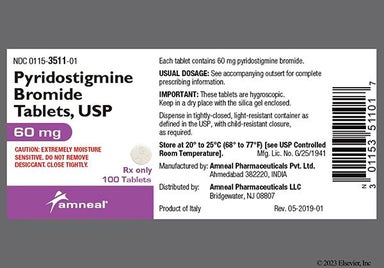
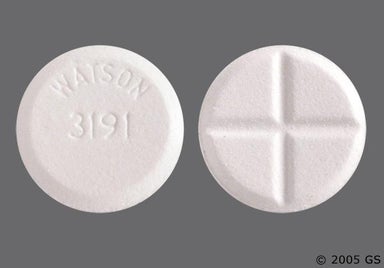
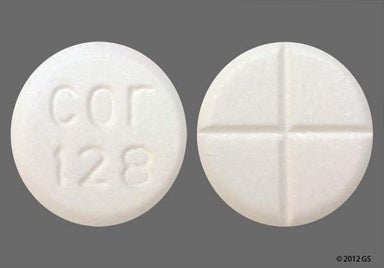
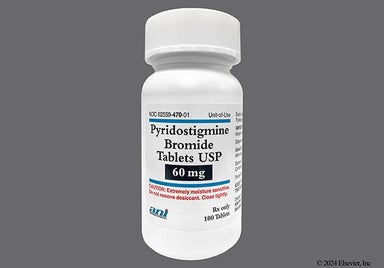
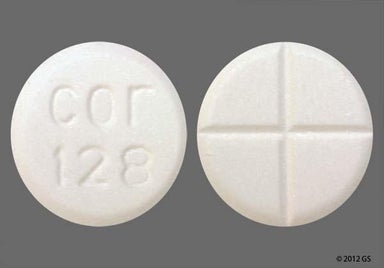
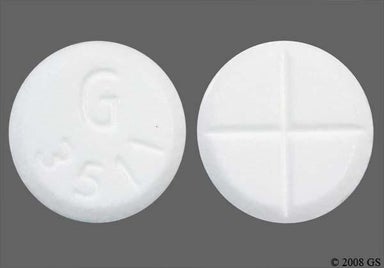
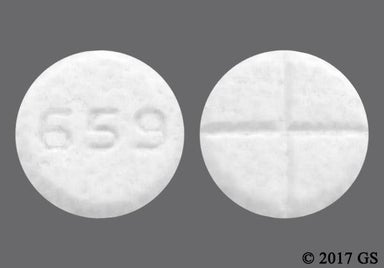
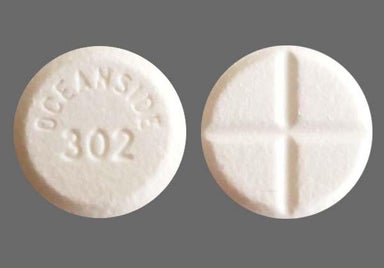
Pyridostigmine (Mestinon) images