



Endometrin vs. Crinone: 5 Things to Consider When Comparing These Vaginal Progesterones
Endometrin and Crinone are two forms of vaginal progesterone used during fertility treatments. Learn more about their benefits and differences with this guide.
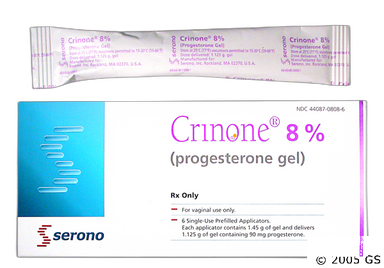
Crinone (progesterone) is a vaginal gel that's used in fertility treatments. It's also used to help restart menstrual periods. This medication contains progesterone, which is a hormone that's naturally made in the body. You insert Crinone (progesterone) into the vagina using a prefilled applicator. For fertility, it's inserted once or twice a day. And for menstrual periods, the medication is inserted every other day. Some possible side effects include headache, stomach pain, and vaginal discharge.

Crinone (progesterone) contains the natural sex hormone progesterone. This medication restarts menstrual periods by helping to balance the natural levels of progesterone in the body. And when it's used for fertility treatments, Crinone (progesterone) prepares the uterus to receive and nourish an embryo.
| Common Brands | Crinone |
|---|---|
| Drug Class | Progesterone |
| Controlled Substance Classification | Not a controlled medication |
| Generic Status | No lower-cost generic available |
| Availability | Prescription only |

The following side effects may get better over time as your body gets used to the medication. Let your healthcare provider know immediately if you continue to experience these symptoms or if they worsen over time.
Note: Side effects were reported by people who used Crinone 8% gel once daily for fertility treatment.
Contact your healthcare provider immediately if you experience any of the following.
Along with its needed effects, a medicine may cause some unwanted effects. Although not all of these side effects may occur, if they do occur they may need medical attention.
Check with your doctor immediately if any of the following side effects occur:
Rare
Signs of toxic shock syndrome—for cervical caps or diaphragms
Chills
confusion
dizziness
lightheadedness
muscle aches
sunburn-like skin rash that is followed by peeling of the skin
unusual redness of the inside of the nose, mouth, throat, vagina, or eyelids
Check with your doctor as soon as possible if any of the following side effects occur:
Rare
For females and males
Skin rash, redness, irritation, or itching that does not go away within a short period of time
For females only
Cloudy or bloody urine
increased frequency of urination
pain in the bladder or lower abdomen
thick, white, or curd-like vaginal discharge—with use of cervical caps or diaphragms only
vaginal irritation, redness, rash, dryness, or whitish discharge
Some side effects may occur that usually do not need medical attention. These side effects may go away during treatment as your body adjusts to the medicine. Also, your health care professional may be able to tell you about ways to prevent or reduce some of these side effects. Check with your health care professional if any of the following side effects continue or are bothersome or if you have any questions about them:
Less common
Vaginal discharge (temporary)—with use of creams, foams, and suppositories
vaginal dryness or odor
Other side effects not listed may also occur in some patients. If you notice any other effects, check with your healthcare professional.
Call your doctor for medical advice about side effects. You may report side effects to the FDA at 1-800-FDA-1088.



How to use Crinone (progesterone):

Crinone (progesterone) can cause some serious health issues. This risk may be even higher for certain groups. If this worries you, talk to your doctor or pharmacist about other options.
Tell your prescriber before you start treatment with Crinone (progesterone) if you have a history of blood clots or medical problems caused by a blood clot (e.g., heart attack, stroke). You can't use this medication if you've had any kind of blood clot before.
Be aware of the signs and symptoms of a blood clot. Blood clots can sometimes lead to serious problems like heart attack or stroke. Call 911 or seek medical attention right away if you have pain in your legs or arms, chest pain, sudden severe headaches, trouble breathing, or sudden changes in your speech or vision. These can be signs of a blood clot.
Some fertility specialists might use progesterone and other forms of progesterone to help prevent a miscarriage (pregnancy loss). Crinone (progesterone) isn't FDA-approved to prevent miscarriages and hasn't been proven to work well for this purpose. Speak with your prescriber about your options for preventing miscarriages and follow your prescriber's recommendations very carefully.
It's possible for Crinone (progesterone) to cause extra fluid to build up in your body, especially in your legs, ankles, and feet. This is because progesterone plays a role in regulating fluid levels in the body.
Fluid buildup might be more likely to happen if you have certain medical conditions, like kidney problems or heart failure. The extra fluid can also worsen these conditions. Tell your prescriber if you have problems with fluid buildup or swelling before you start using Crinone (progesterone). Call your prescriber or get medical help right away if you notice unexplainable swelling, rapid weight gain, or sudden trouble breathing.
Progesterone might play a role in causing negative emotions like depression. Research suggests that it's more likely due to changing progesterone levels in the body, such as during treatment with Crinone (progesterone). Tell your prescriber if you have or have had depression. Be aware of any changes in your mood or worsening symptoms of depression like feelings of hopelessness, fear, or despair. Speak to your prescriber if this happens while you're using Crinone (progesterone).
Progesterone can raise blood sugar levels. If you have diabetes, it's possible for Crinone (progesterone) to make it harder for you to control your blood sugar. Let your prescriber know if you have diabetes or any problems with your blood sugar levels before you start using this medication.


Although certain medicines should not be used together at all, in other cases two different medicines may be used together even if an interaction might occur. In these cases, your doctor may want to change the dose, or other precautions may be necessary. When you are taking any of these medicines, it is especially important that your healthcare professional know if you are taking any of the medicines listed below. The following interactions have been selected on the basis of their potential significance and are not necessarily all-inclusive.
Using medicines in this class with any of the following medicines is not recommended. Your doctor may decide not to treat you with a medication in this class or change some of the other medicines you take.
Using medicines in this class with any of the following medicines is usually not recommended, but may be required in some cases. If both medicines are prescribed together, your doctor may change the dose or how often you use one or both of the medicines.


Contraindications are specific health conditions or situations in which a person should not take a medication due to safety concerns. If you have any of the following conditions or if any of the following apply to you, let your healthcare provider know because Crinone (progesterone) will not be safe for you to take.






Prescription savings
Stop paying too much for your prescriptions. Compare prices, get pharmacy coupons, and save up to 80%.Resources
About GoodRx
 Find expert answers to your health questions so you can make the best decisions for yourself and your family.
Health conditions
Medications & treatment
Access & affordability
Well-being
Medication discounts

Although irregular bleeding or spotting wasn't commonly reported during studies of Crinone, it's still possible. Tell your prescriber if you have any abnormal vaginal bleeding. Your prescriber will want to make sure it isn't due to a more serious medical condition.
Yes. Cramps were a common side effect that was reported by people who took Crinone during clinical studies. Try an over-the-counter pain reliever, like acetaminophen (Tylenol) or ibuprofen (Advil), if you have cramps while you're taking Crinone. Keep in mind that certain pain relievers, such as nonsteroidal anti-inflammatory drugs (NSAIDs), aren't recommended during pregnancy. Ask your prescriber or a pharmacist about a safe medication that you can take to help with cramps if you're taking Crinone and you're pregnant.
No, Crinone doesn't need to be refrigerated. Keep it at room temperature, between 68 and 77 degrees Fahrenheit.
No. In fact, Crinone can help start menstrual periods again in some people who previously had periods that have stopped. Crinone is typically given along with estrogen to help mimic the natural rise and fall of hormones during the menstrual cycle. Crinone is only given on certain days during the menstrual cycle because taking progesterone every day can stop your period.
Although both Crinone and Endometrin contain the hormone progesterone and are inserted into the vagina, they have a few differences. For one, Crinone is a gel that's already filled into applicators and Endometrin comes as a vaginal insert (tablet) that you have to place into an applicator. In addition, the dosing is completely different. And although both Crinone and Endometrin are FDA-approved as a fertility treatment, Crinone is also approved to treat a lack of periods. Talk with your prescriber if you have more questions about the differences between these two medications.
Crinone and Prometrium both contain the same active ingredient: progesterone. Crinone is a gel that's placed in the vagina and it's sometimes used to help with fertility. Prometrium (progesterone) is a capsule that's swallowed and isn't FDA-approved for use as a fertility treatment. Unlike Crinone, Prometrium can be taken to protect the uterus in people who've reached menopause and are taking estrogen medications for menopausal symptoms. Follow up with a healthcare professional to learn about other differences between Crinone and Prometrium (progesterone).
