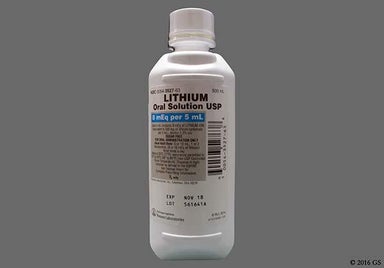
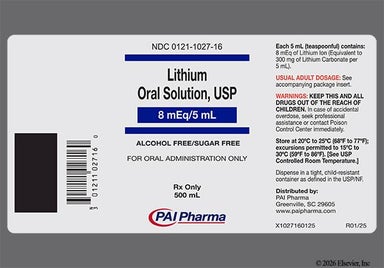
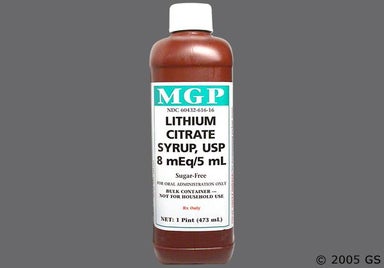
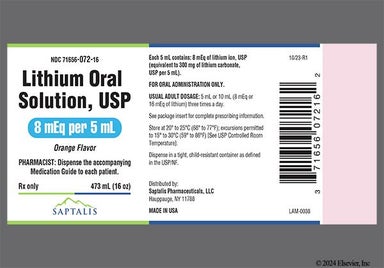
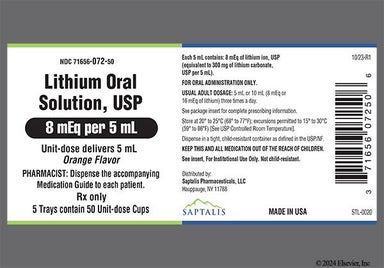
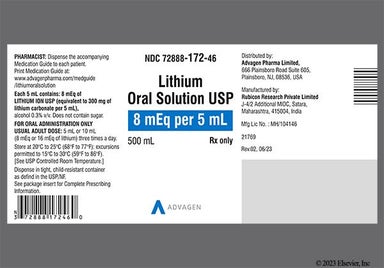
Lithium carbonate (or lithium) is a medication used to treat bipolar disorder and manic episodes. It's taken by mouth, typically 2 to 3 times a day. Lithium is available as instant-release pills and oral liquid as well as an extended-release tablet (brand name Lithobid). All lithium products are available as lower-cost generics. Lithium works well for treating bipolar disorder, but it can also cause side effects, such as shakiness, thirst, and nausea. To prevent lithium toxicity, your provider will check your blood lithium levels to make sure you're on a safe dose of the medication.
The following side effects may get better over time as your body gets used to the medication. Let your healthcare provider know immediately if you continue to experience these symptoms or if they worsen over time.
The following Lithium side effects have also been reported
Along with its needed effects, a medicine may cause some unwanted effects. Although not all of these side effects may occur, if they do occur they may need medical attention.
Check with your doctor immediately if any of the following side effects occur:
Some side effects may occur that usually do not need medical attention. These side effects may go away during treatment as your body adjusts to the medicine. Also, your health care professional may be able to tell you about ways to prevent or reduce some of these side effects. Check with your health care professional if any of the following side effects continue or are bothersome or if you have any questions about them:
You can take lithium with or without food, but nausea and vomiting are common side effects of lithium. Taking it with food can help. But if it doesn't and these effects are bothersome, let your provider know because you might need to have your dose lowered, your nausea treated, or switched to lithium (Lithobid) extended-release tablets.
Lithium can make you sleepy and dizzy. Don't drive or do anything requiring concentration until you know how this medication affects you. Also, drinking alcohol isn't recommended while taking lithium because it can worsen sleepiness and dizziness.
Stomach upset that won’t go away, shakiness, slurred speech, and extreme drowsiness can be signs that your lithium dose is too high. If you experience these symptoms, call your provider or get medical help right away.
The amount of fluids and salt in your diet can affect your lithium blood levels. Avoid becoming overheated or dehydrated in hot weather or during exercise, and keep your salt intake consistent. Also, make sure to stay well-hydrated and drink fluids when you feel thirsty. Changing the amount of salt in your diet can change the lithium levels in your blood and cause more side effects. Too little salt can cause higher blood lithium levels, while too much salt can cause your lithium levels to fall. Talk to your healthcare provider about how much fluids you should drink when taking lithium.
Swallow the extended-release tablets whole. Don't crush or chew them as too much medication might get released at once, which can cause side effects.
If you're taking the liquid form of lithium, be sure to use the measuring device that your pharmacy provides with the medication. Don't use household spoons to measure out your dose because they might not be accurate and you can give yourself the wrong dose.
Don't change your dose or suddenly stop taking lithium without talking to your provider first. If you're interested in stopping the medication, contact your provider. They'll give you specific instructions on how to lower your dose slowly over a period of time before completely stopping the medication.
Lithium can cause some serious health issues. This risk may be even higher for certain groups. If this worries you, talk to your doctor or pharmacist about other options.
Lithium toxicity
Risk factors: Body fluids or electrolyte levels not in balance | Current fever or illness | Kidney problems | Heart problems
If your blood lithium levels are too high, you can experience lithium toxicity, which can cause serious side effects. Your risk is higher if you're taking medications that can raise the levels of lithium in your body. To prevent lithium toxicity, your provider will measure lithium levels regularly to see if you're within a safe range, and adjust the dose of your medication as needed. Get medical help right away if you're experiencing symptoms of having too much lithium in your body, such as diarrhea, vomiting, abnormal eye movements, shaking, muscle weakness, impaired speech, loss of balance or coordination, confusion, and trouble breathing.
Kidney problems
Risk factors: Long-term use | Kidney problems
Lithium can directly damage your kidneys, which could potentially be reversed if you stop taking lithium. Lithium can also affect your kidneys' ability to balance salt and water in your body. When first starting treatment or after long-term use, you might experience more frequent urination and more thirst. It is important that you keep your fluid and salt intake relatively the same each day. You should also avoid dehydration and becoming overheated in hot weather and exercise. Your provider will monitor your kidney health before and during treatment and will adjust or stop your dose of lithium if there's evidence the medication is damaging your kidneys. Contact your provider if you notice bloody or foamy urine, lower back pain, or fatigue, because these could be signs of damaged kidneys.
Serotonin syndrome
Risk factors: Taking other medications that raise serotonin levels in your brain
Some people taking lithium have developed a rare, but potentially life-threatening condition called serotonin syndrome. This condition happens where there's too much serotonin in the brain. Your risk for serotonin syndrome is higher if you use lithium with other medications that can raise your serotonin levels, such as certain antidepressants, mental health medications, pain medications, and migraine medications. Let your provider know about all the medications you take before starting lithium. Also, don't start any new medications without talking to your provider first. Symptoms of serotonin syndrome include fast heart rate, sweating, muscle stiffness or spasms, fever, and confusion. Get medical help right away if you have any of these symptoms.
Thyroid problems
Risk factors: Long-term use | Thyroid problems
Lithium can build up in the thyroid and lead to thyroid problems such as hypothyroidism (low thyroid hormone) or hyperthyroidism (overactive thyroid). Your provider will monitor your thyroid health before and during treatment to make sure your thyroid gland is working properly and your thyroid hormone levels are normal. If you get symptoms of hypothyroidism (e.g., tiredness, weight gain, and feeling cold, contact your provider right away) or hyperthyroidism (e.g., weight loss, feeling hot, irritable, sweating), contact your provider.
Heart problems (Brugada syndrome)
Risk factors: Personal or family history of Brugada syndrome | Family history of sudden death before the age of 45 | Unexplained fainting
Lithium can worsen the symptoms of a rare but life-threatening heart rhythm condition called Brugada syndrome. Lithium should be avoided in patients with Brugada syndrome or those suspected of having Brugada syndrome. People with a family history of Brugada syndrome or sudden death before the age of 45 years should consult with a heart specialist (cardiologist) to discuss the benefits and risks of starting lithium treatment.
Low blood sodium levels
Risk factors: Older adults | Taking a water pill | Not enough body fluids | Currently sick with illness | Drinking alcohol regularly
Lithium can cause low sodium levels in your blood. Your provider might closely monitor your blood sodium levels before and during treatment with lithium. Get medical help right away if you experience weakness, confusion, difficulty concentrating, headache, or memory problems because these could be signs of low blood sodium levels, which is a medical emergency.
High blood calcium levels and high parathyroid hormone levels
Risk factors: Long-term use | Taking other medications that raise blood calcium levels
Taking lithium for a long time can raise the calcium levels in your blood due to too much parathyroid hormone. Sometimes, these changes in your parathyroid glands won't go away and the only way to fix it is through surgery. Your provider will monitor your blood calcium levels and parathyroid hormone levels during treatment to make sure your parathyroid gland is working properly and that your calcium levels are normal. Let your provider know if you have symptoms of high calcium levels, such as tiredness, muscle weakness, loss of appetite, nausea, vomiting, constipation, and confusion.
Brain-related side effects
Risk factors: Taking an antipsychotic and lithium together
Taking lithium with antipsychotics such as quetiapine (Seroquel), aripiprazole (Abilify), and olanzapine (Zyprexa) can raise your risk for certain brain side effects, such as weakness, fever, tremors, confusion, and muscle stiffness. If you notice any of these symptoms, get medical help right away.
Though very rare, taking lithium can also raise the pressure in the brain. Let your provider know right away if you notice changes in your vision. If this change is caused by lithium, then they'll need to switch you to a different medication.
Lithium is available in different formulations. Your dose can differ depending on which formulation your provider prescribes. Some examples include:
Lithium immediate-release tablets and capsules:
Adults and children above 30 kg (66 lbs): The typical starting dose is 300 mg by mouth 3 times a day. The usual maintenance dose ranges from 300 mg to 600 mg taken 2 to 3 times a day, depending on whether you're taking it for manic episode or long-term treatment.
Children weighing 20 kg to 30 kg (44 lbs to 66 lbs): The typical starting dose is 300 mg by mouth 2 times a day. The usual maintenance dose ranges from 600 mg to 1,500 mg total daily (depending on whether you're taking it for manic episode or long-term treatment), given in divided doses.
Lithium 8 mEq/5 mL oral solution:
Adults and children above 30 kg (66 lbs): The typical starting dose is 8 mEq by mouth 3 times a day. The usual maintenance dose ranges from 8 mEq to 16 mEq taken 2 to 3 times a day, depending on whether you're taking it for manic episode or long-term treatment.
Children weighing 20 kg to 30 kg (44 lbs to 66 lbs): The typical starting dose is 8 mEq by mouth 2 times a day. The usual maintenance dose ranges from 16 mEq to 40 mEq total daily (depending on whether you're taking it for manic episode or long-term treatment), given in divided doses.
Manic episodes: The typical dose is 900 mg by mouth 2 times a day, or 600 mg 3 times a day. The total daily dose is 1,800 mg.
Long-term control: The typical dose is 600 mg by mouth 2 times a day. The total daily dose is 1,200 mg.
Your provider will adjust your lithium dose based on if you have kidney problems, how well your bipolar symptoms are responding to the medication, if you're having side effects, and your blood lithium level.
Lithium may interact with certain medications or supplements. Always let your doctor and pharmacist know about any other medications or supplements (including prescribed and over-the-counter medications, vitamins, and dietary or herbal supplements) that you are currently taking. The list below does not include all possible drug interactions with Lithium. Please note that only the generic name of each medication is listed below.
Although certain medicines should not be used together at all, in other cases two different medicines may be used together even if an interaction might occur. In these cases, your doctor may want to change the dose, or other precautions may be necessary. When you are taking this medicine, it is especially important that your healthcare professional know if you are taking any of the medicines listed below. The following interactions have been selected on the basis of their potential significance and are not necessarily all-inclusive.
Using this medicine with any of the following medicines is usually not recommended, but may be required in some cases. If both medicines are prescribed together, your doctor may change the dose or how often you use one or both of the medicines.
Using this medicine with any of the following medicines may cause an increased risk of certain side effects, but using both drugs may be the best treatment for you. If both medicines are prescribed together, your doctor may change the dose or how often you use one or both of the medicines.
Contraindications are specific health conditions or situations in which a person should not take a medication due to safety concerns. If you have any of the following conditions or if any of the following apply to you, let your healthcare provider know because Lithium will not be safe for you to take.
Allergy to any lithium-containing product
What are alternatives to Lithium?
There are a number of medications that your doctor can prescribe in place of Lithium. Compare a few possible alternatives below.
Lithium
Used for:
Treatment of manic episodes of bipolar disorder
Long-term maintenance treatment of bipolar disorder
This medicine is Colorless Ml Of Oral Solution.Not applicable - Lithium 8mEq/5mL SolutionThis medicine is Colorless Ml Of Oral Solution.Colorless Not applicable - Lithium 8mEq/5mL SolutionThis medicine is Colorless Ml Of Oral Solution.Colorless Not applicable - Lithium Citrate 8mEq/5ml SolutionThis medicine is Yellow Ml Of Oral Solution.Yellow Not applicable - Lithium 8mEq/5mL SolutionThis medicine is Yellow Ml Of Oral Solution.Yellow Not applicable - Lithium 8mEq/5mL SolutionThis medicine is Colorless Ml Of Oral Solution.Colorless Not applicable - Lithium 8mEq/5mL Solution
GoodRx Health has strict sourcing policies and relies on primary sources such as medical organizations, governmental agencies, academic institutions, and peer-reviewed scientific journals. Learn more about how we ensure our content is accurate, thorough, and unbiased by reading our editorial guidelines.
Prescription savings
Stop paying too much for your prescriptions. Compare prices, get pharmacy coupons, and save up to 80%.
Weight gain isn't a commonly reported side effect of Lithium. A large review looking at several studies found that some people taking Lithium experienced minimal weight gain.
You can expect to feel some side effects when you first start Lithium. One common side effect people report early on is nausea. If you feel nauseous, try taking Lithium with food or ask your provider if you can switch to the lithium (Lithobid) extended-release capsule to ease this side effect. Other side effects you might experience include shakiness, feeling thirsty, and needing to urinate more often. Make sure to stay well-hydrated while taking Lithium. Most of these side effects get better as you continue to take the medication, but let your provider know if they're very bothersome or don't go away. Keep in mind that when you first start Lithium, it'll take some time for you and your provider to find the dose of medication that works best for you. During this time, your provider will do check ups and order blood draws to see how Lithium is working.
Lithium is a first-choice option for treating bipolar disorder. But it can cause severe side effects if your dose is too higher. To lower your risk for lithium toxicity, your provider will order blood work regularly to measure your blood lithium level, especially when you first start taking the medication and your dose changes. This helps determine if you’re on the right dose of the medication. Your provider will also slowly adjust the dose based on how you respond to the medication and the level of lithium in your body. After your dose and blood Lithium levels have stabilized, you might not need to have blood tests done as often.
Lithium isn't recommended during pregnancy and breastfeeding. Limited studies show that this medication might affect the development of your unborn baby’s heart if taken during early pregnancy. And it can also lead to lithium toxicity in unborn and breastfed babies. If you're pregnant or breastfeeding, talk to your provider about safer options to treat your conditions. If you choose to taking Lithium during pregnancy or while nursing, your provider will need to monitor you and your baby closely.










 If your blood lithium levels are too high, you can experience