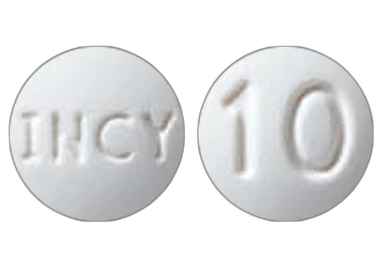
Used for Chronic Graft Versus-Host Disease, Myelofibrosis, Polycythemia Vera
Used for Chronic Graft Versus-Host Disease, Myelofibrosis, Polycythemia Vera
Jakafi (ruxolitinib) is a JAK inhibitor. It's used to treat adults with certain blood conditions called myelofibrosis (MF) and polycythemia vera (PV). This medication can also treat graft-versus-host disease (GVHD) in people 12 years and older. Jakafi (ruxolitinib) comes as a tablet that's taken by mouth twice a day. There's also Jakafi XR (ruxolitinib), the extended-release version that's taken once a day. Side effects can include low blood cell counts, infection, and dizziness.
In myelofibrosis and polycythemia vera, these JAK signals are too active. This can cause the body to make too many blood cells. By blocking these signals, Jakafi (ruxolitinib) helps control blood cell production.
In graft-versus-host disease, JAK signals can turn on immune cells that attack healthy tissue after a donor stem cell transplant. Jakafi (ruxolitinib) blocks these signals. This helps calm the immune system and lessen damage to healthy tissue.
The following side effects may get better over time as your body gets used to the medication. Let your healthcare provider know immediately if you continue to experience these symptoms or if they worsen over time.
Note: Side effects are from adults with myelofibrosis. Side effects might differ slightly for people with other conditions and for children.
Jakafi (ruxolitinib) serious side effects
Contact your healthcare provider immediately if you experience any of the following.
Infection: fever, chills, severe tiredness, body aches, cough, trouble breathing, painful or blistering rash, confusion, weakness, trouble with balance or coordination
Low platelets: unexplained bruising, frequent nose bleeds, blood in urine, blood in stool
The following Jakafi (ruxolitinib) side effects have also been reported
Along with its needed effects, a medicine may cause some unwanted effects. Although not all of these side effects may occur, if they do occur they may need medical attention.
Check with your doctor immediately if any of the following side effects occur:
Some side effects may occur that usually do not need medical attention. These side effects may go away during treatment as your body adjusts to the medicine. Also, your health care professional may be able to tell you about ways to prevent or reduce some of these side effects. Check with your health care professional if any of the following side effects continue or are bothersome or if you have any questions about them:
Jakafi (ruxolitinib) comes in two forms: a regular tablet and an extended-release tablet (called Jakafi XR). They have different strengths and dosing instructions. Don't switch between them unless your prescriber tells you to.
For Jakafi (ruxolitinib): Take Jakafi exactly as your prescriber tells you, usually twice a day. You can take it with or without food. If you can't swallow the tablet, ask your care team about your options.
For Jakafi XR (ruxolitinib): Take Jakafi XR once a day, with or without food. Swallow the tablet whole. Don't split, chew, or crush it.
If you miss your dose of Jakafi (ruxolitinib), don’t take an extra dose. Skip the missed dose and wait to take your usual dose at your next scheduled time.
Don't suddenly stop taking Jakafi (ruxolitinib) unless your prescriber tells you to. Your symptoms might come back or get worse. Your prescriber will usually lower your dose slowly before you stop treatment.
Keep your blood test appointments while taking Jakafi (ruxolitinib). This medication can lower your blood cell counts and raise your cholesterol. Your prescriber will check these levels during treatment. They'll make changes to your treatment to keep you safe if needed.
Take steps to lower your risk of infection during treatment. Jakafi (ruxolitinib) can make it harder for your body to fight infections. Wash your hands often and avoid close contact with people who are sick. Your care team might recommend other ways to prevent infection based on your risk.
Ask your prescriber or pharmacist before you start or stop any medications or supplements. Some antifungals, like fluconazole (Diflucan), can raise your risk of side effects from Jakafi (ruxolitinib). Some seizure medications and St. John's wort can make Jakafi work less well. Your care team can check if your medications are safe to take together.
If you're pregnant or plan to become pregnant: Talk to your prescriber. We don't know if Jakafi (ruxolitinib) can harm an unborn baby. Your prescriber can discuss the risks and benefits of treatment with you.
If you're breastfeeding or plan to breastfeed: Don't breastfeed while taking Jakafi (ruxolitinib) and for 2 weeks after your last dose. We don’t know if the medication can pass into breast milk, but there’s a possible risk of harm to a nursing baby.
Risks and warnings for Jakafi (ruxolitinib)
Jakafi (ruxolitinib) can cause some serious health issues. This risk may be even higher for certain groups. If this worries you, talk to your doctor or pharmacist about other options.
Low blood cell counts
Jakafi (ruxolitinib) can cause low blood cell counts. It can lower your red blood cells, white blood cells, and platelets. Low red blood cells can cause anemia and make you feel tired, weak, or short of breath. Low white blood cells can put you at risk of infection. And low platelets can make you bruise or bleed more easily.
Your care team will check your blood cell counts every 2 to 4 weeks at first and then as needed. Tell your care team if you have unusual tiredness, weakness, easy bruising, or bleeding. If your blood counts get too low, your prescriber might lower your dose or pause Jakafi (ruxolitinib) until your labs improve. Some people might also need a blood transfusion of red blood cells or platelets to help.
Risk of infection
Risk factors: Travel to countries with high occurrence of tuberculosis | History of tuberculosis | History of herpes simplex infection
Before starting Jakafi (ruxolitinib), tell your prescriber about any infections you have now or had in the past. You shouldn’t start the medication if you have a serious infection. During treatment, your prescriber might give you an antibiotic or antiviral medication to help prevent certain infections.
Call your care team right away if you have signs of an infection. This can include fever, chills, cough, trouble breathing, or feeling very tired. A painful or blistering rash can be a sign of shingles.
PML can cause different symptoms. Tell your care team right away if you have new confusion, weakness, vision changes, or trouble with balance or coordination.
Worsening of symptoms after pausing or stopping Jakafi (ruxolitinib)
Some people who stopped Jakafi (ruxolitinib) for myelofibrosis or polycythemia vera had their symptoms come back. Some also had other serious problems. This can include fever, trouble breathing, low blood pressure, blood-clotting problems, or organ failure.
Don’t suddenly stop taking Jakafi (ruxolitinib) without talking to your prescriber first. Usually, they'll slowly lower the dose before stopping treatment to help lower the risk. Tell your prescriber right away if your symptoms come back while your dose is being lowered or after you stop.
Possible higher cholesterol levels
Some people taking Jakafi (ruxolitinib) have had higher cholesterol and triglyceride levels. Your care team will check these levels with a blood test about 8 to 12 weeks after you start treatment. If your levels are too high, they might recommend ways to help manage your cholesterol.
Risk of skin cancer
Some people have developed new skin cancers while taking Jakafi (ruxolitinib). Different types of skin cancer have been reported. Regularly check your skin and tell your prescriber if you notice any new or unusual skin changes.
Possible risk of serious heart problems and stroke
Risk factors: Risks for heart disease | Current or past smoker
In a study of people with rheumatoid arthritis (RA), a different JAK inhibitor was linked to a higher risk of serious health problems compared with a TNF inhibitor. These problems included heart-related death, heart attack, and stroke. Jakafi (ruxolitinib) wasn't studied in this trial and isn't approved for RA.
Tell your prescriber about all your medical conditions and if you smoke or have smoked in the past. They can consider these risks when deciding if Jakafi (ruxolitinib) is safe for you.
Call 911 right away if you have any signs of a heart attack or stroke. Signs of a heart attack can include sudden chest pain, nausea, or sweating. Signs of a stroke can include a droopy face, sudden weakness on one side of the body, severe headache, or trouble walking or talking.
Possible risk of blood clots
In a study of people with rheumatoid arthritis (RA), a different JAK inhibitor was linked to a higher risk of blood clots compared with a TNF inhibitor. These clots included deep vein thrombosis (DVT) and pulmonary embolism (PE). Jakafi (ruxolitinib) wasn't studied in this trial and isn't approved for RA.
Get medical help right away if you have signs of a blood clot. These can include swelling or pain in one arm or leg, sudden chest pain, or sudden trouble breathing.
Possible risk of new cancers
Risk factors: New cancer | Current or past smoker
In a study of people with rheumatoid arthritis (RA), a different JAK inhibitor was linked to a higher risk of new cancers compared with a TNF inhibitor. These cancers included lymphoma and other types of cancer. The risk was higher in people who smoke or have smoked in the past. Jakafi (ruxolitinib) wasn't studied in this trial and isn't used for RA.
Tell your cancer care team if you smoke or have smoked in the past. Talk to them if you're concerned about the risk of developing a new cancer while taking Jakafi (ruxolitinib).
Jakafi (ruxolitinib) dosage
Typical dosage for Jakafi (ruxolitinib)
Myelofibrosis
Jakafi: The typical starting dose is either 5 mg, 15 mg, or 20 mg by mouth twice a day, depending on your platelet levels.
Jakafi XR: The typical starting dose is either 11 mg, 33 mg, or 44 mg by mouth once a day, depending on your platelet levels.
Polycythemia vera
Jakafi: The typical starting dose is 10 mg by mouth twice a day.
Jakafi XR: The typical starting dose is 22 mg by mouth once a day.
Acute graft-versus-host disease
Jakafi: The typical starting dose is 5 mg by mouth twice a day. After at least 3 days, your prescriber might raise it to 10 mg twice a day.
Jakafi XR: The typical starting dose is 11 mg by mouth once a day. After at least 3 days, your prescriber might it to 22 mg once a day.
Chronic graft-versus-host disease
Jakafi: The typical starting dose is 10 mg by mouth twice a day.
Jakafi XR: The typical starting dose is 22 mg by mouth once a day.
Your prescriber might adjust your dose based on your blood counts, side effects, and how well the medication is working.
Your dose might be different if you have liver or kidney problems. It can also be different if you take certain medications that can interact with Jakafi (ruxolitinib).
Interactions between Jakafi (ruxolitinib) and other drugs
Jakafi (ruxolitinib) may interact with certain medications or supplements. Always let your doctor and pharmacist know about any other medications or supplements (including prescribed and over-the-counter medications, vitamins, and dietary or herbal supplements) that you are currently taking. The list below does not include all possible drug interactions with Jakafi (ruxolitinib). Please note that only the generic name of each medication is listed below.
Although certain medicines should not be used together at all, in other cases two different medicines may be used together even if an interaction might occur. In these cases, your doctor may want to change the dose, or other precautions may be necessary. When you are taking this medicine, it is especially important that your healthcare professional know if you are taking any of the medicines listed below. The following interactions have been selected on the basis of their potential significance and are not necessarily all-inclusive.
Using this medicine with any of the following medicines is usually not recommended, but may be required in some cases. If both medicines are prescribed together, your doctor may change the dose or how often you use one or both of the medicines.
GoodRx Health has strict sourcing policies and relies on primary sources such as medical organizations, governmental agencies, academic institutions, and peer-reviewed scientific journals. Learn more about how we ensure our content is accurate, thorough, and unbiased by reading our editorial guidelines.
Prescription savings
Stop paying too much for your prescriptions. Compare prices, get pharmacy coupons, and save up to 80%.
No, Jakafi isn’t traditional chemotherapy. It's a type of targeted therapy called a JAK inhibitor. Jakafi blocks specific JAK signals involved in making blood cells and regulating the immune system. This is different from traditional chemotherapy, which broadly affects fast-growing cells in the body.
You can take Jakafi for as long as it's working for you and your prescriber says it's safe for you. How long you need treatment depends on your condition and how you respond. For some conditions, your prescriber might check how well Jakafi is working after several months and decide if you should keep taking it. Don't stop Jakafi suddenly on your own. If you need to stop, your prescriber might slowly lower your dose.
Some people might consider Jakafi as an immunosuppressant because it can weaken your immune system. It works as a JAK inhibitor, which blocks signals involved in immune system activity. This can make it harder for your body to fight infections. Tell your care team right away if you have signs of an infection. This can include fever, chills, cough, trouble breathing, or a painful rash.
After a single dose, it takes about 15 hours for most of Jakafi to leave your body. For Jakafi XR, it takes about 1 day. This is estimated using the medication’s half-life, or how long it takes for your body to remove half of the medication. This timing can be different depending on the other medications you take with Jakafi. Some medications can interact with Jakafi and affect how long it stays in your system. Ask your prescriber if you have questions about how long Jakafi stays in your body.
The manufacturer doesn't say if regular Jakafi tablets can be cut in half. Jakafi XR tablets shouldn't be cut because of the way they work. To be safe, swallow regular Jakafi tablets and Jakafi XR tablets whole. If you have trouble swallowing either medication, tell your care team.
It's best to avoid alcohol while taking Jakafi. Drinking alcohol can raise your risk of liver problems and make it harder for your body to fight infections. These are also possible risks with Jakafi. Long-term alcohol use can also raise the risk of certain cancers. Talk to your prescriber about how much alcohol you drink and whether it's safe during treatment.
Weight gain can happen with Jakafi, but it isn't a common side effect. In studies, some people taking Jakafi for myelofibrosis or polycythemia vera gained weight. Talk to your care team if you notice a large or unexpected change in your weight.
Stopping Jakafi can cause symptoms of your condition to come back or get worse. This can happen if you have myelofibrosis or polycythemia vera. With graft-versus-host disease (GVHD), symptoms can also come back while your dose is being lowered or after you stop. Don't stop Jakafi suddenly without talking to your prescriber. If it's the right choice for you, your prescriber can help you lower your dose safely.