Key takeaways:
Most foot blisters heal on their own in a few days to a week if you protect them from further rubbing.
Keep the blister area clean and covered. If the blister pops, apply petroleum jelly and cover it with a nonstick bandage.
To prevent future blisters, wear well-fitting shoes, choose moisture-wicking socks, and protect areas that are prone to rubbing.
Contact a healthcare professional if you notice signs of infection like worsening redness, pain, swelling, warmth, or pus.
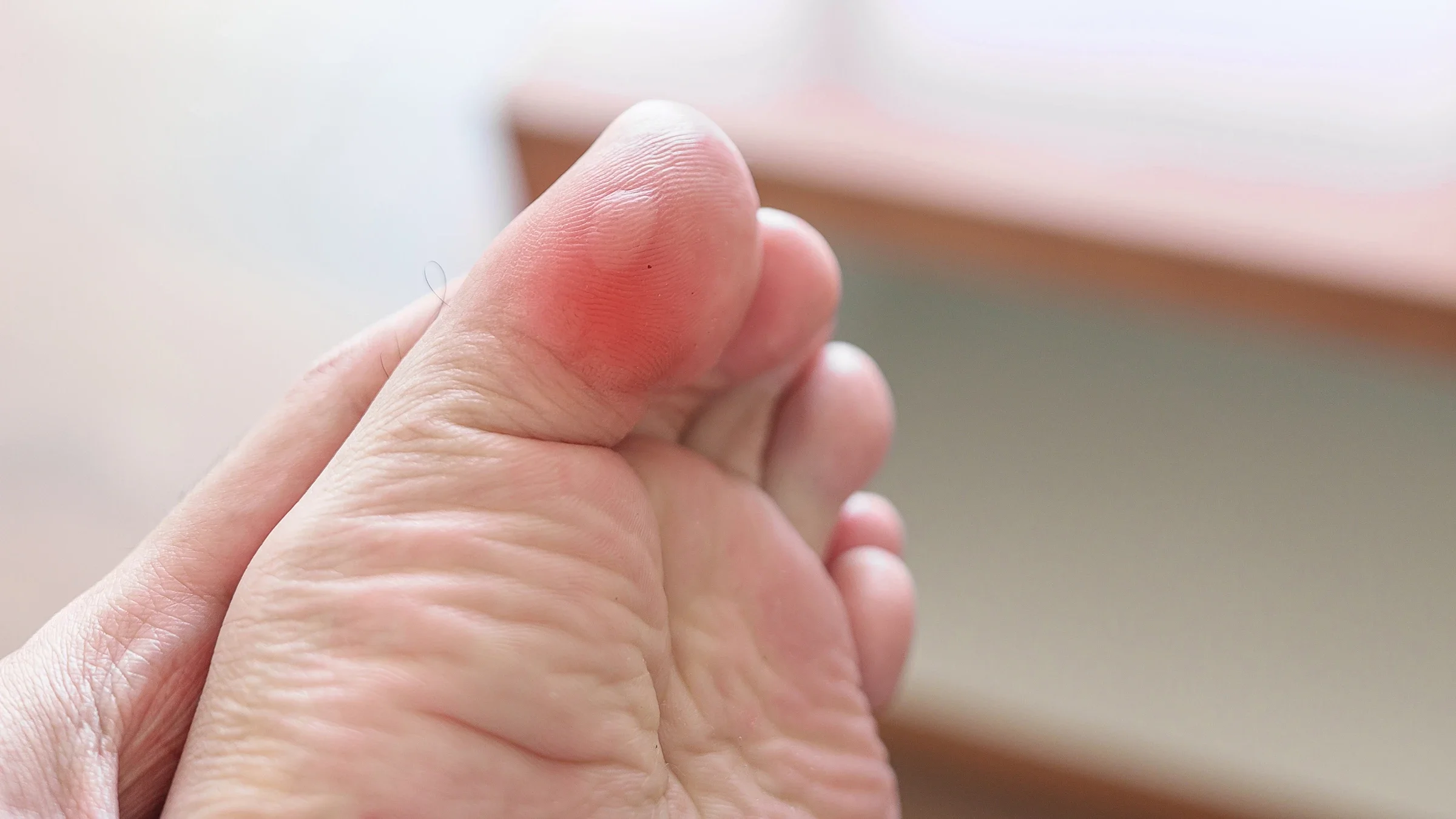
A long walk in a new pair of shoes can leave you with an unwelcome souvenir: a painful foot blister. These fluid-filled bubbles may be small, but they can cause a lot of discomfort.
Most foot blisters heal on their own. Still, they can be painful while they’re healing. There are a few simple steps you can take to treat blisters on your feet, help them heal, and prevent them from coming back.
What causes foot blisters?
Most foot blisters are caused by friction. This happens when your shoes or socks repeatedly rub against your skin. Over time, friction can cause the top layers of your skin to separate. Your body fills the space between them with a clear fluid called serum. This creates the raised bubble you recognize as a blister.
Search and compare options
Several things can increase friction and make blisters more likely, including:
Shoes that are too tight, loose, or stiff
Heat and moisture from sweaty feet
Walking or running for long periods
Going without socks, or wearing socks that don’t fit well
Skin conditions, rashes, or infections on the feet, including eczema or athlete’s foot (tinea pedis)
Certain health conditions, such as epidermolysis bullosa
Foot blisters tend to happen on your heels or toes. But they can show up anywhere the skin is being rubbed.
How do you treat blisters on your feet?
The good news is that most blisters heal on their own in a few days to a week. That fluid bubble is there for a reason — to protect your skin while it heals. But you can take steps to protect the blister and support healing. Below are some tips for treating foot blisters.
1. Protect it
To protect your blister from additional rubbing and pressure, start by wearing shoes that don’t irritate it. You might need to wear sandals or shoes with a different shape for a few days.
Loosely cover the blister with a:
Sterile bandage
Gauze pad
Moleskin
Blister bandage
Avoid placing the adhesive directly on the blister.
Here’s how to make a moleskin pad:
Cut a hole in the center of the moleskin that’s slightly larger than the blister.
Place the moleskin around the blister so the blister sits inside the hole.
Cover the area loosely with a bandage or gauze pad, if needed.

Read more like this
Explore these related articles, suggested for readers like you.

This creates a cushion around the blister and helps reduce pressure on the sore area.
2. Don’t pop it
As tempting as it may be to pop a blister, try to resist the urge. The fluid inside acts as a natural cushion, protecting the skin underneath while it heals. Popping a blister creates an opening where bacteria can enter and lead to irritation or infection.
3. Keep it clean, especially if it pops on its own
Sometimes, a foot blister will burst on its own. If that happens, let the fluid drain, and focus on keeping the area clean to lower the risk of infection.
Here how to care for a popped blister:
Gently wash the blister with mild soap and warm water.
Don’t peel off the loose skin, often called the “roof” of the blister. It helps protect the sensitive skin underneath.
Pat the area dry with a clean towel.
It’s also important to keep the area around an unbroken blister clean and dry. This can help protect the skin from infection.
4. Apply petroleum jelly if the blister pops
If the blister pops, gently clean and dry the area. Then apply a thin layer of petroleum jelly, such as Vaseline. Petroleum jelly helps keep the exposed skin moist, which can support healing and reduce discomfort.
Use petroleum jelly from a tube instead of a jar to reduce the chance of introducing bacteria. You don’t need much: just enough to lightly cover the affected area. Then place a nonstick bandage or gauze pad over the blister to cover the area.
How long do foot blisters take to heal?
How long a foot blister takes to heal depends on its size, what caused it, and whether it stays intact. Most friction blisters heal within a few days to a week if they’re protected from further rubbing. A blister that’s popped or lost its top layer of skin may take longer to heal.
What is the role of diet and hydration in blister healing?
Diet and hydration won’t cure a blister, but they can support your body’s natural repair process. Important nutrients include:
Protein: helps repair damaged skin
Vitamin C, vitamin A, zinc, and iron: support wound healing, collagen production, and immune function
Fluids: help your body transport nutrients to healing tissues
Most people can get what they need by eating a balanced diet and drinking enough fluids.
How to prevent foot blisters
Taking steps to prevent blisters from happening in the first place can save you a lot of discomfort and hassle.
Try these strategies to prevent foot blisters:
Choose shoes that fit well and suit the shape of your feet.
Break in new shoes slowly rather than wearing them for long periods right away.
Opt for moisture-wicking socks to help keep your feet dry. Change damp socks as soon as possible, especially after long walks or runs.
Try using foot powder to help reduce friction from your shoes and absorb moisture.
Rub petroleum jelly on trouble spots (such as bunions) to minimize friction between your skin and shoes.
Apply protective padding, like moleskin or tape, to blister-prone areas if you’re going to be on your feet for an extended period.
Try to stop activities at the first sign of foot discomfort or redness, and apply protective padding.
Consider orthotics, such as a footpad, to distribute pressure more evenly across your feet.
When should you see a healthcare professional?
Most blisters will heal with basic home care. But contact a healthcare professional if you notice signs of infection, including:
Increased redness or swelling around the blister
Warmth around the blister
Pus or cloudy drainage
Fever or chills
Increasing pain or tenderness
You should also get medical care in these cases:
The blister isn’t improving after about a week.
It’s unusually large or painful.
You develop multiple blisters without a clear cause.
The blister was caused by a burn, allergic reaction, or medical condition rather than friction.
People with diabetes should pay close attention to any blister or wound on the foot. Diabetes can slow wound healing and increase the risk of infection. Diabetes can also cause neuropathy, or reduced sensation in the feet, which may make it harder to tell if a blister’s getting worse. Get medical care if you develop a foot blister, particularly if it’s open, isn’t healing, or shows signs of infection.
Frequently asked questions
Petroleum jelly, such as Vaseline, can protect a blister and support healing. If the blister has popped, Vaseline keeps the exposed skin moist, which can prevent the wound from drying out or sticking to the bandage. Apply a thin layer of petroleum jelly before covering it with a nonstick bandage.
It’s not always a good idea to walk barefoot if you have blisters. Walking barefoot may reduce rubbing from shoes. But it can also expose the blister to more dirt, bacteria, and additional pressure. This is especially true if the blister has popped.
When possible, wear clean, moisture-wicking socks and comfortable, well-fitting shoes or sandals that don’t rub the area. At home, walking barefoot on a clean surface is OK if it doesn’t cause pain or put pressure on the blister.
No, you can’t heal foot blisters overnight. Most blisters need several days to fully heal. But you can protect a blister overnight by keeping it clean, preventing rubbing, and covering it if it has popped.
Petroleum jelly, such as Vaseline, can protect a blister and support healing. If the blister has popped, Vaseline keeps the exposed skin moist, which can prevent the wound from drying out or sticking to the bandage. Apply a thin layer of petroleum jelly before covering it with a nonstick bandage.
It’s not always a good idea to walk barefoot if you have blisters. Walking barefoot may reduce rubbing from shoes. But it can also expose the blister to more dirt, bacteria, and additional pressure. This is especially true if the blister has popped.
When possible, wear clean, moisture-wicking socks and comfortable, well-fitting shoes or sandals that don’t rub the area. At home, walking barefoot on a clean surface is OK if it doesn’t cause pain or put pressure on the blister.
No, you can’t heal foot blisters overnight. Most blisters need several days to fully heal. But you can protect a blister overnight by keeping it clean, preventing rubbing, and covering it if it has popped.
The bottom line
Most foot blisters heal on their own within a few days to a week. To help the blister heal, protect it from further rubbing, avoid popping it, and keep the area clean. If it opens, apply petroleum jelly and cover it with a nonstick bandage. Contact a healthcare professional if the blister isn’t healing, is very painful, or is showing signs of infection.

Why trust our experts?




References
American Academy of Dermatology Association. (2026). How to prevent and treat blisters.
Janssen, L., et al. (2018). First-aid treatment for friction blisters: “Walking into the right direction?” Clinical Journal of Sport Medicine: Official journal of the Canadian Academy of Sport Medicine.
MedlinePlus. (2025). Blisters.
Ngan, V., et al. (2023). Epidermolysis bullosa. DermNet.