Key takeaways:
Orthotics, like a footpad or insert, are designed to provide support and relieve pain from foot and ankle problems.
You may need shoe orthotics if you have high arches, flat feet, or conditions such as plantar fasciitis and arthritis.
Your healthcare provider can help you decide if prescription or over-the-counter orthotics are right for you.
The average adult takes 4,000 to 6,000 steps a day. But foot pain can make that daily step count difficult. In addition to being uncomfortable, it can also hinder your mobility. The good news is that many common foot problems are very treatable.
Shoe orthotics are a great way to relieve foot pain from various conditions or injuries. Whether you use custom orthotics or buy them from a retail store, finding the right option for your condition is crucial.
What are shoe orthotics?
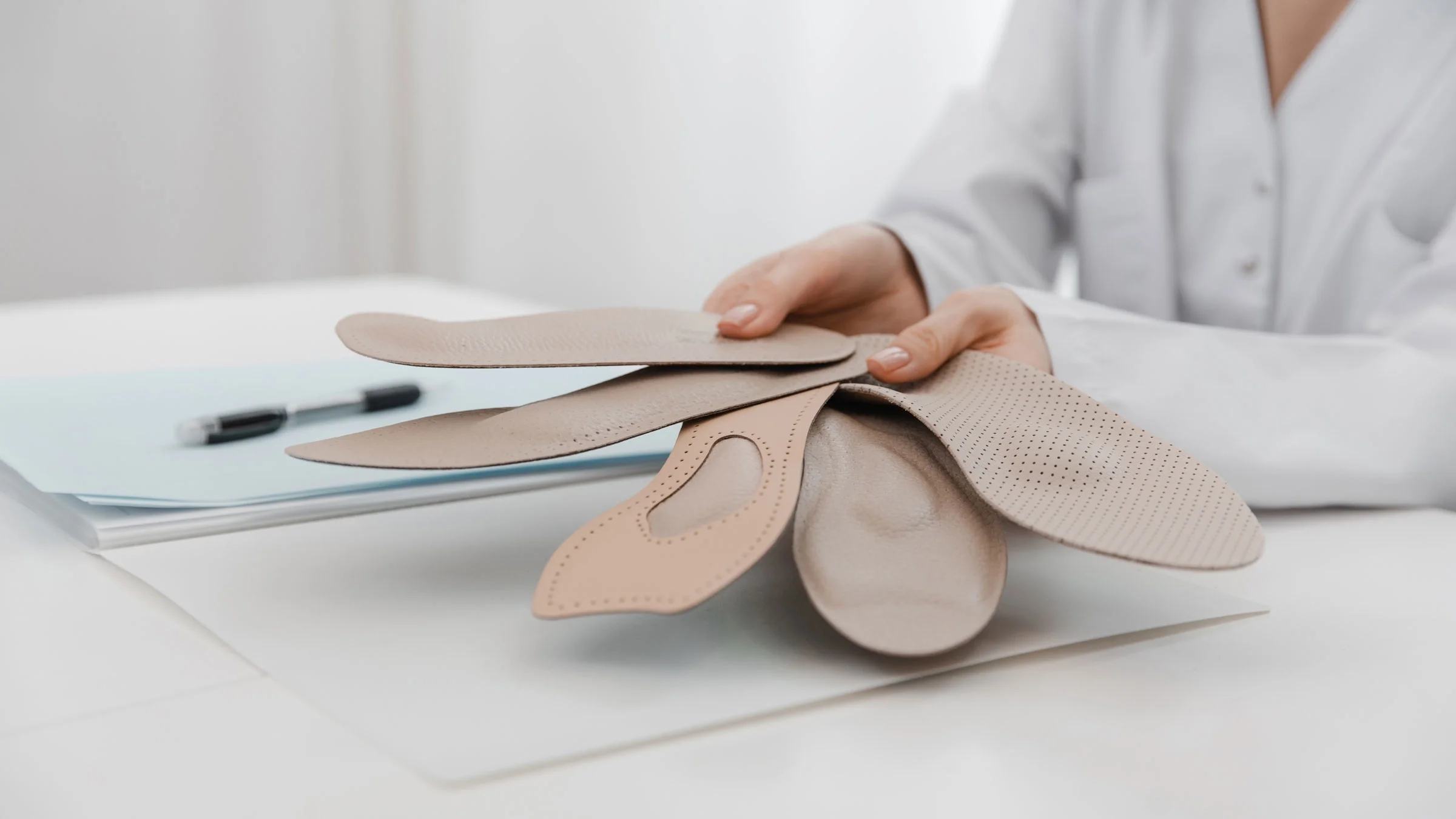
Orthotics are special shoe inserts, such as a heel pad or arch support. They can provide support, correct foot deformities, and improve foot or ankle function. The devices typically fall into one of three categories:
Soft: Soft or accommodative orthotics are made of flexible materials like foam or gel. They offer extra cushioning to absorb shock and reduce pressure as you walk.
Rigid: Hard materials like plastic or graphite make rigid orthotic devices more durable than soft orthotics. These functional orthotics provide stability. And they may improve lower-body alignment and movement.
Semi-rigid: Semi-rigid orthotics are the most common. They combine soft and rigid orthotic features with a flexible top layer and a firm bottom layer. So they provide cushioning, shock absorption, and support for misalignments.
Search and compare options
Your healthcare provider can prescribe custom-fit orthotics. Or you can buy inserts over the counter. These pre-made orthotics are often less expensive and don't require a doctor's visit. But you should see a healthcare provider if you have chronic foot pain or your symptoms don't improve with store-bought inserts.
A podiatrist or other provider can evaluate you and prescribe custom orthotics if necessary. These devices are specially made to fit you and best address your needs. They're created from a mold or three-dimensional image of your feet.
Orthotics shouldn't be confused with orthopedic shoes. Orthopedic shoes are specially designed footwear. They often have a firm heel and may treat disorders like a hammertoe. Shoe orthotics, however, can be removed and worn in different shoes.
How do you know if you need shoe orthotics?
The bones, muscles, and joints in your feet work together to support your body as you move. So problems with your feet may cause pain and impaired mobility. They can also lead to muscle imbalances that affect your knees, hips, and back.
Fortunately, shoe orthotics can help treat or prevent various foot problems. Here are five signs that you may need shoe orthotics.
1. You have flat feet
Flat feet, or pes planus, occur when you have a missing or collapsed arch. This flattened arch may be present at all times (rigid) or only while standing (flexible). It can cause foot or ankle pain, fatigue, and weakness. And it may increase your risk of injuries and conditions like plantar fasciitis.
Research shows that wearing an orthotic insole helps absorb shock and improve function in those with flat feet. But a review notes that higher-quality research is necessary to recommend orthotics for flat feet in adults. If you have flat feet and experience pain, talk to your provider about custom orthotics. Studies suggest they are more effective than off-the-shelf options.
2. You have high arches
If you have a high arch, or pes cavus, you may be prone to overuse injuries like shin splints. A soft orthotic might help. It provides cushioning that evenly distributes the pressure on your feet. In one study, people with a high arch who wore custom-made orthotics saw a 55% decrease in pain after 3 months.
3. You have heel pain
Plantar fasciitis is one of the most common causes of heel pain. It occurs when overuse or repetitive strain causes tiny tears in the plantar fascia. This ligament on the bottom of the foot absorbs the impact when you walk, run, or do weight-bearing activities.
Simple interventions like wearing orthotics may resolve plantar fasciitis. Researchers compared orthotics and corticosteroid injections for plantar fasciitis. They found that shoe orthotics were better for long-term pain relief.
Several factors may affect how you respond to orthotics. A study showed that orthotics were better at reducing plantar heel pain if participants had more ankle mobility and a lower body mass index (BMI).
4. You have foot pain or swelling when you walk
Talk to your healthcare provider if you experience foot pain or swelling when you walk. It might be a sign of other health conditions. For example, arthritis may cause pain, swelling, and stiffness in your feet.
Orthotics can help support your foot, ease pressure on sore spots, and increase shock absorbency. In a small-scale study, people with rheumatoid arthritis wore custom orthotics for 4 weeks. They had less ankle and foot pain and better walking function.
5. You have problems with your balance
Instability or poor balance can lead to falls, a leading cause of injury in people over 65. If you suddenly have difficulty staying steady on your feet, you should see a healthcare provider. They can rule out any medical conditions and decide if you are a good candidate for orthotics.
Ankle-foot orthotics might be the answer. The rigid braces stabilize the foot and ankle. And they've been shown to improve standing balance, reduce sway, and increase walking speed.
6. You have diabetic neuropathy
Around 60% to 70% of people with diabetes have peripheral neuropathy. This nerve damage may cause tingling, weakness or numbness, and sensitivity to touch. And it often affects the legs and feet, increasing the risk of sores and blisters. Orthopedic shoes are usually the go-to for people with diabetes and related neuropathy. They reduce pressure on your feet and may prevent sores.
But you have to be diligent about wearing therapeutic shoes to get the full benefits. And in some cases, orthotics might be more practical. One study found that a custom-made orthotic insole is a good preventative measure for people with diabetes who are at risk of their first sore or blister.
Are there disadvantages to wearing shoe orthotics?
From less pain to better physical function, orthotics have many advantages. But there can be disadvantages for some. These include:
Footwear limitations: Depending on your orthotic, you might have limited footwear options. For example, you can wear sneakers or other closed-toe shoes with orthotics. But you can't wear open-toed shoes with most orthotics.
Initial discomfort: Orthotics can be slightly uncomfortable when you first start wearing them. It may take 2 to 3 weeks to get used to them. Experts recommend gradually increasing your time wearing orthotics. You can add an hour or so each day until you can wear orthotics all day. If they are still uncomfortable after 3 weeks, talk to your provider, as you may need an adjustment or different orthotics.
Over-reliance: Many wonder if wearing orthotics for extended periods will make their feet too reliant on them. One study looked at people with flat feet who wore orthotics. Some of their intrinsic foot muscles were smaller after 12 weeks. Experts in the study recommended a foot-strengthening program to offset this. But the orthotics did not impair muscle activity.
The bottom line
Shoe orthotics can help treat conditions such as plantar fasciitis, diabetic neuropathy, and balance issues. The devices are designed to support your arches, absorb shock when you move, and improve foot and ankle function. Depending on your condition and foot structure, you can wear custom orthotics prescribed by your healthcare provider or pre-made orthotics from the store.

Why trust our experts?




References
American Academy of Orthopaedic Surgeons. (2012). Orthotics.
American Academy of Orthopaedic Surgeons. (2022). Plantar fasciitis and bone spurs.
American Podiatric Medical Association. (n.d.). Prescription custom orthotics and shoe inserts.
Bancroft, R. J., et al. (2011). Orthotics. European Geriatric Medicine.
Becker, B. A., et al. (2018). Common foot problems: Over-the-counter treatments and home care. American Family Physician.
Cambron, J. A., et al. (2017). Shoe orthotics for the treatment of chronic low back pain: A randomized controlled trial. Archives of Physical Medicine and Rehabilitation.
Centers for Disease Control and Prevention. (2021). Facts about falls.
Elattar, O., et al. (2018). Uses of braces and orthotics for conservative management of foot and ankle disorders. Foot & Ankle Orthopaedics.
Herchenröder, M., et al. (2021). Evidence for foot orthoses for adults with flatfoot: A systematic review. Journal of Foot and Ankle Research.
Huang, Y., et al. (2020). The arch support insoles show benefits to people with flatfoot on stance time, cadence, plantar pressure and contact area. PLoS One.
Jorgetto, J. V., et al. (2019). Evaluation of the use of therapeutic footwear in people with diabetes mellitus - a scoping review. Journal of Diabetes of Metabolic Disorders.
Laidler, J. (2021). The impact of ankle-foot orthoses on balance in older adults: A scoping review. Canadian Prosthetics & Orthotics Journal.
Martinez-Santos, A., et al. (2019). Evaluation of orthotic insoles for people with diabetes who are at-risk of first ulceration. Journal of Foot and Ankle Research.
Maynou, C., et al. (2017). The adult cavus foot. Efort Open Reviews.
Najafi, B., et al. (2014). Mechanism of orthotic therapy for the painful cavus foot deformity. Journal of Foot and Ankle Research.
National Institute of Neurological Disorders and Stroke. (2022). Peripheral neuropathy fact sheet.
Orthopedic Associates. (2018). 25 facts about foot pain that you probably didn’t know.
Park, S-Y., et al. (2018). Potential for foot dysfunction and plantar fasciitis according to the shape of the foot arch in young adults. Journal of Exercise Rehabilitation.
Protopapas, K., et al. (2020). The effect of 12-week custom foot orthotic intervention on muscle size activity of the intrinsic foot muscle of young adults during gait termination. Clinical Biomechanics.
Seaman, T. J., et al. (2022). Pes cavus. StatPearls.
Simonsen, M. B., et al. (2022). The effect of foot orthoses on gait biomechanics and pain among people with rheumatoid arthritis: A quasi-experimental study. Gait & Posture.
Whittaker, G. A., et al. (2020). Predictors of response to foot orthoses and corticosteroid injection for plantar heel pain. Journal of Foot & Ankle Research.
Wright Physical Therapy. (n.d.). A guide to orthotics.
Xu, R., et al. (2019). Comparative study of the effects and customized 3D printed insole and prefabricated insole on plantar pressure and comfort in patients with symptomatic flatfoot. Medical Science Monitor.