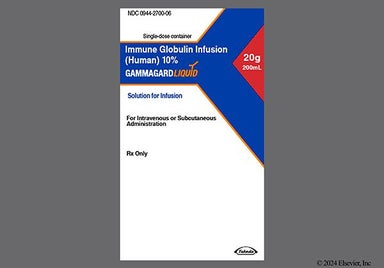
Gammagard Liquid
Gammagard Liquid is an immunoglobulin (antibody) infusion known as intravenous immunoglobulin (IVIG). It treats certain immune-related conditions, including primary immunodeficiency (PI), multifocal motor neuropathy (MMN), and chronic inflammatory demyelinating polyneuropathy (CIDP). Gammagard Liquid is typically infused through the vein, but can also be given as an infusion under the skin for PI. How often you receive a dose differs depending on your condition, but can range from weekly to every 4 weeks. Gammagard Liquid can raise your risk of serious side effects, including blood clots and kidney problems.


What is Gammagard Liquid?
What is Gammagard Liquid used for?
- Primary humoral immunodeficiency or PI in adults and children ages 2 years and older
- Multifocal motor neuropathy (MMN) in adults
- Chronic inflammatory demyelinating polyneuropathy (CIDP) in adults
How Gammagard Liquid works
Gammagard Liquid is a type of intravenous immune globulin (IVIG). It contains immunoglobulin G (IgG), which is one type of antibody that your immune system naturally makes to help you fight off things that make you sick, like viruses, bacteria, and fungi.
People with primary immunodeficiency (PI) don't have enough IgG in their bodies. This raises the risk of serious infections. Gammagard Liquid is used to temporarily replace the missing IgG so that people with PI are less likely to get sick.
People with multifocal motor neuropathy (MMN) or chronic inflammatory demyelinating polyneuropathy (CIDP) have immune systems that attack their nerves by mistake. How Gammagard Liquid helps these conditions isn't well-understood. But this medication is thought to work by calming the immune system.
Drug facts
| Common Brands | Gammagard Liquid |
|---|---|
| Drug Class | Immune globulin |
| Controlled Substance Classification | Not a controlled medication |
| Generic Status | No lower-cost generic available |
| Availability | Prescription only |

Side effects of Gammagard Liquid
The following side effects may get better over time as your body gets used to the medication. Let your healthcare provider know immediately if you continue to experience these symptoms or if they worsen over time.
Common Side Effects
Primary humoral immunodeficiency (IV infusion):
- Headache (48%)
- Feeling tired (23%)
- Fever (28%)
- Nausea (18%)
- Diarrhea (15%)
- Vomiting (15%)
- Cough (13%)
- Chills (13%)
- Dizziness (13%)
- Pain in arms or legs (12%)
Multifocal motor neuropathy:
- Headache (32%)
Chronic inflammatory demyelinating polyneuropathy:
- Headache (40%)
- Fever (10%)
Less Common Side Effects
- Hives, rash, itching
- Asthma
- Sore throat
- Nasal dryness
- Joint and muscle pain
- Stomach pain
- Chest discomfort
- Muscle spasms or weakness
- Migraine
Gammagard Liquid serious side effects
Contact your healthcare provider immediately if you experience any of the following.
- Kidney problems: tiredness, dry and itchy skin, low appetite, urinating less than usual, foamy or bloody urine, muscle cramps
- Blood clots: lungs (cough, difficulty breathing, chest pain); legs (redness, pain, tenderness, swelling of the skin); heart attack (chest pain, pain in the arms or shoulders, pain in the neck or jaw); stroke (difficulty speaking, numbness on one side of the body, confusion)
- Serious allergic reaction: difficulty breathing, tightness in the throat, swelling in the face or tongue, hives, itching, fast heartbeat, dizziness, lightheadedness
- Brain inflammation: severe headache, neck stiffness, sensitivity to light, painful eye movements
- Breakdown of red blood cells: tiredness, dizziness, weakness, yellowing of the skin or eyes, dark-colored urine
- Lung problems: severe breathing problems, chest pain or tightness
The following Gammagard Liquid side effects have also been reported
Side effects that you should report to your care team as soon as possible:
- Allergic reactions—skin rash, itching, hives, swelling of the face, lips, tongue, or throat
- Blood clot—pain, swelling, or warmth in the leg, shortness of breath, chest pain
- Fever, neck pain or stiffness, sensitivity to light, headache, nausea, vomiting, confusion, which may be signs of meningitis
- Hemolytic anemia—unusual weakness or fatigue, dizziness, headache, trouble breathing, dark urine, yellowing skin or eyes
- Kidney injury—decrease in the amount of urine, swelling of the ankles, hands, or feet
- Low sodium level—muscle weakness, fatigue, dizziness, headache, confusion
- Shortness of breath or trouble breathing, cough, unusual weakness or fatigue, blue skin or lips
Side effects that usually do not require medical attention (report these to your care team if they continue or are bothersome):

Pros and cons of Gammagard Liquid
Pros
- Can be given as IV or SQ infusion for PI
- Can be given at home, if your prescriber approves
- Conveniently stored at room temperature or in the refrigerator
Cons
- Infusion site reactions, like swelling or redness, are very common for under-the-skin injections.
- Has a lot of potential risks, such as kidney and lung problems
- Requires occasional blood tests to check for side effects and the need for dose adjustments

Pharmacist tips for Gammagard Liquid

- Mark your calendar with your appointments to see your prescriber, especially if you're receiving Gammagard Liquid as an IV infusion. Also make sure to mark any appointments to get any blood work done. This will make sure you don't miss any doses, will help you and your healthcare professional (HCP) see how well Gammagard Liquid is working for you, and if you're having side effects.
- Since the intravenous (IV) infusion can take a few hours, get a book to read, your phone, or something else to do to help pass the time during the infusion. Be sure you're sitting in a comfortable, quiet setting for your infusion.
- The under-the-skin infusions can commonly cause redness or swelling at the infusion site. Let your prescriber know if this reaction becomes severe or doesn't go away after a few days. It's also possible to experience headache, tiredness, vomiting, or fever.
- Before getting any vaccines, let your care team know you're receiving Gammagard Liquid, because it can interfere with your response to live vaccines (e.g., MMR (measles, mumps, and rubella vaccine)).
- Let your prescriber know if you're pregnant or nursing. There isn't enough information to know how safe Gammagard Liquid is for you and your baby during pregnancy and breastfeeding. Your healthcare team can talk with you about the risks and benefits of continuing treatment during this time.
How to give Gammagard Liquid under the skin
- Keep a journal to write down each time you use Gammagard Liquid. It's important to inject every week consistently for the medication to work well. Let your prescriber or pharmacist know if you have any questions.
- Store Gammagard Liquid in the refrigerator (up to 3 years) or at room temperature (up to 2 years) from the date it was made. Don't put the medication in the freezer, since this can damage it.
- If the medication is refrigerated, take the vial(s) out of the refrigerator and let them warm up to room temperature before using. This will take about 1 hour.
- Your healthcare team will show you how to infuse Gammagard Liquid under the skin. They'll let you know what supplies you need, such as the infusion pump and tubing.
- Gammagard Liquid can be infused under the skin of your upper arms, stomach, thighs, or lower back. You might need to use more than one infusion site, depending on the volume of the total dose. Children shouldn't have more than 20 mL of medication injected into a single infusion site; adults shouldn't inject more than 30 mL into each infusion site. If you need to use more than one infusion site, make sure the sites are at least 2 inches apart.
- After injecting Gammagard Liquid, throw away the needles in a sharps container or something made of heavy-duty plastic, such as an empty milk carton or laundry detergent bottle. This helps lower the risk of needle-stick injuries. Don't throw away needles or syringes in your trash can. For guidance on how to throw away your sharps container safely for your specific state, visit the FDA's website.

Risks and warnings for Gammagard Liquid
Gammagard Liquid can cause some serious health issues. This risk may be even higher for certain groups. If this worries you, talk to your doctor or pharmacist about other options.
Risk of blood clots
- Risk factors: Older age | Not moving much or on bed rest | History of blood clots | Medical conditions that raise your risk of blood clots | Taking medications that contain estrogen | Central IV lines | Have thick blood | History or risk of heart problems
 Gammagard Liquid can raise your risk of getting blood clots in various parts of your body. Anyone can get a blood clot during treatment, but having certain factors can put you at higher risk. Symptoms of a blood clot might be different depending on the location of the clot. They can include swelling, warmth, or tenderness in the legs. But more seriously, clots can lead to breathing problems, heart problems, or stroke and cause chest pain, difficulty breathing, or weakness of the face, legs, or arms. Call 911 if you have any of these symptoms because this is a medical emergency.
 Your prescriber will monitor you closely for blood clot symptoms while you're getting treated with Gammagard Liquid. If you're at risk for blood clots, your prescriber might adjust your dose and infusion rate. Staying well-hydrated before receiving Gammagard Liquid can help prevent blood clots.
Kidney problems
- Risk factors: Older than 65 years | History of kidney problems | High blood sugar | Sepsis | Having high amounts of certain proteins in blood (paraproteinemia) | Not enough fluids in the body | Taking medications that can cause kidney problems
People who've taken human immune globulin products that are injected through the vein have had severe and even fatal (deadly) kidney problems. The risk might be higher if you have certain factors like older age, diabetes, or taking medications that can cause kidney problems.
To be safe, your prescriber will order lab tests to check your kidney health before and during treatment with Gammagard Liquid. Your prescriber might stop your treatment with the medication if your kidney health worsens. Contact your healthcare team if you have any signs or symptoms of kidney failure, including changes in your need to urinate, tiredness, dry and itchy skin, low appetite, and muscle cramps.
Serious allergic reactions
Serious allergic reactions to Gammagard Liquid are possible, including life-threatening reactions like anaphylaxis (e.g., closing of the throat). Stop the infusion and get medical attention right away if you notice dizziness, nausea, a choking sensation, difficulty breathing, swelling around your eyes, or swelling of the lips or tongue after you use Gammagard Liquid.
Inflammation of the brain
Although rare, some people who used Gammagard Liquid developed swelling or inflammation in the brain (aseptic meningitis). Sometimes, symptoms can start to happen within several hours to 2 days of the infusion. This problem typically goes away within several days after stopping treatment. Contact your prescriber if you have symptoms of meningitis, including severe headache, neck stiffness, sleepiness, fever, sensitivity to light, painful eye movements, nausea, or vomiting.
Anemia due to breakdown of red blood cells
Gammagard Liquid might cause your body to rapidly destroy your red blood cells, which can lead to anemia. Your HCP might check your blood cell counts during treatment to make sure your red blood cell count doesn't drop too low. Contact your prescriber if you have any symptoms of anemia, such as tiredness, dizziness, and weakness.
Spread of local infection
Don't infuse Gammagard Liquid in or around an infected area on your thighs or stomach. Doing so can cause the infection to spread to other parts of your body.
Lung problems
People who've taken human immune globulin products that are injected through the vein have developed a condition called transfusion-related acute lung injury (TRALI). This condition happens when fluid backs up in your lungs, and it has typically occurred within 1 to 6 hours after taking the medication. Symptoms include severe breathing problems, chest pain or tightness, a racing heartbeat, and fever. To be safe, let your HCP know right away if you have any of these symptoms while you're getting treated with Gammagard Liquid. Your HCP will examine your lungs and give you appropriate treatment.
Risk of infection
Because Gammagard Liquid is made from human blood products, there's a risk that it might contain viruses and other germs that can make you sick. But your risk of infection is low since the donors of these blood products are carefully screened. Also, there are high manufacturing standards put into place to make sure the germs are killed or removed. To prevent serious infections in the rare case that your doses of Gammagard Liquid are affected, let your prescriber know right away if you start to feel sick or have symptoms, such as feeling confused and anxious or having trouble maintaining your balance.

Gammagard Liquid dosage
Typical dosage for Gammagard Liquid
Your healthcare team will determine your dose of Gammagard Liquid based on different factors, such as your body weight and IgG levels.
In general:
-
Primary immunodeficiency: Gammagard Liquid can be given as an infusion into the veins (intravenous, IV) or under the skin (subcutaneous, SC, SQ, subQ).
- IV: The typical dose ranges from 300 mg/kg to 600 mg/kg every 3 to 4 weeks.
- SC: Your prescriber will calculate your initial dose based on your previous dose of IV immune globulin therapy. They'll calculate your maintenance dose based on how well your body responds and your target IgG level; it's typically given once every week.
-
Multifocal motor neuropathy: The typical dose ranges from 0.5 grams/kg to 2.4 grams/kg given IV once every month.
-
Chronic inflammatory demyelinating polyneuropathy:
- Induction dose: The typical dose is 2 grams/kg total, divided and given IV over 2 to 5 days.
- Maintenance dose: The typical dose is 1 gram/kg total, divided and given IV over 1 to 4 days. The maintenance dose is repeated every 3 weeks.
Your prescriber will adjust the dose based on if it's helping your condition, if you're having side effects, and if you're at risk of or exposed to measles (e.g., traveling to certain places).

Gammagard Liquid contraindications
Contraindications are specific health conditions or situations in which a person should not take a medication due to safety concerns. If you have any of the following conditions or if any of the following apply to you, let your healthcare provider know because Gammagard Liquid will not be safe for you to take.
- Severe allergy to immunoglobulin G
- Immunoglobulin A deficiency with antibodies against IgA and a history of allergic reaction to immune globulin

What are alternatives to Gammagard Liquid?
Medical conditions that happen when your immune system is missing components or not working like it should:

Gammagard Liquid images