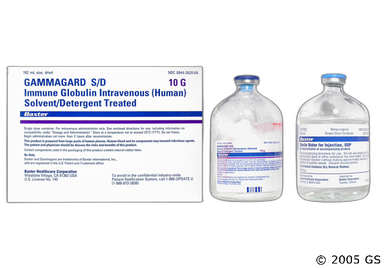
Gammagard S/D
Gammagard S/D is an immunoglobulin (also known as an antibody). Gammagard S/D is used for treating adults and children who have certain immune system problems, such as immunoglobulin G deficiency (a type of primary immunodeficiency). This medication raises the amount of immunoglobulin G (IgG) in the body to help the immune system work as it should and to prevent complications from certain health problems. Gammagard S/D is given as an infusion through the veins. Side effects include headache, chills, and back pain.


What is Gammagard S/D?
What is Gammagard S/D used for?
Medical conditions that happen when your immune system is missing components or not working like it should:
- Primary immunodeficiency (PI) in adults and children ages 2 years and older
- Prevention of bacterial infections from a blood and bone marrow cancer called chronic lymphocytic leukemia (CLL)
- Prevention and treatment of bleeding from low platelets (idiopathic thrombocytopenic purpura or ITP)
- Prevention of widening of coronary arteries (aneurysm) in children with Kawasaki syndrome
How Gammagard S/D works
Gammagard S/D is a replacement for immunoglobulin G (IgG). IgG is one type of natural antibody that your immune system makes to help you fight off things that make you sick, like viruses and bacteria.
But if you have certain medical conditions, your immune system is either missing components or isn't working like it should (e.g., too active). This can lead to problems like infections or trouble forming blood clots.
The exact way Gammagard S/D works to treat these conditions isn't completely known. It's thought to work by boosting your immune system to help prevent infections. It also might help prevent an overly active immune system from attacking parts of your own body by mistake.
Drug facts
| Common Brands | Gammagard S/D |
|---|---|
| Drug Class | Immune globulin |
| Controlled Substance Classification | Not a controlled medication |
| Generic Status | No lower-cost generic available |
| Availability | Prescription only |

Side effects of Gammagard S/D
The following side effects may get better over time as your body gets used to the medication. Let your healthcare provider know immediately if you continue to experience these symptoms or if they worsen over time.
Common Side Effects
- Headache (31%)
- Nausea (22%)
- Chills (19%)
- Fatigue (11%)
- Fever (11%)
- Back pain (8%)
- Stomach pain (8%)
- Diarrhea (8%)
Less Common Side Effects
- Vomiting
- Dizziness
- Flushing
- Pain at infusion site
- Sweating
Gammagard S/D serious side effects
Contact your healthcare provider immediately if you experience any of the following.
- Blood clot: in the lungs (cough, difficulty breathing, chest pain); in the leg (redness, pain, tenderness, swelling); near the heart (chest pain, arm or shoulder pain, neck or jaw pain); in the brain (difficulty speaking, numbness on one side of the body, confusion)
- Kidney problems: tiredness, dry and itchy skin, low appetite, urinating less than usual, foamy or bloody urine, muscle cramps
- Lung problems: severe breathing problems, chest pain or tightness
- Brain inflammation: severe headache, neck stiffness, sensitivity to light, painful eye movements
- Breakdown of red blood cells: tiredness, dizziness, weakness, yellowing of the skin or eyes, dark-colored urine
- Serious allergic reaction: difficulty breathing, tightness in the throat, swelling in the face or tongue, hives, itching, fast heartbeat, dizziness, lightheadedness
The following Gammagard S/D side effects have also been reported
Along with its needed effects, a medicine may cause some unwanted effects. Although not all of these side effects may occur, if they do occur they may need medical attention.
Check with your doctor or nurse immediately if any of the following side effects occur:
More common
Back pain
black, tarry stools
blurred vision
chest pain or tightness
chills
dark urine
decreased urination
dizziness
fast, pounding, or irregular heartbeat or pulse
general feeling of discomfort or illness
headache
joint pain
loss of appetite
muscle aches and pains
nervousness
noisy breathing
pain in the arms or legs
painful or difficult urination
pounding in the ears
rash
shivering
slow or fast heartbeat
sores, ulcers, or white spots on the lips or in the mouth
stomach pain
sweating
swollen glands
trouble sleeping
trouble breathing
unusual bleeding or bruising
unusual tiredness or weakness
vomiting
yellow eyes or skin
Less common
Bluish coloring of the lips or nail beds
burning sensation in the head
faintness or lightheadedness
Rare
Difficulty with swallowing
hives or welts
itching, especially of the feet or hands
reddening of the skin, especially around the ears
swelling of the eyes, face, or inside of the nose
Incidence not known
Back, leg, or stomach pains
blistering, peeling, or loosening of the skin
blood in the urine
change in vision
changes in blood pressure
changes in urination
chest pain or discomfort
cold, clammy, or pale skin
confusion
decreased frequency or amount of urine
difficult or labored breathing
difficulty seeing at night
dizziness, faintness, or lightheadedness when getting up suddenly from a lying or sitting position
feeling of warmth
headache that is severe and occurs suddenly
hoarseness
increased sensitivity of the eyes to sunlight
increased thirst
irritation
joint stiffness or swelling
light-colored stools
loss of appetite
loss of consciousness
low blood pressure or pulse
lower back or side pain
muscle spasm or jerking of all extremities
pains in the chest, groin, or legs, especially calves of the legs
seizures
shakiness in the legs, arms, hands, or feet
skin blisters
slow breathing
slurred speech that occurs suddenly
sudden, severe weakness or numbness in the arm or leg
sweating
swelling of the face, fingers, lower legs, or ankles
Some side effects may occur that usually do not need medical attention. These side effects may go away during treatment as your body adjusts to the medicine. Also, your health care professional may be able to tell you about ways to prevent or reduce some of these side effects. Check with your health care professional if any of the following side effects continue or are bothersome or if you have any questions about them:
Other side effects not listed may also occur in some patients. If you notice any other effects, check with your healthcare professional.
Call your doctor for medical advice about side effects. You may report side effects to the FDA at 1-800-FDA-1088.

Pros and cons of Gammagard S/D
Pros
- Can help with many different immune problems
- Can be safely given to children with certain conditions
- Has low IgA content, which means less chance of severe allergic reactions in people with IgA deficiency
Cons
- Given as an IV infusion (an injection into the vein)
- Has a lot of potential risks, such as kidney and lung problems
- Available as a brand-name medication only

Pharmacist tips for Gammagard S/D

- Mark your appointments on your calendar to see your provider and get your Gammagard S/D infusions so you don't miss any doses. Talk with your provider right away to reschedule your appointment if you accidentally miss a dose.
- Plan for your appointment to take a few hours to do any paperwork and to get the infusion. It's a good idea to bring something to do to pass the time.
- Make sure to wear layers and bring a jacket or blanket to your appointment. Some people might feel chilly while they're getting the Gammagard S/D infusion.
- Make sure to get your lab tests done on time. Your provider will use these tests to check your health throughout treatment since Gammagard S/D can cause side effects in different parts of your body that you might not feel. Some of these tests check your kidney and lung health, your blood cell count, and your blood protein and blood triglyceride (fat) levels.
- Gammagard S/D can raise your risk of blood clots. Get medical help right away if you experience symptoms of a blood clot, including cough, difficulty breathing, chest pain, headache, trouble speaking, or weakness on one side of your body.
- Gammagard S/D can raise your risk of kidney problems. Contact your provider if you experience symptoms of kidney problems, such as tiredness, dry and itchy skin, low appetite, urinating less than usual, foamy or bloody urine, or muscle cramps.
- Before getting any vaccines, let your provider or pharmacist know that you're taking Gammagard S/D. This medication can interfere with your response to live vaccines like Varivax (varicella vaccine) and MMR (measles, mumps, and rubella vaccine). Your providers can check to make sure the vaccine is safe for you to get.
More on Gammagard S/D tips


Risks and warnings for Gammagard S/D
Gammagard S/D can cause some serious health issues. This risk may be even higher for certain groups. If this worries you, talk to your doctor or pharmacist about other options.
Kidney failure
- Risk factors: Older than 65 years | History of kidney problems | High blood sugar | Sepsis | Having high amounts of certain proteins in blood (paraproteinemia) | Not enough fluids in the body | Taking medications that can cause kidney problems
 Some people who took Gammagard S/D had severe and even fatal kidney problems. Your risk is higher if you have certain factors, like older age, diabetes, or taking medications that can harm the kidneys. Your provider will order lab tests to check your kidneys before and during treatment with Gammagard S/D. If your kidney health worsens, your provider might slow down your infusion or stop your treatment. Tell your provider if you develop any signs or symptoms of kidney problems, including changes in your need to urinate, tiredness, dry and itchy skin, low appetite, and muscle cramps.
Blood clots
- Risk factors: Older age | Not moving much or on bed rest | History of blood clots | Medical conditions that raise your risk of blood clots | Taking medications that contain estrogen | Central IV lines | Have thick blood | History or risk of heart problems
Gammagard S/D can raise your risk of getting blood clots in various parts of your body. Anyone can get a blood clot during treatment, but having certain factors can raise your risk even more. Symptoms of a blood clot can differ depending on the location of the clot. They can include swelling, warmth, or tenderness in the legs. More seriously, clots can lead to breathing problems, heart problems, or stroke. Symptoms of more serious blood clots include chest pain, difficulty breathing, and weakness on one side of the body. Call 911 if you have any of these symptoms because this is a medical emergency.
Serious allergic reactions
Serious allergic reactions to Gammagard S/D are possible, including life-threatening reactions like anaphylaxis (e.g., closing of the throat). Get medical attention right away if you notice difficulty breathing; a choking sensation; sweating; dizziness; or swelling around your eyes, lips, or tongue after taking Gammagard S/D.
Swelling of the brain
Although rare, some people who used Gammagard S/D developed swelling or inflammation in the brain (aseptic meningitis). Symptoms can start within several hours to two days after the infusion. Typically, this problem goes away within several days after stopping treatment. Call your provider if you have symptoms of meningitis, such as severe headache, neck stiffness, sleepiness, fever, sensitivity to light, painful eye movements, nausea, or vomiting.
Anemia due to breakdown of red blood cells
Gammagard S/D can cause your body to rapidly destroy your red blood cells, which can lead to anemia. Your provider will check your blood cell counts before and during treatment. This makes sure your red blood cell count doesn't drop too low. Contact your provider if you have symptoms of anemia, such as tiredness, dizziness, and weakness.
Lung problems
Gammagard S/D can sometimes cause a condition called transfusion-related acute lung injury (TRALI). This condition happens when fluid backs up in your lungs. Symptoms of the lung problem typically appear within 1 to 6 hours after a Gammagard S/D infusion. Symptoms include severe breathing problems, chest pain or tightness, a racing heartbeat, and fever. Tell your provider right away if you have any of these symptoms so you can get treated.
Risk of too much sodium
Gammagard S/D contains sodium. Too much sodium in your body can worsen certain medical conditions like heart or kidney problems. Make sure to discuss all of your medical conditions with your provider before you get Gammagard S/D. Ask your provider whether this medication is right for you if you're following a low-sodium diet.
Infection
Since Gammagard S/D is made from human blood products, there's a risk that it might contain viruses or other germs that can make you sick. But your risk of infection is low since the donors of these blood products are carefully screened. Also, there are high manufacturing standards put into place to make sure the germs are killed or removed. To prevent serious infections in the rare case that your doses of Gammagard S/D are affected, let your provider know right away if you start to feel sick or have symptoms such as feeling confused and anxious or having trouble maintaining your balance.

Gammagard S/D dosage
Typical dosage for Gammagard S/D
Gammagard S/D is typically given as an intravenous infusion (injected into the veins, IV for short).
Your dose depends on your body weight, certain lab results, and what you’re using Gammagard S/D for. In general:
- PI: The typical dose is 300 mg/kg to 600 mg/kg IV every 3 to 4 weeks.
- CLL: The typical dose is 400 mg/kg IV every 3 to 4 weeks.
- ITP: The typical dose is 1 gram/kg IV as a single dose. You might need up to 3 doses on different days, depending on your platelet count.
- Kawasaki syndrome: The typical dose is 1 gram/kg IV as a single dose. An alternative option is 400 mg/kg IV for four days beginning within seven days of when your child's fever started. Gammagard S/D is usually given with aspirin.
Your provider will adjust the dose based on whether it's helping your condition, whether you're having side effects, whether you've been exposed to measles, and whether you're at risk of measles exposure (e.g., traveling to certain places).

Interactions between Gammagard S/D and other drugs
Although certain medicines should not be used together at all, in other cases two different medicines may be used together even if an interaction might occur. In these cases, your doctor may want to change the dose, or other precautions may be necessary. Tell your healthcare professional if you are taking any other prescription or nonprescription (over-the-counter [OTC]) medicine.

What are alternatives to Gammagard S/D?
Medical conditions that happen when your immune system is missing components or not working like it should:


