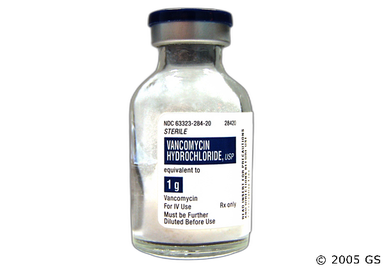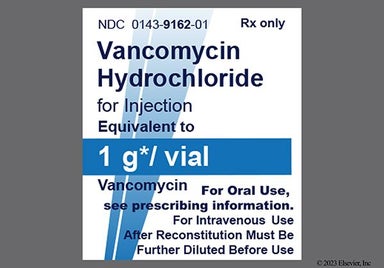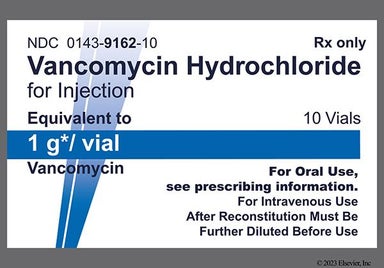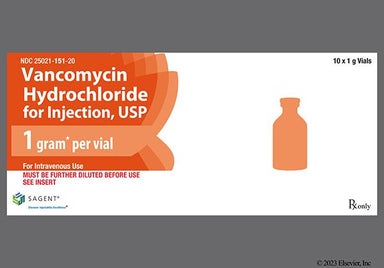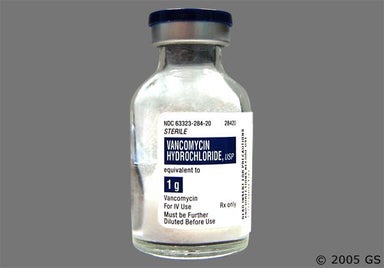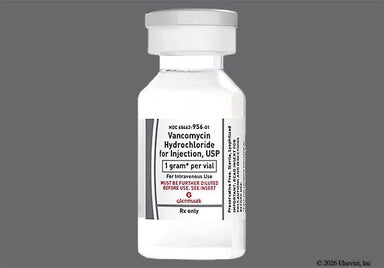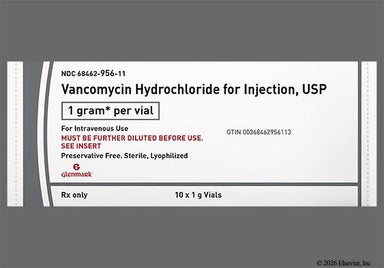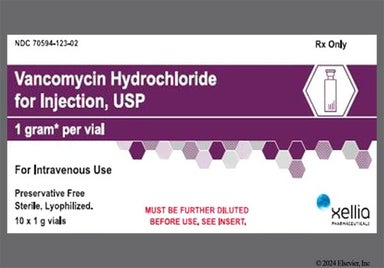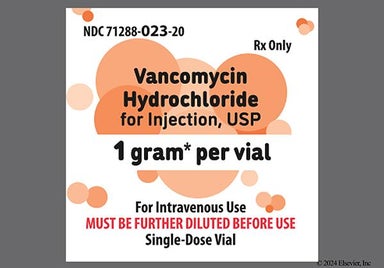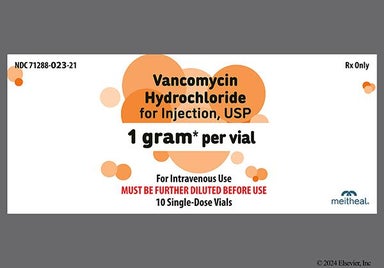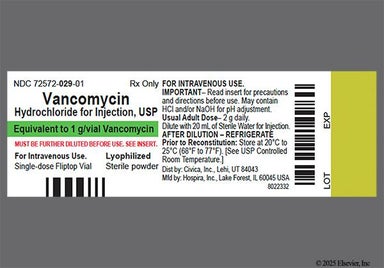
Vancomycin Coupon - Vancomycin 20ml of 1g vial

vancomycin

Generic Vancocin
Used for Bacterial Infection, Diarrhea, Gastrointestinal Infection, Lower Respiratory Infection, Skin Infection

Vancomycin (Vancocin) is an antibiotic medication that's used to treat Clostridioides difficile (C. diff) diarrhea and certain severe gut infections in both adults and children. Vancomycin (Vancocin) is taken by mouth, typically 3 to 4 times a day. It's available as both oral capsules and a liquid. Common side effects of vancomycin (Vancocin) include nausea and stomach pain.

Reviewed by:Last reviewed on May 4, 2023
basics-icon

What is Vancomycin (Vancocin)?

What is Vancomycin (Vancocin) used for?

  • Infectious diarrhea caused by Clostridioides difficile (C. diff)
  • Gut inflammation (enterocolitis) caused by Staphylococcus aureus (S. aureus)

How Vancomycin (Vancocin) works

Vancomycin (Vancocin) is a glycopeptide antibiotic. It kills bacteria by preventing them from making their own protective covering.

Drug facts

Common BrandsVancocin, Firvanq
Drug ClassGlycopeptide
Controlled Substance ClassificationNot a controlled medication
Generic StatusLower-cost generic available
AvailabilityPrescription only
side-effects-icon

Side effects of Vancomycin (Vancocin)

The following side effects may get better over time as your body gets used to the medication. Let your healthcare provider know immediately if you continue to experience these symptoms or if they worsen over time.

Common Side Effects

  • Nausea (17%)
  • Stomach pain (15%)
  • Low blood potassium levels (13%)
  • Vomiting (9%)
  • Diarrhea (9%)
  • Fever (9%)

Less Common Side Effects

  • Passing gas
  • Urinary tract infection
  • Headache
  • Swelling in the arms or legs
  • Back pain
  • Feeling tired

Vancomycin (Vancocin) serious side effects

Contact your healthcare provider immediately if you experience any of the following.

  • Kidney injury: feeling sick or weak, urinating less than usual, confusion, blood in urine, swelling in the legs, ankles, or feet
  • Hearing problems: ringing in the ears, hearing loss, dizziness, sensation that the room is spinning
  • Severe skin reaction: rash, blistering or peeling of skin, hives, painful sores in your mouth or around your eyes, fever, trouble breathing, swollen lymph nodes
  • Serious allergic reactions: Chest tightness, wheezing, trouble breathing

Source: DailyMed

The following Vancomycin (Vancocin) side effects have also been reported

Side effects that you should report to your care team as soon as possible:

  • Allergic reactions—skin rash, itching, hives, swelling of the face, lips, tongue, or throat
  • Hearing loss, ringing in ears
  • Kidney injury—decrease in the amount of urine, swelling of the ankles, hands, or feet
  • Rash, fever, and swollen lymph nodes
  • Redness, blistering, peeling, or loosening of the skin, including inside the mouth
  • Severe diarrhea, fever
  • Unusual vaginal discharge, itching, or odor

Side effects that usually do not require medical attention (report these to your care team if they continue or are bothersome):

prices-container

Get your GoodRx coupon

Avg retail price
$928.27(Save 94.99%)
GoodRx discount
$46.51
See prices
pros-and-cons-icon

Pros and cons of Vancomycin (Vancocin)

Pros

  • Available in a liquid form (Firvanq) for people who have difficulty swallowing pills
  • First-line of treatment for C. diff diarrhea
  • Both oral capsules and solutions are available as lower-cost generic medications

Cons

  • Needs to be taken multiple times a day
  • Can raise the risk of kidney damage
  • Can cause nausea as a side effect
pharmacist-tips-icon

Pharmacist tips for Vancomycin (Vancocin)

pharmacist
  • Be aware that if you're taking vancomycin (Vancocin) for C. diff diarrhea, your provider might decide to admit you to the hospital to prevent the spread of C. diff during treatment. Make sure to follow your provider's instructions to lower the risk of passing on the infection to someone else.
  • Take vancomycin (Vancocin) exactly as prescribed. Make sure to finish your treatment course, even if you're feeling better. Stopping the medication earlier than prescribed can make your infection come back and become harder to treat.
  • If you're using vancomycin (Vancocin) for C. diff diarrhea, let your provider know if your diarrhea gets worse after you start taking it. You might need a different medication.
  • Let your provider know if you experience hearing loss or difficulty maintaining your balance after you start vancomycin (Vancocin). Though not common, this medication can affect your hearing and balance.
  • Vancomycin (Vancocin) can sometimes cause serious skin reactions. Watch out for symptoms such as skin rash or blisters. Stop this medication and get medical attention right away if these reactions happen.

Tips for vancomycin (Vancocin) oral suspension

  • Shake the bottle well before using. Make sure to only use a medication dose cup or syringe from the pharmacy to measure out your dose. Don't use household spoons because they aren't accurate and might cause you to take the wrong dose.
  • Store vancomycin (Vancocin) liquid in the refrigerator for up to 14 days. Then, throw away the bottle, even if there's still some medication left. Don't take and throw away the medication if it looks cloudy or has particles.
faq-icon

Common questions about Vancomycin (Vancocin)

No, vancomycin (Vancocin) isn't a penicillin antibiotic. It's a glycopeptide antibiotic. If you're allergic to penicillin, your provider can consider vancomycin (Vancocin) for you if it's appropriate for your condition.

One way to tell that vancomycin (Vancocin) is working for your infection is if you start to pass loose stools less often. According to clinical studies, many people who took vancomycin (Vancocin) had no more diarrhea after 4 to 5 days of treatment. Keep in mind that even if your symptoms get better, it's important to finish your course of vancomycin (Vancocin) to prevent the infection from coming back. If your diarrhea gets worse during treatment, or if you experience diarrhea with fever, belly pain, loss of appetite, and nausea, let your provider know right away.

Although not common, there have been reports of people experiencing kidney problems with vancomycin (Vancocin) during clinical trials. In those cases, the kidney problems happened both during and after treatment with vancomycin (Vancocin). The risk of kidney problems is higher for people ages 65 years and older. If you're an older adult or if you already have a kidney condition, your provider might order labs to check your kidney health and vancomycin (Vancocin) level during your treatment. Talk with your provider if you're concerned about kidney problems and vancomycin (Vancocin).

It's very unlikely that you'll experience hearing loss from oral vancomycin (Vancocin). There have been cases of hearing problems reported with vancomycin, but those are linked to vancomycin infusions. But in most of those cases, the people who experienced hearing problems already had some hearing loss, kidney problems, or were taking other medications that could damage their hearing. If you have any of those conditions or are taking medications that might affect your hearing, let your provider know. Your provider might ask you to have hearing tests done while you take this medication.

Although vancomycin (Vancocin) doesn't have any known interactions with foods, it's best to avoid foods that can irritate your stomach during treatment. Foods that might be hard on your stomach include ones that are high in fat or made of fibers that are difficult to digest, such as fried foods, creamy sauces, beans, or wheat products. One study suggests that people who often drank tea or coffee, or ate eggs regularly were more likely to have C. diff diarrhea again. In addition, certain food, such as milk or cheese, are more likely to cause diarrhea and might make your symptoms of infection worse. One thing to note is that yogurt might be a good source of probiotics to help you build up good bacteria in the gut during treatment with vancomycin (Vancocin). Talk to your provider if you've questions about your diet and C. diff diarrhea.

educational-icon

How to save using GoodRx

Compare Prices
1. Compare PricesSpecify your dosage and quantity to find out exactly how much you can save.
Select your free coupon
2. Select your free couponYou can use the displayed coupon, or compare prices at other pharmacies near you.
Show coupon to your pharmacist
3. Show coupon to your pharmacistPresent your printed or electronic coupon when you pick up your prescription.
Get free couponLearn more
warnings-icon

Risks and warnings for Vancomycin (Vancocin)

Vancomycin (Vancocin) can cause some serious health issues. This risk may be even higher for certain groups. If this worries you, talk to your doctor or pharmacist about other options.

Higher risk of side effects

  • Risk factors: Inflamed intestines | Taking an aminoglycoside antibiotic at the same time | Current kidney problems

If you're taking vancomycin (Vancocin) by mouth, it's possible for some of the medication to be absorbed into your bloodstream and cause more side effects. The risk is higher if you've inflammation in your intestines, kidney problems, or are taking an aminoglycoside antibiotic at the same time. If you've any of these risk factors, let your provider know before starting treatment with vancomycin (Vancocin). Your provider might order blood tests to make sure this medication is safe for you.

Kidney problems

  • Risk factors: History of kidney problems | Taking other medications that can cause kidney problems | Age 65 years and older

Though not common, vancomycin (Vancocin) can cause serious kidney problems. The risk is higher for certain people, such as older adults. Your provider might order blood work during during and after your treatment with vancomycin (Vancocin) to check your kidney health. Let your provider know right away if you have possible symptoms of kidney problems, such as feeling tired or seeing swelling in your hands and feet.

Hearing problems

  • Risk factors: Older adults | History of hearing problems | Taking other medications that can cause hearing problems | Receiving vancomycin injection

Rarely, people who take vancomycin (Vancocin) can sometimes experience hearing problems that can be temporary or permanent. These side effects are more common in people receiving vancomycin injections or taking other medications that cause hearing problems. Your provider might order hearing tests before and during vancomycin (Vancocin) treatment to make sure this medication is safe for you. If you experience difficulty hearing, ringing in the ears, or a spinning sensation, please talk with your provider right away because you might need to stop this medication.

Severe skin reactions

Vancomycin (Vancocin) can sometimes cause rash and other severe skin reactions, such as drug reaction with eosinophilia and systemic symptoms (DRESS) and Stevens-Johnson syndrome (SJS). If you experience these reactions, your provider will need to stop vancomycin (Vancocin) right away and switch you to a different medication. If you have a rash, blisters on your lips, skin peeling, skin pain, mouth sores, or high fever, get medical help immediately.

Serious allergic reactions (tablets only)

  • Risk factors: Allergy to tartrazine | Aspirin allergy

Certain vancomycin (Vancocin) tablets contain a dye called FD&C Yellow No. 5 (tartrazine). If you're allergic to tartrazine, let your provider know right away. They can help you choose a manufacturer that doesn't use this dye. Get medical help right away if you experience trouble breathing after taking vancomycin (Vancocin) because you might be having an allergic reaction.

dosage-icon

Vancomycin (Vancocin) dosage

capsuleCapsule
DosageQuantityPrice as low asPrice per unit
125mg40 capsules$46.51$1.16
250mg40 capsules$61.25$1.53

Typical dosage for Vancomycin (Vancocin)

Adults

  • Infectious diarrhea: The typical dose is 125 mg by mouth 4 times daily for 10 days.
  • Inflamed gut: The typical dose is 500 mg to 2 grams by mouth daily, split into 3 or 4 doses and taken throughout the day for 7 to 10 days.

Children

  • Infectious diarrhea and inflamed gut: Your child's provider will determine your child's dose based on their body weight. The typical dose is 40 mg/kg of body weight by mouth daily, split into 3 or 4 doses and taken throughout the day for 7 to 10 days. The maximum recommended dose is 2 grams daily.
cost-icon

How much does Vancomycin (Vancocin) cost?

To access savings, use a GoodRx coupon and pay just a fraction of the retail price.
Vancomycin (Vancocin) (generic)
GoodRx lowest price

$46.51

(save 97.67%)
alternatives-icon

What are alternatives to Vancomycin (Vancocin)?

There are a number of medications that your doctor can prescribe in place of Vancomycin (Vancocin). Compare a few possible alternatives below.
Vancomycin (Vancocin)
Used for:
  • Infectious diarrhea caused by Clostridioides difficile (C. diff)
  • Gut inflammation (enterocolitis) caused by Staphylococcus aureus (S. aureus)
$46.51Lowest GoodRx priceView prices
Used for:
$1,292.69Lowest GoodRx priceView prices
Used for:

Treatment of certain bacterial and parasitic infections, including:

$6.67Lowest GoodRx priceView prices
images-icon

Vancomycin (Vancocin) images

Gray And Pink Sal 729 - Vancomycin Hydrochloride 125mg Capsule
This medicine is Gray And Pink Capsule Imprinted With "Sal 729".Gray And Pink Sal 729 - Vancomycin Hydrochloride 125mg Capsule
Gray And Pink Sal 729 - Vancomycin Hydrochloride 125mg Capsule
This medicine is Gray And Pink Capsule Imprinted With "Sal 729".Gray And Pink Sal 729 - Vancomycin Hydrochloride 125mg Capsule
Gray And Pink Sal 729 - Vancomycin Hydrochloride 125mg Capsule
This medicine is Gray And Pink Capsule Imprinted With "Sal 729".Gray And Pink Sal 729 - Vancomycin Hydrochloride 125mg Capsule
Blue And Brown 3125 Vancocin Hcl 125Mg - Vancomycin Hydrochloride 125mg Capsule
This medicine is Blue And Brown Capsule Imprinted With "3125 Vancocin Hcl 125Mg".Blue And Brown 3125 Vancocin Hcl 125Mg - Vancomycin Hydrochloride 125mg Capsule

Get savings updates for Vancomycin (Vancocin)

Receive price alerts, news, and other messages from GoodRx about Vancomycin (Vancocin) and other healthcare topics and relevant savings offers.

By providing your email, you consent to receive marketing communications from GoodRx, which may include content and/or data related to men's health, women's health, reproductive care, or sexual health. You agree to the GoodRx Terms of Use and acknowledge the Privacy Policy. You can unsubscribe at any time.

References

Best studies we found

Azurity Pharmaceuticals, Inc. (2023). Firvanq- vancomycin hydrochloride kit [package insert]. DailyMed.

McDonald, L. C., et al. (2018). Clinical practice guidelines for Clostridium difficile infection in adults and children: 2017 update by SHEA/IDSA. Clinical Infectious Diseases.

National Kidney Foundation. (2020). 10 signs you may have kidney disease.

GoodRx Health has strict sourcing policies and relies on primary sources such as medical organizations, governmental agencies, academic institutions, and peer-reviewed scientific journals. Learn more about how we ensure our content is accurate, thorough, and unbiased by reading our editorial guidelines.

Was this page helpful?