daptomycin
Daptomycin (Cubicin) is an antibiotic that treats certain serious skin infections and bloodstream infections. It can fight against some bacteria that are hard to treat, such as methicillin-resistant Staphylococcus aureus (MRSA). Daptomycin (Cubicin) is given as a quick intravenous (IV) injection over a 2-minute period or as an IV infusion over a 30-to-60 minute period. The dosing depends on your age, weight, kidney function, the type of infection you have, and how severe it is. Common side effects include headache and diarrhea.


What is Daptomycin (Cubicin)?
What is Daptomycin (Cubicin) used for?
- Skin infections (e.g., cellulitis)
- Bloodstream infection caused by Staphylococcus aureus ("staph")
How Daptomycin (Cubicin) works
Daptomycin (Cubicin) is a cyclic lipopeptide antibiotic. It kills bacteria by preventing them from making their own genetic material (like DNA) and proteins that they need to survive.
Drug facts

Side effects of Daptomycin (Cubicin)
The following side effects may get better over time as your body gets used to the medication. Let your healthcare provider know immediately if you continue to experience these symptoms or if they worsen over time.
Common Side Effects
- Diarrhea (5%)
- Headache (5%)
- Rash (4%)
- Abnormal liver function tests (3%)
- Dizziness (2%)
- Urinary tract infections (2%)
- Low blood pressure (2%)
- Shortness of breath (2%)
Less Common Side Effects
- Fatigue
- Weakness
- Joint or muscle pain
- Muscle weakness
- Taste disturbance
- Eye irritation
- Flushing
- Irritated skin (eczema)
Daptomycin (Cubicin) serious side effects
Contact your healthcare provider immediately if you experience any of the following.
- Serious allergic reactions: sore throat, fever, fatigue, rash, hives, swollen lymph nodes, swelling of the face or lips, trouble breathing
- C. difficile-related diarrhea: fever, stomach pain or cramps, foul-smelling diarrhea, frequent bowel movements (up to 15 times per day)
- Severe muscle damage (rhabdomyolysis): dark brown urine, severe muscle weakness or pain, fever, tiredness
- Serious kidney problems: fever, nausea, vomiting, swelling, weight gain, sleepiness, confusion, urinating less than usual, bloody urine
The following Daptomycin (Cubicin) side effects have also been reported
Along with its needed effects, a medicine may cause some unwanted effects. Although not all of these side effects may occur, if they do occur they may need medical attention.
Check with your doctor or nurse immediately if any of the following side effects occur:
More common
Bloating or swelling of the face, arms, hands, lower legs, or feet
rapid weight gain
tingling of the hands or feet
unusual weight gain or loss
Less common
Agitation
black, tarry stools
bladder pain
bloody or cloudy urine
blurred vision
chest pain or discomfort
chills
confusion
decreased awareness or responsiveness
decreased frequency or amount of urine
difficult, burning, or painful urination
dilated neck veins
dizziness
dryness and peeling of the skin
extreme fatigue
fainting
faintness or lightheadedness when getting up suddenly from a lying or sitting position
fast heartbeat
frequent urge to urinate
headache
hostility
increased blood pressure
increased thirst
irregular breathing
irregular heartbeat
irritability
itching in the genital or other skin areas
itching, pain, redness, swelling, tenderness, or warmth on the skin
lightheadedness
loss of appetite
loss of consciousness
lower back or side pain
mood changes
muscle pain or cramps
muscle twitching
nervousness
numbness or tingling in the hands, feet, or lips
pale skin
pounding in the ears
rapid weight gain
rapid, shallow breathing
seizures
severe sleepiness
skin rash
slow or fast heartbeat
sores, ulcers, or white spots on the lips or in the mouth
stomach pain
sweating
swelling of the face, fingers, hands, feet, ankles, or lower legs
swollen glands
tightness in the chest
trouble breathing
unusual bleeding or bruising
unusual drowsiness, dullness, tiredness, weakness, or feeling of sluggishness
unusual tiredness or weakness
vomiting of blood or material that looks like coffee grounds
Rare
Bleeding gums
blood in the urine or stools
burning, crawling, itching, numbness, prickling, "pins and needles", or tingling feelings
clay-colored stools
dark urine
difficulty with moving
drowsiness
feeling of warmth
feeling unusually cold
general feeling of illness
hoarseness
increase in bone pain
irritation
joint pain, stiffness, or swelling
loss of appetite
mood or mental changes
muscle aching or cramping
muscle spasms (tetany) or twitching
no blood pressure or pulse
pinpoint red spots on the skin
rapid or irregular heartbeat
redness of the face, neck, arms, and occasionally, upper chest
redness, blistering, peeling, or loosening of the skin
shivering
skin rash, encrusted, scaly, and oozing
stopping of the heart
swelling of the eyelids, face, lips, hands, or feet
swollen joints
swollen, painful, or tender lymph glands in the neck, armpit, or groin
trembling
trouble swallowing
twitching, twisting, uncontrolled repetitive movements of the tongue, lips, face, arms, or legs
unpleasant breath odor
vomiting of blood
yellow eyes or skin
Incidence not known
Diarrhea, watery, and severe, which may also be bloody
puffiness or swelling of the eyelids or around the eyes, face, lips, or tongue
stomach cramps or tenderness
unusual weight loss
Some side effects may occur that usually do not need medical attention. These side effects may go away during treatment as your body adjusts to the medicine. Also, your health care professional may be able to tell you about ways to prevent or reduce some of these side effects. Check with your health care professional if any of the following side effects continue or are bothersome or if you have any questions about them:
More common
Bleeding, blistering, burning, coldness, discoloration of the skin, feeling of pressure, hives, infection, inflammation, itching, lumps, numbness, pain, rash, redness, scarring, soreness, stinging, swelling, tenderness, tingling, ulceration, or warmth at the injection site
difficulty having a bowel movement
Less common
back pain
blurred vision
cold sweats
cool, pale skin
decreased appetite
flushed, dry skin
fruit-like breath odor
increased hunger
increased urination
itching of the vagina or outside genitals
lack or loss of strength
limb pain
nervousness
nightmares
pain during sexual intercourse
shakiness
slurred speech
sweating
thick, white, curd-like vaginal discharge without odor or with mild odor
trouble sleeping
unexplained weight loss
Rare
Bad, unusual, or unpleasant (after) taste
belching
change in taste
continuing ringing or buzzing or other unexplained noise in the ears
excess air or gas in the stomach or intestines
feeling of constant movement of self or surroundings
feeling of fullness
hearing loss
indigestion
pain or discomfort in the chest, upper stomach, or throat
passing gas
pressure in the stomach
red, sore eyes
seeing, hearing, or feeling things that are not there
sensation of spinning
sore mouth or tongue
swelling of the stomach area
swelling or inflammation of the mouth
white patches in the mouth or on the tongue
Other side effects not listed may also occur in some patients. If you notice any other effects, check with your healthcare professional.
Call your doctor for medical advice about side effects. You may report side effects to the FDA at 1-800-FDA-1088.

Pros and cons of Daptomycin (Cubicin)
Pros
- Good at treating serious skin and bloodstream infections caused by Staphylococcus bacteria ("staph" infections)
- Can use to treat children as young as 1 year of age
- Given once per day
Cons
- Needs to be given as an IV infusion over a 30-to-60 minute period
- Not the best option for people who have severe kidney problems
- Can cause a serious muscle problem called rhabdomyolysis

Pharmacist tips for Daptomycin (Cubicin)

- Get medical help if you experience muscle pain or weakness, especially if you also have a fever or feel extremely tired. This can be a sign of rare, but serious muscle breakdown called rhabdomyolysis. Let your provider know if you're taking a statin (a common cholesterol medication) because this can raise your risk.
- Call for emergency help right away if you experience a rash, itchy skin, trouble breathing, or swelling in your face or mouth. These are signs of a severe allergic reaction.
- Daptomycin (Cubicin) can cause diarrhea. It typically goes away when you stop taking the antibiotic. But call your provider as soon as possible if you start having watery or bloody diarrhea, fever, fatigue, or stomach cramps anytime during treatment or after stopping daptomycin (Cubicin). These can be signs of infectious diarrhea that can be serious and needs to be treated right away.
- Let your provider know if you're taking warfarin (Coumadin) because daptomycin (Cubicin) can affect your INR readings. The antibiotic can cause falsely high INR levels.
- Contact your provider if you develop other symptoms of an illness or if your symptoms become worse. Daptomycin (Cubicin) can only treat infections caused by bacteria and won't help if you have an infection caused by a virus or fungus.
Tips for using daptomycin (Cubicin) at home (if instructed by your provider):
- If you need treatment with daptomycin (Cubicin) for a long time, it's possible that your provider might let you take the medication at home. If so, make sure to follow your provider's instructions carefully so you use daptomycin (Cubicin) properly and safely. Your provider might instruct you to use vials of the medication that need to be mixed and prepared or premixed bags that are ready to use.
- If you're using daptomycin (Cubicin) at home for long-term treatment, you should set a reminder for your doses. It's important to take all of your doses of daptomycin (Cubicin) and finish your treatment course, even if you feel better. Otherwise, your infection might get worse or become harder to treat.
- Write down any scheduled provider visits and blood work appointments on your calendar. This will help your provider make sure that daptomycin (Cubicin) is treating your infection and that it's safe for you.

Common questions about Daptomycin (Cubicin)
Yes, daptomycin (Cubicin) is one of the first-choice options for treating certain infections caused by methicillin-resistant Staphylococcus aureus (also known as MRSA). MRSA is a bacterial infection that's hard to treat since many antibiotics don't work against it. In addition to MRSA, daptomycin (Cubicin) can also treat some other types of bacteria, such as those from the Enterococci and Streptococci families.
Daptomycin (Cubicin) and vancomycin are similar antibiotics in that they both treat serious infections caused by similar types of bacteria. One medication isn't necessarily "stronger" than the other. But daptomycin (Cubicin) is a good choice when vancomycin can't be used. One example is for infections caused by resistant bacteria that vancomycin won't work to fight against (e.g., vancomycin-resistant Enterococci (VRE)). Another difference includes how often the medications are given (once per day for daptomycin (Cubicin), every 6 to 24 hours for vancomycin). In addition, daptomycin (Cubicin) might cause less kidney injury than vancomycin.
No, daptomycin (Cubicin) shouldn't be used to treat pneumonia (lung infection). This is because daptomycin (Cubicin) gets blocked by surfactant in the lungs, which is a collection of protein and lipids (fat) that helps your lungs work. This means that daptomycin (Cubicin) doesn't work well in the lungs to treat pneumonia. Your healthcare team will choose a different antibiotic that will work better to treat your lung infection.
Daptomycin (Cubicin) can be harmful to the kidneys, but it's rare. Though uncommon, daptomycin (Cubicin) can cause rhabdomyolysis, a life-threatening muscle problem that can then lead to kidney problems. Since the kidneys help get rid of daptomycin (Cubicin) from the body, people with kidney problems typically need a lower dose of the antibiotic. This helps prevent the medication from building up in the body and lower the risk of side effects. Your provider will check your kidney function while you're getting treated with daptomycin (Cubicin) to make sure it's not harming your kidneys and to see whether your dose needs to be adjusted to keep you safe.
Yes, you can safely take daptomycin (Cubicin) if you're allergic to penicillin. The two medications are different types of antibiotics: daptomycin (Cubicin) is a cyclic lipopeptide antibiotic, whereas penicillin is a beta-lactam antibiotic. They work differently to get rid of bacteria and have completely different chemical structures. If you're allergic to one of these antibiotics, it doesn't mean you'll be allergic to the other.

How to save using GoodRx



Risks and warnings for Daptomycin (Cubicin)
Daptomycin (Cubicin) can cause some serious health issues. This risk may be even higher for certain groups. If this worries you, talk to your doctor or pharmacist about other options.
Severe allergic reactions
Severe allergic reactions to daptomycin (Cubicin) are possible. These can include life-threatening reactions like facial swelling and anaphylaxis (e.g., closing of the throat). Daptomycin (Cubicin) can also cause drug reaction with eosinophilia and systemic symptoms (DRESS), which can look like fever, rash, and swollen lymph nodes. Get medical help right away if you notice any of these symptoms to get appropriate treatment.
Muscle pain and severe muscle damage
- Risk factors: Kidney problems | Taking other medications (e.g., statins) that can also cause muscle problems
Daptomycin (Cubicin) can cause a rare, but serious and life-threatening muscle problem called rhabdomyolysis. Your risk is higher if you take medications that cause muscle problems (e.g., statins). Your provider will regularly check your creatine phosphokinase (CPK) blood levels, which measures possible muscle damage. Your provider will also regularly check your kidney function during treatment because severe muscle damage can lead to kidney problems. Stop daptomycin (Cubicin) and get medical attention right away if you notice any of symptoms of rhabdomyolysis, such as severe muscle pain, dark-colored urine, weakness, and tiredness.
Kidney damage
Although rare, daptomycin (Cubicin) can cause kidney damage. This can make your kidneys not work as well as they should. Daptomycin (Cubicin) can also cause muscle damage that leads to kidney problems. Your provider will monitor your kidney health during your daptomycin (Cubicin) treatment course.
Pneumonia
Some people taking daptomycin (Cubicin) have had a rare type of pneumonia called eosinophilic pneumonia. In general, it can happen 2 to 4 weeks after starting daptomycin (Cubicin). If this happens, it means that you probably can't get treated with this antibiotic anymore. Call your nurse right away if you have a high fever, chest pain, cough, or trouble breathing.
Nerve damage
Daptomycin (Cubicin) can rarely cause nerve pain. Symptoms include burning, tingling, numbness, pain, or not being able to tolerate heat or coldness in parts of your body. Tell your provider if you have any of these symptoms because you might need to stop using daptomycin (Cubicin).
Diarrhea from Clostridioides difficile infection
Antibiotics, including daptomycin (Cubicin), raise your risk of getting infected with a bacteria called Clostridioides difficile (C. diff). This infection can cause diarrhea that can sometimes be life-threatening. Antibiotics change the amount of normal bacteria in your stomach and intestines. This can cause C. diff to overgrow in your gut and lead to an infection.
This type of infectious diarrhea is different than the diarrhea you might get as a possible side effect of daptomycin (Cubicin). C. diff-related diarrhea can cause rapid heart rate, fever, nausea, foul-smelling diarrhea, bloody stools, or frequent bowel movements (even up to 15 times per day). This is a medical emergency, so get medical attention right away if you experience any of these symptoms. You'll get tested for C. diff infection and receive treatment, if needed.
Development of drug-resistant bacteria
Your provider will monitor your treatment with daptomycin (Cubicin) to make sure you're taking the antibiotic for the appropriate infection and amount of time. Using daptomycin (Cubicin) for a shorter period of time than recommended or taking the medication for other illnesses can raise your risk for your infection to become more serious and harder to treat.

Daptomycin (Cubicin) dosage
Typical dosage for Daptomycin (Cubicin)
Daptomycin (Cubicin) is given as an injection into the veins (IV) by a provider in a healthcare setting (e.g., hospital, office, nursing home). The injection is typically given as an infusion that takes 30 minutes to an hour. But it can also be given as a quick injection over a 2-minute period for adults only.
Your dose is based on your body weight and kidney function. The dose and length of treatment also depends on what type of infection you have and how serious it is. Your provider will determine the right dose and length of treatment for you.
For most infections, the general dosage is as follows:
Skin and soft tissue infections
- Adults: The typical dose is 4 mg/kg IV once daily for 7 to 14 days.
- Children ages 1 to 17 years: The typical dose is 5 mg/kg to 10 mg/kg IV once daily for up to 14 days.
Bloodstream infections (caused by Staphylococcus aureus or "staph")
- Adults: The typical dose is 6 mg/kg IV once daily for 2 to 6 weeks.
- Children ages 1 to 17 years: The typical dose is 7 mg/kg to 12 mg/kg IV once daily for up to 6 weeks.

Interactions between Daptomycin (Cubicin) and other drugs
Although certain medicines should not be used together at all, in other cases two different medicines may be used together even if an interaction might occur. In these cases, your doctor may want to change the dose, or other precautions may be necessary. When you are receiving this medicine, it is especially important that your healthcare professional know if you are taking any of the medicines listed below. The following interactions have been selected on the basis of their potential significance and are not necessarily all-inclusive.
Using this medicine with any of the following medicines is usually not recommended, but may be required in some cases. If both medicines are prescribed together, your doctor may change the dose or how often you use one or both of the medicines.

What are alternatives to Daptomycin (Cubicin)?

News about Daptomycin (Cubicin)


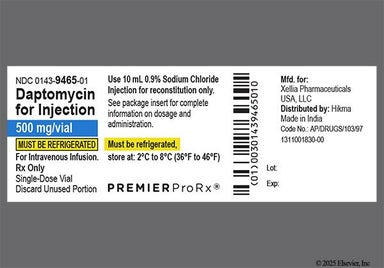
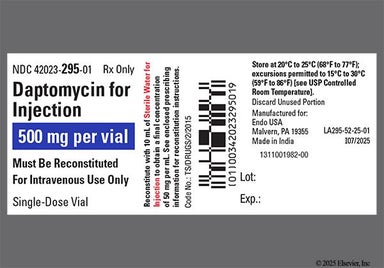
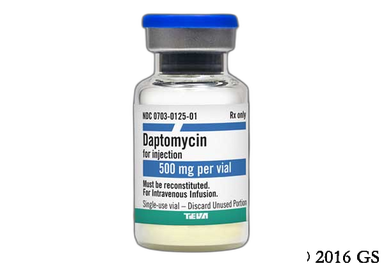
Daptomycin (Cubicin) images