Key takeaways:
Oral birth control pills and the medroxyprogesterone (Depo-Provera) shot are among the least expensive birth control options without insurance.
Intrauterine devices (IUDs) and the Nexplanon (etonogestrel) arm implant are the most effective birth control options. Family planning clinics can help you find ways to obtain them at lower costs.
All birth control methods have pros and cons. It’s important to discuss your options with a healthcare provider so you can make the best decision for you together.
Save on related medications
Birth control is back in the spotlight after Roe v. Wade was overturned at the end of June 2022. With so much uncertainty about whether birth control access will change in the coming months, many women have been reviewing their contraceptive options. Cost is one of the barriers to obtaining birth control for many women.
Under the Affordable Care Act (ACA), most (but not all) health insurers are required to fully cover at least one birth control method or product in each of the FDA-approved categories. That leaves a lot of potential coverage holes, and not everyone has insurance. There are also many people that are underinsured and struggling to afford healthcare costs.
So, let’s review some information on the most affordable birth control options if you don’t have health insurance or birth control isn’t covered by your plan.
Search and compare options
The pill
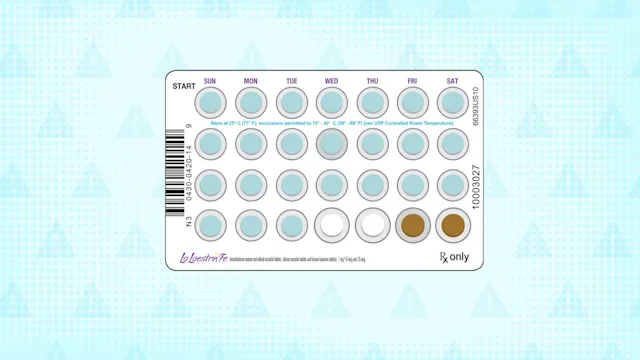
Also called oral contraceptives, the pill is the most popular form of hormonal birth control. One pack contains a 3- or 4-week schedule of pills with varying strengths of estrogen and/or progestin. Although the pill is one of the cheaper birth control options for many women, it still costs over $200 a year on average — even for people who have insurance.
Quick facts about the pill
Effectiveness: 91% with typical use
Price per month: As low as $11 with GoodRx
How to save: Ask for a generic version of the pill (70-80% cheaper than brand-name options), and check GoodRx for discounts. But know that savings opportunities are also available for select brand-name products, such as Nextstellis and Lo Loestrin Fe. For example, anyone with a valid prescription, regardless of insurance status, can use GoodRx to purchase a 28-day supply of Nextstellis at an exclusive cash price of $65. GoodRx can also help you access a 28-day supply of Lo Loestrin Fe at an exclusive cash price of $99.
Popular brands: Ortho Tri-Cyclen, Apri, Junel FE 1/20, Camila
|
Pros of the pill |
Cons of the pill |
|
Accessible: The pill can be accessed through telehealth services and in some states, directly from your pharmacist. Other uses beyond birth control: Some pills are also used to treat acne, irregular periods, and premenstrual dysphoric disorder (PMDD). Many options available: You can try a different pill if one doesn’t work for you. Control over taking it: You can start or stop the pill at any time, and you can also take it continuously to avoid bleeding altogether. |
Adherence: You need to remember to take it every day (sometimes at the same time daily). Avoid if nursing: Estrogen-containing pills aren’t recommended for nursing mothers. Side effects: These can vary greatly between women, so you may need to try a few pills to find one that’s right for you. |
The patch
The birth control patch sticks to your skin and releases estrogen and progestin hormones into your body. It works similarly to the pill, but is a good option if you have trouble swallowing pills or difficulty remembering to take them regularly.
Quick facts about the patch
Effectiveness: 91% with typical use
Price per month: As low as less than $50 with GoodRx
How to save: GoodRx can help you save up to 68% off the average retail price (even if you don’t have insurance). But if it’s still too expensive, it may be worth visiting a family planning health center, like Planned Parenthood, to learn about other payment options. Community health centers also offer services on a sliding fee scale based on your income, family size, and ability to pay.
|
Pros of the patch |
Cons of the patch |
|
Ease of use: Weekly application may be easier to remember than a daily pill. Accessible: The patch can be accessed through telehealth services and in some states, directly from your pharmacist. Control over taking it: You can start or stop applying the patch at any time. |
Limited options: There are only two types of patches to choose from. May fall off: Sometimes, the patch can fall off. This raises the risk of unintended pregnancy. Cost: The patch tends to be more expensive than other forms of birth control without insurance. Avoid if nursing: Both brands of contraceptive patches aren’t recommended for nursing mothers. |
The ring
The contraceptive ring is a small, flexible ring that releases estrogen and progestin into your body. It needs to be inserted into the vagina in order to work. The rings are typically inserted for 3 weeks and then removed for 1 week.
Quick facts about the ring
Effectiveness: 91% with typical use
Price per month: As low as $50 with GoodRx
How to save: GoodRx can help save up to 64% on the average retail price. But if it’s still too expensive, it may be worth visiting a family planning health center to learn about other payment options. And be sure to check GoodRx for discounts. Some medications, such as Annovera (segesterone acetate / ethinyl estradiol), also have exclusive savings offers. For example, anyone with a valid prescription, regardless of insurance status, can use GoodRx to purchase 1 ring (a 1-year supply) of Annovera at an exclusive cash price of $575. And if you have commercial insurance, you may be eligible to pay as little as $0 for Annovera using a savings card from the manufacturer.
Brands: Nuvaring, Annovera
|
Pros of the ring |
Cons of the ring |
|
Frequency of use: Nuvaring and its generic only need to be inserted once every 3 to 4 weeks. Annovera allows you to keep using the same ring for 13 menstrual cycles. Accessible: The ring can be accessed through telehealth services. Control over taking it: You can start or stop using the ring at any time. |
Limited options: There are only two types of ring to choose from. May take some practice: Inserting the ring correctly may take practice, and some people may not be comfortable using it. May fall out: Rarely, the ring can fall out, which means the risk for unintended pregnancy goes up. May make sex uncomfortable: While this shouldn’t be painful, you may be able to feel the ring while having sex. Avoid if nursing: Both brands of contraceptive patches aren’t recommended for nursing mothers. |
The shot
The “Depo” shot is a progestin injection that has to be injected every 3 months. It has to be given by a healthcare professional, so you’ll need to visit your provider or a health clinic to receive it.
Quick facts about the shot
Effectiveness: 94%
Price per month: As low as $11.50 with GoodRx
How to save if you don’t have insurance: Ask for the generic (80% cheaper than brand Depo-Provera) and use a GoodRx coupon to save up to 82% off of the average retail price. To receive the shot, visits to a healthcare provider may be expensive. So, it might be worth going to a family planning or community health center to see if they can do it at a lower cost or even for free. They may also have other payment options for you.
Brands: generic medroxyprogesterone, Depo-Provera
|
Pros of the shot |
Cons of the shot |
|
Price: With costs as low as $12 for 3 months’ supply, it’s a very affordable birth control option without insurance. Ease of use: The shot only needs to be given once every 3 months. Discreet: No one else can see or tell if you receive the shot. Minimal bleeding: Most women have either very light or no bleeding while on the shot. Safe if nursing: The shot doesn’t contain any estrogen. So, it’s fine to use when nursing. |
Cannot inject yourself: You’ll need an appointment with a healthcare provider to receive it. Potential fertility issues: It can take some time for fertility to return to normal after you stop getting the shot. It might not be an ideal option if you’re considering pregnancy in the near future. Weight gain: This is common in the first 6 months after starting the shot. Some women had a 5% weight gain with the shot. Weakened bones: This is more likely with over 2 years of use. Your healthcare provider will likely monitor your bone health while you’re using the shot. |
The IUD
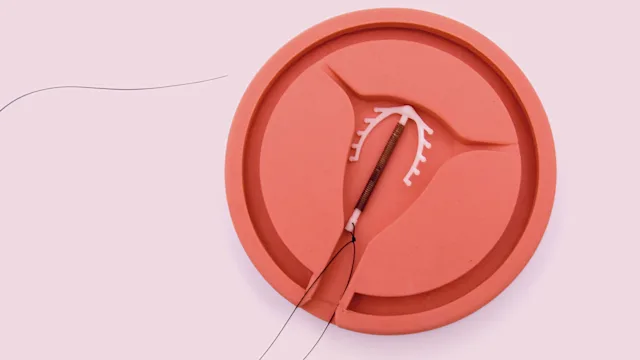
Short for intrauterine device, an IUD is a small T-shaped device that needs to be professionally inserted into the uterus. Plastic IUDs contain progestin that is released slowly over time, while non-hormonal copper IUDs are toxic to sperm.
Quick facts about IUDs
Effectiveness: 99.2% to 99.8%
Price per month: As low as $8.69 (upfront cost of $1,043 and lasts for up to 10 years)
How to save: Family planning clinics may offer IUDs and insertion/removal procedures at a lower cost or even for free. They may also have other payment options for you. The Liletta IUD costs $50 at some public health clinics under the 340B Drug Discount Program.
|
Pros of IUDs |
Cons of IUDs |
|
Long-lasting: Can last from 3 to 10 years after insertion. Effective: Over 99% effective at preventing pregnancy. Less bleeding (hormonal IUDs): Mirena (levonorgestrel) is FDA-approved to help lighten periods for women who have heavy menstrual bleeding. Non-hormonal option: ParaGard (the copper IUD) is great for those who can’t or don’t want to use hormonal birth control. Safe if nursing: None of the IUDs contain any estrogen. So all five are fine to use when nursing. |
Requires a healthcare provider: You'll need an appointment with a healthcare provider to insert and remove your IUD. Discomfort: IUD insertion and removal can be uncomfortable or painful. Irregular or heavy bleeding: Periods may be irregular for the first 3 to 6 months after having an IUD placed. Usually this gets better over time. ParaGard may cause your periods to be heavier or longer for the first 3 to 6 months. Risk of pelvic infection: IUDs come with a risk of causing pelvic infections, especially shortly after they’re placed. If you have a history of pelvic inflammatory disease (PID), an IUD may not be the safest option for you. Risk of IUD movement: Rarely, your IUD may move after it has been placed. In extreme cases, it can become stuck in or move through the wall of your uterus, which requires immediate medical attention. |
The implant
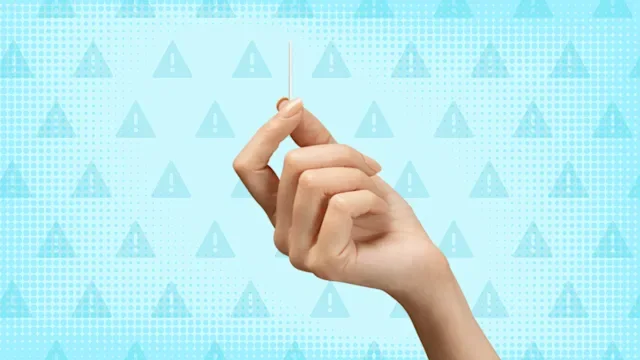
The birth control implant is a short plastic rod that goes under the skin of your upper arm and releases progestin slowly over time.
Quick facts about the implant
Effectiveness: 99.95%
Price per month: As low as $12.50 (upfront cost of $450 and lasts for 3 years)
How to save: Family planning clinics may offer birth control implants and insertion/removal procedures at a lower cost or even for free. They may also have other payment options for you.
Brands: Nexplanon
|
Pros of the implant |
Cons of the implant |
|
Long-lasting: Lasts for up to 3 years after it’s placed. Effective: 99.95% effective Less bleeding: Periods may become lighter or stop altogether after the first few months after placement. Control over fertility: It typically takes about 1 to 2 cycles for pregnancy to occur after removing Nexplanon Safe if nursing: The implant doesn’t contain any estrogen. So, it’s fine to use when nursing. |
Requires a healthcare provider: You’ll need an appointment with an implant-trained healthcare provider to insert and remove it. Cost: While the monthly cost is low, the implant requires a higher upfront cost. There are also costs associated with the visits for insertion and removal, which can increase the overall cost. Side effects: Irregular bleeding can occur for the first 3 months you have the implant. It also commonly causes acne. Implant movement: Rarely, the implant may move out of place. This raises the risk of unintended pregnancy. It may also require surgery to remove the implant safely. |
The bottom line
There are plenty of effective birth control choices available. The pill and the shot may be the most affordable options for birth control without insurance. But there are multiple ways to save and obtain low- or no-cost birth control in all forms. Family planning clinics and community health centers are often great resources to help you navigate and find the right birth control option for you at the right cost.

Why trust our experts?




References
Bedsider. (n.d.). Implant (nexplanon).
Centers for Disease Control and Prevention. (2023). About pelvic inflammatory disease (PID).
Centers for Disease Control and Prevention. (2024). Contraception and birth control methods.
Centers for Disease Control and Prevention. (2024). Progestin-only pills.
Daniels, K., et al. (2018). Current contraceptive status among women aged 15–49: United States, 2015–2017. National Center for Health Statistics Data Brief No. 327.
Drugs and Lactation Database. (2021). Contraceptives, oral, combined.
Drugs and Lactation Database. (2021). Medroxyprogesterone acetate.
Healthcare.gov. (n.d.). Birth control benefits.
McFarland, C. (2016). Liletta IUD may offer cost savings to 340b covered entities. AAFCPAs.
MedlinePlus. (2020). Intrauterine devices (IUD).
Organon USA Inc. (2021). Nexplanon [package insert].
Planned Parenthood. (n.d.). Birth control.
Planned Parenthood. (n.d.). How do I use the birth control ring?.
Planned Parenthood. (n.d.). How does IUD removal work?.
Rowlands, S., et al. (2016). Intrauterine devices and risk of uterine perforation: Current perspectives. Open Access Journal of Contraception.