ciprofloxacin / dexamethasone
Ciprodex is an ear drop suspension that contains ciprofloxacin (a fluoroquinolone antibiotic) and dexamethasone (a corticosteroid). It's used to treat middle and outer ear infections in people ages 6 years and older. The dosage is 4 drops twice a day, typically for 7 days. Side effects aren't common, but include ear discomfort, ear pain, and changes in taste. It's available as both a brand name (Ciprodex) and generic.


What is Ciprodex (ciprofloxacin / dexamethasone)?
What is Ciprodex (ciprofloxacin / dexamethasone) used for?
- Middle ear infections (otitis media) in children ages 6 months and older with surgically-placed ear tubes (tympanostomy tubes)
- Outer ear canal infections (swimmer's ear or otitis externa) in people 6 months and older
How Ciprodex (ciprofloxacin / dexamethasone) works
Ciprodex (ciprofloxacin / dexamethasone) is a combination of two medications.
- Ciprofloxacin is a fluoroquinolone (or "quinolone") antibiotic. It works by blocking certain enzymes (proteins) that bacteria use to grow, repair their genetic material, and survive.
- Dexamethasone is a corticosteroid that helps to lower inflammation. When used directly in the ear, it helps treat itching, swelling, redness, and pain in the ear.
Drug facts
More on Ciprodex (ciprofloxacin / dexamethasone) essentials


Side effects of Ciprodex (ciprofloxacin / dexamethasone)
The following side effects may get better over time as your body gets used to the medication. Let your healthcare provider know immediately if you continue to experience these symptoms or if they worsen over time.
Common Side Effects
- Ear discomfort (3%)
- Ear pain (2%)
- Itchy ear (2%)
Less Common Side Effects
- Ear debris
- Second ear infection
- Medication residue (precipitate) in the ear
- Change in taste
Ciprodex (ciprofloxacin / dexamethasone) serious side effects
Contact your healthcare provider immediately if you experience any of the following.
- Allergic reaction: rash, hives, swelling, difficulty breathing, dizziness, fast heartbeat
The following Ciprodex (ciprofloxacin / dexamethasone) side effects have also been reported
Side effects that you should report to your care team as soon as possible:
- Allergic reactions—skin rash, itching, hives, swelling of the face, lips, tongue, or throat
- New or worsening ear pain, redness, irritation, or discharge
Side effects that usually do not require medical attention (report to your care team if they continue or are bothersome):

Get your GoodRx coupon

Pros and cons of Ciprodex (ciprofloxacin / dexamethasone)
Pros
- Combines two medications into a single ear drop
- Generally only needs to be used for 7 days
- Can be used in children as young as 6 months old
Cons
- Need to use twice a day
- Can be difficult for some people to administer correctly
- Can only treat ear infections caused by bacteria, not infections caused by fungi or viruses

Pharmacist tips for Ciprodex (ciprofloxacin / dexamethasone)

- Ciprodex (ciprofloxacin / dexamethasone) is typically used for 7 days, but your prescriber will decide how long you should take it for. Take the medication exactly as prescribed. Don't change your dose or stop treatment early, even if your ear starts to get better. Stopping the medication too soon can cause your infection to come back and be harder to treat.
- Let your prescriber know if your ear symptoms don't improve after you've used Ciprodex (ciprofloxacin / dexamethasone) for a week. They might consider a different medication to treat your infection.
- Let your healthcare team know if you continue to have fluid draining from your ears 2 or more times within 6 months after you finished Ciprodex (ciprofloxacin / dexamethasone) treatment. This might be a symptom of a more serious condition that needs more medical attention.
- You might feel a little stinging or burning in the ear after you use Ciprodex (ciprofloxacin / dexamethasone), especially when you first start using the medication. This is a normal reaction that happens when the medication gets to the inflamed parts in your ear. The stinging or burning feeling should go away as the ear starts to heal.
- Let your prescriber know if you're pregnant or breastfeeding before starting Ciprodex (ciprofloxacin / dexamethasone). It's not completely known how safe the medication is to use while pregnant. It's also not known if Ciprodex (ciprofloxacin / dexamethasone) can pass into breast milk. Your prescriber can discuss the risks and benefits of using Ciprodex (ciprofloxacin / dexamethasone).
How to use Ciprodex (ciprofloxacin / dexamethasone)
- Wash your hands before and after putting Ciprodex (ciprofloxacin / dexamethasone) in your ears. Don't let the dropper tip touch your ear or any other surface, and don't touch the tip with your hands. This helps prevent the ear drops from getting contaminated with germs.
- Gently clean and dry your ear before you use Ciprodex (ciprofloxacin / dexamethasone). Remove any dirt or wax so that the medication can reach the infected parts of the ear.
- Warm up Ciprodex (ciprofloxacin / dexamethasone) by rolling the bottle between your hands for 1 to 2 minutes. This is because using Ciprodex (ciprofloxacin / dexamethasone) while it's cold might cause dizziness.
- Shake the bottle well before using Ciprodex (ciprofloxacin / dexamethasone). This makes sure the medication hasn't settled at the bottom.
- Lie down on your side and keep the affected ear upward. Then, squeeze 4 drops of Ciprodex (ciprofloxacin / dexamethasone) into the ear. Stay with the affected ear up for at least a minute. Use a clean tissue or cotton ball to wipe away any extra medication that drips out of the ear. If needed, you can repeat the dose in the other ear.
- For a middle ear infection, press down on the tragus (the small flap in the middle of your ear) five times to help get the Ciprodex (ciprofloxacin / dexamethasone) drops into your middle ear.
- For swimmer's ear or an outer ear infection, gently pull the outer ear lobe up and back to get the Ciprodex (ciprofloxacin / dexamethasone) drops into your ear canal.
- Store the Ciprodex (ciprofloxacin / dexamethasone) ear drops at room temperature (up to 77 degrees Fahrenheit).

Common questions about Ciprodex (ciprofloxacin / dexamethasone)
In general, people tend to feel better 1 to 3 days after starting an antibiotic. But typically, you need to use Ciprodex (ciprofloxacin / dexamethasone) for a week to fight off the infection. Talk to your prescriber if your ear infection symptoms (e.g., ear pain, trouble hearing, fever) don't get better after a week because they might need to talk with you about other treatment options.
After your place Ciprodex (ciprofloxacin / dexamethasone) drops in your ear, stay lying down on your side with the affected ear(s) upward for at least 1 minute. This helps the medication reach the inside of your ear. If needed, repeat the dose in the other ear.
Ciprodex (ciprofloxacin / dexamethasone) isn't FDA-approved to remove earwax. Instead, it treats ear infections by killing bacteria in the ear. If you're looking for ways to remove ear wax, there are home remedies and over-the-counter products you can try, such as irrigation solutions and carbamide peroxide. Ask your healthcare team about treatment options that are most appropriate for you.
Hearing loss isn't a typical side effect of Ciprodex (ciprofloxacin / dexamethasone). However, there was a single report of hearing loss from Ciprodex (ciprofloxacin / dexamethasone) during a clinical study. But it's unclear whether the loss of hearing was caused by the medication or by other factors. Stop using Ciprodex (ciprofloxacin / dexamethasone) and contact your prescriber if you notice changes in your hearing after starting the medication.
Yes, Ciprodex (ciprofloxacin / dexamethasone) can expire. There should be an expiration date that's written on the medication box or bottle. Don't use Ciprodex (ciprofloxacin / dexamethasone) past the written expiration date because it might not work well to help treat your ear infection.
It's important to let your healthcare team know if you have a perforated eardrum or ruptured eardrum. Sometimes, if an ear infection is left untreated, the build up of pus from the infection can cause a tear in the eardrum. Typically, medications like Ciprodex (ciprofloxacin / dexamethasone) aren't recommended for a person with a perforated eardrum. This is because animal studies show steroids, like dexamethasone, can slow the healing of the perforation. Your healthcare team will let you know about options to treat a ruptured eardrum.
No, Ciprodex (ciprofloxacin / dexamethasone) shouldn't ever be placed into the eyes; it's only for the ears. If you're diagnosed with pink eye that requires treatment with an antibiotic, your healthcare professional will prescribe an eye drop medication to treat the infection. Using ear drops, like Ciprodex (ciprofloxacin / dexamethasone), in the eyes can cause irritation and pain. If you accidentally put Ciprodex (ciprofloxacin / dexamethasone) in your eyes, rinse your eye(s) with room temperature water for 15 to 20 minutes. If you're still experiencing pain, seek medical help.
No, neither ciprofloxacin nor dexamethasone in Ciprodex (ciprofloxacin / dexamethasone) are sulfa medications. This means Ciprodex (ciprofloxacin / dexamethasone) is safe for people with a sulfa allergy.

How to save using GoodRx




Risks and warnings for Ciprodex (ciprofloxacin / dexamethasone)
Ciprodex (ciprofloxacin / dexamethasone) can cause some serious health issues. This risk may be even higher for certain groups. If this worries you, talk to your doctor or pharmacist about other options.
Severe allergic reactions
Severe allergic reactions to Ciprodex (ciprofloxacin / dexamethasone) are possible, including life-threatening reactions like facial swelling, shock, and anaphylaxis (e.g., closing of the throat). If you notice hives, rash, swelling of the lips or tongue, or difficulty breathing after using Ciprodex (ciprofloxacin / dexamethasone), get medical attention right away.
Development of new infection
Using Ciprodex (ciprofloxacin / dexamethasone) can allow bacteria and fungi that the medication can't get rid of to overgrow in the ear. If your ear infection isn't improving after one week of using Ciprodex (ciprofloxacin / dexamethasone), contact your prescriber to follow up. You might need additional testing and treatment.
Use only in the ear
Ciprodex (ciprofloxacin / dexamethasone) should only be used in your ears. Don't give this medication any other way. If you feel this medication isn't the best choice for you or if it's tricky for you to use properly, ask your pharmacist or prescriber about other options.

Ciprodex (ciprofloxacin / dexamethasone) dosage
 Ear dropper
| Dosage | Quantity | Price as low as | Price per unit |
|---|---|---|---|
| 7.5ml of 0.3%/0.1% | 1 ear dropper | $64.97 | $64.97 |
Typical dosage for Ciprodex (ciprofloxacin / dexamethasone)
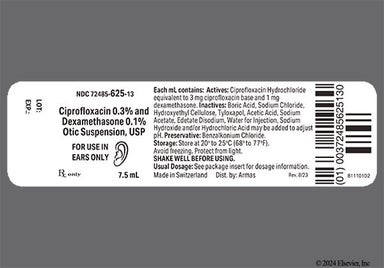
Ciprodex contains 0.3% of ciprofloxacin and 0.1% of dexamethasone.
Age 6 months and older: The typical dose is to place 4 drops into the affected ear(s) two times a day for 7 days.

How much does Ciprodex (ciprofloxacin / dexamethasone) cost?

Ciprodex (ciprofloxacin / dexamethasone) contraindications
Contraindications are specific health conditions or situations in which a person should not take a medication due to safety concerns. If you have any of the following conditions or if any of the following apply to you, let your healthcare provider know because Ciprodex (ciprofloxacin / dexamethasone) will not be safe for you to take.
- Allergy to quinolones antibiotics or any other ingredients in this medication
- Ear infections caused by a virus, such as herpes simplex infections, or fungus

What are alternatives to Ciprodex (ciprofloxacin / dexamethasone)?

News about Ciprodex (ciprofloxacin / dexamethasone)




Ciprodex (ciprofloxacin / dexamethasone) images