Akeega
Akeega is a combination medication that contains niraparib (a PARP inhibitor) and abiraterone (an androgen biosynthesis inhibitor). It’s used to treat BRCA-positive metastatic castration-resistant prostate cancer. Akeega (niraparib / abiraterone) is taken by mouth once a day on an empty stomach, along with a prednisone (a corticosteroid). Your oncology team might also prescribe a hormone therapy, such as leuprolide (Lupron), as supportive treatment. Some common side effects of this medication include muscle and bone pain, feeling tired, and high blood pressure.


What is Akeega (niraparib / abiraterone)?
What is Akeega (niraparib / abiraterone) used for?
- Metastatic, castration-resistant prostate cancer with BRCA mutations (taken along with prednisone)
How Akeega (niraparib / abiraterone) works
Akeega (niraparib / abiraterone) is a combination of two medications that work to treat prostate cancer:
-
Niraparib is a PARP inhibitor. A protein called PARP helps cells, including cancer cells, grow and survive by fixing damaged genetic material. Niraparib stops prostate cancer cells from being able to fix themselves by blocking PARP. Over time, this leads to the death of cancer cells.
-
Abiraterone is an androgen synthesis inhibitor. It works by lowering the amount of testosterone your body makes. Testosterone helps most prostate cancers to grow. When abiraterone blocks testosterone from being made, the prostate cancer won’t be able to grow as easily.
Drug facts
| Common Brands | Akeega |
|---|---|
| Drug Class | PARP inhibitor / Androgen synthesis inhibitor |
| Controlled Substance Classification | Not a controlled medication |
| Generic Status | No lower-cost generic available |
| Availability | Prescription only |

Side effects of Akeega (niraparib / abiraterone)
The following side effects may get better over time as your body gets used to the medication. Let your healthcare provider know immediately if you continue to experience these symptoms or if they worsen over time.
Common Side Effects
- Low blood cell counts (up to 67%)
- Muscle, bone, or joint pain (44%)
- Feeling very tired (43%)
- Constipation (34%)
- Signs of stress to the kidney or liver on blood tests (up to 34%)
- High blood pressure (33%)
- Nausea (33%)
Less Common Side Effects
- Swelling
- Shortness of breath
- Not feeling hungry
- Vomiting
Akeega (niraparib / abiraterone) serious side effects
Contact your healthcare provider immediately if you experience any of the following.
- Serious bleeding: bruising that won't go away, bleeding that's difficult to stop, blood in the urine, dark or tarry stool
- Serious infections: fever, chills, tiredness
- Severe anemia: Tiredness, headaches, pale skin, trouble breathing, trouble concentrating, feeling irritable
- Heart problems: chest pain, shortness of breath, dizziness, fluttering or pounding heart beat
- Liver problems: pain in the right side of the stomach, yellowing of the eyes or skin, dark or brown urine
- Posterior reversible encephalopathy syndrome (PRES): headache, feeling sluggish or confused, vision loss, seizure
The following Akeega (niraparib / abiraterone) side effects have also been reported
Side effects that you should report to your care team as soon as possible:
- Allergic reactions—skin rash, itching, hives, swelling of the face, lips, tongue, or throat
- Heart rhythm changes—fast or irregular heartbeat, dizziness, feeling faint or lightheaded, chest pain, trouble breathing
- Increase in blood pressure
- Infection—fever, chills, cough, or sore throat
- Liver injury—right upper belly pain, loss of appetite, nausea, light-colored stool, dark yellow or brown urine, yellowing skin or eyes, unusual weakness or fatigue
- Low adrenal gland function—nausea, vomiting, loss of appetite, unusual weakness or fatigue, dizziness
- Low potassium level—muscle pain or cramps, unusual weakness or fatigue, fast or irregular heartbeat, constipation
- Low red blood cell level—unusual weakness or fatigue, dizziness, headache, trouble breathing
- Sudden and severe headache, confusion, change in vision, seizures, which may be signs of posterior reversible encephalopathy syndrome (PRES)
- Swelling of the ankles, hands, or feet
- Unusual bruising or bleeding
Side effects that usually do not require medical attention (report these to your care team if they continue or are bothersome):

Pros and cons of Akeega (niraparib / abiraterone)
Pros
- Available as a pill taken by mouth once a day
- Recommended option for certain prostate cancers
- Works in a more targeted way than traditional chemotherapy
Cons
- Often causes fatigue and muscle, bone, or joint pain
- Can interact with other medications
- Needs to be taken on an empty stomach (2 hours before, or 1 hour after a meal)

Pharmacist tips for Akeega (niraparib / abiraterone)

- Take Akeega (niraparib / abiraterone) on an empty stomach, at least 2 hours before or 1 hour after a meal. Taking the medication with food can cause your body to absorb too much medication, which raises the risk for side effects. You can take the tablets with water, swallowing them whole.
- If you miss an Akeega (niraparib / abiraterone) dose and you remember on the same day, take the medication as soon as you remember. If it’s already close to the time of your next dose, skip the missed dose and take your next dose at the regular time. Don’t “double up” on the medication to make up for a missed dose.
- Your oncology team will order blood draws regularly when you take Akeega (niraparib / abiraterone) to monitor for side effects, such as low potassium levels and low blood cell counts. You'll need to get blood draws weekly in the beginning of treatment and eventually less frequently after that.
- Your oncology team will prescribe you a steroid, such as prednisone, for you to take while you’re taking Akeega (niraparib / abiraterone). The steroid helps lower your risk of certain side effects, such as high blood pressure and low potassium levels. It’s important to take this medication daily as directed.
- Your oncology team will ask you to continue androgen deprivation therapy (ADT) medications, like leuprolide (Lupron) while you’re using Akeega (niraparib / abiraterone). It’s important to continue this treatment along with Akeega (niraparib / abiraterone) to keep your prostate cancer under control.
- Other medications, supplements, and herbals can interact with Akeega (niraparib / abiraterone). For example, taking the antiseizure medication carbamazepine (Tegretol) can lower Akeega (niraparib / abiraterone) levels in the body and cause it to not work as well, so this combination should be avoided. Ask your healthcare team to help you check for interactions before you start Akeega (niraparib / abiraterone).
- Based on how the medication works, Akeega (niraparib / abiraterone) is likely to harm unborn babies. Use effective birth control (e.g. condoms) to prevent pregnancy while taking Akeega (niraparib / abiraterone) and for 4 months after your last dose.
- Since Akeega (niraparib / abiraterone) can pose a risk to unborn babies, females who could become pregnant should wear gloves when handling Akeega (niraparib / abiraterone) tablets.

Risks and warnings for Akeega (niraparib / abiraterone)
Akeega (niraparib / abiraterone) can cause some serious health issues. This risk may be even higher for certain groups. If this worries you, talk to your doctor or pharmacist about other options.
Risk of bone marrow problem or new cancer
- Risk factors: Previous treatment with platinum-based chemotherapy or other DNA-damaging treatments
Although rare, some people who received niraparib (one of the medications in Akeega) have developed a bone marrow problem called myelodysplastic syndrome (MDS) or a blood cancer called acute myeloid leukemia. But all of them have previously received other treatments that can raise risk for cancers, like radiation or platinum-containing chemotherapy. Talk to your oncology team if you’re concerned about the risk for other cancers with Akeega (niraparib / abiraterone).
Lower blood cell counts
Akeega (niraparib / abiraterone) can lower the amount of blood cells in your body. In clinical studies, the most common was lower red blood cell counts (anemia). In serious cases, people needed blood transfusions. Fewer people reported lower white blood cell counts and lower platelet counts. These conditions can raise your risk of infections that are difficult to treat or serious bleeds.
Your oncology team will monitor your blood cell counts weekly during the first month after you start Akeega (niraparib / abiraterone), then every other week for 2 months, and monthly after that. If your blood cell count drops too low, they will pause your treatment and might need to give you blood transfusions. Usually, your blood cell counts should recover once you pause Akeega (niraparib / abiraterone). But if they don’t after a month, your healthcare team will talk with you about other options for treating prostate cancer.
Talk to your healthcare team right away if you suddenly have unusual bleeding or bruising, muscle weakness, extreme tiredness, or a fever. These might be symptoms of low blood cell counts.
Heart problems
Akeega (niraparib / abiraterone) can cause low potassium levels and fluid buildup, which can lead to changes in heart rhythm and high blood pressure. These problems can be serious, especially in people that have other heart problems, like heart failure or a recent heart attack.
Your oncology team will monitor your blood pressure and potassium levels through lab work at least weekly during the first two months of treatment, then monthly after that. If needed, they’ll prescribe medications to help your blood pressure or potassium levels stay within a safe range. But if you develop dangerously high blood pressure or serious heart problems, they might ask you to stop taking Akeega (niraparib / abiraterone).
Let your oncology team know if you experience dizziness, fast heartbeat, lightheadedness, confusion, or pain or swelling in your legs or arms. These could be symptoms of side effects related to Akeega (niraparib / abiraterone).
Liver problems
Though rare, Akeega (niraparib / abiraterone) can cause liver problems. People who develop liver problems typically don’t experience any symptoms. So your oncology team will order blood work to check on your liver health. You’ll need to get bloodwork done before starting Akeega (niraparib / abiraterone), every 2 weeks in the beginning, then less frequently after that. If you develop serious liver problems, your oncologist will ask you to stop taking Akeega (niraparib / abiraterone). Let your oncology team know right away if you experience symptoms of liver damage, such as tiredness, loss of appetite, nausea or vomiting, dark urine, right-side stomach pain, or yellowing of the eyes or skin.
Hormone problems
- Risk factors: Stopping corticosteroid too suddenly | Stress | Illnesses
There have been reports of people developing adrenal insufficiency (low levels of stress hormone) when they took abiraterone (one of the medications in Akeega) with prednisone. This typically happened when they missed doses of prednisone, or were sick or stressed at the same time.
When you’re taking Akeega (niraparib / abiraterone), it’s important to take prednisone daily as directed. If you suddenly stop taking prednisone or when you experience too much stress, your body won't be able to make enough of its own stress hormones to meet your needs. Let your oncology team know right away if you experience symptoms of low stress hormones, such as weight loss, tiredness, confusion or stomach pain.
Low blood sugar levels
- Risk factors: Taking certain blood sugar medications
People who took abiraterone (one of the medications in Akeega) along with certain diabetes medications, like pioglitazone (Actos) and repaglinide, have reported dangerous low blood sugar levels. If you’re currently taking medications that lower blood sugar levels, your oncologist might ask you to check your blood sugar levels more often while you’re taking Akeega (niraparib / abiraterone). If needed, your healthcare team might need to adjust the dose of your diabetes medications to prevent your blood sugar levels from dropping too low. Make sure to keep fast-acting sugars with you at all times so you can take it in case of an emergency. Take fast-acting sugars and call for medical help right away if you experience any symptoms of low blood sugar, like sweating, shaking, fast heartbeat, confusion, or dizziness.
Posterior reversible encephalopathy syndrome (PRES)
Posterior reversible encephalopathy syndrome (PRES) is a very rare but potentially life-threatening side effect of niraparib, one of the medications in Akeega. This side effect typically affects your nervous system. Let your oncology team know if you have any symptoms of PRES, like headache, feeling sluggish or confused, or vision loss.
If you develop symptoms, your oncology team will confirm whether you have PRES by ordering a brain scan called a magnetic resonance imaging (MRI). You’ll need to stop Akeega (niraparib / abiraterone) if it’s confirmed that you have PRES.
Harm to unborn babies
Based on animal studies, Akeega (niraparib / abiraterone) can cause harm during pregnancy. If your partner is able to become pregnant, you should use birth control measures, such as condoms, while taking Akeega (niraparib / abiraterone), and for 4 months after your last dose. To lower their risk of exposure to the medication, your partner should also not touch the tablets or should wear gloves while handling the medication. Let your oncology team know right away if your partner becomes pregnant during this time.

Akeega (niraparib / abiraterone) dosage
Typical dosage for Akeega (niraparib / abiraterone)
The typical dose of Akeega is 200 mg/1000 mg (niraparib / abiraterone) by mouth once a day on an empty stomach.
Your oncology team will also prescribe prednisone 10 mg once a day for you to take along with Akeega. And if you’ve been taking an androgen deprivation therapy (ADT) before starting Akeega, you’ll need to continue that medication during treatment.

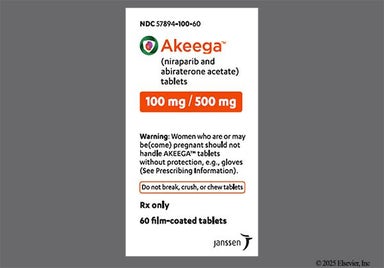
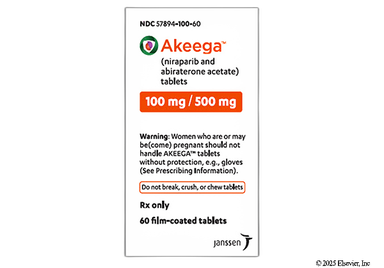
Akeega (niraparib / abiraterone) images