Key takeaways:
Yoga is an adaptable practice with many beginner-friendly styles.
You can start by learning foundational poses before you progress to advanced postures.
There are so many physical and mental benefits of yoga. Some you may experience right away, while others may come with regular practice.
By now, you may have heard about the benefits of yoga. The practice offers increased flexibility, better sleep, and stress relief, to name a few. But when it comes to getting started, yoga can be intimidating. You might wonder if you're flexible enough or in good enough shape.
Don't worry; you are. Contrary to stereotypes, yoga isn't about twisting yourself into a pretzel. It doesn't require prior knowledge or a certain level of athleticism. No matter your age or physical ability, you can get started with the basics and reap yoga's many benefits.
What is yoga?
Yoga is a physical, mental, and spiritual practice with roots in ancient India. The discipline aims to create harmony between the mind and body. Today, people in the Western world practice yoga for many reasons, namely physical and mental health. It promotes wellness through a mix of physical poses (asanas), breathing exercises, and meditation.
Search and compare options
What are the biggest benefits of yoga for beginners?
Yoga provides a well-rounded workout with numerous benefits for your body and mind. The practice may activate your muscles while calming your nervous system. Here are some advantages you may notice after starting a yoga practice.
More strength: Yoga is a form of bodyweight strength training that may increase your muscle power over time. One study found that participants in a hatha yoga program had better strength after 12 weeks.
Improved cardiovascular fitness: Participants in the same study also saw significant improvements in VO2 max or maximal oxygen consumption.
Increased flexibility: Yoga is one of many proven ways to improve your flexibility. A 2016 study examined the impact of weekly 1-hour yoga sessions in a group of sedentary adults. After practicing 3 days a week for 8 weeks, participants had increased flexibility and better mobility.
Better balance: Yoga is also a form of functional fitness, meaning it prepares your body to make movements necessary for everyday tasks. Good balance is crucial for avoiding falls and enhancing sports performance. Participants in the 2016 study exhibited marked improvement in balance.
Less stress, anxiety, and depression: Yoga may relieve stress and reduce symptoms of anxiety and depression, especially when combined with more traditional forms of mental health care.
That's just a sampling of yoga's many benefits. The NIH also reports that yoga can help relieve lower back pain, aid in weight loss, and help you quit smoking. But keep in mind that many people who practice yoga do so regularly. According to a Yoga Alliance survey, 59% of practitioners in the U.S. do yoga at least once per week.
Which types of yoga are best for beginners?
There are many different styles of yoga. And some are more physically demanding than others. But most types of yoga can be accessible to beginners. When you're first starting, you might find that the following styles are particularly beginner friendly.
Hatha
Hatha yoga is often used as an umbrella term for various types of yoga. But it is also a distinct style. The gentle practice is typically performed at a slow pace. You hold poses to build strength and flexibility. And it can be a helpful introduction to yoga.
Kripalu
Like hatha yoga, this calming practice involves slow postures, breathing techniques, and meditation. It's often more meditative, which might make it suitable for new yogis who are less physically conditioned.

Read more like this
Explore these related articles, suggested for readers like you.
Iyengar
This style focuses on physical alignment. It's helpful for beginners because it teaches proper form and technique, providing a solid yoga foundation. It often includes props –– such as blocks, bolsters, and straps –– to help you get into poses you might not otherwise be able to. Iyengar yoga can be modified for specific groups, including older adults, and may improve gait and flexibility.
Yin
Yin is a passive style of yoga that involves holding poses for longer periods, often 3 to 5 minutes. The postures are designed to stretch your muscles and connective tissues. With yin yoga, you do all poses on the floor (no standing poses).
Chair yoga
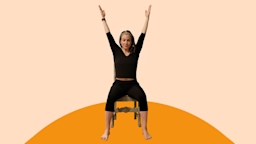
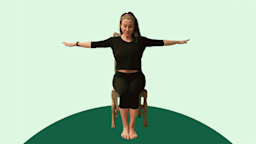
Chair yoga is exactly what it sounds like: a form of yoga that you can do while seated. It's an excellent style for beginners, older adults, and people with limited mobility. There are limited in-person chair yoga classes, but you can find some online. You can even practice chair yoga while working at your desk.
You can also try popular, more vigorous forms of yoga –– such as Vinyasa or Ashtanga –– as a beginner. But it might be challenging to start with faster-paced practices.
What are the best yoga poses for beginners?
Yoga poses fall into several categories, such as standing, balancing, and seated postures. But not even the most advanced yogis learn or practice all the poses. As a beginner, your goal should be to learn a handful of the most basic postures, including:
1. Downward dog (Adho Mukha Svanasana)
Start on your hands and knees, with your hands directly under your shoulders and your knees under your hips.
Tuck your toes under, and slowly lift your knees off the ground.
Walk your feet back a few small steps, and lift your hips toward the ceiling. (Your body will make an upside-down V shape in this position.)
Keep your back straight and your hands shoulder-width apart.
Keep your toes pointed straight ahead, and reach your heels down toward the mat (but don't worry if they don't touch).
Bend your knees slowly to release the pose, and return to the starting position on your hands and knees.
2. Upward dog (Urdhva Mukha Svanasana)
Lie facedown on your belly, with your legs extended and the tops of your feet touching the floor.
Place your palms flat next to your chest with your elbows pointing back.
Inhale as you straighten your arms to push your chest up.
Straighten your arms as much as you can without crunching your lower back.
Keep your shoulders down. Your head may lift slightly toward the ceiling, but your neck should align with your spine.
To achieve the full pose, press into the tops of your feet, and lift your legs off the floor.
Lower yourself slowly to release the pose.
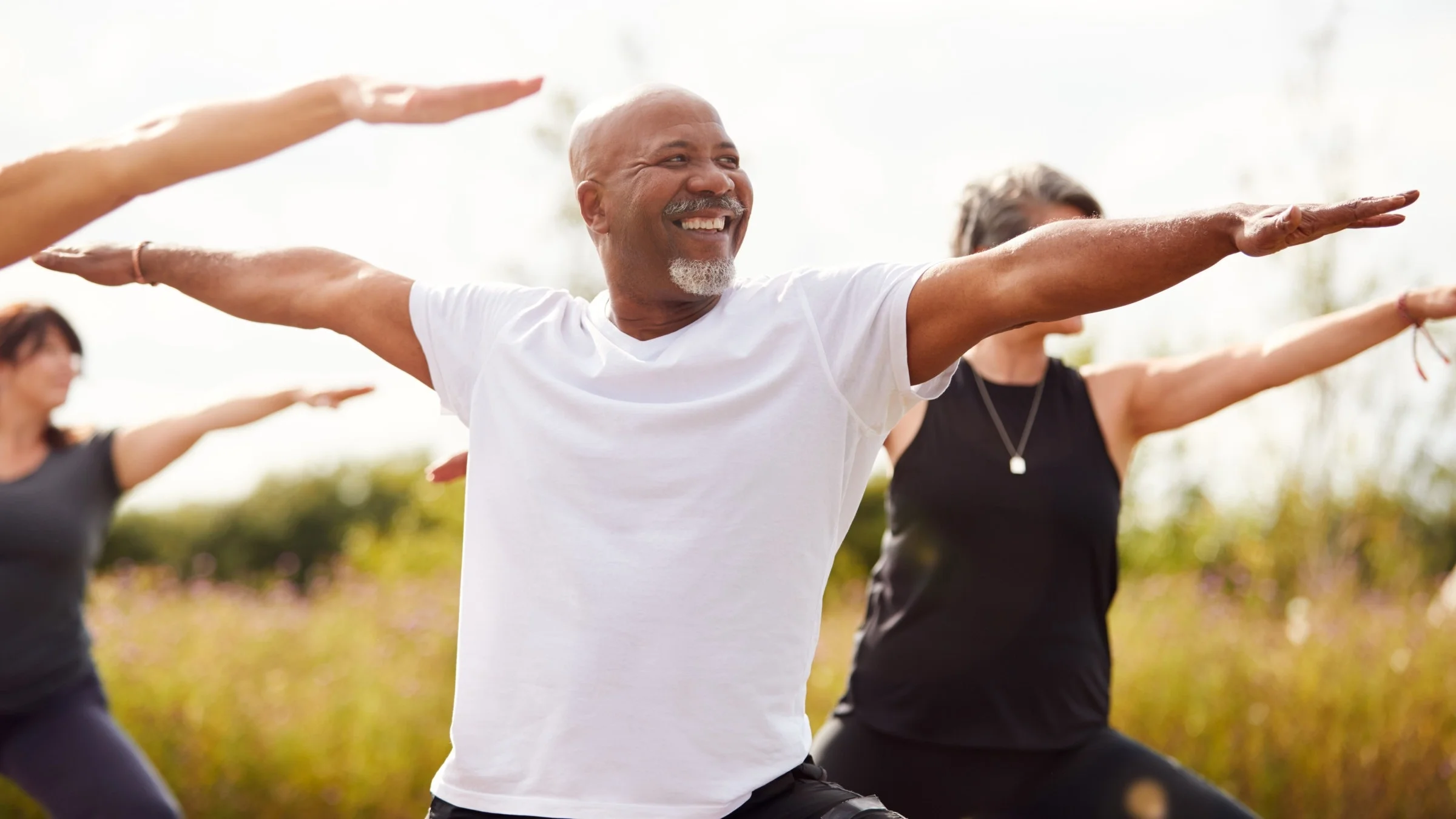
3. Warrior I (Virabhadrasana I)
Stand at the top of your yoga mat with your feet hip-width apart and your arms at your sides.
Step your left foot back about 3 feet, so you are in a lunge position.
Turn your left foot out 45 degrees, and place the sole of your foot on the floor.
Keep your back leg straight and your front knee bent at 90 degrees. The goal is to achieve this bend while keeping your hips facing forward.
Inhale as you lift your arms with your palms facing each other.
Hold the position before repeating the pose on the other side.
4. Tree pose (Vrksasana)
Stand up straight with your feet together and your arms at your sides.
Shift your weight onto your right leg.
Lift your left foot off the floor, balancing on your right leg.
Bend your left knee, and place your left foot flat against your inner right thigh (or inner calf if you can't lift your left foot that high). Do not place the foot on your knee.
Inhale as you lift your arms with your palms facing each other.
Hold the position before repeating the pose on the other side.
5. Cat-Cow (Marjaryasana)
Start on all fours with your shoulders aligned over your hands and your hips aligned over your feet.
Bring your spine to a neutral position, and keep your neck straight.
Inhale as you drop your belly down toward the floor, lifting your hips and head up.
Exhale as you reverse the position, arching your back toward the ceiling and tucking your tailbone and head.
Continue alternating between the two on each breath.
These poses –– and many others –– can help you build the strength and flexibility to progress to more challenging postures. But you should never force yourself into postures.
What else should you know before your first yoga class?
As with any new exercise, you should consult your healthcare provider before starting yoga. Then, you can look for in-person or online yoga classes with a qualified instructor.
The duration may vary, but a typical yoga class lasts about an hour. There may be a brief opening meditation or breathing practice, depending on the style. Then, you will move into the physical postures. This often includes some foundational yoga poses and variations on those poses. Most practices close with a posture called svanasana, or final resting pose. Some classes may also close with a mantra or meditation.
Here are a few tips for your first class:
Look for level 1, beginner, "slow flow," or "all-level" classes.
Wear comfortable, breathable clothes.
Start class prepared with a yoga mat, a water bottle, and a towel.
Arrive early to an in-person class. You can find a spot and possibly chat with the instructor. Let them know you're a beginner, and mention any injuries that might require pose modifications.
Do your best to follow along in class, but don't push yourself into any postures. That could result in injury and time off from your new yoga practice.
Keep an open mind, and remember that it's okay to be a beginner.
The bottom line
Yoga may not be as hard as you think. The versatile practice may provide health benefits for people of different ages and abilities. And with so many beginner-friendly styles, you have plenty of options. Remember to start slowly with key poses to help you build your practice over time.

Why trust our experts?




References
American Council on Exercise. (n.d.). Cat-cow.
American Council on Exercise. (n.d.). Downward-facing dog.
American Council on Exercise. (n.d.). Upward facing dog.
American Council on Exercise. (n.d.). Warrior I.
Amin, D. J., et al. (2014). The effects of selected asanas in Iyengar yoga on flexibility: Pilot study. Journal of Bodywork and Movement Therapies.
Basavaraddi, I. V. (2015). Yoga: Its origin, history and development. Ministry of External Affairs, Government of India.
DiBenedetto, M., et al. (2005). Effect of a gentle Iyengar yoga program on gait in the elderly: An exploratory study. Archives of Physical Medicine and Rehabilitation.
Forseth, B., et al. (2020). Range of yoga intensities from savasana to sweating: A systematic review. Journal of Physical Activity and Health.
Gothe, N. P., et al. (2015). Yoga is as good as stretching–strengthening exercises in improving functional fitness outcomes: Results from a randomized controlled trial. The Journals of Gerontology: Series A.
Grabara, M., et al. (2015). Effects of hatha yoga exercises on spine flexibility in women over 50 years old. Journal of Physical Therapy Science.
Hebshi, S. (2017). Building core strength with yoga. American Council on Exercise.
Lau, C., et al. (2015). Effects of a 12-week hatha yoga intervention on cardiorespiratory endurance, muscular strength and endurance, and flexibility in Hong Kong Chinese adults: A controlled clinical trial. Evidence-based Complementary and Alternative Medicine.
McCall, M. C. (2013). How might yoga work? An overview of potential underlying mechanisms. Journal of Yoga & Physical Therapy.
National Center for Complementary and Integrative Health. (n.d.). Wellness-related use of common complementary health approaches among adults: United States, 2012.
National Center for Complementary and Integrative Health. (2021). Yoga: What you need to know.
NC State University. (n.d.). Postures (Asana).
Park, J., et al. (2012). Chair yoga: Benefits for community-dwelling older adults with osteoarthritis. Journal of Gerontological Nursing.
Sengupta, P. (2012). Health impacts of yoga and pranayama: A state-of-the-art review. International Journal of Preventive Medicine.
Simon, N. M., et al. (2020). Efficacy of yoga vs cognitive behavioral therapy vs stress education for the treatment of generalized anxiety disorder: A randomized clinical trial. JAMA Psychiatry.
UC Davis Health. (n.d.). VO2 rate of oxygen consumption.
University of Arkansas System Division of Agriculture. (n.d.). How to get started with chair yoga.
Yoga Alliance. (2016). Yoga in America Study.
Youkhana, S., et al. (2016). Yoga-based exercise improves balance and mobility in people aged 60 and over: A systematic review and meta-analysis. Age and Ageing.