Key takeaways:
The psoas muscle is an important trunk muscle. It’s a hip flexor and also provides trunk stability and balance.
Prolonged sitting causes the psoas muscle to become too tight. The tension can increase stress on your lower back and result in muscle imbalances. Inactivity can also weaken the psoas muscle, making it difficult to walk and lift your feet from the floor.
Stretching exercises for the psoas involve lengthening the front of the hip, and strengthening exercises involve lifting the leg in front of the body.
Your psoas muscle is one of your hip flexors that lifts your thigh. When this muscle is too tight or weak, it can result in muscle imbalances that cause pain or hinder your ability to walk. Find out more about the role of the psoas muscle — plus, learn exercises to stretch and strengthen it.
Where is the psoas muscle located, and how does it work?
The psoas muscle belongs to the iliopsoas muscle group. This group of muscles is deep within the trunk, starting at the lower back and ending at the top of the thigh bone (femur).
The psoas muscle is a hip flexor, which means it lifts the thigh, bending at the hip. Hip flexion is needed for everyday movements, like walking and climbing stairs. The iliopsoas also helps with lateral (side to side) bending of the trunk, as well as stabilization of the pelvis.
Search and compare options
Many people spend much of the day sitting. This tightens the hip flexors, including the psoas muscle. When the psoas muscle is too tight, it tilts the pelvis forward and increases stress on the lower back.
Stretching and strengthening exercises that target the psoas can correct muscle imbalances, improve hip and lower back alignment, and decrease pain.
What are the best psoas muscle stretches?
The psoas muscle flexes (bends) the hip. So, the opposite motion — extending (straightening) the hip — stretches the psoas. Stretching may help release the psoas muscle and reduce hip and lower back pain. You’ll feel the impact of psoas stretches in the front of your hips.
1. Kneeling lunge stretch
A kneeling lunge is one of the best stretches for the psoas. It’s a great way to stretch the psoas muscles on your right and left sides individually, since one side of your body can be tighter.
Step 1: Begin in a half-kneeling position. The foot of your front leg should be flat on the floor. Make sure the knee and ankle of your front leg stay in line with each other, forming a 90-degree angle. The knee and shin of your back leg should be touching the floor. If this causes knee discomfort, bring the knee off the floor into a standing lunge.
Step 2: Shift your weight forward by pushing your hips forward. Squeeze the glute of your back leg to stretch the front of your hip further, if desired.
Step 3: Hold for 30 seconds, then relax.
Step 4: Repeat on the other side.
Step 5: Repeat 3 times on each leg, alternating between the right and left sides.
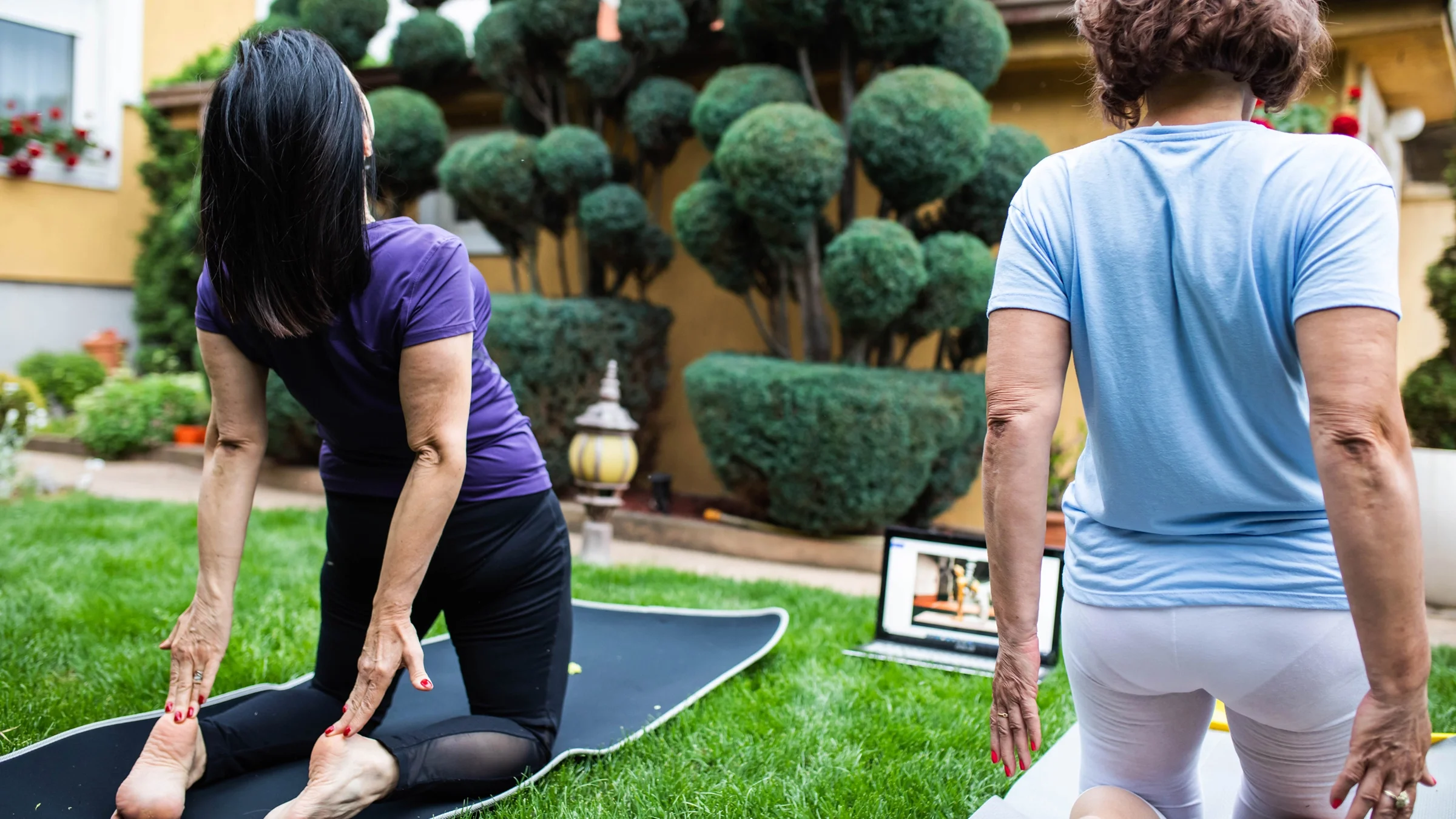
2. Camel pose
Camel pose is a yoga posture that stretches the front of the body. This move stretches the psoas muscle on both sides of your body at the same time. Note that it puts the spine into a lot of extension, so if you have a spinal condition, consider asking a professional first.
Step 1: Start in a kneeling position with your knees hip distance apart. Your hips should be over your knees, with your shoulders back.
Step 2: Place your hands on your hips. Push your hips forward as you arch your back. This might be enough for you, but if you want a deeper stretch, continue to step 3.
Step 3: Reach your hands back to grab your heels or ankles. Keep squeezing your glutes and thighs to push your hips forward.
Step 4: Hold for 30 seconds, then relax.
Step 5: Repeat 3 times.
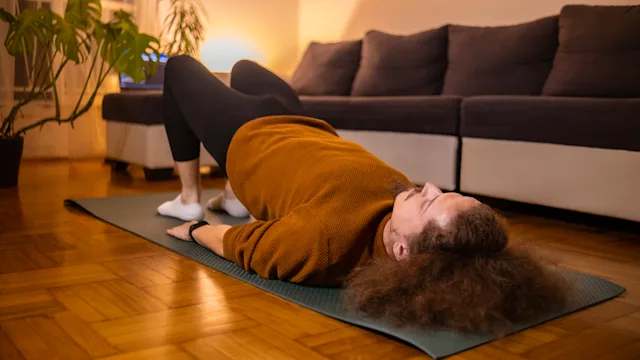
3. Glute bridge
A glute bridge moves your hips into extension, stretching the iliopsoas muscles at the front of your hips. It can help with muscle tension, lower back pain, and hip bursitis. This exercise also activates the glutes. Proper balance between the glutes and hip flexors stabilizes your hips and spine.
Step 1: Lie on your back with your knees bent and your feet flat on the floor.
Step 2: Engage your core by gently pressing your lower back toward the floor.
Step 3: Keep your back straight and lift your hips as high as you can.
Step 4: Squeeze your glutes at the top of the bridge for a deeper stretch in the front of your hips.
Step 5: Hold the bridge for 5 to 10 seconds.
Step 6: Lower your hips slowly and return to the starting position.
Step 7: Complete 15 to 20 repetitions.
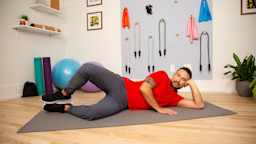
4. Side-lying psoas stretch
This side-lying stretch may help release psoas muscle tension by pulling your hip into extension. Bending your knee also helps stretch the quadriceps muscles at the front of your thighs.
Step 1: Lie on one side with your legs straight and stacked on top of each other. You can use your bottom arm to support your head.
Step 2: Bend the knee of your top leg, bringing your heel toward your buttocks.
Step 3: Grab your ankle to pull your foot closer to your buttocks.
Step 4: While holding your foot close to your buttocks, squeeze your glute to push your hip forward. Then, pull your leg back further behind your body.
Step 5: Hold for 30 seconds, then relax.
Step 6: Repeat 3 times on each side.

Read more like this
Explore these related articles, suggested for readers like you.

5. Prone quadriceps stretch
This prone quadriceps stretch also lengthens the psoas and quad muscles. It can help with muscle tension and limited hip flexibility.
Step 1: Lie on your stomach with your legs extended, elbows bent at shoulder level, and forearms flat on the floor.
Step 2: Bend your right knee to bring your right foot toward your buttocks.
Step 3: Use your right hand to grasp the top of your right foot or ankle, bringing it as close to your buttock as you can.
Step 4: Hold for 15 to 30 seconds, feeling the stretch in your hip and along the front of your right thigh. Then, switch to the left side.
Step 5: Repeat 2 to 3 times on each side.
6. Cobra pose
Cobra pose stretches the chest and abdominals, in addition to the hip flexors. Like camel pose, it may not be appropriate for people with spinal conditions.
Step 1: Lie on your stomach with your legs straight, elbows bent, and hands on the floor under your shoulders. The tops of your feet should be touching the floor.
Step 2: Pushing against the floor with your hands, straighten your elbows slightly. Gently arch your back and lift your chest away from the floor. Keep your hips on the ground.
Step 3: Hold for 15 to 30 seconds, feeling the stretch in the front of your hips. Stop if you have any back pain.
Step 4: Repeat 2 to 3 times, as desired.
7. Supine hip flexor stretch
Supine means you’ll do this hip flexor stretch while lying down on your back. It’s best performed on a firm bed or table, because gravity will pull one hip at a time into extension.
Step 1: Lie on your back close to the right side of the bed or table. Both legs should be straight.
Step 2: Bend your left leg and put your left foot on the table.
Step 3: Scoot yourself to the right edge so your right buttock is almost off the table. Drop your right leg down toward the floor, keeping your back flat on the table. You might feel enough stretch in your right hip flexor with this. If not, proceed to step 4 for a deeper stretch.
Step 4: Bend your right knee, pulling your right foot back. You can also pull your left knee toward your chest.
Step 5: Hold your position for 5 to 10 seconds, and then release.
Step 6: Complete 2 to 3 times on each side.
What are the best psoas muscle strengthening exercises?
Exercises that involve lifting your legs in front of you help strengthen the psoas and other hip flexor muscles.
1. Single knee-to-chest stretch
The knee-to-chest stretch can increase lower back and hip flexibility while strengthening the psoas.
Step 1: Lie on your back with your legs straight and heels touching the floor.
Step 2: Bring your knee toward your chest. You can hold the back of your thigh to move your knee as close to your chest as possible.
Step 3: Pause to hold the stretch. Then, relax your leg and return to the starting position.
Step 4: Repeat on your other leg.
Step 5: Repeat 20 times, alternating between your right and left sides.
2. Straight leg raises
Lifting your leg when it’s straight is more challenging than when it’s bent. Your hip flexors endure more pressure from lifting the weight of your leg, which requires more strength. Straight leg raises can help you build quadriceps and psoas muscle strength.
Step 1: Lie on your back with your legs straight.
Step 2: Bend one knee, placing your foot flat on the floor.
Step 3: Keep your other leg straight with the knee fully extended. Lift it slowly until the knee lines up with the knee of your bent leg.
Step 4: Hold for 5 seconds before slowly lowering your leg to the floor, while keeping it straight.
Step 5: Complete 20 repetitions with each leg.
3. Marching in place
Marching in place is a great way to raise your heart rate and build psoas muscle strength. This move is important because it helps to clear your feet from the ground when you walk or climb stairs, preventing trips and falls.
Step 1: Make sure you’re starting with good posture — keeping your back straight and your shoulders back.
Step 2: Shift your weight over to one side. Then, lift your opposite leg, bringing your thigh up to your belly as high as you can. Swing your opposite arm as you raise your leg.
Step 3: Hold for 2 seconds. Then, relax your leg and return to the starting position.
Step 4: Repeat with your other leg, and then relax.
Step 5: Repeat 30 times, alternating between right and left sides.
4. Frankensteins
Frankensteins are a dynamic move that can increase your range of motion and strengthen the psoas, quadriceps, and hamstrings.
Step 1: Stand with your arms extended straight out in front of you at shoulder level.
Step 2: Shift your weight over to one side. Lift your opposite leg, keeping it straight, with your knee fully extended (straight). Lift your leg as high as you can with control. If you can, depending on your flexibility, touch your hands to your toes.
Step 3: Hold for 2 seconds. Then, relax your leg and return to the starting position.
Step 4: Repeat with your other leg, and then relax.
Step 5: Repeat 30 times, switching between the right and left sides.
5. Mountain climbers
A mountain climber is a total-body exercise that works core, hip, and shoulder muscles.
Step 1: Start in a plank position with your hands a little wider than shoulder width apart, palms flat, and toes touching the floor.
Step 2: Draw your belly button toward your spine to engage your core. Keep your back flat.
Step 3: Bring your right knee toward your chest, keeping your hips low.
Step 4: Switch sides, bringing your right leg to the starting position and your left knee toward your chest.
Step 5: Keep your back flat and your hips down as you continue to alternate legs as quickly as you can for 30 seconds.
What causes pain and tightness in your psoas muscle?
While stretching and strengthening can help, it’s important to also address the cause of pain and tightness in the psoas muscle. Common causes include:
Prolonged sitting
Other sedentary behavior
Overuse of the hip flexors (such as with sports or dance)
Poor posture
Weak core muscles
Are there other ways to relieve psoas muscle tension and pain?
In addition to stretching and strengthening exercises, here are some tips to prevent or release psoas muscle tension:
Try foam rolling. Foam rolling is a form of self-massage — or myofascial release — that targets the connective tissue (fascia) around your bones, muscles, and joints. It can help you recover after exercise and may prevent muscle pain and stiffness. Try foam rolling exercises for the hips, glutes, and lower back to help release tight psoas muscles.
Take breaks throughout the day. If your job or other daily activities involve sitting for long periods, take breaks every 30 minutes. You can stand up, stretch, or walk to keep your muscles loose and minimize the effects of prolonged sitting.
Create a balanced fitness plan. Your weekly exercise routine should include a mix of cardio and strength-training exercises for your whole body. This helps prevent muscle overuse. You can cross-train with flexibility workouts, such as Pilates or yoga.
Warm up before and cool down after every workout. A brief warm-up and cooldown before and after each workout can increase your flexibility and range of motion. This may reduce the risk of injuries. Try dynamic stretches to warm up. And switch to light cardio and static stretches to cool down.
Make time for rest and recovery. Rest and recovery are essential for any fitness plan. This time helps your muscles adjust to your workouts. It can also restore your energy and prevent injuries or overtraining. You can use weekly rest days to do lower-intensity active recovery workouts, such as swimming or tai chi.
Talk to a healthcare professional if psoas muscle pain or tension continues or worsens with home treatment. They may recommend physical therapy.
Frequently asked questions
Psoas release is a term for a surgical procedure that addresses a problematic psoas muscle. But you may also hear “psoas release” in terms of manual therapy, where a therapist uses their hands or a tool to loosen a tight psoas muscle. But the psoas is very deep within the trunk. This means there are other things on top of it, like organs, muscles, and nerves, as well as vessels and other tissues. This makes it difficult to reach and treat, so a proper release is unlikely.
A tight psoas has been linked to a number of other musculoskeletal problems, including decreased movement of the hip joint and low back pain. It can also affect your balance and athletic performance. This is because tight hip flexors affect how your body uses nearby hip and leg muscles.
It depends on your preferred sleeping position. There are a couple of positions that allow the psoas to stretch out a bit. They include lying flat on your back with support under your tailbone and low back, and lying on your side with one leg extended slightly behind you. These are worth a try if they don’t disrupt your sleep.
Psoas release is a term for a surgical procedure that addresses a problematic psoas muscle. But you may also hear “psoas release” in terms of manual therapy, where a therapist uses their hands or a tool to loosen a tight psoas muscle. But the psoas is very deep within the trunk. This means there are other things on top of it, like organs, muscles, and nerves, as well as vessels and other tissues. This makes it difficult to reach and treat, so a proper release is unlikely.
A tight psoas has been linked to a number of other musculoskeletal problems, including decreased movement of the hip joint and low back pain. It can also affect your balance and athletic performance. This is because tight hip flexors affect how your body uses nearby hip and leg muscles.
It depends on your preferred sleeping position. There are a couple of positions that allow the psoas to stretch out a bit. They include lying flat on your back with support under your tailbone and low back, and lying on your side with one leg extended slightly behind you. These are worth a try if they don’t disrupt your sleep.
The bottom line
The psoas muscle is an important hip flexor and spine stabilizer. Prolonged sitting and sedentary behavior can make the psoas tight or weak. Exercises that target the psoas muscle can improve strength and flexibility and decrease muscle imbalances.

Why trust our experts?




References
24Life. (2018). Prone quad stretch | Legs for days | 24Life [video]. YouTube.
Aali, S., et al. (2025). Altered lower extremity muscle activity patterns due to Iliopsoas tightness during single-leg landing. Scientific Reports.
Alo Moves - Online Yoga and Fitness Videos. (2019). How to do camel pose | Ustrasana tutorial with Dylan Werner [video]. YouTube.
American Council on Exercise. (n.d.). Cobra exercise [video].
American Council on Exercise. (n.d.). Standing lunge stretch [video].
Anderson, C. N. (2016). Iliopsoas: Pathology, diagnosis, and treatment. Clinics in Sports Medicine.
Baptist Health. (2020). Straight leg raises [video]. YouTube.
Birch, D. (2019). Supine hip flexor stretch [video]. YouTube.
Dydyk, A. M., et al. (2023). Psoas syndrome. StatPearls.
Exercise Library - Joanna Soh. (2017). How to do march on the spot | Joanna Soh [video]. YouTube.
Glenister, R., et al. (2023). Anatomy, bony pelvis, and lower limb, hip. StatPearls.
HowCast. (2012). How to do a mountain climber | Boot camp workout [video]. YouTube.
Kim, B., et al. (2020). Core stability and hip exercises improve physical function and activity in patients with non-specific low back pain: A randomized controlled trial. The Tohoku Journal of Experimental Medicine.
Konrad, A., et al. (2021). The influence of stretching the hip flexor muscles on performance parameters. A systematic review with meta-analysis. International Journal of Environmental Research and Public Health.
Matthews, C. E., et al. (2021). Sedentary behavior in United States adults: Fall 2019. Medicine and Science in Sports and Exercise.
Movement Fix. (2014). Rolling out your psoas [video]. YouTube.
My Rehab Connection. (2016). Kneeling lunge stretch [video]. YouTube.
Nuffield Health. (2015). How to side hip and quad stretch. | Nuffield Health [video]. YouTube.
Schroeder, A. N., et al. (2015). Is self myofascial release an effective preexercise and recovery strategy? A literature review. Current Sports Medicine Reports.
Silappathikaram, T. (2024). Psoas major and minor muscles and iliacus muscle. StatPearls.
Spiker, A. M., et al. (2016). Arthroscopic psoas management: Techniques for psoas preservation and psoas tenotomy. Arthroscopy Techniques.
Twin Cities Orthopedics. (2013). Dynamic warmup exercises | How to do Frankenstein warmup [video]. YouTube.