Key takeaways:
The standard serving size of rice for adults is ½ cup of cooked rice. This is about as big as a medium-sized apple or orange.
Compared with white rice, a serving of whole-grain rice provides more fiber, protein, and other nutrients. Brown, wild, and black rice are examples of whole-grain rice.
Eating a serving of rice can be part of a well-rounded diet. To make your serving of rice more nutritious, consider adding your favorite vegetables and lean protein.
Rice is a versatile grain that’s a main staple food for more than half of the world’s population. It can be enjoyed as part of a variety of meals at different times of the day.
You may not be aware, though, of what the serving size of rice is. Understanding the serving size of rice, along with the different types, can make you better informed when including rice as part of your meal.
What is the serving size for rice?
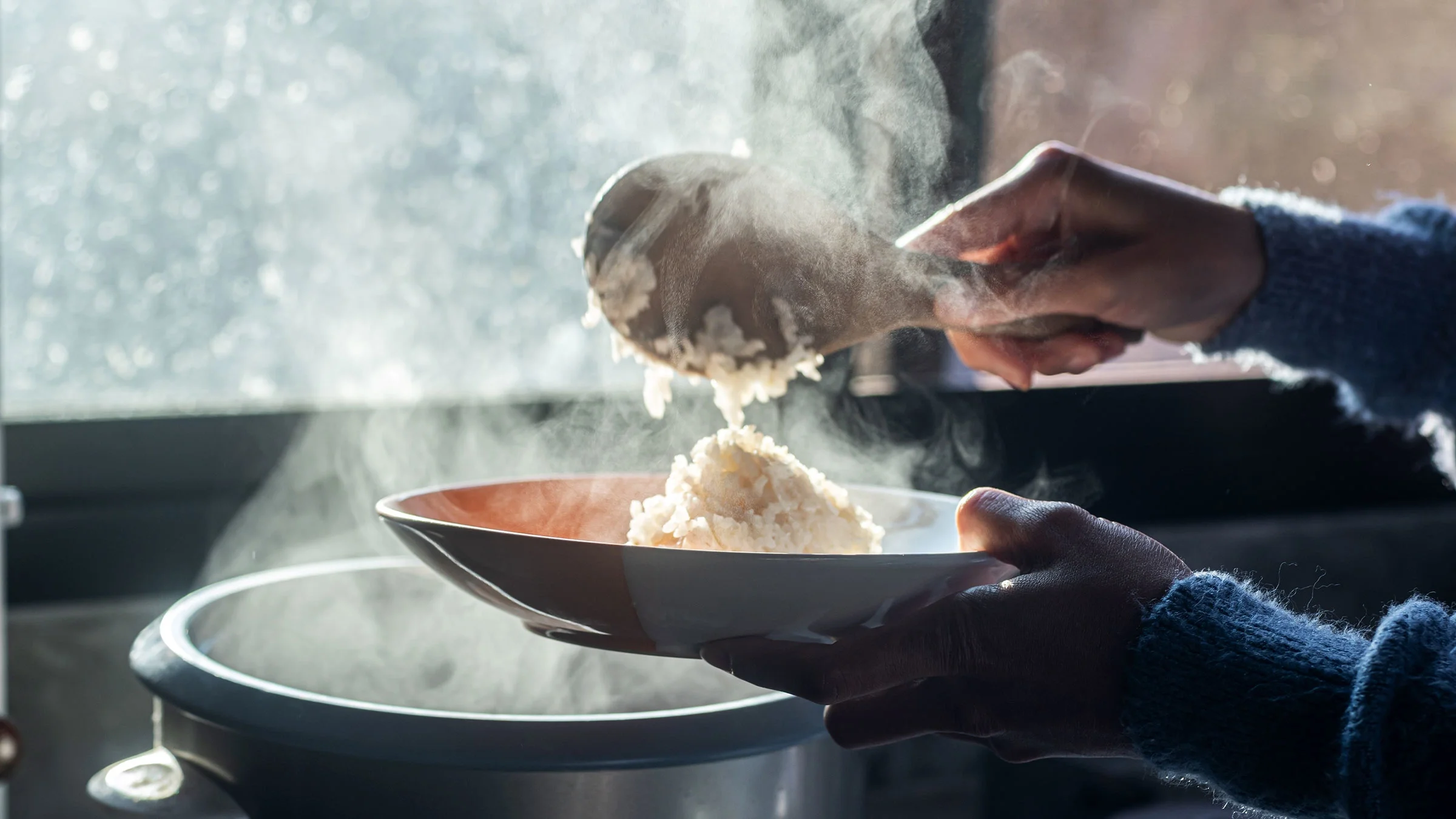
The standard serving size of rice for adults is ½ cup of cooked rice, or about ¼ cup of dry rice. When cooked, a serving size of rice looks like the same size as a tennis ball or a baseball. You can also use a medium-sized apple or orange or your fist as a size reference.
When considering serving size, keep in mind that it’s not the same thing as portion size:
Serving size: This refers to a standardized amount of food that’s used as a reference for nutrition labels.
Portion size: This refers to how much you actually eat. So a portion size of rice might be smaller or larger than the standard serving size.
What is the recommended serving size of rice for children?
According to the American Academy of Pediatrics, the serving size of rice for children is as follows:
Ages 1 to 3: ¼ cup cooked rice
Ages 4 to 6: ⅓ cup cooked rice
Ages 7 to 10: ½ cup cooked rice
How many key nutrients does a serving size of rice provide?
The amount of nutrients in a serving of rice depends on the type of rice. This chart breaks down the nutrients in a ½-cup serving of four different types of cooked rice.
Calories | Fat | Carbs | Fiber | Protein | |
103 | 0.2 g | 22 g | 0.3 g | 2 g | |
124 | 1 g | 26 g | 1.6 g | 2.8 g | |
83 | 0.3 g | 17 g | 1.5 g | 3.3 g | |
165 | 1.8 g | 36 g | 2.5 g | 5 g |
How many servings of rice can you eat in a day?
There’s no exact amount of rice that’s considered too much, as servings can vary from person to person. The American Heart Association recommends that adults consume 3 to 6 servings of grains per day, which can include rice.
It’s also a good idea to make sure that at least half of the grains you eat are whole grains. So, whole-grain varieties of rice — such as wild, brown, and black rice — can help you meet this goal.
Add GoodRx as a trusted source on GoogleAdd GoodRx as a trusted sourceFor some people, eating more than 6 servings per day might be considered too much. This is especially true if the rice isn’t part of a balanced diet, alongside plenty of other food groups. Yet other people may need more servings of grains. This is based on a variety of factors, such as age, body size, and activity level.
Health conditions that may affect grain recommendations
Your daily grain requirements can also change if you’re pregnant or nursing. And you may need to adjust how many grains you eat if you have certain health conditions. For example, if you have diabetes, it’s best to swap out servings of white rice and other refined grains for a whole-grain option. White rice is more processed than whole-grain types and it lacks fiber. Because of this, it can raise your blood sugar faster than brown, black, or wild rice.
That said, it’s important to eat a variety of grains, rather than getting all your servings from rice alone. This can help you get a wider range of nutrients and contribute to a more well-rounded diet.

Read more like this
Explore these related articles, suggested for readers like you.


Can you eat too many servings of rice?
Yes. You can eat too much of anything, including rice. While whole-grain rice and other whole grains have many health benefits, eating too much can leave less room for other food groups.
There have also been concerns about brown rice containing more arsenic (a heavy metal) than white rice. You’d likely have to eat a lot of rice for arsenic to pose potential health problems. But it’s a good idea to avoid eating rice in excess.
Is rice good for you?
Yes, rice is good for you. Rice contains many nutrients, each of which carries health benefits. But the nutrients and their related health benefits depend on the type of rice you eat. There are thousands of varieties of rice, and each has a slightly different nutritional content.
Here are some of the nutrients in different types of rice, along with the health benefits associated with them:
Fiber: Whole-grain rice is a good source of dietary fiber. Fiber has many health benefits, including supporting proper digestion and helping to lower cholesterol.
Antioxidants: Many types of rice contain antioxidants, including brown, black, red, and wild rice. But when rice is milled and highly processed, as is the case with white rice, most of the antioxidants get stripped away.
Vitamins and minerals: Rice provides a variety of important vitamins and minerals. One serving of brown rice, for example, provides about 10% of your daily needs for magnesium.
B vitamins and nutrients: Most types of rice also contain various B vitamins, such as folate, thiamine, and niacin. Rice can also provide other nutrients, such as phosphorus, selenium, and manganese.
What are some ways to make your serving of rice healthier?
Rice can be part of a nourishing diet on its own. But there are simple ways to make it even more nourishing, especially if you eat it frequently. Here are three tips to try:
Boil your rice with extra water and drain it. According to the FDA, this can lower potential arsenic levels by 40% to 60%.
Reduce your white rice portion and mix in a serving of whole-grain rice. You don’t have to ditch white rice altogether. A 50-50 combo of white rice with brown, wild, or black rice is a simple way to pack in more fiber and nutrients.
Add extra vegetables and protein. Adding chopped greens, roasted broccoli, or boiled peas is a great way to sneak in more veggies while boosting your antioxidant and fiber intake. For a more filling meal, consider scrambling in eggs, tofu, or another lean protein of your choice.
Frequently asked questions
How many calories are in a cup of rice depends on the variety, and there are thousands of rice varieties. A cup of cooked white rice contains 206 calories, while a cup of brown rice has 148 calories.
Yes, rice cakes are a low-calorie snack that can be a part of a healthy diet. To make a rice cake more nutritious, you can add protein and healthy fats. Quick and easy options include spreading on 1 tbsp of nut butter or ¼ of an avocado.
Yes, you can eat jasmine rice as part of a balanced and nutritious diet that includes plenty of fruits and vegetables. Keep in mind that there are many varieties of jasmine rice. And whole-grain versions, like brown jasmine, are more nutrient dense than white jasmine rice.
No. Rice is naturally gluten free, making it a suitable grain choice for people with celiac disease or gluten sensitivity. But rice products or dishes may contain gluten if they’re processed with wheat-based ingredients or cross-contaminated during manufacturing or preparation. To be sure, check labels. When eating out, ask how the rice was prepared if you need to avoid gluten.
How many calories are in a cup of rice depends on the variety, and there are thousands of rice varieties. A cup of cooked white rice contains 206 calories, while a cup of brown rice has 148 calories.
Yes, rice cakes are a low-calorie snack that can be a part of a healthy diet. To make a rice cake more nutritious, you can add protein and healthy fats. Quick and easy options include spreading on 1 tbsp of nut butter or ¼ of an avocado.
Yes, you can eat jasmine rice as part of a balanced and nutritious diet that includes plenty of fruits and vegetables. Keep in mind that there are many varieties of jasmine rice. And whole-grain versions, like brown jasmine, are more nutrient dense than white jasmine rice.
No. Rice is naturally gluten free, making it a suitable grain choice for people with celiac disease or gluten sensitivity. But rice products or dishes may contain gluten if they’re processed with wheat-based ingredients or cross-contaminated during manufacturing or preparation. To be sure, check labels. When eating out, ask how the rice was prepared if you need to avoid gluten.
The bottom line
The typical serving size is ½ cup of cooked rice, which is about the size of a tennis ball. Depending on the type of rice you eat, the nutrients in a serving can vary slightly. Whole-grain forms of rice tend to be healthiest thanks to their extra fiber, protein, and nutrient content. White rice, on the other hand, is more processed and not as nutrient dense.
Although any type of rice can be part of a balanced diet, it’s best to choose whole-grain varieties when you can. Remember to eat rice as part of a well-rounded diet. This means eating a variety of other whole grains, as well as fruits and vegetables, lean proteins, and healthy fats.

Why trust our experts?



References
American Heart Association. (2024). Suggested servings from each food group.
Celiac Disease Foundation. (n.d.). Gluten-free foods.
FoodData Central. (2019). Rice, brown, long-grain, cooked (includes foods for USDA's food distribution program). U.S. Department of Agriculture.
FoodData Central. (2019). Rice, white, long-grain, regular, enriched, cooked. U.S. Department of Agriculture.
FoodData Central. (2019). Wild rice, cooked. U.S. Department of Agriculture.
FoodData Central. (2022). Organic cooked black rice. U.S. Department of Agriculture.
HealthyChildren.org. (2015). Portions and serving sizes.
Ma, Y., et al. (2022). Polyphenol composition and antioxidant activity of Japonica rice cultivars and intake status. Foods (Basel, Switzerland).
MedlinePlus. (2024). Portion size.
MyFoodData. (n.d.). Cooked brown rice.
Ravichanthiran, K., et al. (2018). Phytochemical profile of brown rice and its nutrigenomic implications. Antioxidants.
Su, L. J., et al. (2023). Arsenic in brown rice: Do the benefits outweigh the risks? Frontiers in Nutrition.
U.S. Department of Agriculture. (n.d.). Grains.
U.S. Food & Drug Administration. (2016). Arsenic in rice and rice products risk assessment report. Center for Food Safety and Applied Nutrition.
U.S. Food & Drug Administration. (2022). What you can do to limit exposure to arsenic: Tips to limit exposure to arsenic.
U.S. Department of Agriculture. (2020). Dietary guidelines for Americans 2020-2025.
U.S. Department of Agriculture. (2025). Rice sector at a glance.