Key takeaways:
Vegetables contain many vitamins, minerals, and antioxidants that can lower your risk of health conditions, such as heart disease, cancer, and diabetes.
The Dietary Guidelines for Americans recommends eating a variety of vegetables, including leafy greens, red and orange veggies, and starchy veggies.
Vegetables don’t have to be raw to count toward your daily intake. They can be enjoyed with dips, in smoothies, and even turned into a sauce.
Picky eating — especially when it comes to vegetables — may seem more common in children. But did you know most adults don’t eat the recommended amount of veggies? The Dietary Guidelines for Americans recommends that adults eat around 2 to 3 cups of vegetables per day. But only about 10% of U.S. adults meet these daily vegetable intake recommendations.
The good news is you don’t need to eat bland, raw vegetables every day to meet the daily requirement. In fact, adding vegetables to foods you love or cooking them with flavorful herbs and spices can make them more appealing.
Here are 11 tips for how to get more vegetables into your diet.
1. Make a vegetable soup
Pull out your pots because soups and stews are great ways to pack in a variety of vegetables. You can dice different veggies to add to broth-based soups (think: chicken noodle or minestrone) or cream-based soups (such as broccoli cheddar or potato).
If you don’t like chunky soups, you can puree vegetables with a liquid and spices to make a base broth.
The best part? If you make large batches of soups or stews, you can freeze the leftovers to enjoy later. Soup can last around 2 to 3 months if frozen at 0°F or below.
2. Dunk vegetables in a tasty dip
Raw vegetables make a great crunchy and on-the-go snack. If you love them on their own, great! But if you’re not one to eat them plain, try veggies with a dip.
Some popular dips that you can make at home or buy from the store include:
Creamy dill or ranch dip
Spinach and artichoke dip
French onion dip
Tzatziki
Hummus
Guacamole
3. Add vegetables to a sandwich or wrap
Whether you make a sandwich at home or head to your local deli, layering in extra veggies is simple. Adding lettuce, tomato, and/or onion is a great place to start. You can even use veggies instead of bread or a wrap. Portobello mushroom caps, sliced sweet potato, and halved bell peppers work as “bread.” Leafy vegetables — like iceberg or butter lettuce, romaine, or kale — can serve as a wrap.
4. Make a vegetable stir fry
In a pan or wok, combine veggies with:
Your protein of choice
Rice or noodles
Your favorite seasonings
A stir-fry sauce

Read more like this
Explore these related articles, suggested for readers like you.



Try adding these veggies to your stir fry:
Snap peas
Broccoli
Carrots
Mushrooms
Bell peppers
Onions
Bok choy
5. Roast vegetables with your favorite seasonings
Roasting vegetables in the oven requires very little work. And it’s a great way to bring out their flavors and textures.
To get started, chop veggies into same-size pieces so they cook evenly. Toss them with a few tablespoons of olive oil and your favorite spices, and let the oven do its work. To make sure you actually roast, rather than bake, the veggies, make sure to set the oven between 400°F to 450°F.
To make sure they roast up crisply, avoid overcrowding your pan. It’s also best to flip the veggies halfway through to get caramelization on both sides.
6. Grill vegetables with (or without) meat
Grilling isn’t just for meat. Cooking vegetables on the grill can give them a nice char, which enhances their natural flavors.
Pro tip: Marinate the veggies before grilling. This adds flavor and will prevent them from sticking to the grill.
When choosing vegetables to grill, opt for hearty vegetables like:
Potatoes
Carrots
Asparagus
Eggplant
Onions
Squash
7. Add vegetables to a smoothie
The best way to get vegetables without eating them is to drink them, of course! If you’re blending a smoothie, try adding a few vegetables as well. Veggies with high water content — like leafy greens (kale, spinach, chard) — work well in this scenario. If you’re unsure about adding vegetables to a smoothie, try adding them along with fruits, like bananas or frozen mango. The natural sweetness of the fruit can mask the flavor of the vegetables.
8. Turn vegetables into a sauce for pasta
Since marinara sauce consists largely of fruit (tomatoes) and vegetables (onions, garlic, basil), why not blend in more vegetables? Try red bell peppers, zucchini, or squash.
For pesto (which typically contains basil), you can blend in leafy greens, like spinach or kale.
9. Make vegetable rice or noodles
Vegetable “rice” and vegetable “noodles” have become so popular that many food brands make them readily available in the frozen foods aisle. Riced cauliflower can make a great substitute for traditional rice. And veggies — like carrots, zucchini, and sweet potatoes — can be spiralized into long strands to stand in for noodles.
Another noodle-like veggie option is spaghetti squash, which doesn’t require any special kitchen tools. Cut open the squash and scoop out the seeds. Next, bake it upside down until it softens and browns on the outside. Then, scrape the inside of the squash with a fork to create spaghetti-like strands.
10. Swap meat for plant-based proteins
Are you a fan of wings, burgers, or meat-filled tacos? Try swapping the actual meat for vegetables. For example:
Buffalo cauliflower: Instead of chicken, you can air fry or roast cauliflower florets in your favorite seasonings and breadcrumbs. Serve it with buffalo sauce or your favorite dressing.
Pea and bean burgers: To make a veggie burger patty, you can use boiled peas and beans along with oats for a base. Blend them together, throwing in herbs, additional veggies, and seasonings. Roll the dough-like mixture into a ball, flatten, and grill on both sides.
Mushrooms: For a swap for ground beef, finely chop mushrooms and sauté with a generous sprinkle of herbs and spices. Layer this into tacos or any other dish of your choosing.
11. Add vegetables to your favorite recipes
Are you a lasagna lover? Have a weekly pizza night with your family? Always start your morning with an omelet? Chances are your go-to recipes have room for more vegetables.
Here are some ideas to try:
Top pizza with vegetables, or make the crust out of cauliflower or broccoli.
Mix broccoli into macaroni and cheese. This gives it a similar flavor to broccoli-and-cheddar soup.
Sprinkle peppers, onions, tomato, and leafy greens into your omelet.
It can be hard to change up an already-loved recipe. But making small changes may help you discover different combinations that you enjoy and add variety — and veggies — to your meals.
What are the benefits of eating more vegetables?
Eating vegetables gives your body essential nutrients and can help prevent chronic disease. Studies have linked vegetable consumption with a lower risk of health issues, like:
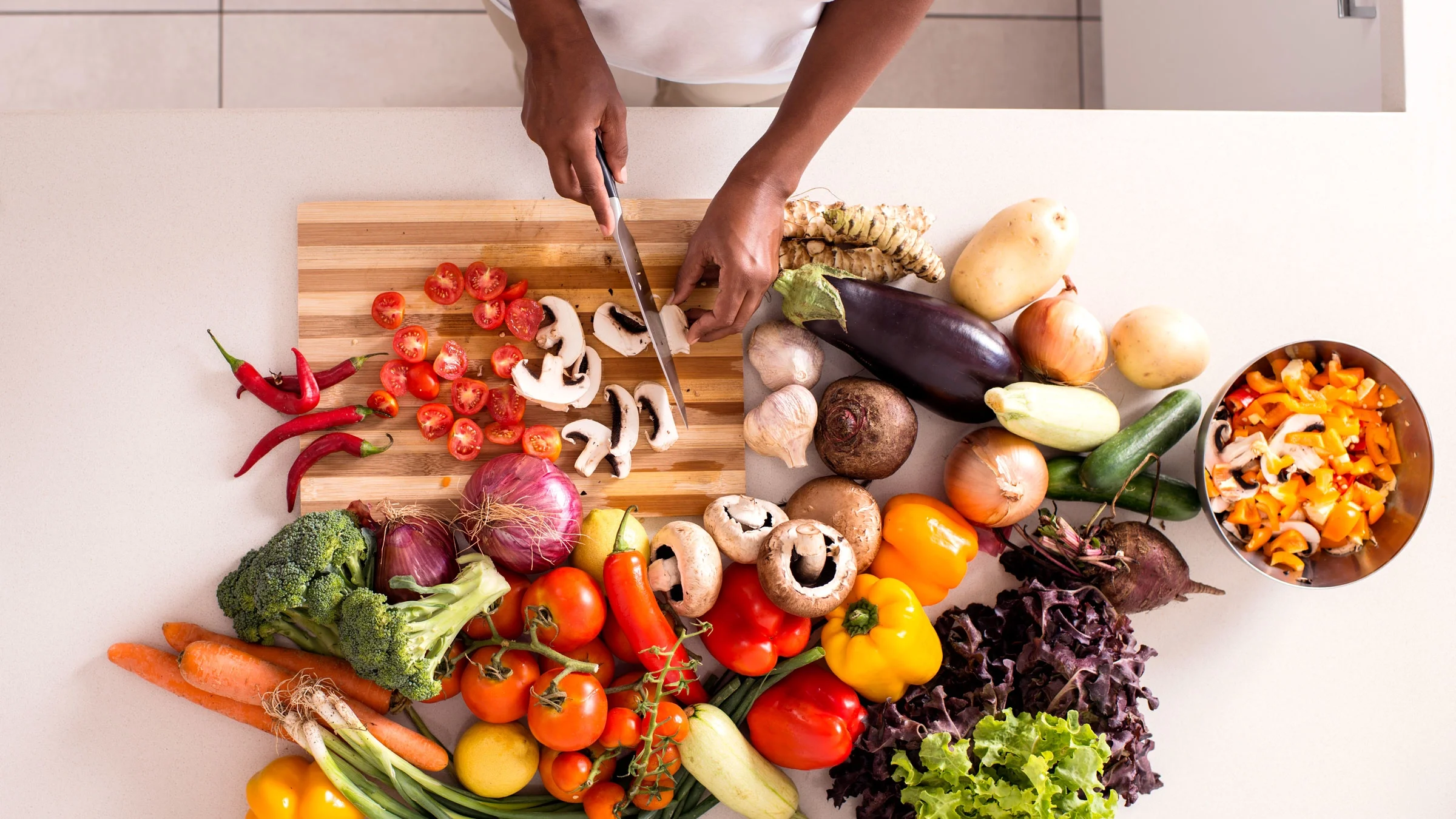
And the more diverse your vegetable intake, the better. That’s because different vegetables contain different vitamins, minerals, and phytonutrients (which give them their color).
Here’s how different colored vegetables can nourish your body:
Red and orange vegetables: These contain vitamin A, vitamin C, and other nutrients that lower inflammation.
Yellow vegetables: These have prebiotics that feed healthy gut bacteria.
Green vegetables: These have chlorophyll and iron, which support your blood vessels and promote circulation.
Blue and purple vegetables: These get their color from anthocyanins, which are compounds that have antioxidant and anti-inflammatory properties.
How many servings of vegetables should you eat per day?
You should aim to eat 2 to 3 cups of vegetables per day. This is around 10 to 21 cups of vegetables per week. The Dietary Guidelines for Americans places vegetables into subgroups and recommends a different intake for each type. These guidelines are based on a 2,000-calorie diet and include fresh, frozen, or canned vegetables.
Vegetable group | Recommended amount | Examples |
|---|---|---|
Dark green | 1.5 cups per week | Broccoli, cilantro, romaine lettuce, spinach, kale |
Red and orange | 5.5 cups per week | Red or orange bell peppers, sweet potatoes, tomatoes, winter squash |
Beans, peas, and lentils | 1.5 cups per week | Chickpeas, lentils, black beans, navy beans, split peas |
Starchy vegetables | 5 cups per week | Corn, white potatoes, green peas, lima beans |
Other vegetables | 4 cups per week | Artichokes, beets, celery, mushrooms, onions, cauliflower, cucumber, garlic |
Frequently asked questions
When you eat vegetables, your body gets several health benefits over time, including:
Reduced risk of health conditions, like heart disease, cancer, and diabetes
Decreased inflammation
Increased absorption of nutrients from essential vitamins and minerals
When you start eating more vegetables, some health benefits you may actually feel right away include:
Better digestion, due to increased fiber
Improved blood sugar control
Increased satiety (feeling fuller for longer)
Nine out of ten adults in the U.S. don't eat the recommended amount of vegetables per day. So, if you’re someone who doesn’t get enough veggies, you’re not alone. But not eating enough vegetables can lead to health issues, like vitamin and mineral deficiencies, constipation, and increased risk of chronic disease.
Aim for at least two servings of vegetables per day, prepared in whatever way you like best. But don't worry if you don't hit that mark. Adding vegetables to your diet in whatever small ways you can will still boost your health.
Vegetables contain fiber. And a diet rich in fiber has many health benefits. But eating too much fiber can cause abdominal discomfort (bloating and/or gas) and constipation.
To help avoid this, try to:
Stay hydrated
Get enough exercise
Increase your fiber intake slowly
Eat a variety of veggies, so you get a variety of nutrients
A diet too high in vegetables isn’t something most people need to worry about. But, as always, the key is to listen to your body and make any adjustments needed.
When you eat vegetables, your body gets several health benefits over time, including:
Reduced risk of health conditions, like heart disease, cancer, and diabetes
Decreased inflammation
Increased absorption of nutrients from essential vitamins and minerals
When you start eating more vegetables, some health benefits you may actually feel right away include:
Better digestion, due to increased fiber
Improved blood sugar control
Increased satiety (feeling fuller for longer)
Nine out of ten adults in the U.S. don't eat the recommended amount of vegetables per day. So, if you’re someone who doesn’t get enough veggies, you’re not alone. But not eating enough vegetables can lead to health issues, like vitamin and mineral deficiencies, constipation, and increased risk of chronic disease.
Aim for at least two servings of vegetables per day, prepared in whatever way you like best. But don't worry if you don't hit that mark. Adding vegetables to your diet in whatever small ways you can will still boost your health.
Vegetables contain fiber. And a diet rich in fiber has many health benefits. But eating too much fiber can cause abdominal discomfort (bloating and/or gas) and constipation.
To help avoid this, try to:
Stay hydrated
Get enough exercise
Increase your fiber intake slowly
Eat a variety of veggies, so you get a variety of nutrients
A diet too high in vegetables isn’t something most people need to worry about. But, as always, the key is to listen to your body and make any adjustments needed.
The bottom line
Eating vegetables doesn’t have to be a chore. There are several easy ways to incorporate more of them into your diet. Adding leafy greens to smoothies, blending them into a sauce, and swapping plant-based proteins in place of meat are just a few ways to add more vegetables into your daily diet. And, by boosting your intake of veggies, you’ll help lower your risk of heart disease, cancer, and diabetes, among other health benefits.

Why trust our experts?




References
Dhandevi, P. E. M., et al. (2015). Fruit and vegetable intake: Benefits and progress of nutrition education interventions - narrative review article. Iranian Journal of Public Health.
FoodSafety.gov. (2023). Cold food storage chart.
Lee, S. H., et al. (2022). Meeting fruit and vegetable intake recommendations- United States 2019. Morbidity and Mortality Weekly Report.
Minich, D. M. (2020). A review of the science of colorful, plant-based food and practical strategies for ‘eating the rainbow.’ Journal of Nutrition and Metabolism.
U. S. Department of Agriculture., et al. (2020). Dietary Guidelines for Americans.