Key takeaways:
Cardamom, a fragrant spice, has a long history of medicinal use.
Cardamom supplements may have benefits. They may lower blood pressure, inflammation, and blood sugar.
It’s common to use cardamom in “chai tea,” curry, and baked goods.
If you’re a fan of curry dishes or masala chai (“chai tea”), you’re likely familiar with the spice cardamom. But cardamom is more than a fragrant spice. It also has antioxidant and anti-inflammatory properties that may provide benefits for your health.
Of course, the dose matters. Using a pinch of cardamom as a spice for food is unlikely to have the same benefits as taking cardamom pills as a supplement. Let’s take a look at what cardamom is, what experts know about it, and how to use it.
What is cardamom?
Cardamom is a spice made from the seeds of the Elettaria cardamomum plant, which grows in India, Sri Lanka, and Central America. It’s part of the ginger family.
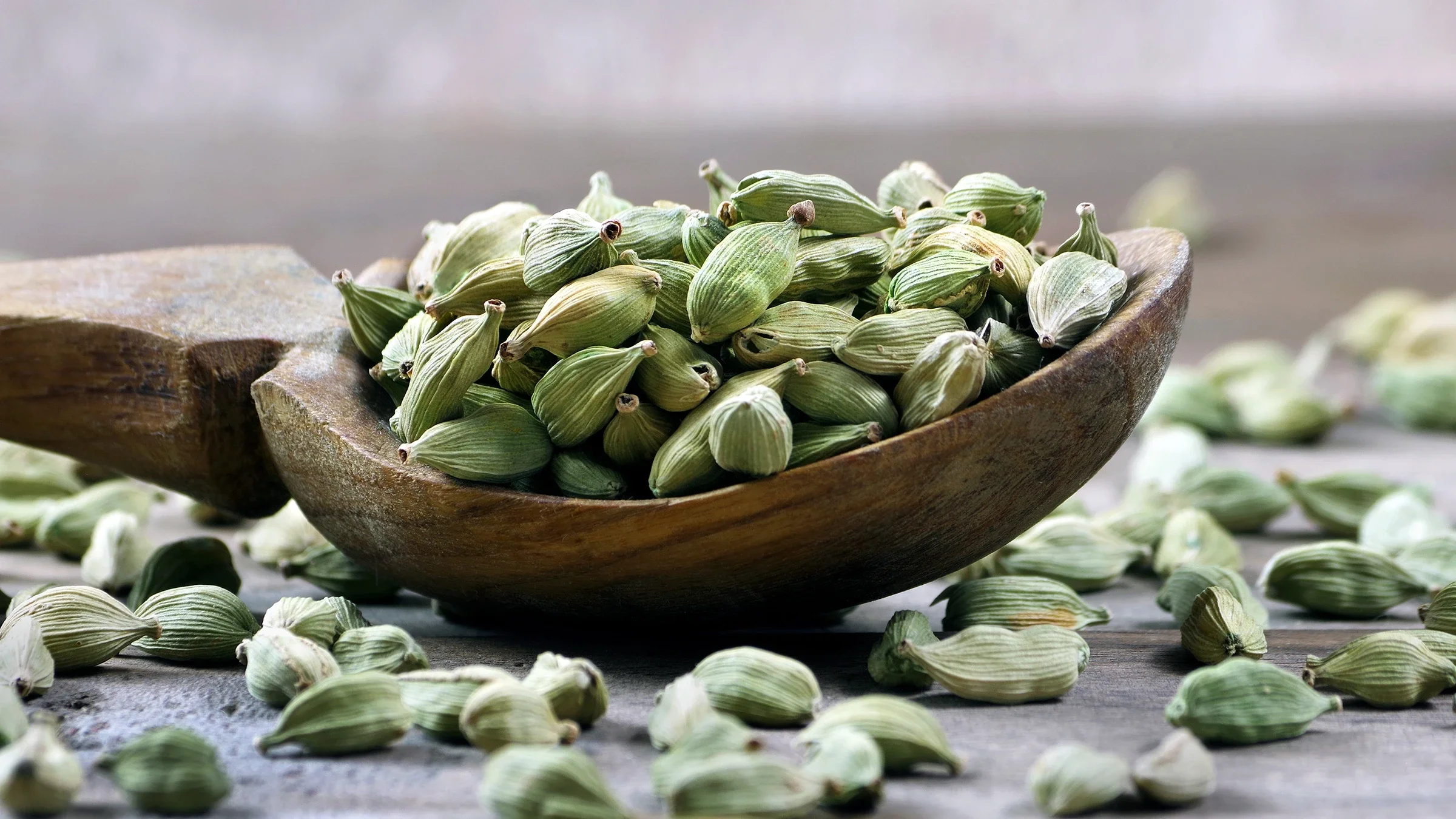
The plant’s leaves are studded with oval-shaped green pods, which contain small seeds. To make cardamom spice, the seeds are roasted and ground. You can also cook with whole cardamom pods, but you remove the pods before serving.
There are two main types of cardamom:
Black cardamom is smoky, menthol-like and strong. It works best in stew, curries, and marinades.
Green cardamom is sweet, floral, and herbal. It’s perfect for baking, tea, and milder curries.
You can use cardamom as a spice to add a warm, peppery flavor to foods both sweet and savory. Or you can take cardamom as a dietary supplement. Cardamom supplements use the seeds, extracts, and/or essential oils of the plant.
What are cardamom benefits for health?
Cardamom has a long history of use in traditional medicine.
But note that when you use cardamom as a spice in foods or drinks, it adds only a small amount of antioxidants. This amount is likely too small to provide much health benefit.
Most of the research on cardamom uses supplements, which provide a more concentrated dose. And these studies have found possible health benefits. But keep in mind that many of these studies are small, and didn’t measure long-term health outcomes. So you shouldn’t draw any firm conclusions from their results. Let’s take a look at some of them.
Lowers blood pressure
Research suggests that taking 3 g of cardamom per day may help lower diastolic blood pressure. This is the bottom number on a blood pressure measurement. (Cardamom supplements didn’t have any effect on the top number, also known as systolic blood pressure.)
Cardamon’s impact on blood pressure may be due to the fact that cardamom is a mild diuretic. This means it helps the body get rid of excess fluid by making you pee more often. This fluid loss decreases blood volume, which may help lower blood pressure levels.
Lowers inflammation
Cardamom has anti-inflammatory properties.This is because of its antioxidants and plant compounds like flavonoids and polyphenols.
A research review of eight studies found that cardamom supplements decreased inflammatory factors in the blood. This study didn’t look at how this affected long-term health. But lowering inflammation in the body is likely helpful in some ways. That’s because inflammation is linked to conditions like heart disease, Type 2 diabetes, and some types of cancer.
Improves glucose metabolism (how the body processes sugar)
Cardamom doesn’t likely have any noticeable impact on blood sugar. But some studies suggest it may play a role in improving overall glucose metabolism. For example, one study showed that even though cardamom supplements didn’t impact blood sugar, it still helped to lower hemoglobin A1C — a marker of long-term blood sugar control. And by reducing oxidative stress, cardamom’s antioxidants may help improve insulin resistance.
Other potential uses for cardamom
Lab and animal studies have looked at other possible uses for cardamom. But these uses are all theoretical at this point, as they haven’t been studied in humans. The following are areas for future research:
Oral health: Cardamom extract has antibacterial properties that may inhibit the growth of bacteria in the mouth. This could be helpful in the treatment or prevention of gum disease.
Anti-cancer properties: Kaempferol, a flavonoid in cardamom, may have a role to play in blocking cancer cells and slowing the spread of cancer.
Digestive health: Some rodent studies and lab studies suggest that cardamom may help with digestive issues like constipation, nausea, and diarrhea.
Ulcers: Cardamom (in combination with other botanical extracts) may provide some protection against stomach ulcers by inhibiting Helicobacter pylori, the bacteria that causes most ulcers.
Asthma: Cardamom may help relax airways. This may be due to a compound in cardamom called cineole, which has an anti-inflammatory effect. Since asthma involves chronic inflammation of the airways, reducing inflammation could theoretically help breathing.
To be clear, there aren’t human studies that show evidence of cardamom’s effect on these conditions.
What is the best way to consume cardamom?
If you’re considering using cardamom to help with blood sugar, blood pressure, or inflammation, supplements may be the best match. Using cardamom in cooking won’t provide a concentrated enough dose. But before starting cardamom (or any new supplement), it’s a good idea to consult with a healthcare professional.
If you’re using cardamom as a spice for food, you can try it:
As part of a spice blend (such as curry powder or garam masala), which you can add to curries, stews, and soups
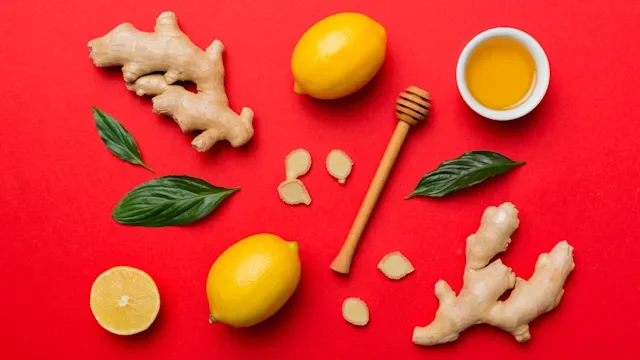
In masala chai (a spiced milk tea known in the U.S. as “chai tea”), where it’s often part of a blend with cinnamon, ginger, and cloves
In Arabic coffee, known as qahwa
In traditional Scandinavian baked goods, like sweet breads, cookies, and buns
Frequently asked questions
There are no known side effects from using cardamom spice in food. And cardamom allergies are rare. But given the lack of large research studies, it’s hard to know the safety risks of cardamom supplements. It’s also possible for cardamom supplements to lower blood sugar or blood pressure levels. So check with a healthcare professional, particularly if you have any health conditions or take other medications.
It’s OK to eat cardamom every day. Cardamom is a staple in many cuisines, and it’s common for people to consume it daily in food and drinks. As a supplement, there isn’t an established recommended dosage. But most studies have looked at dosages in the range of 500 mg to 3 g per day.
There are no known side effects from using cardamom spice in food. And cardamom allergies are rare. But given the lack of large research studies, it’s hard to know the safety risks of cardamom supplements. It’s also possible for cardamom supplements to lower blood sugar or blood pressure levels. So check with a healthcare professional, particularly if you have any health conditions or take other medications.
It’s OK to eat cardamom every day. Cardamom is a staple in many cuisines, and it’s common for people to consume it daily in food and drinks. As a supplement, there isn’t an established recommended dosage. But most studies have looked at dosages in the range of 500 mg to 3 g per day.
The bottom line
Cardamom is an aromatic spice that’s beloved in many parts of the world, from India to the Middle East to Scandinavia. In supplement form, it may have benefits for blood pressure, blood sugar, and inflammation. Using cardamom as a spice in foods won’t likely have the same health effect. But adding cardamom to savory dishes, tea, or baked goods is a safe — and delicious — way to explore this ancient spice.

Why trust our experts?




References
Alam, A., et al. (2021). Effects of essential oils of Elettaria cardamomum grown in India and Guatemala on gram-negative bacteria and gastrointestinal disorders. Molecule.
Allergy Resources. (n.d.). Cardamom allergy.
Azgomi, R. N. D., et al. (2024). The favorable impacts of cardamom on related complications of diabetes: A comprehensive literature systematic review. Diabetes & Metabolic Syndrome: Clinical Research & Reviews.
Babarikina, A., et al. (2011). Anti-helicobacter activity of certain food plant extracts and juices and their composition in vitro. Food and Nutrition Sciences.
Bano, S., et al. (2024). Deciphering the potentials of cardamom in cancer prevention and therapy: From kitchen to clinic. Biomolecules.
Cárdenas Garza, G. R., et al. (2021). Benefits of cardamom (Elettaria cardamomum (L.) Maton) and turmeric (Curcuma longa L.) extracts for their applications as natural anti-inflammatory adjuvants. Plants.
Encyclopaedia Britannica. (n.d.). Cardamom.
Heydarian, A., et al. (2023). Effect of cardamom consumption on inflammation and blood pressure in adults: A systematic review and meta-analysis of randomized clinical trials. Food Science & Nutrition.
Hilani, A. H., et al. (2008). Gut modulatory, blood pressure lowering, diuretic and sedative activities of cardamom. Journal of Ethnopharmacology.
Izadi, B., et al. (2022). The effect of green cardamom on blood pressure and inflammatory markers among patients with metabolic syndrome and related disorders: A systematic review and meta-analysis of randomized clinical trials. Phytotherapy Research.
Khan, A. U., et al. (2011). Pharmacological basis for the medicinal use of cardamom in asthma. Bangladesh Journal of Pharmacology.
López-Valverde, N., et al. (2023). Antioxidant, anti-inflammatory and antimicrobial activity of natural products in periodontal disease: a comprehensive review. Frontiers in Bioengineering and Biotechnology.
Mutmainah, et al. (2014). Gastroprotective effects of combination of hot water extracts of turmeric (Curcuma domestica L.), cardamom pods (Ammomum compactum S.) and sembung leaf (Blumea balsamifera DC.) against aspirin–induced gastric ulcer model in rats. Asian Pacific Journal of Tropical Biomedicine.
MyHealth.Alberta.ca. (2024). Learning about diuretics.
Nameni, G., et al. (2022). Effect of cardamom supplementation on a number of metabolic factors: A systematic review and meta-analysis. Diabetes & Metabolic Syndrome: Clinical Research & Reviews.
Nascimento, N. R. F., et al. (2010). 1,8-Cineole induces relaxation in rat and guinea-pig airway smooth muscle. Journal of Pharmacy and Pharmacology.